


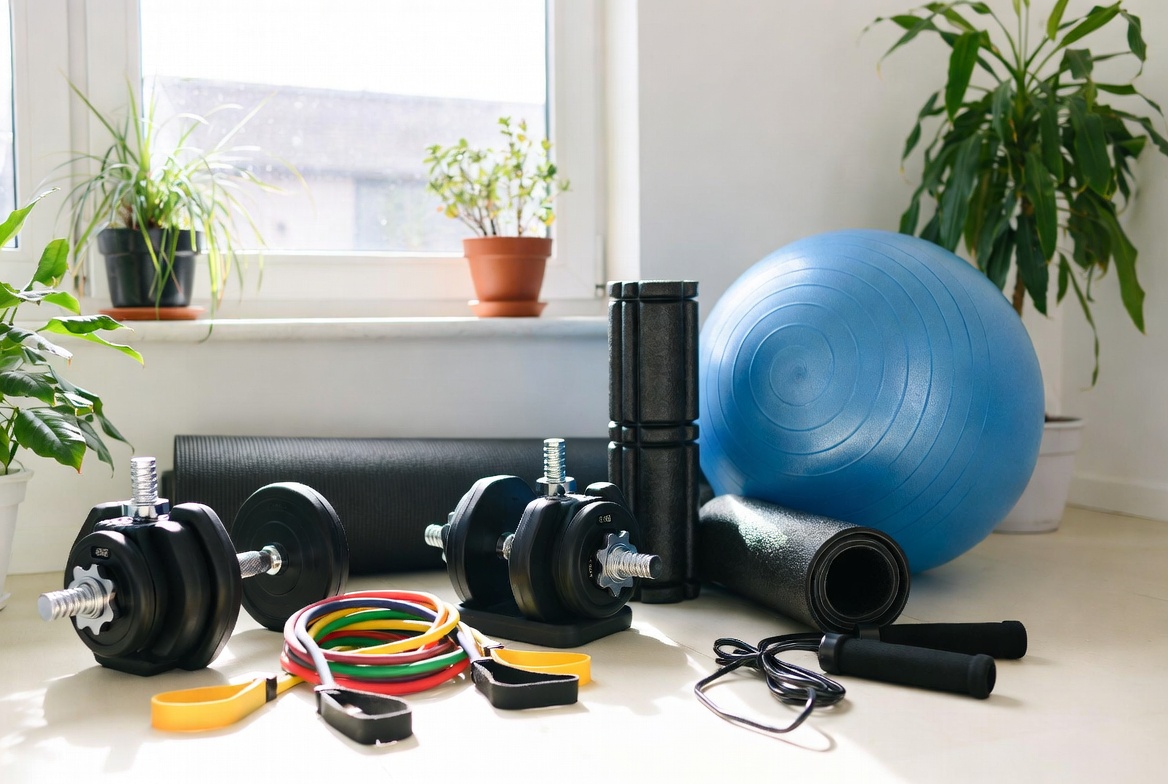
If you’re just starting out, the best home gym equipment is a simple, versatile mix that hits all the bases—strength, cardio, and flexibility—without costing a fortune. I always tell beginners to start with a core trio: a set of adjustable dumbbells, a good variety of resistance bands, and a quality exercise mat. That’s it. This simple setup unlocks hundreds of different exercises, giving you everything you need to build a solid fitness foundation.
How to Start Your Home Fitness Journey

Diving into home fitness can feel like a massive undertaking, but I promise, creating a workout space you’ll genuinely use is easier than it looks. Think of this guide as your friendly roadmap, here to help you sidestep the overwhelming options and build a practical gym, even if you don’t have a huge budget or a spare room.
So many people get stuck before they even start. They worry about gym intimidation, or they’re just not sure what to do first. We’re going to leave those concerns behind. Instead, let’s focus on the incredible freedom that comes with working out in your own space, on your own schedule. It’s all about creating a personal sanctuary for your health, no matter how small.
Setting the Stage for Success
Here’s the thing: this isn’t just about buying equipment. It’s about building a habit that sticks. Your environment has a huge impact on your motivation—way more than most people realize. A dusty treadmill shoved in a cluttered corner isn’t exactly inspiring. On the other hand, a clean, organized, and inviting space can make exercise feel less like a chore and more like a welcome break in your day.
Before you even browse for a single dumbbell, take a minute to think about the vibe you want. Do you need an energetic, bright space to get you going, or something more calm and focused? You’d be amazed what a difference simple touches can make, like good lighting, a small Bluetooth speaker for your favorite playlist, or even a plant.
The best home gym isn’t the one with the fanciest gear. It’s the one you actually look forward to using. It’s all about creating a space that gets rid of excuses and makes it easy to be consistent.
Your First Actionable Steps
Real momentum comes from small, manageable wins. Don’t try to go from zero to a five-day-a-week, pro-level plan overnight. Just focus on the basics of getting into a rhythm and learning to listen to your body. If you need a little more help with that crucial first phase, our guide on how to start exercising is the perfect place to begin.
As you get started, keep these three things in mind:
- Master Your Bodyweight First: Before you invest in heavy weights, get comfortable with foundational movements like squats, push-ups (even on your knees!), and planks. This builds a strong, stable base and is one of the best ways to prevent injury down the road.
- Consistency Trumps Intensity: A 15-minute workout three times a week will do far more for you than one grueling two-hour session you only manage once a month. Consistency is what drives real progress.
- Listen to Your Body: Pay close attention to how you feel. Some days you’ll be full of energy, and others you’ll be dragging. Learning to adjust your workout to match your body’s signals is a skill that will serve you for years to come.
Laying the Foundation: Space, Budget, and Your “Why”
Before you get swept up in the excitement of new gear, let’s pump the brakes for a second. The home gyms that actually get used—the ones that deliver real results—aren’t built on impulse buys. They’re built on a thoughtful plan.
Taking a few minutes now to honestly assess your space, your budget, and your actual goals is the most important step. It’s the difference between creating a functional fitness corner you love and a graveyard of dusty, expensive equipment. Let’s get real about what you’re working with.
How Much Room Do You Actually Have?
First things first: physical space. Be brutally honest with yourself about how much of your home you can truly dedicate to working out. This isn’t about daydreaming of a custom garage setup; it’s about finding a practical spot in your current reality.
Grab a tape measure and map out your zone. Is it a small corner of your bedroom? Maybe you’ve got a 6×6 foot patch of floor that’s all yours. Perfect! Knowing those dimensions immediately tells you that a massive power rack or a full-sized treadmill is off the table, saving you a ton of research time.
Let’s look at a couple of common scenarios:
- The Apartment Nook: You’ve carved out a spot that fits a yoga mat with a little wiggle room. This means your gear needs to be compact and easy to store. We’re talking resistance bands, a good mat, and maybe a set of adjustable dumbbells you can tuck under the bed.
- The Spare Room or Garage Corner: Here, you have a bit more breathing room—say, a 10×10 foot area. This opens the door to bigger pieces like a weight bench, a stationary bike, or a more permanent home for your weights. You can create a dedicated “gym zone” that’s always ready to go.
The goal isn’t to have the biggest space; it’s to make the most of the space you have. A well-organized small corner will always be more effective than a cluttered, unused large room.
Setting a Realistic Budget
Next up, let’s talk money. It’s easy to get starry-eyed looking at high-end equipment, but a firm budget is your best friend. It forces you to prioritize what truly matters for your goals, preventing you from overspending on things you don’t need just yet.
Instead of a vague idea, land on a specific number. Here’s a realistic look at what different budgets can get you started with:
- The Bare-Bones Starter Kit (Under $100): This is all about getting the most bang for your buck. You can easily grab a high-quality yoga mat, a full set of resistance bands with handles, and a speed jump rope. This simple trio covers mobility, strength, and cardio essentials without breaking the bank.
- The Solid Foundation ($300 – $500): This is where things get interesting. You can invest in a quality pair of adjustable dumbbells, which effectively replace an entire rack of weights. Pair that with a sturdy, adjustable bench, and you’ve just unlocked hundreds of classic strength exercises.
- The All-In Upgrade ($800+): With a bigger budget, you can bring a serious piece of cardio equipment into the mix. A quality foldable treadmill or a quiet spin bike can completely change the game, giving you a comprehensive gym experience right at home.
What Are You Actually Training For?
Finally, we get to the most important question: what do you really want to achieve? Your “why” dictates your “what.” Buying equipment without a clear goal is like going grocery shopping without a recipe—you end up with a cart full of stuff that doesn’t really go together.
Your goals should point you directly to the right gear. Try to be specific. “Get in shape” is too vague. Let’s drill down.
- Goal: “Build Muscle and Strength”: Your shopping list should be all about resistance. Adjustable dumbbells and an adjustable bench are your heavy hitters here. Resistance bands are also a fantastic and affordable place to start.
- Goal: “Improve Heart Health and Lose Weight”: You need something that gets your heart pumping. A stationary bike, a rowing machine, or even a simple elliptical would be an excellent cornerstone for your gym.
- Goal: “Increase Flexibility and Reduce Stress”: Keep it simple. A top-notch yoga mat, a couple of yoga blocks, and a foam roller are all you need to create a peaceful space for recovery and mindfulness.
When you map your goals to your purchases, every piece of equipment has a purpose. This intentional approach is how you build a home gym that’s truly designed for your success.
Getting Geared Up: Your First Home Gym Equipment
Alright, let’s get to the best part—picking out your gear. Going into this without a plan is a quick way to end up with a clothes rack that looks suspiciously like a treadmill. So, instead of just throwing a random list at you, we’ll approach this with a “Good, Better, Best” mindset. This way, you can find the perfect starting point that matches your budget, space, and how serious you’re ready to get.
We’re going to focus on the three pillars of a solid fitness routine: building strength, getting your heart rate up with some cardio, and improving your flexibility. Every piece I recommend is chosen because it’s versatile and can grow with you. That means the stuff you buy today will still be challenging you a year from now.
This graphic really nails down the pre-planning process. Before you spend a dime, you need to have a handle on your space, budget, and what you actually want to achieve.
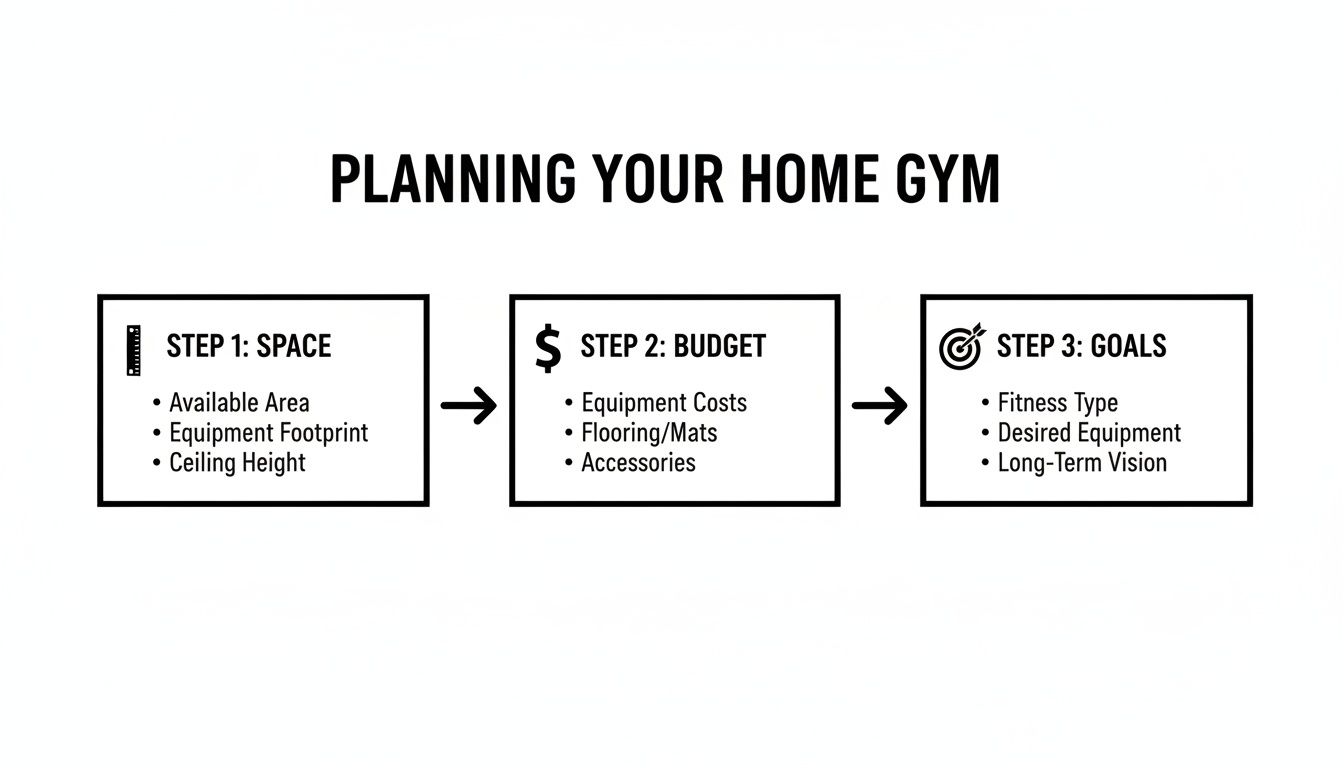
Get these three things straight first, and every purchase you make will have a purpose.
Building Foundational Strength
Strength training is the absolute bedrock of a balanced fitness plan. It doesn’t just build muscle; it fires up your metabolism and makes your bones stronger. As a beginner, the goal isn’t to lift the heaviest thing you can find—it’s to master the basic movements with perfect form.
Good: A Solid Set of Resistance Bands
If you’re working with a tight budget or a tiny corner of a room, a good set of resistance bands is your secret weapon. They are ridiculously versatile, perfect for building strength and helping with mobility work.
- Why they’re great for beginners: Bands provide variable resistance—the more you stretch them, the harder it gets. This is fantastic for learning new exercises safely because the tension is lightest right at the beginning of the move, where you’re most likely to get injured.
- What to look for: Don’t just grab a single band. Get a full set with different resistance levels, and make sure it comes with attachments like handles and a door anchor. That one little addition opens up a whole world of exercises, letting you mimic gym machines like lat pulldowns and cable rows.
Plus, you can toss them in a suitcase, so you never have an excuse to skip a workout when you travel. They’re a long-term fitness tool you’ll use for years.
Better: A Pair of Adjustable Dumbbells
Got a little more to spend and some room to spare? Adjustable dumbbells are a total game-changer. Honestly, they might be the single best investment you can make for a home gym. The space-saving alone is incredible.
The boom in home fitness is undeniable. The global market is expected to rocket from $12.88 billion in 2025 to $19.79 billion by 2032, and these clever weights are a huge part of that. Here in North America, where the market is already worth $4.56 billion in 2024, people are choosing them because they let you progress from 5 pounds all the way to 50 pounds (or more) without needing a dozen different pairs of dumbbells. We’re talking a cost savings of up to 70% compared to a traditional dumbbell rack. You can dive deeper into the numbers in the full market analysis from Fortune Business Insights.
Just one pair replaces an entire rack. With a quick turn of a dial, you can go from light bicep curls to heavy squats in seconds.
Adjustable dumbbells hit that perfect sweet spot. They give you the progressive overload you need for real strength gains without eating up your entire floor space or budget.
Best: Dumbbells and an Adjustable Bench
If you’re all-in and ready to build a truly functional strength setup, pairing those adjustable dumbbells with an adjustable weight bench is the way to go. This simple combination unlocks pretty much every fundamental strength exercise you’ll ever need.
Having a bench that can go from flat to incline to decline is critical for targeting muscles properly. Think about incline chest presses, seated shoulder presses, or dumbbell rows—all of which are much more effective (and safer) with a bench for support. It’s the piece that takes your setup from a “workout corner” to a legitimate home gym.
Boosting Your Cardio Health
Cardio is non-negotiable for heart health, endurance, and managing your weight. The trick is to find something you don’t hate doing, because consistency is everything here.
Good: A Simple Jump Rope
Never, ever underestimate the power of a jump rope. It’s cheap, takes up almost no space, and delivers a brutal cardio workout in minutes. It’s the perfect tool for high-intensity interval training (HIIT) that will get your heart pounding.
And we’re not talking about the plastic ones from the playground. You can get weighted ropes for an extra challenge or sleek speed ropes for performance. All you need is enough ceiling clearance to swing it.
Better: A Foldable Treadmill or Walking Pad
If you’re more of a walker or jogger, a foldable treadmill or a walking pad is a brilliant option. These are designed specifically for homes, so they’re much more compact and easier to store than their commercial gym counterparts. Many of them fold completely flat and can be slid under a bed.
This is your answer to bad weather or late nights when you just need to get your steps in. It gives you a controlled way to build your cardio base, whether you’re doing a slow walk while catching up on Netflix or a steady jog.
Improving Flexibility and Mobility
Flexibility and mobility are the unsung heroes of any fitness routine. They keep you from getting injured, help with muscle soreness, and just make you move better in everyday life. These items aren’t optional—they’re essential.
- Exercise Mat: A good mat is more than just a cushion. It provides a non-slip surface that defines your workout space and makes everything from planks to post-workout stretching way more comfortable.
- Foam Roller: Think of this as your own personal massage therapist. A foam roller is amazing for working out knots and relieving muscle tightness. Rolling out your legs, back, and shoulders after a tough workout can make a huge difference in how you feel the next day.
To give you a clearer picture, here’s a quick-glance table of what a great starter kit looks like.
Beginner’s Home Gym Starter Kit Comparison
This table breaks down the essentials, helping you see at-a-glance what each piece offers and what you can expect in terms of space and cost.
| Equipment Type | Primary Use | Space Needed | Average Cost |
|---|---|---|---|
| Resistance Bands | Strength & Mobility | Minimal (a drawer) | $25 – $60 |
| Adjustable Dumbbells | Progressive Strength | Small (2′ x 2′ area) | $200 – $500 |
| Adjustable Bench | Full-Body Strength | Medium (folds for storage) | $100 – $300 |
| Jump Rope | High-Intensity Cardio | Minimal (overhead space) | $10 – $30 |
| Exercise Mat | Flexibility & Floor Work | Small (rolls up) | $20 – $50 |
| Foam Roller | Recovery & Mobility | Minimal (closet space) | $20 – $40 |
Ultimately, building the perfect home gym for a beginner isn’t about having a ton of equipment. It’s about having the right pieces that directly support your goals and get you excited to work out.
Designing a Safe and Motivating Workout Space

Okay, you’ve got the gear. Now comes the fun part: turning that corner of your basement or spare room into a place you actually want to be. The environment you build is just as crucial as the equipment you fill it with. A smart setup keeps you safe, sure, but it also gives you that little nudge of motivation you need to stick with it.
You don’t need a huge, dedicated room for this. It’s all about being clever with the space you have, whether that’s a slice of your living room or a clear spot in the garage. Let’s dig into what makes a workout zone functional and, dare I say, inspiring.
Laying the Groundwork—Literally
First things first: your floor. It’s the foundation for every single exercise. Protecting it, and protecting your joints, is non-negotiable. An accidental dumbbell drop can shatter a tile, dent hardwood, or permanently crush carpet fibers. Even the constant impact from something like jumping rope takes a toll.
The easiest fix? Interlocking rubber floor mats. They’re relatively cheap, a breeze to click together, and offer some serious perks for anyone with home gym equipment.
- Noise Reduction: If you have family or downstairs neighbors, they’ll appreciate this. Rubber flooring deadens the thud of dropped weights and the sound of you moving around.
- Joint-Friendly Surface: That little bit of cushion makes a world of difference for shock absorption, which is a lifesaver for your knees and ankles during high-impact moves.
- Better Stability: Mats give you a solid, non-slip surface. No more worrying about your bench sliding mid-press or your feet slipping during a lunge.
Even if you just start with a single, thick exercise mat, it’s enough to define your workout area and give you the padding you need for push-ups, planks, and stretches.
Setting the Right Atmosphere
Ever wonder why you feel more energized in a commercial gym? A lot of it comes down to the bright lights, mirrors, and good airflow. You can easily recreate that vibe at home.
Good lighting is a game-changer. It can make a space feel more awake and welcoming. If your spot doesn’t have a window for natural light, a bright floor lamp works wonders. Same goes for ventilation. A simple fan keeps the air moving, making your workout way more comfortable and preventing that stuffy, stale feeling.
A strategically placed mirror is probably the single most valuable tool for a beginner. This isn’t about vanity; it’s about safety. Watching your form lets you catch and correct mistakes on the fly, ensuring you’re doing squats and rows correctly to get results and, more importantly, avoid injury.
Putting Your Safety First
A safe workout space isn’t just about the physical setup. It’s also about how you use the gear and listen to your body—two things that beginners often overlook.
Before you do anything else, read the manual. I know, it sounds boring and obvious, but you’d be surprised how many accidents happen because of improper assembly. Double-check that every bolt is tight and every piece is secure before you even think about starting.
Next, make these three things a non-negotiable part of every single session:
- Always Warm Up: Kick things off with 5-10 minutes of light cardio and dynamic stretching. Think jumping jacks, high knees, and arm circles. This gets your muscles ready for what’s coming and dramatically cuts your risk of injury.
- Learn to Listen: There’s a huge difference between the discomfort of a hard workout and actual pain. Pushing through muscle fatigue is how you get stronger. Sharp, sudden, or shooting pain is your body’s alarm bell telling you to stop immediately.
- Don’t Skip the Cool Down: Finish every workout with 5 minutes of static stretching. Hold each stretch for 20-30 seconds. This helps with flexibility and kick-starts your muscle recovery.
By making these safety steps a habit, you’re setting yourself up for a fitness journey that lasts. The goal isn’t just to get fit, but to get there without getting sidelined.
Beginner Workouts You Can Do Today
So you’ve got the gear—that’s a huge first step! But let’s be honest, even the best equipment is just expensive furniture if you don’t have a plan. The real magic happens when you start moving.
To get you started, I’ve put together three simple, full-body routines you can jump into right now. These are designed to help you get comfortable with the fundamental movements and build some early momentum without feeling totally lost. Just pick the one that fits the equipment you have, and remember: good form will always beat speed and heavy weights.
The Resistance Band Burn
If you started out with a set of resistance bands, this routine is for you. It’s incredibly low-impact but you’ll be surprised at how challenging it can be. Bands are fantastic for teaching you how to control your muscles through their entire range of motion.
Give this circuit a try. Aim for 3 rounds, and take a 60-90 second breather between each one.
- Banded Good Mornings (12 reps): Step onto the band with both feet and loop the other end over the back of your neck. Keeping your back perfectly straight, hinge forward at your hips until you feel a good stretch in your hamstrings. Squeeze your glutes to pull yourself back up to a standing position.
- Banded Overhead Press (10 reps): While standing on the band, bring the handles up to your shoulders. Press them straight up overhead until your arms are locked out, then lower them back down slowly and with control.
- Banded Rows (12 reps): Hook your band around a doorknob or another sturdy anchor point. Face the door, grab the handles, and pull them toward your chest, focusing on pinching your shoulder blades together at the end of the movement.
- Banded Squats (15 reps): Stand on the band with your feet about shoulder-width apart, holding the handles up at your shoulders. Drop into a squat like you’re sitting back in a chair, making sure your chest stays up. Drive through your heels to return to the start.
- Plank (Hold for 30-45 seconds): Nothing fancy here. Just hold a solid plank, keeping your body in a perfectly straight line from your head to your heels.
This little circuit hits all the major muscle groups, making it a super-efficient workout. As you get stronger, you can level up by using a thicker band or tacking on an extra round.
The Dumbbell and Bodyweight Circuit
Did you pick up some adjustable dumbbells and a mat? Perfect. This circuit is about to become your go-to. It mixes classic strength exercises with some bodyweight moves to build muscle and get your heart pumping at the same time.
Complete 3 full rounds of this circuit, taking about 60 seconds of rest after you finish each one.
- Goblet Squats (12 reps): Cup one dumbbell vertically against your chest with both hands. Lower into a deep squat, focusing on keeping your back straight and chest proud.
- Dumbbell Bench Press (10 reps): Lie on your bench (or the floor is fine too!). Press the dumbbells from your chest straight up until your arms are fully extended, then lower them back down slowly.
- Dumbbell Rows (10 reps per arm): A classic back-builder. Put one knee and one hand on your bench for support. Grab a dumbbell with the other hand and row it up toward your hip, keeping that back nice and flat.
- Push-Ups (As many as you can): Do these from your toes or drop to your knees if you need to. The goal is good form and a full range of motion, not a specific number.
- Reverse Lunges (8 reps per leg): Take a big step backward with one foot, lowering both knees until they form 90-degree angles. Push off the back foot to return to the start, then switch legs.
- Jumping Jacks (45 seconds): End the circuit with a classic cardio blast to empty the tank.
If you’re looking for more ways to structure your training and make progress, check out the beginner gym workout plan on our blog. It’s full of tips to help you build a routine you can actually stick with.
The Cardio and Core Blaster
This one is all about elevating your heart rate and carving out a strong, stable core. All you need is a jump rope and a mat—that’s it. The idea is to flow through the core work, using the jump rope as a high-intensity interval.
Go through this sequence for a total of 4 rounds:
- Jump Rope: 60 seconds at a pace you can maintain.
- Reverse Crunches: 15 reps.
- Bird-Dog: 10 reps per side (go slow and focus on control!).
- Mountain Climbers: 30 seconds.
- Rest: 60 seconds, then go again.
A Quick Tip from Experience: The single most important thing you can do right now is just show up. Consistency will always, always beat intensity when you’re starting out. A 20-minute workout three times a week is infinitely better than one monster session that leaves you too sore to move for five days. Be patient with yourself, build the habit, and the results will come.
Your Home Gym Questions, Answered
Even with the best-laid plans, a few questions always seem to surface right when you’re about to pull the trigger on your first pieces of equipment. I’ve been there. Let’s clear up those common sticking points so you can move forward feeling completely sure of your choices.
What’s the Single Best Piece of Equipment to Start With?
If you have to choose just one thing, a solid set of resistance bands with handles gives you the most bang for your buck. They’re incredibly versatile, perfect for building a solid strength base, working on mobility, and even for rehab-style movements. Plus, you can toss them in a bag and take them anywhere.
But if you have a bit more to spend, adjustable dumbbells are the clear winner. They are the heart and soul of a great beginner’s home gym because they solve the biggest challenge: progressive overload. To get stronger, you need to lift heavier over time, and a single pair of these can replace an entire rack of weights, taking you from 5 lbs all the way up to 50 lbs or more.
The best piece of equipment is the one you’ll actually use. For pure versatility on a tight budget, it’s bands. For serious, long-term strength training in a tiny space, it’s adjustable dumbbells.
How Can I Build a Home Gym in a Small Apartment?
Living in a small space doesn’t rule out a home gym; it just means you have to be clever about it. Your goal is to pick gear that’s compact, easy to store, and serves multiple purposes. You want to be able to turn your living room into a workout space and back again without a major headache.
Here are the staples for apartment fitness:
- Resistance Bands and a Mat: This is the ultimate compact fitness combo. They take up almost no room and can be stashed in a drawer.
- Adjustable Dumbbells: One pair of these can replace up to 15 sets of regular dumbbells. The space-saving is just incredible.
- A Foldable Walking Pad: For cardio in a small space, these are a revelation. They’re far more compact than a traditional treadmill and slide right under a sofa or bed when you’re finished.
Should I Buy Cardio or Strength Equipment First?
Honestly, a mix of both is what you want for well-rounded health. But your primary goal should absolutely dictate your first big purchase. What’s the one result you’re most excited about?
If you’re focused on weight loss and improving your heart health, starting with something like a stationary bike or elliptical is a great move. But if you’re itching to build muscle, fire up your metabolism, and feel stronger, then strength gear like dumbbells should be your top priority.
Remember, you can always have both, even from day one. Bodyweight exercises are fantastic for strength, and a brisk walk outside is great cardio. Don’t forget that what you eat is just as crucial as how you move. For some great ideas, check out our guide to the best post-workout recovery foods.
What’s a Realistic Budget for a Beginner’s Home Gym?
The good news is you can get started with almost any budget. It’s all about buying the essentials now and then slowly adding to your collection as you get more consistent and your needs evolve.
- Under $50: This gets you in the game. You can easily grab a quality yoga mat, a full set of resistance bands, and a jump rope.
- $300 to $600: This is a real sweet spot for a powerful setup. This budget usually covers a great pair of adjustable dumbbells and a sturdy, reliable weight bench.
- $800 to $1500: In this range, you can add a quality piece of cardio equipment—like a foldable treadmill or a quiet spin bike—to create a truly complete home setup.
At The Happy Health Blog, our mission is to provide clear, practical advice that helps you build healthy habits for life. Dive into our other articles to find the support and motivation you need for every part of your wellness journey. https://thehappyhealthblog.com
