



Using apple cider vinegar for acid reflux is one of those home remedies you hear about everywhere. It's a staple in natural health circles, but the truth is, it's a very mixed bag. While countless people swear it's their secret weapon against heartburn, the science hasn't quite caught up, and for some, it can actually make things worse.
Can Apple Cider Vinegar Really Help Acid Reflux?

It sounds completely backward, doesn't it? Fighting acid with more acid? It’s a fair question, but the logic behind the remedy isn't about neutralizing anything. Instead, the theory centers on the surprising idea that some cases of acid reflux aren't caused by too much stomach acid, but by too little. This condition is known as hypochlorhydria.
Here’s how it’s thought to work: when stomach acid is too weak, your digestion grinds to a halt. Food just sits there for longer than it should, starts to ferment, and produces gas. All that extra pressure building up in your stomach can physically push open the valve at the top of your stomach—the lower esophageal sphincter (LES)—allowing stomach contents to splash back up into your esophagus. Hello, heartburn.
The "Low Stomach Acid" Theory
This is where apple cider vinegar comes into play. The idea is that introducing the mild acetic acid from ACV helps bring the stomach's pH back down to its proper, highly acidic level. This signals the LES to do its job and clamp down tight, preventing that painful backwash.
So, in theory, ACV doesn't get rid of acid; it helps restore the natural acidic environment your stomach needs to function correctly. This is likely why so many personal stories and anecdotal reports praise its effects. But it's really important to remember that this is still just a theory—most of the support comes from individual experiences, not from solid, large-scale clinical trials.
To give you a quick overview, here's a summary of the core concepts, risks, and scientific standing of using ACV for acid reflux.
Using Apple Cider Vinegar for Acid Reflux At a Glance
| Aspect | Summary |
|---|---|
| The Core Theory | Proposes that low stomach acid (hypochlorhydria) weakens the lower esophageal sphincter (LES), causing reflux. ACV is thought to restore acidity, helping the LES close properly. |
| Potential Benefits | Many anecdotal reports claim it provides quick relief from heartburn symptoms, particularly after meals, and may improve overall digestion. |
| Key Risks | Can erode tooth enamel, irritate the throat and esophagus, and may worsen reflux in people with high stomach acid. It can also interact with certain medications. |
| Scientific Consensus | There is very limited scientific evidence to support its use. No major clinical trials have confirmed its effectiveness or safety for treating acid reflux or GERD. |
This table helps put the remedy into perspective. While the theory is plausible, the lack of scientific backing and potential risks mean it's not a one-size-fits-all solution.
A Widespread Condition
Understanding this debate is crucial because acid reflux is an incredibly common problem. It affects an estimated 20% of adults in the United States, making it one of the top digestive complaints out there. That’s millions of people looking for relief, often beyond what traditional medicine offers. You can dig deeper into the prevalence of this condition in a report from Medical News Today.
The core idea is simple: Not enough stomach acid leads to poor digestion and pressure that pushes the esophageal valve open. Apple cider vinegar is thought to help restore the proper acidic environment, keeping the valve securely closed.
Ultimately, even with a compelling theory, the results are highly individual. What works wonders for one person might be useless—or even painful—for another. The best approach is a cautious one, understanding both the "why" and the "what if" before trying it for yourself.
Getting to the Bottom of Acid Reflux
Before we can even talk about whether apple cider vinegar is a good idea for your acid reflux, we need to get a clear picture of what’s actually going on in your gut. That burning sensation you feel—heartburn—is really just the end result of a mechanical problem.
Think of it like this: there’s a muscular gate between your esophagus (the tube your food travels down) and your stomach. This gate is called the lower esophageal sphincter, or LES for short. Normally, it swings open to let food pass into your stomach and then snaps shut right away, keeping powerful stomach acid safely contained.
Acid reflux happens when that gate gets lazy. If the LES is weak or relaxes when it shouldn't, stomach acid and bits of food can splash back up into the esophagus. The lining of your esophagus is delicate and not built to handle that kind of corrosive acid, which is what causes that classic, painful burn.
What’s Happening with Your Lower Esophageal Sphincter?
The LES is more than just a simple flap; it’s a smart ring of muscle that responds to all sorts of signals from your body. When it’s working right, you never even think about it. But when it starts to fail, you feel it almost immediately.
A number of things can weaken the LES's ability to seal properly. Imagine a door hinge that's constantly under stress—over time, it gets loose. The more pressure you put on it, the more likely it is to give way. This is exactly why so many common acid reflux triggers are things that increase the pressure inside your abdomen.
The Usual Suspects: Common Triggers That Weaken the Gate
Figuring out your personal triggers is one of the biggest steps you can take to get a handle on acid reflux. While it's a bit different for everyone, most of the culprits fall into a few clear-cut categories.
Foods That Can Cause Trouble:
- High-Fat and Fried Foods: These guys hang around in your stomach for a long time because they're slow to digest. This ramps up acid production and puts more pressure on that LES gate.
- Spicy Foods: Things like chili peppers can be a double-whammy, directly irritating the esophagus and sometimes telling the LES to relax.
- Acidic Foods and Drinks: If your esophagus is already raw and sensitive from reflux, things like citrus, tomatoes, coffee, and soda can make the irritation feel much worse.
- Chocolate and Peppermint: Unfortunately, these favorites are well-known for relaxing the LES muscle, basically propping the gate open for acid to sneak through.
Knowing your triggers isn't about deprivation—it's about information. Once you know what sets off your symptoms, you're in the driver's seat and can make choices that keep you comfortable.
Lifestyle Habits to Watch:
- Overeating: Big meals literally stretch your stomach, which puts a ton of physical pressure on the LES. A little backflow becomes almost unavoidable.
- Obesity: Extra weight, especially around the middle, increases the pressure inside your abdomen, constantly pushing up against the stomach and LES. Even a small amount of weight loss can make a huge difference here.
- Lying Down Too Soon After a Meal: Gravity is a huge help in keeping stomach contents down. When you lie down with a full stomach, it’s like tilting a bottle of acid on its side—it’s just much easier for it to spill out. Try to wait at least 2-3 hours after eating before you lie down or go to bed.
Chronic inflammation is another piece of the puzzle that can contribute to all sorts of digestive problems. If you're looking for a more comprehensive approach, following an anti-inflammatory meal plan can be a great way to support your gut health from the inside out.
Once you start to identify these triggers in your daily life, you can build a smarter plan for finding relief. This foundational knowledge is key to figuring out where a remedy like apple cider vinegar for acid reflux might—or might not—fit in.
How Could Apple Cider Vinegar Possibly Help With Acid Reflux?
At first glance, the idea of drinking something acidic to fight acid reflux sounds completely backward. It’s like trying to put out a fire with gasoline, right? But the theory behind using apple cider vinegar for acid reflux flips the script on conventional wisdom. It suggests the problem might not be too much stomach acid, but actually too little.
This condition is called hypochlorhydria, and the basic idea is that when your stomach isn't acidic enough, digestion grinds to a halt. Food, especially protein, can't be broken down efficiently. So, it just sits there, fermenting and creating gas.
All that gas has to go somewhere. It builds up pressure inside your stomach, pushing upward against the little muscular valve at the top—the lower esophageal sphincter (LES). Eventually, that pressure can force the valve open, allowing stomach contents to splash back up into your esophagus. That's the searing sensation we know as heartburn.
The Theory: Restoring Your Stomach’s Natural Acidity
So, where does ACV fit in? According to this theory, introducing a mild acid like apple cider vinegar before a meal helps nudge your stomach's pH back down to the highly acidic level it's supposed to be. A properly acidic stomach is a signal to the rest of your digestive system to work correctly.
Most importantly, it tells the LES to clamp down tight and stay shut, creating a secure seal. By helping your stomach get back to its optimal acidic state, ACV could support more efficient digestion, which means less fermentation, less gas, and less pressure forcing that valve open.
The key takeaway is this: ACV isn't meant to neutralize acid, but to supplement it. The goal is to restore the stomach's natural environment so the esophageal valve does its job and keeps everything where it belongs.
This diagram highlights some of the common culprits that increase stomach pressure and weaken the LES over time.
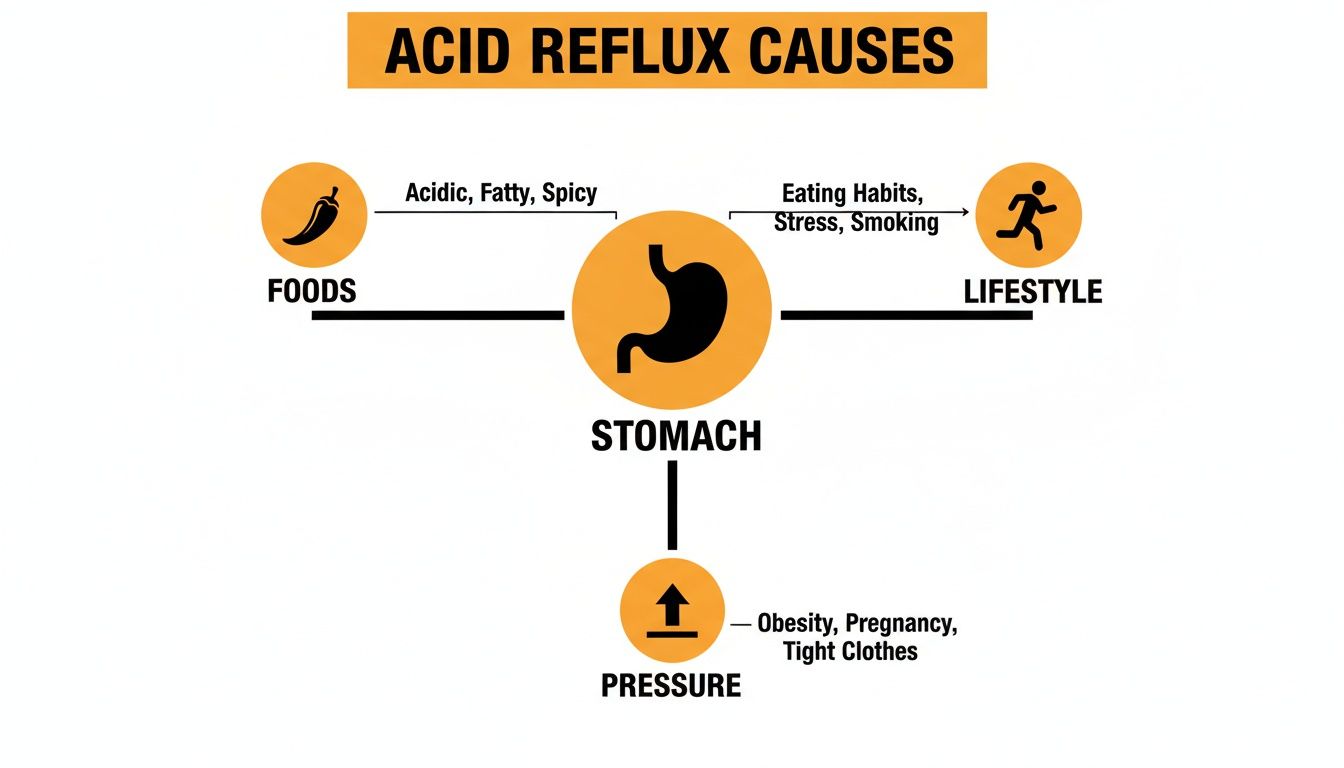
As you can see, things like certain foods and lifestyle habits often contribute to the pressure that overwhelms the stomach's natural "gatekeeper."
It's Not Just Acid—It's Also About the "Mother"
There’s another piece to this puzzle, and you can see it floating in bottles of raw, unfiltered apple cider vinegar. That cloudy, stringy stuff is called the "mother," and it’s a powerhouse of beneficial bacteria, proteins, and enzymes created during fermentation.
The mother is packed with probiotics—the good-guy bacteria that support a healthy gut. Your gut microbiome, which is the community of trillions of microorganisms living in your digestive tract, is a huge factor in your overall health. When this delicate ecosystem gets out of whack (a state called dysbiosis), it can lead to all sorts of digestive trouble.
Some research has started to draw a line between poor gut health and reflux. For example, some studies on the gut microbiome have linked dysbiosis to as many as 60% of reflux cases. The probiotics in the ACV mother, like Acetobacter, may help bring things back into balance.
One 2021 review even found that formulations containing ACV brought heartburn relief to 65% of users, compared to only 30% in the placebo group. The researchers believe this was partly because ACV helps stimulate digestive enzymes, reducing the time food lingers in the stomach. You can explore more about these findings and the science of ACV here.
By introducing these beneficial microbes, ACV might help create a healthier gut environment, leading to smoother digestion and, hopefully, fewer reflux episodes.
Kickstarting Your Body’s Own Digestive Power
Finally, the acetic acid in ACV might do more than just directly lower your stomach’s pH. It may also act as a trigger, prompting your body to produce more of its own digestive juices and enzymes.
Think of it as creating a positive feedback loop for better digestion:
- The Initial Boost: You introduce diluted ACV into your stomach.
- Enzyme Activation: This acidity jump-starts pepsin, the main enzyme for breaking down protein, which only works in a very acidic environment.
- Better Breakdown: With your digestive enzymes fully activated, food gets broken down much more quickly and effectively.
- Less Pressure: Because food is moving along efficiently, there's less time for it to sit and ferment, which means less gas and less pressure on your LES.
Seen this way, apple cider vinegar isn't a magic bullet for acid reflux. Instead, it's a tool that may help support and kickstart your body’s own natural digestive processes. By addressing potential underlying issues like low stomach acid and an imbalanced gut, it aims to create an internal environment where digestion just works better.
What Does The Science Say About Apple Cider Vinegar?
When you start digging into the research on using apple cider vinegar for acid reflux, you’ll find a real head-scratcher. There's a mountain of personal stories—people in forums, on blogs, and in your life who absolutely swear by it. Yet, when you look for formal scientific studies, the trail goes surprisingly cold.
This gap can be pretty confusing. The bottom line is, there are currently no large-scale, high-quality clinical trials that prove apple cider vinegar is a slam-dunk treatment for acid reflux or GERD. Most of what we have comes from very small studies, individual case reports, or theories, like the idea that it helps with low stomach acid.
Now, this doesn’t automatically mean it doesn’t work. It just means the scientific community hasn't put it through the wringer in a way that would lead to a doctor officially recommending it. The studies that do exist are often too small or don't have a proper control group, which makes it tough to say for sure what’s really going on.
Scientific Evidence vs Anecdotal Claims
So, where does that leave you? It helps to put what people are experiencing side-by-side with what the research has actually confirmed. This isn't about ignoring personal success stories but about getting a clear, balanced view of the situation.
| Claim | Scientific Support | Common Anecdotal Reports |
|---|---|---|
| Instantly Stops Heartburn | None. No studies have shown immediate relief. | Many people report that a small, diluted dose of ACV knocks out their heartburn within minutes. |
| Balances Stomach pH | Plausible, but unproven. The idea that ACV helps by restoring low stomach acid makes sense in theory, but it hasn’t been directly tested for reflux. | Users often say it feels like it "wakes up" their digestion, especially before a big, protein-heavy meal. |
| Improves Overall Digestion | Limited. There's some evidence that the probiotics in "the mother" can boost gut health, which is connected to better digestion overall. | It's common for people to report less bloating, gas, and a general feeling of "lightness" after meals when they use ACV regularly. |
As you can see, there’s a major disconnect. While science is still on the fence because of the lack of hard data, the personal experiences are often overwhelmingly positive. This begs the question: if it’s not just the ACV, what else could be contributing to the relief?
Could It Be The Placebo Effect?
One powerful force that researchers always have to account for is the placebo effect. This is a very real, well-documented phenomenon where simply believing a treatment will work can cause a genuine improvement in your symptoms, even if the "treatment" itself has no active ingredients.
The placebo effect isn’t about being tricked or just "thinking" you feel better. It’s a fascinating mind-body connection where your brain's expectation of a good outcome can trigger real physiological changes, like reducing your perception of pain.
If you’re convinced a remedy is going to help, your brain might release natural pain-relieving chemicals that genuinely make you feel better. With something like acid reflux, which is often made worse by stress and anxiety, this psychological element can be particularly powerful.
Of course, this doesn't mean everyone’s positive experience with apple cider vinegar for acid reflux is all in their head. It just reminds us that our beliefs and expectations are potent forces on any health journey. The relief people feel is completely real to them, no matter the exact mechanism behind it.
Ultimately, exploring natural remedies means you have to become a bit of a detective for your own body. The lack of definitive science forces you to weigh the plausible theories, the stories of others, and—most importantly—your own carefully monitored experience. It’s all about making an informed choice, starting slow and safe, and listening to what your body tells you.
How to Use Apple Cider Vinegar Safely

If you're thinking about trying apple cider vinegar for your acid reflux, it’s critical to do it the right way. While many people swear by it, ACV is still a potent acid and needs to be handled with care to avoid making things worse. The key is choosing the right kind of ACV, using a safe dose, and protecting your body in the process.
First off, not all apple cider vinegar is the same. You'll want to look for a specific type: raw, organic, and unfiltered ACV that contains the "mother." The "mother" is that cloudy, stringy stuff you see at the bottom of the bottle. It’s a colony of beneficial bacteria and enzymes, and it’s where many of the proposed health benefits come from. A clear, filtered vinegar won't have it.
Starting Your ACV Routine
The number one rule is simple but non-negotiable: never drink it straight. The high acidity can wreak havoc on your tooth enamel and burn the sensitive lining of your mouth and esophagus. You must dilute it, every single time.
A good, conservative way to start is with one to two teaspoons of ACV mixed into a large, eight-ounce glass of water. Think of it as a very light tonic, not a concentrated shot.
Many people find it works best to drink this mixture about 15-30 minutes before a meal, especially before eating protein or fats. The idea is that this gives the vinegar a head start in signaling your stomach to gear up for digestion.
Here's the golden rule for trying ACV: Always dilute, start low, and go slow. This is definitely not a situation where more is better. The most important thing is to listen to how your body responds.
Protecting Your Teeth and Throat
Even when diluted, the acetic acid in ACV can be tough on your teeth over the long haul. Repeated exposure can soften tooth enamel, leaving you more vulnerable to sensitivity and cavities. Thankfully, a few simple habits can make a huge difference.
Here’s a quick checklist for drinking it safely:
- Always Dilute: Stick to 1-2 teaspoons of ACV in a full 8-ounce glass of water.
- Use a Straw: Sipping the drink through a straw is a great trick to help the liquid bypass most of your teeth.
- Rinse After: As soon as you’re done, swish your mouth with plain water to wash away any residual acid.
- Wait to Brush: Hold off on brushing your teeth for at least 30 minutes after your ACV drink. Your enamel is temporarily softened by the acid, and brushing right away can scrub it off.
Making these steps a part of your routine can help you tap into the potential benefits of ACV without compromising your dental health. While ACV can be a helpful tool, it's just one part of a bigger picture. For a more complete approach to digestive wellness, you might want to look into the best supplements for gut health that can complement lifestyle adjustments.
Ultimately, using apple cider vinegar is all about being mindful. Pay close attention to how you feel. If your symptoms get worse, or if you notice any stomach pain or throat irritation, that’s your body’s signal to stop and talk to your doctor.
Potential Risks and Who Should Avoid ACV
While many people are curious about apple cider vinegar for reflux, it’s not a harmless home remedy. It's a potent acid, and using it incorrectly can backfire, causing more problems than it solves. Before you even think about trying it, you need to understand the potential downsides.
One of the biggest issues is its effect on tooth enamel. The acetic acid in ACV is strong enough to literally wear away the protective surface of your teeth. Over time, especially with regular use, this can lead to painful sensitivity, yellowing, and a much higher risk of cavities.
That same acidity can also be incredibly harsh on your throat and esophagus. If you don't dilute it enough, you could experience a chemical-like burn. And if your reflux is already caused by too much stomach acid, adding more acid to the equation can, unsurprisingly, make your symptoms a whole lot worse.
Medication Interactions You Should Know
It's not just about direct irritation. Apple cider vinegar can also interfere with certain medications, which can lead to some serious health complications. This is something you absolutely must be aware of before starting.
A major red flag is its interaction with drugs that affect your potassium levels. Both diuretics (often called "water pills") and insulin can lower the amount of potassium in your body. High doses of ACV can do the same thing. Combining them can cause your potassium to plummet, a dangerous condition called hypokalemia that can impact your heart and muscle function.
Important Takeaway: Don't mistake ACV for a simple kitchen ingredient in this context. It's a powerful substance that can interact with essential medications and aggravate certain health problems. Always talk to your doctor before trying it, especially if you have any pre-existing conditions or are taking prescriptions.
Who Should Be Cautious or Avoid ACV Entirely
For some people, experimenting with ACV is simply not a good idea. If you fit into any of the groups below, you should steer clear of using it for acid reflux.
- Individuals with Gastroparesis: This condition slows down how quickly your stomach empties its contents, and it's common in people with diabetes. Studies show ACV can delay stomach emptying even further, which could worsen bloating, nausea, and make blood sugar control even more difficult.
- People with Chronic Kidney Disease: Your kidneys are responsible for filtering and managing acids in your body. When their function is compromised, they can't handle an extra acid load from something like ACV, which could put a dangerous strain on your system.
- Those with Low Potassium Levels: If you already have low potassium (hypokalemia) or take medications known to lower it, adding ACV into the mix is a risky gamble that could make a bad situation worse.
- Individuals with Damaged Esophageal Tissue: If you've been diagnosed with conditions like esophagitis or a hiatal hernia, your esophagus is already inflamed and sensitive. Pouring acid on it, even diluted, is likely to cause significant pain and further irritation.
At the end of the day, your safety is what matters most. If you have any health concerns at all, the right first step isn't reaching for a bottle of ACV—it's having a conversation with your healthcare provider.
A Few Common Questions About Using ACV for Acid Reflux
Even with all the science and theory laid out, it's totally normal to have some lingering questions. When you're thinking about trying a home remedy like apple cider vinegar, a little healthy skepticism is a good thing. Let's tackle some of the most common questions I hear.
Can I Take ACV With My Prescription Medications?
This is a big one, and the short answer is: be very careful. ACV isn’t just a food; it can interact with certain medications. The main concerns are with diuretics (often called "water pills") and insulin, where ACV could potentially throw your potassium levels out of whack.
Honestly, this is a non-negotiable. You absolutely have to talk to your doctor or pharmacist before adding ACV to your routine. They know your health history and can spot potential conflicts you wouldn't even think of. Don't ever just wing it.
How Long Does It Take to Work?
There's no magic number here. Everyone’s body is different. I’ve heard from some people who feel relief from their heartburn within 20-30 minutes after taking a small, diluted dose before a meal. For others, it’s a much slower burn—they might notice subtle improvements over several days or even weeks of consistent use.
If you give it a try, patience is your best friend. Pay attention to how you feel, but don't expect it to be a silver bullet. And if your symptoms get worse or you see no change at all? That's your body telling you to stop.
Are ACV Pills or Gummies Any Better?
It makes sense why these are so popular—who really likes the taste of straight vinegar? While pills and gummies are definitely easier to get down, there are a few trade-offs to keep in mind.
- Dose Mystery: It's tough to know exactly how much acetic acid you’re getting. With liquid, you control the measurement yourself. With a pill, you're trusting the label.
- Hidden Triggers: Gummies, especially, are often packed with sugar to make them taste good. For many people, sugar is a major reflux trigger, so you might be defeating the purpose.
- Different Delivery: A capsule has to dissolve first, which means the timing and interaction in your stomach might be different than sipping the diluted liquid right before you eat.
They can be a decent alternative, but you have to become a label detective. Look for high-quality brands with as few added ingredients as possible.
Key Insight: Liquid, pill, or gummy—the core rules don't change. Start with a tiny dose and listen to what your body tells you.
What If Apple Cider Vinegar Makes Things Worse (Or Does Nothing)?
Look, ACV is not a universal cure. It's completely fine—and very common—for it to not work for you. If it doesn't help or you feel worse, just stop. Simple as that.
The good news is there are plenty of other natural things to try. For example, many people get fantastic relief from soothing herbal teas. You can check out some of the best herbal teas for health in our detailed guide, as many are known to ease digestive upset.
Other go-to remedies include ginger, chamomile, and deglycyrrhizinated licorice (DGL). But remember, these work best when you also nail the fundamentals: avoid your trigger foods, eat smaller portions, and stay upright after meals. A holistic approach almost always wins.
At The Happy Health Blog, we're committed to providing you with well-researched, practical guidance to support your wellness journey. Explore our site for more expert-backed articles on nutrition, fitness, and natural health. Visit us at https://thehappyhealthblog.com to learn more.
