


A whole food, plant-based (WFPB) way of eating is all about embracing foods as close to their natural state as possible. The idea is simple: eat whole, unrefined, or minimally processed plants. It's a philosophy focused on abundance and health, not on restriction and rules. You'll build your meals around fruits, vegetables, whole grains, and legumes while steering clear of highly processed stuff.
Unpacking the Whole Food, Plant-Based Diet
Think of your body as a high-performance engine. A WFPB diet is the premium fuel it needs to run at its best. This isn't some rigid, complicated set of rules. Instead, it's a flexible framework that shifts the focus to all the amazing foods you can eat, which helps create a positive and sustainable relationship with food. It's less about what you have to cut out and more about what you can crowd onto your plate.
The emphasis is always on foods that look like they did when they came from the ground. That means choosing a baked potato over a bag of potato chips, a bowl of steel-cut oats over a sugary breakfast cereal, or an actual orange over a carton of orange juice. This simple shift maximizes your intake of vitamins, minerals, and especially fiber—all the good stuff that gets stripped away during processing.
WFPB vs. Veganism: A Key Distinction
People often use "WFPB" and "vegan" interchangeably, but they're actually quite different. While both diets skip animal products, their core motivations and food choices don't always align. Veganism is primarily an ethical stance against animal cruelty that often extends beyond food to things like clothing and cosmetics. A WFPB diet, on the other hand, is a lifestyle pattern laser-focused on health.
The biggest difference comes down to that "whole food" part. A vegan diet can technically include a lot of highly processed foods—think vegan junk food, refined white flour, and lots of oils. The WFPB approach specifically minimizes or avoids these items to optimize health outcomes.
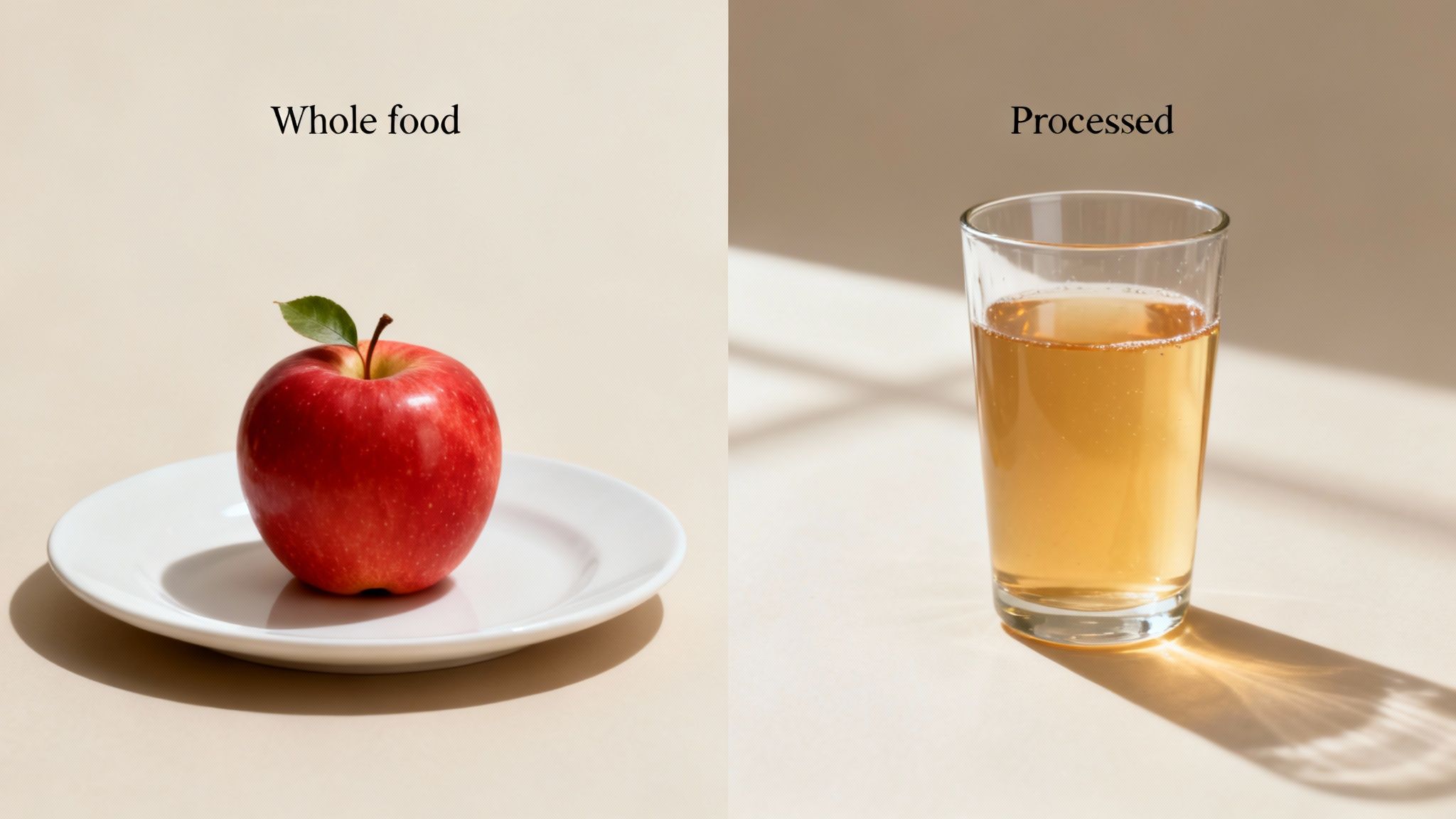
The easiest way to picture this is to think about an apple versus apple juice. Both are from a plant and technically vegan. But the apple is a whole food, packed with fiber and its full spectrum of nutrients. The juice is a processed version, stripped of its fiber and often loaded with added sugar.
A WFPB diet guides you toward the apple every time. This distinction is what makes this way of eating so powerfully linked to preventing and even reversing chronic diseases.
The Philosophy of Abundance
At its heart, shifting to a WFPB lifestyle is about celebrating an abundance of delicious, satisfying, and nourishing foods. It’s not about feeling deprived. You’ll learn to build incredible meals from these core food groups:
- Fruits: Berries, bananas, apples, citrus, and melons.
- Vegetables: Leafy greens like spinach and kale, broccoli, carrots, and sweet potatoes.
- Whole Grains: Oats, quinoa, brown rice, farro, and barley.
- Legumes: Lentils, chickpeas, black beans, and split peas.
When you start piling your plate high with these foundational foods, the less healthy options naturally get pushed aside. This change in mindset—from restriction to inclusion—is what makes the whole food, plant-based diet such an enjoyable and powerful path to long-term wellness.
What Science Says About a WFPB Diet's Health Benefits
So, what's really happening in your body when you switch to whole, plant-based foods? This isn't just about a vague sense of "feeling better." The changes are real, measurable, and backed by a mountain of scientific evidence showing how this way of eating can protect you from chronic disease.
By loading your plate with nutrient-packed plants, you’re naturally flooding your system with fiber, antioxidants, and anti-inflammatory compounds. At the same time, you’re cutting out things known to cause harm, like dietary cholesterol and high amounts of saturated fat. This simple switch creates a cascade of positive effects, from your heart to your cells.
A Natural Approach to Weight Management
One of the first things people notice when they go WFPB is how their body finds its natural, healthy weight. It almost feels effortless. Since whole plant foods are full of fiber and water but generally low in calorie density, you can eat generous, filling meals without overdoing it on calories.
This means you get to eat until you're satisfied, and you can stop obsessing over counting every calorie. The focus shifts from restriction to nourishment. A summary of evidence from SUNY Downstate Health Sciences University highlighted a trial where patients on a WFPB diet lost an average of 6.7% of their body weight—that's almost nine pounds more than the control group. You can learn more about these significant health outcomes and the global impact of diet.
Think of it less like a "diet" and more like a recalibration. You're simply giving your body the fuel it was designed for, and a healthy weight becomes a natural side effect.
It completely flips the script on weight loss. Instead of deprivation, you're embracing an abundance of delicious, whole foods, creating a positive cycle for both your body and mind.
A Game-Changer for Heart Health
Heart disease is still a leading killer, but a WFPB diet is one of the most powerful tools we have to prevent and even reverse it. The benefits for your cardiovascular system are dramatic.
For starters, you completely eliminate dietary cholesterol when you stop eating animal products. That alone is huge for your arteries. On top of that, the massive amount of fiber in plants actively helps pull excess cholesterol out of your system.
Here's a quick look at what happens:
- Blood Pressure Drops: Plant-based diets are naturally low in sodium and high in potassium, a winning combination that helps relax blood vessels and bring down your numbers.
- "Bad" Cholesterol Plummets: Study after study shows that eating WFPB significantly lowers LDL cholesterol, the main culprit behind the plaque that clogs arteries. It's been observed that populations with a total cholesterol below 150 simply don't get heart disease.
- Arteries Become More Flexible: Your blood vessels are lined with a delicate layer called the endothelium. A diet rich in plants keeps this lining smooth and pliable, allowing blood to flow freely the way it's supposed to.
Taming Blood Sugar and Cooling Inflammation
This way of eating is also incredibly effective for managing and preventing type 2 diabetes. The high fiber content in whole foods slows down how quickly sugar enters your bloodstream, which prevents the sharp spikes and crashes that lead to insulin resistance. The result is steadier energy and much better long-term blood sugar control.
Beyond blood sugar, we now know that chronic inflammation is at the root of many major illnesses, from arthritis to heart disease. Highly processed foods and animal products tend to fuel that fire. Whole plant foods, on the other hand, are loaded with antioxidants and phytonutrients that actively fight inflammation.
By cooling this systemic inflammation, you're protecting your cells, joints, and organs from damage. This translates to a greater sense of well-being and a lower risk for a whole host of chronic conditions.
Building Your Whole Food Plant Based Plate
Switching to a whole food, plant-based way of eating isn't about restriction. Far from it. It’s about rediscovering food and filling your plate with an incredible abundance of vibrant, nourishing ingredients. Forget about what you're "giving up" and get excited about everything you're about to add.
Think of your plate as a canvas. A WFPB approach invites you to paint with a rich palette of colors, textures, and flavors that come straight from the earth. The whole idea is to eat foods that are as close to their natural state as possible, making sure you get every last bit of goodness from each bite.
This simple concept has a powerful impact on your health, as this chart illustrates.
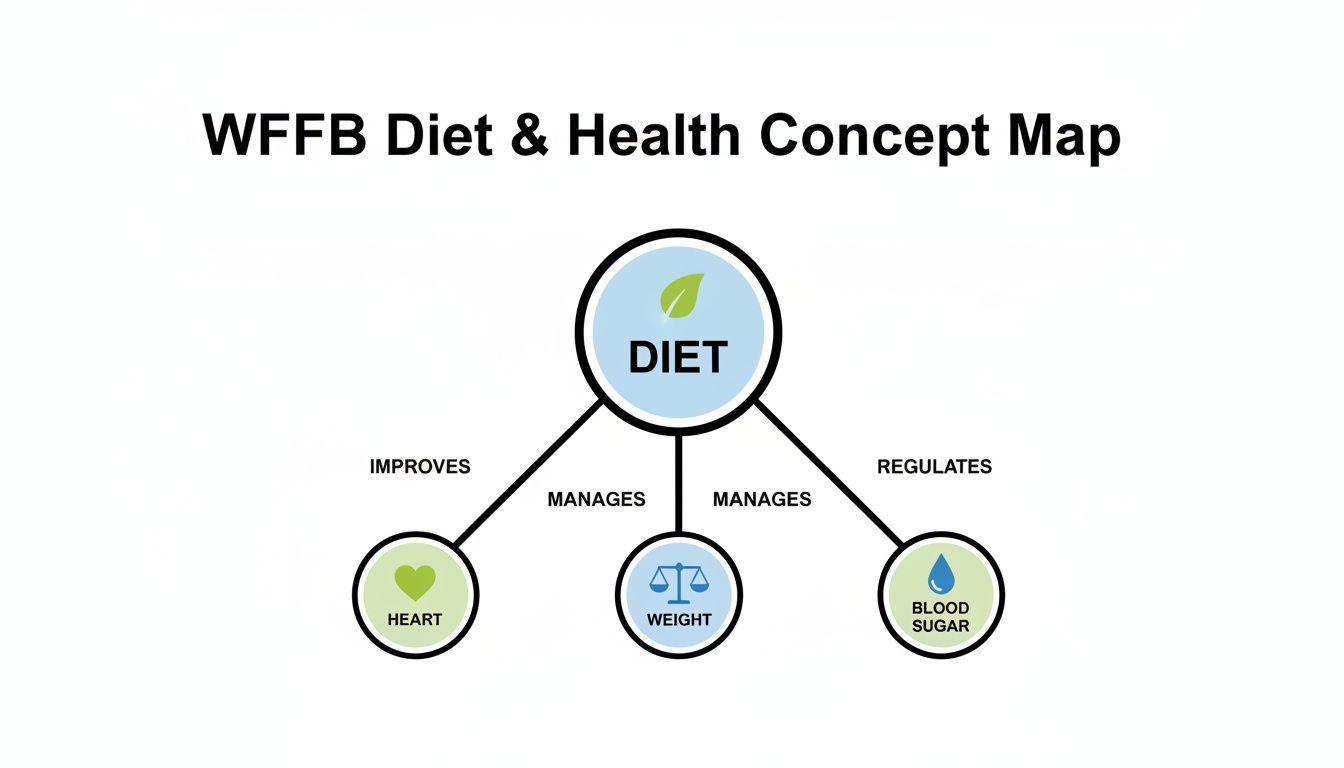
As you can see, this way of eating is directly tied to a healthier heart, easier weight management, and better blood sugar control.
Foods to Welcome on Your Plate
Building a WFPB plate is actually pretty straightforward once you know the core food groups. These are the staples that will become the foundation of your meals, fueling you with energy, protein, fiber, and all the micronutrients your body craves.
- Fruits: Eat the rainbow. Berries, bananas, apples, oranges, and mangoes are fantastic for breakfast, snacks, or adding a touch of natural sweetness to your dishes.
- Vegetables: Aim to fill at least half your plate with these. Leafy greens like spinach and kale, cruciferous powerhouses like broccoli and cauliflower, and colorful bell peppers should be on the menu every day.
- Tubers and Starchy Vegetables: These are your friends, not your enemies. Sweet potatoes, corn, winter squash, and peas provide the complex carbohydrates that deliver steady, sustained energy.
- Whole Grains: Look for grains in their complete, intact form. Think oats, quinoa, brown rice, millet, and barley—all excellent sources of fiber and key nutrients.
- Legumes: This group is a true powerhouse. It includes all beans, lentils, and chickpeas. They are packed with protein and fiber, making your meals satisfying and incredibly filling.
The secret is to load up on these foundational foods first. When you do that, you naturally push the less healthy options off your plate. It’s all about addition, not subtraction, which makes healthy eating feel generous instead of limiting.
When you eat this way, you're giving your body the premium fuel it needs to thrive, keeping you feeling full and energized all day long.
Foods to Minimize or Avoid
Just as important as what you add is what you choose to leave behind. The foods on this list are typically highly processed or come from animal sources, which can contribute to inflammation and chronic health issues. The goal is to dramatically reduce them so the whole plant foods can truly work their magic.
The main categories to leave off your shopping list are:
- Animal Products: This means all meat (red meat, poultry, pork), fish, eggs, and dairy products like milk, cheese, and yogurt. These foods are primary sources of dietary cholesterol and saturated fat.
- Processed Foods: A good rule of thumb: if it comes in a box with a paragraph of ingredients you can’t pronounce, steer clear. This includes things like white bread, sugary cereals, and most packaged snacks.
- Extracted Oils and Refined Sugars: All oils, even so-called "healthy" ones like olive oil, are highly processed, calorically dense, and stripped of nutrients. Likewise, refined sugars like white sugar or high-fructose corn syrup offer nothing but empty calories.
Visualizing Your New Plate
To really bring this to life, let’s compare a typical meal with a well-balanced WFPB plate. The difference is night and day, highlighting a major shift toward fiber-rich, nutrient-dense foods that build health instead of undermining it.
Standard Diet vs. Whole Food Plant Based Plate
The table below breaks down the fundamental differences in how a meal is constructed.
| Nutrient/Food Group | Standard American Diet | Whole Food Plant-Based Diet |
|---|---|---|
| Protein Source | Often a large portion of meat, poultry, or fish | Legumes (beans, lentils), tofu, quinoa, nuts, seeds |
| Carbohydrates | Typically refined grains like white rice or pasta | Whole grains (brown rice, oats) and starchy vegetables |
| Fats | Saturated fats from animal products, butter, and oils | Whole food fats from avocados, nuts, and seeds |
| Plate Composition | ~50% Meat, 25% Refined Starch, 25% Vegetables | ~50% Vegetables, 25% Legumes/Protein, 25% Whole Grains |
| Fiber and Nutrients | Often low in fiber and antioxidants | Extremely high in fiber, vitamins, and minerals |
Seeing the plates side-by-side makes it clear: a WFPB meal is built on a foundation of nutrient density. This simple visual can empower you to confidently stock your kitchen and start building delicious meals that truly promote your health.
How to Make a Smooth Transition to WFPB
Taking on a big lifestyle change can feel like a huge mountain to climb, but switching to a whole food, plant-based way of eating doesn't have to be an all-or-nothing shock to the system. The real key is finding a pace that feels good—and even exciting—for you.
Think of it less like a rigid diet and more like a massive upgrade to your daily habits. It’s all about progress, not perfection. The idea is to build a solid foundation of strategies that make this journey not just doable, but genuinely enjoyable for the long haul. Remember, every single plant-based meal is a win.
Choose Your Transition Strategy
Everyone’s life and personality are different, so it’s crucial to pick an approach that actually fits you. There's no single "right" way to get started.
Here are two of the most popular (and effective) methods I've seen work for people:
- The Gradual Approach: This is perfect if you’re the type who likes to ease into new things. You could start with something simple like "Meatless Mondays" and then slowly add more plant-based days to your week. Another great tactic is to "veganize" one meal at a time. Nail a WFPB breakfast for a week, then tackle lunch, and finally, dinner.
- The Full Immersion: If you’re motivated by a clean break and quick results, you might prefer to just dive right in. This means committing to a fully WFPB diet from day one. This can definitely help you kick old habits to the curb faster, but it does require a bit more planning and prep work upfront.
No matter which path you take, having a plan is your best friend. For a little more structure, you might find our clean eating meal plan is a really helpful resource to get you going.
Your Pantry Makeover Toolkit
A successful switch really starts in your kitchen. Creating an environment that supports your new goals is probably one of the most powerful things you can do. Start by clearing out the highly processed foods and animal products to make space for all the good stuff.
Next up, the fun part: restocking with WFPB staples. These are the versatile, workhorse ingredients that will form the backbone of all your new favorite meals.
Essential Shopping List Starters:
- Whole Grains: Think brown rice, quinoa, rolled oats, and whole-wheat pasta.
- Legumes: Canned or dried lentils, chickpeas, and black beans are your new best friends—they’re incredibly versatile.
- Produce: Load up on leafy greens, onions, garlic, potatoes, and a rainbow of seasonal fruits and veggies.
- Flavor Boosters: Low-sodium vegetable broth, tamari, nutritional yeast (for that cheesy flavor!), and a great collection of herbs and spices.
And you’re definitely not alone in making this shift. A recent study by YouGov and Veganuary found that 25.8 million people worldwide gave veganism a try in January. The global vegan food market hit USD 33.14 billion and is expected to skyrocket to USD 103 billion by 2032. It's a massive cultural shift. Discover more insights about these worldwide veganism statistics.
Master Simple Food Swaps
You absolutely don't have to reinvent the wheel or give up the meals you love. Often, a few simple swaps are all it takes to make a dish WFPB-friendly.
The secret to a sustainable transition is to focus on familiar comfort foods and adapt them. This makes the change feel less like a departure and more like a simple, healthy evolution of what you already love to eat.
For instance, instead of ground beef in tacos or spaghetti, try using cooked lentils or crumbled tempeh. If a baking recipe calls for eggs, a "flax egg"—just one tablespoon of ground flaxseed mixed with three tablespoons of water—works like a charm. These small changes make a huge difference, letting you enjoy those comforting flavors while sticking to your new goals.
Key Nutrients on a Plant-Based Diet
One of the first questions I always get is, "But where do you get your…?" It's a valid concern. Can you really get everything your body needs from plants alone? The answer is a resounding yes, but it does mean being mindful of a few key nutrients.
Think of this not as a list of worries, but as your nutritional roadmap. Knowing what to look for empowers you to build a diet that doesn't just sustain you, but helps you thrive.
The Non-Negotiable: Vitamin B12
Let's get the most important one out of the way first: Vitamin B12. This vitamin is absolutely essential for healthy nerve function and making red blood cells. B12 is made by microbes in the soil, not by plants or animals. Since we live in a sanitized world with washed produce, you simply can't rely on getting it from a plant-based diet.
For this reason, taking a reliable Vitamin B12 supplement is non-negotiable for long-term health. This is a simple, inexpensive, and critical step for anyone eating this way.
A cyanocobalamin or methylcobalamin supplement is all you need. It’s a tiny action that provides total peace of mind and safeguards your well-being.
Getting Enough Iron and Calcium
Iron is the workhorse that carries oxygen in your blood, and calcium is the bedrock of strong bones. The good news is the plant kingdom is absolutely loaded with both.
Plant-based iron (called non-heme iron) is everywhere, though it's absorbed a bit differently than the iron from meat. The trick is to pair it with a source of Vitamin C, which dramatically boosts how much your body can use.
- Excellent Iron Sources: Lentils, chickpeas, beans, tofu, and pumpkin seeds are powerhouses. Just add some bell peppers, broccoli, or a squeeze of lemon to your meal to supercharge absorption.
- Top Calcium Sources: Fortified plant milks and tofu made with calcium sulfate are easy wins. Leafy greens like kale and bok choy are also fantastic, as are almonds and sesame seeds.
Omega-3s, Vitamin D, and Other Key Players
Once you've got the big ones covered, a few other nutrients will complete your nutritional toolkit.
Omega-3 Fatty Acids are crucial for brain health and keeping inflammation in check. While many people think of fish, you can easily get the plant-based precursor, ALA, from everyday foods.
- Sources: A tablespoon or two of ground flaxseeds, chia seeds, or a handful of walnuts each day is all it takes.
Vitamin D, often called the "sunshine vitamin," is vital for absorbing calcium and supporting your immune system. Honestly, it isn't abundant in any diet, plant-based or not.
- Sources: Your body makes Vitamin D from sensible sun exposure. But depending on where you live and the time of year, a vegan D3 supplement is usually a smart move.
Finally, let's talk protein. As long as you're eating a good mix of whole foods, especially legumes, getting enough protein is rarely an issue. For some great ideas, check out our guide to the beans highest in protein. By mindfully including these foods, you're building a truly complete and nourishing way of eating.
How Your Plate Can Help the Planet
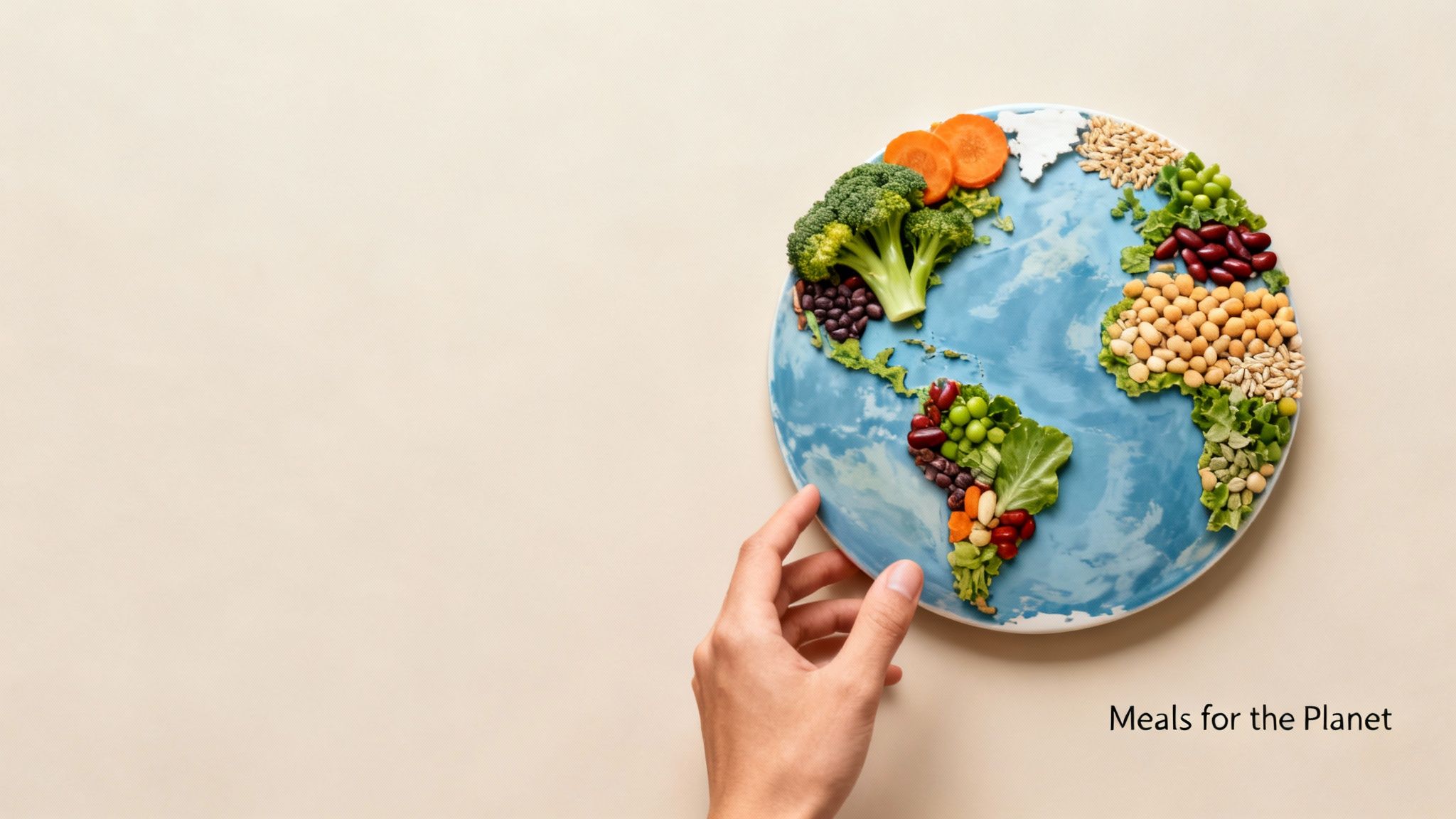
When you adopt a whole food, plant-based diet, the benefits extend far beyond your own health. It creates a powerful ripple effect that touches the well-being of the entire planet. Every meal becomes a chance to make a positive environmental choice, turning your plate into a genuine tool for sustainability.
This isn't about feeling guilty over past choices. It's about feeling empowered, knowing that the food you eat can make a real, measurable difference.
The link between our food and the environment is surprisingly direct. Animal agriculture is a massive contributor to greenhouse gas emissions, deforestation, and water consumption across the globe. By simply shifting our plates away from animal products and toward whole plant foods, we significantly lighten our ecological footprint.
Your Food and Your Footprint
Let's break it down. Producing a single pound of beef requires an enormous amount of land and thousands of gallons of water. In stark contrast, growing a pound of lentils or beans uses just a tiny fraction of those resources.
This one simple swap, when repeated over time, adds up to conserve precious natural resources and cut down on pollution.
Every time you choose a bean burrito over a beef one, you're casting a vote for a healthier planet. This lifestyle is a profound act of care—for your body and for the environment we all share.
Making more sustainable food choices is quickly becoming a global movement. A recent study found that if we replaced just half of the world's meat consumption with plant-based alternatives by 2050, we could slash food system emissions by a staggering 31%.
This shift is already showing up in our shopping habits. Global plant-based food sales have soared to $29 billion, marking a 34% jump in just a few years. You can dive deeper into the science behind plant-based nutrition's top benefits and see the data for yourself.
Choosing a whole food, plant-based diet is one of the most effective actions you can take to support a more sustainable future. It proves that our small, daily decisions can collectively create massive, positive change.
Your Top Plant-Based Questions, Answered
Starting any new way of eating is bound to bring up a few questions. That's completely normal! This section is all about tackling those common concerns and busting some of the biggest myths you might have heard about a whole food, plant-based diet.
Think of this as your go-to spot for those nagging "but what about…" thoughts. We'll give you clear, science-backed answers so you can move forward with total confidence.
"But Where Will I Get My Protein?"
This is, without a doubt, the number one question people have. The good news? It's almost a non-issue. The idea that plants lack protein is one of the most persistent myths out there, but the plant kingdom is absolutely packed with everything you need.
Your body is a master at its job. It takes the amino acids from all the different foods you eat throughout the day and builds its own complete proteins. So, as long as you're eating a good variety of whole plant foods and getting enough calories to feel satisfied, you’ll be getting plenty of protein. No complex math required.
Some real protein powerhouses in the plant world include:
- Legumes: Think lentils, chickpeas, black beans, and split peas. They're cheap, versatile, and loaded with protein.
- Whole Grains: Quinoa is famously a complete protein, but oats, brown rice, and farro also pack a decent punch.
- Vegetables: You might be surprised to learn how much protein is in vegetables like broccoli, spinach, and even potatoes.
Our culture has an obsession with protein, leading many of us to believe we need massive amounts. In reality, a well-planned WFPB diet easily provides all the building blocks for a strong, healthy body.
Instead of tracking every gram, just focus on eating a colorful variety of foods. Nature has already done the hard work, packaging protein perfectly with fiber, vitamins, and minerals.
"Isn't a WFPB Diet Really Expensive?"
It’s easy to see why people think this, especially when you see the prices on fancy vegan mock meats and cheeses. But in reality, a whole food plant based diet can be one of the most affordable ways to eat.
The real staples of this lifestyle are some of the cheapest items in the grocery store.
We’re talking about the basics:
- Beans (dried beans are dirt cheap!)
- Lentils
- Brown Rice
- Oats
- Potatoes
These humble ingredients are the foundation for thousands of incredible meals. When you build your diet around these, buy produce that’s in season, and make good use of your freezer for fruits and veggies, you'll almost certainly see your grocery bill shrink compared to a diet heavy in meat and dairy.
"How Can I Possibly Handle Social Situations and Eating Out?"
This can feel like the trickiest part when you're just starting out. But navigating restaurant menus and family dinners gets so much easier with a little practice and a positive attitude.
Thankfully, the world is catching up, and most restaurants have at least a few plant-based options. The easiest trick is to check the menu online before you go. It takes the pressure off and lets you pick a place where you know you'll have something great to eat. And don't be shy about calling ahead—many chefs are more than happy to whip up something special if you ask.
When you're heading to a friend's or family member's house, offer to bring a big, delicious WFPB dish to share. This is a game-changer. It guarantees you'll have something amazing to eat, and it’s a fantastic way to show everyone how incredible plant-based food can be. Remember, the point of getting together is the connection, and food is just part of that. If you're looking for more ways to keep your diet balanced, our guide on the best supplements for gut health has some great tips.
At The Happy Health Blog, we're here to give you the knowledge and tools to build a healthier, more vibrant life. Dig into our library of articles for more expert guidance on nutrition, fitness, and overall well-being. Visit us at https://thehappyhealthblog.com to keep learning.
