


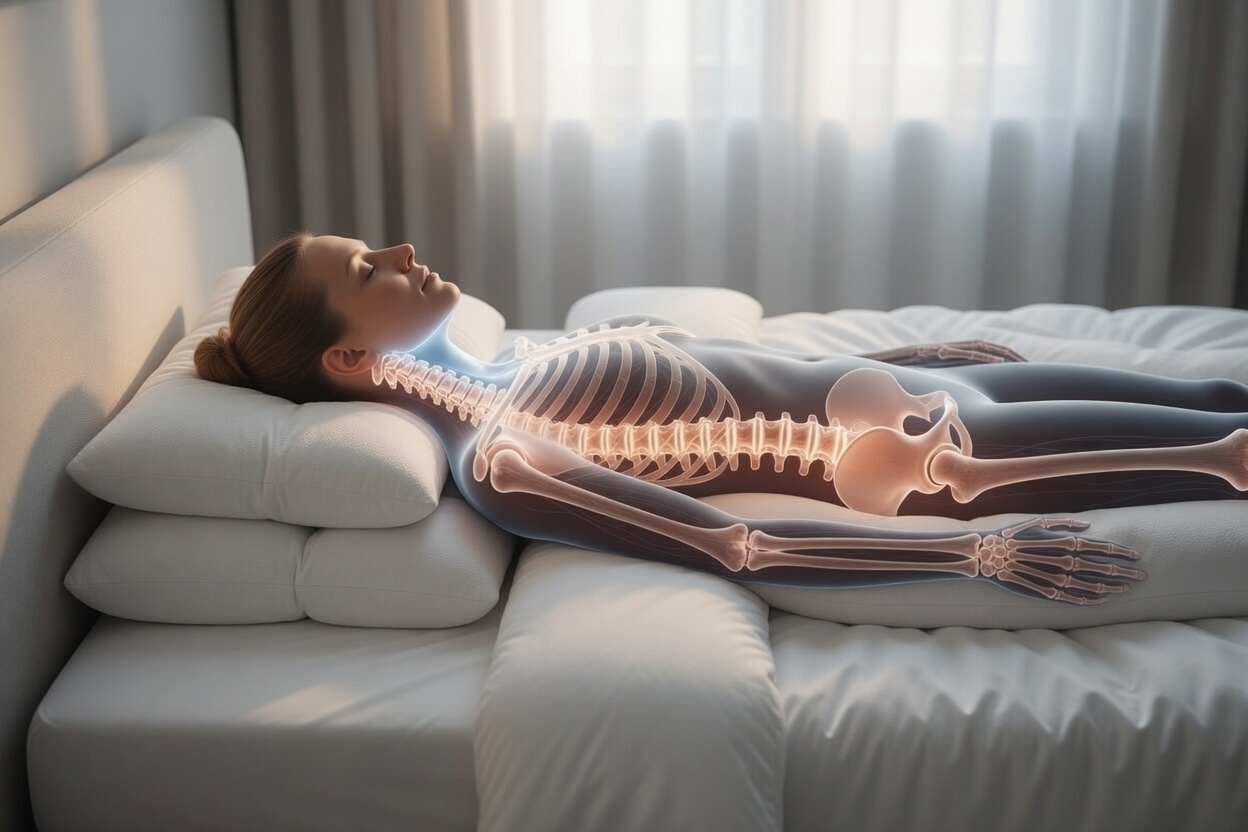
Waking up tired and sore is a daily struggle for millions of people worldwide. The way your physical body rests at night plays a massive role in your overall health. Fixing your sleep posture is the most effective method to wake up feeling completely refreshed.
When your spine is forced out of alignment your surrounding muscles must work overtime. This constant physical tension leads to severe aches and poor breathing patterns over time. Improving your daily nighttime body alignment is a scientifically proven strategy for long term wellness.
Many individuals ignore the physical signs of poor alignment until the pain becomes unbearable. Taking proactive steps to correct your bed habits can save you from years of discomfort. A properly aligned spine allows your nervous system to heal and recover fully.
Why finding the best sleep posture matters for your health
The natural alignment of your spine dictates how well your internal systems function daily. A poor resting angle puts extreme pressure on your delicate lower lumbar region. This is exactly why finding the best sleep posture is crucial for your physical recovery.
How bad physical alignment causes morning stiffness
Sleeping twisted or curled up tightly forces your major joints into very unnatural angles. Over time this creates chronic inflammation that lasts throughout your entire working day. Your body will eventually suffer from permanent joint stiffness if you ignore your sleep posture completely.
The link between your resting angle and blocked airways
Resting completely flat on your back often causes your relaxed tongue to fall backward. This naturally blocks your throat and heavily restricts the amount of oxygen reaching your brain. Every small adjustment to your sleep posture makes a massive difference in your breathing comfort.
Why your spine needs neutral support during the night
The human spine has a natural curve that must be supported during resting hours. When a bad mattress or wrong angle distorts this curve the surrounding ligaments become inflamed. Neutral support ensures your muscles completely relax and repair themselves from daily stress.
Discovering the best way to sleep with lower back pain safely
Millions of people struggle to find basic relief when their lower spine hurts constantly. Learning the best way to sleep with lower back pain can change your daily life completely. The primary goal is to drastically reduce the mechanical stress on your lower lumbar region.
Exactly how to sleep with lower back pain without stress
If you constantly wonder how to sleep with lower back pain the answer is simple hip support. Lying directly on your side with slightly bent knees relieves the spinal pressure instantly. This biological change keeps your pelvis neutral and stops painful overnight muscle spasms.
Why you need a sleep posture pillow between your knees
A standard head pillow is rarely enough to keep your entire skeletal system properly aligned. Using a specialized sleep posture pillow between your knees makes a massive difference in comfort. It physically stops your heavy top leg from pulling your lower spine out of alignment.
How to support your natural lumbar curve in bed
You can place a small rolled up towel under your lower back for extra support. This fills the natural anatomical gap and prevents your lower spine from collapsing downward. Proper physical support prevents dangerous twisting motions that aggravate injured spinal discs.
Avoiding the tight fetal position if you have disc issues
Curling your knees too closely to your chest rounds your lower back dangerously. This tight fetal position puts immense pressure on your delicate spinal discs. Stretching your legs out slightly keeps your posture neutral and protects your nerve endings.
Simple habits to maintain a good sleep posture all night
Staying in one safe anatomical position all night requires practice and a lot of patience. Developing a good sleep posture means creating a physical environment that supports your body weight. Your mattress and bedding materials must work together to hold your joints securely in place.
How a sleep posture corrector trains your subconscious mind
Sometimes your physical body needs extra mechanical help to unlearn decades of bad resting habits. Wearing a soft sleep posture corrector can gently remind your tired muscles to stay aligned. This wearable tool provides light physical resistance when you attempt to twist unconsciously.
The role of a supportive mattress for total joint relief
A mattress that is too soft will cause your heavy hips to sink deeply into the bed. This ruins your delicate spinal alignment no matter how hard you try to stay straight. A medium firm surface is generally ideal for supporting your major joints perfectly overnight.
Transitioning from stomach sleeping to a safer angle
Resting flat on your stomach forces your neck to twist and heavily arches your lower back. You must slowly train your body to sleep on your side by using body pillows. Hugging a large cushion prevents you from rolling onto your stomach while you rest.
Creating a relaxing bedtime routine to loosen tight muscles
Stretching your major muscle groups before bed reduces the tension built up during the day. A warm bath helps your muscle fibers relax and prepares your joints for stillness. Relaxed muscles make it much easier to maintain a healthy angle all night long.
Finding the safest snoring sleep position for quiet breathing
Loud heavy breathing at night disrupts your deep rest and bothers anyone sleeping nearby. Adopting the right snoring sleep position physically opens your throat and stops the harsh noise. It allows fresh oxygen to flow smoothly without violently vibrating your soft airway tissues.
Why lying flat on your back forces your airway closed
Gravity actively pulls your relaxed throat muscles downward when you lie completely flat. This severely narrows the breathing tube and forces air through a very tiny space. The resulting tissue vibration is exactly what causes those loud and annoying nighttime sounds.
How the side sleeping angle acts as a natural remedy
Rolling completely onto your side is the most effective way to clear your breathing passages. This specific anatomical angle prevents gravity from collapsing your soft internal throat tissues. It keeps your tongue resting safely forward in your mouth away from the airway.
Elevating your head properly without straining your neck
A scientifically designed pillow elevates your heavy head and keeps your neck aligned properly. You should avoid stacking multiple pillows because this pushes your chin directly into your chest. A single firm cushion provides the perfect elevation to keep your airway wide open.
The difference between simple heavy breathing and sleep apnea
Simple snoring happens when your throat tissues vibrate loudly due to a narrow airway. Sleep apnea is a serious medical condition where you actually stop breathing completely for short periods. Changing your position helps simple issues but you should see a doctor for severe breathing pauses.
Targeting specific body pains with overnight alignment
Different joint pains require slightly different approaches to overnight physical alignment. Adjusting your angle carefully takes the pressure off the specific nerves that are hurting you. Small changes to your leg spacing or arm placement make a huge difference in overall comfort.
Preventing sharp shoulder pain when resting on your side.
Laying directly on your shoulder joint crushes the soft tissues and restricts blood flow. You should pull your bottom shoulder slightly forward so you rest on your shoulder blade instead. This simple adjustment prevents the sharp pain and numbness that wakes you up.
Keeping your neck straight to avoid morning tension headaches
Your neck contains vital nerves that travel up into your head and control tension. If your head is tilted too high or too low these nerves become highly irritated. A contoured pillow keeps your cervical spine straight and eliminates those morning tension headaches.
Reducing heavy hip pressure with proper leg spacing
Your hips bear the brunt of your body weight when you sleep on your side. Placing a cushion between your legs keeps your hips parallel and reduces this heavy pressure. This ensures your hip joints do not grind together while you rest peacefully.
Conclusion
Protecting your delicate spine and vital airways at night is absolutely necessary for total wellness. Taking the time to improve your daily alignment is the best health investment you can make. Committing to the best sleep posture ensures you wake up completely pain free and energized.
Frequently asked questions about protecting your spine in bed
Can a bad resting angle permanently change your spine shape?
Poor resting angles over many decades can definitely contribute to chronic spinal curvature issues. Your muscles adapt to the bad positions and pull your bones out of their natural alignment. Correcting your posture early prevents these long term structural changes from becoming permanent.
What to do if you wake up on your stomach repeatedly?
Rolling onto your stomach is a natural reflex that you should not stress heavily about. Simply correct your physical angle whenever you happen to wake up and realize you moved. Over time your subconscious brain will naturally prefer the newly trained safe alignment.
How long it takes to feel real relief from a new position?
Most normal people need about three to four weeks to adjust their habits completely. Your deep muscles need sufficient time to get used to the new angles and structural support. Daily consistency is the most important factor in making the anatomical change permanent.
Is sleeping without a head cushion better for your neck?
Sleeping entirely flat without a cushion is only recommended for strict back sleepers on firm mattresses. If you sleep on your side you absolutely need a pillow to fill the empty shoulder gap. Side sleepers will suffer severe neck pain if their head drops down to the mattress.
Does your body weight impact your ideal resting angle at night?
Heavier individuals often need a firmer mattress to prevent their hips from sinking too deeply. Excess weight around the stomach also pulls the spine down when sleeping on the back. Side sleeping is generally the safest and most supportive angle regardless of your body weight.
