



When it comes to supporting your gut, the big three are probiotics, prebiotics, and digestive enzymes. These are the foundational players that work together to balance your internal ecosystem, smooth out digestion, and help you absorb the nutrients you need to feel your best.
Understanding Your Gut Health Ecosystem
It’s easy to think of your digestive tract as just a long tube, but it’s actually more like a bustling internal garden, teeming with trillions of microorganisms. This complex community is your gut microbiome, and it has a massive say in your overall health—influencing everything from your immune response and mood to how you metabolize food.
When this ecosystem is in harmony, you thrive. But modern life—with its stress, processed foods, and medications—can easily throw things out of whack, leading to bloating, gas, and general discomfort.
This is exactly where targeted supplements can step in to provide real support. It’s no surprise that people are taking a more proactive approach to their digestive wellness. The global market for these supplements is expected to jump from USD 19.3 billion in 2025 to a whopping USD 34.5 billion by 2035. Probiotics alone are projected to account for about 42% of that market, which shows just how much focus is shifting to nurturing our inner gardens. You can find more detailed market analysis on this growing trend.
The Key Players in Gut Support
To really make sense of gut health supplements, you have to know who the main players are and what they do. Each one has a very specific job, and they often work best as a team.
- Probiotics: These are the "good guys"—the beneficial bacteria themselves. Think of them as reinforcements for your gut's native army, helping to maintain order and keep troublemakers in check.
- Prebiotics: This is the "fertilizer" for those good guys. Prebiotics are special fibers that you can't digest, but your friendly gut microbes love to eat. They help the good bacteria multiply and thrive.
- Digestive Enzymes: These are the "worker bees" that break down your food. They act like tiny scissors, chopping up complex proteins, fats, and carbs into smaller, absorbable nutrients.
This trio forms a powerful system for digestive wellness.
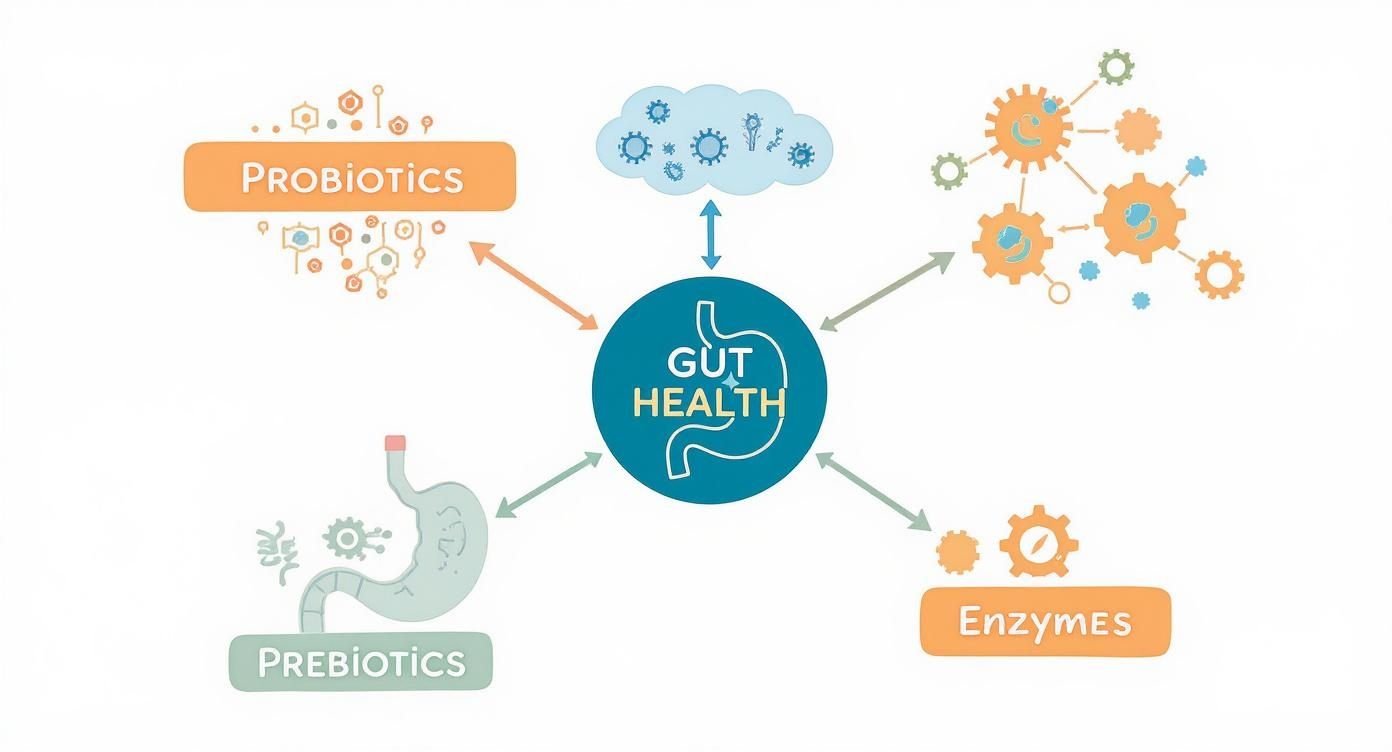
As you can see, a truly effective strategy often involves more than just one of these. Let's take a quick look at how these categories compare side-by-side.
A Quick Look at Top Gut Health Supplements
| Supplement Type | Primary Function | Best For |
|---|---|---|
| Probiotics | Introduces beneficial bacteria to the gut. | Anyone looking to rebalance their microbiome, especially after antibiotics or illness. |
| Prebiotics | Feeds and nourishes existing good bacteria. | People who want to support their native gut flora and improve overall digestive regularity. |
| Digestive Enzymes | Helps break down food for better nutrient absorption. | Individuals who experience bloating, gas, or indigestion after eating specific foods. |
Each supplement type tackles a unique piece of the digestive puzzle. Now, we'll dive deeper into each category to help you figure out what might work best for your specific needs.
Probiotics: Your Gut's Reinforcements
When people talk about gut health supplements, probiotics are almost always the first thing that comes to mind. It's for good reason. Think of your gut as a complex, bustling garden. Probiotics are like the skilled gardeners—the friendly microbes that tend the soil, nurture the good plants, and keep the weeds from taking over.
More technically, probiotics are live, beneficial bacteria and yeasts that, when you take enough of them, actively improve your health. They show up to support your gut's native team, helping to strengthen the intestinal lining, produce helpful compounds like short-chain fatty acids, and keep your whole digestive system in a state of healthy equilibrium.
It's All About the Strains
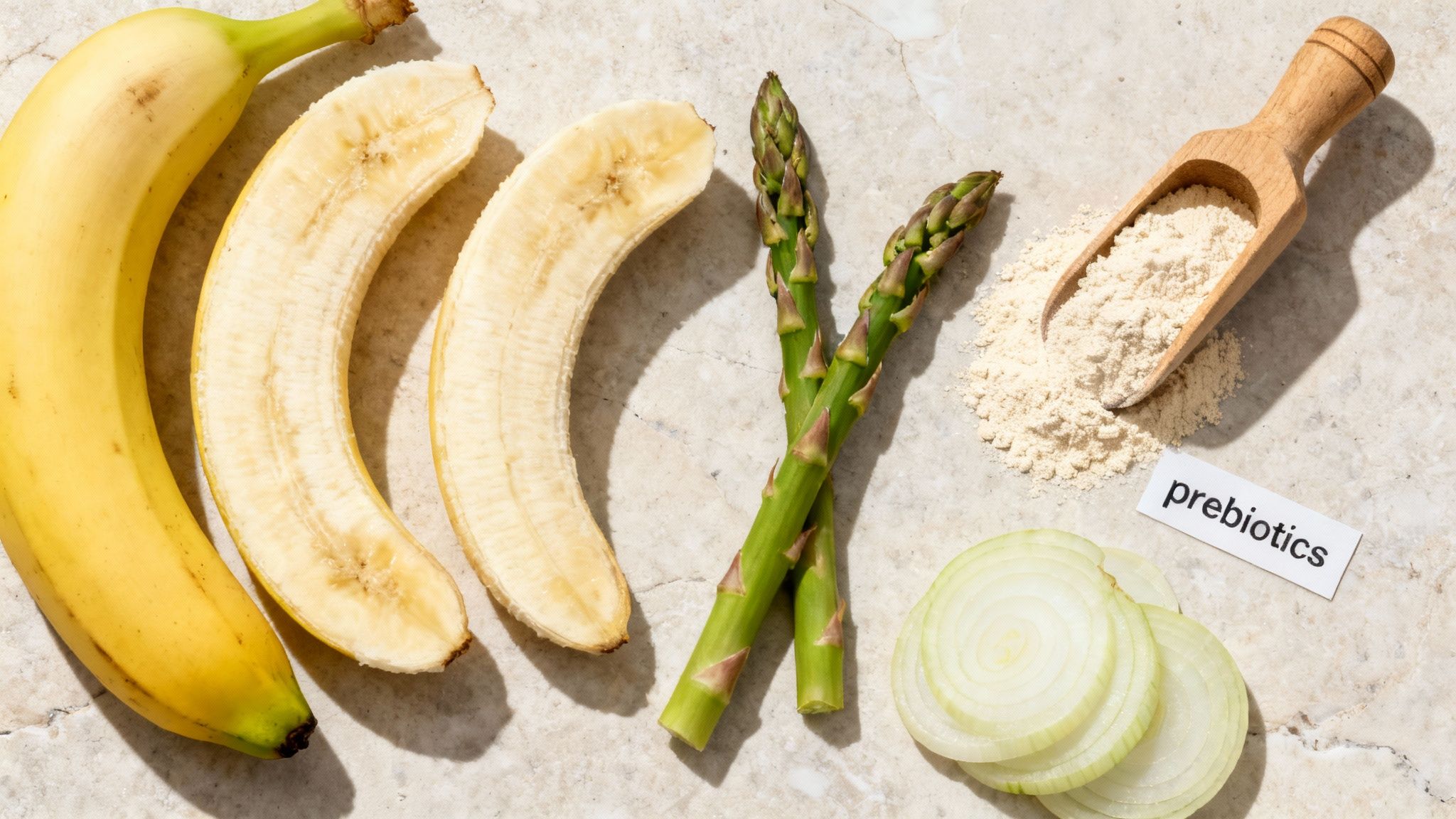
Here’s something you need to know: not all probiotics are the same. Just like you wouldn't send a plumber to fix your car, different probiotic strains have different jobs in your gut. The two most famous families are Lactobacillus and Bifidobacterium, but the real magic is in the specific details.
- Lactobacillus acidophilus is a classic. It hangs out mostly in the small intestine and is well-known for helping with things like lactose digestion and general digestive ease.
- Bifidobacterium lactis prefers the colon and is a powerhouse for supporting immune function and helping your body push back against unwanted microbes.
- Saccharomyces boulardii is the odd one out—it's actually a beneficial yeast. This makes it tough, as it's not killed off by antibiotics, which is why it's a go-to for managing antibiotic-related diarrhea.
Reading a supplement label can feel a bit like trying to decipher code, but it’s pretty straightforward once you know the lingo. The genus (Lactobacillus), species (acidophilus), and the specific strain (like NCFM) tell you exactly which microbe you're getting. That strain name is your clue that it's been studied for a specific, targeted purpose.
The Bottom Line: Grabbing any old probiotic off the shelf isn't the best strategy. The goal is to pick specific, well-researched strains that match what you're trying to achieve—whether that’s taming bloat, boosting your immune defenses, or getting your gut back on track after antibiotics.
What's the Deal with CFUs?
Another acronym you’ll see everywhere is CFU, or Colony Forming Units. This number tells you how many live, active microbes are packed into each dose. It's easy to fall into the trap of thinking "more is always better," but that’s not really how it works.
For general, everyday gut support, a dose of 5 to 20 billion CFUs is often perfectly effective. Higher doses are usually reserved for more targeted, short-term needs. What really matters is the specific strain and the dose that was proven effective in clinical research. A product with 10 billion CFUs of a well-studied strain is almost always a better bet than a supplement with 100 billion CFUs of a generic, unproven mix.
If you want to get into the nitty-gritty of picking a great product, our guide to the best probiotics for gut health breaks down our top recommendations.
How to Pick a Winner
Walking down the supplement aisle can feel overwhelming. To make sure you’re buying a high-quality probiotic that will actually do its job, keep an eye out for these things:
- Strain-Specific Labels: Look for the full strain name on the bottle, not just "Lactobacillus."
- Backed by Science: The best brands use strains that have been tested in human clinical trials for the health concern you're addressing.
- Smart Delivery: Probiotics are delicate. Look for things like delayed-release capsules that are designed to protect them from stomach acid so they can make it to your intestines alive.
- Third-Party Certified: A seal from an independent lab gives you confidence that what's on the label is actually what's in the bottle.
By using these quality markers as your guide, you can confidently choose a probiotic that genuinely supports your body’s internal ecosystem.
Prebiotics: Fuel for Your Best Gut Bacteria
If probiotics are the friendly new troops arriving to support your gut, prebiotics are their five-star catering service. Think of it this way: you can't just send reinforcements into the field without supplies. Prebiotics are the specialized rations that ensure your beneficial bacteria not only survive but thrive.
This is more than just fiber. Prebiotics are a specific type of plant fiber that your body can't digest. They travel all the way down to your colon untouched, where they become a feast for your resident good microbes.
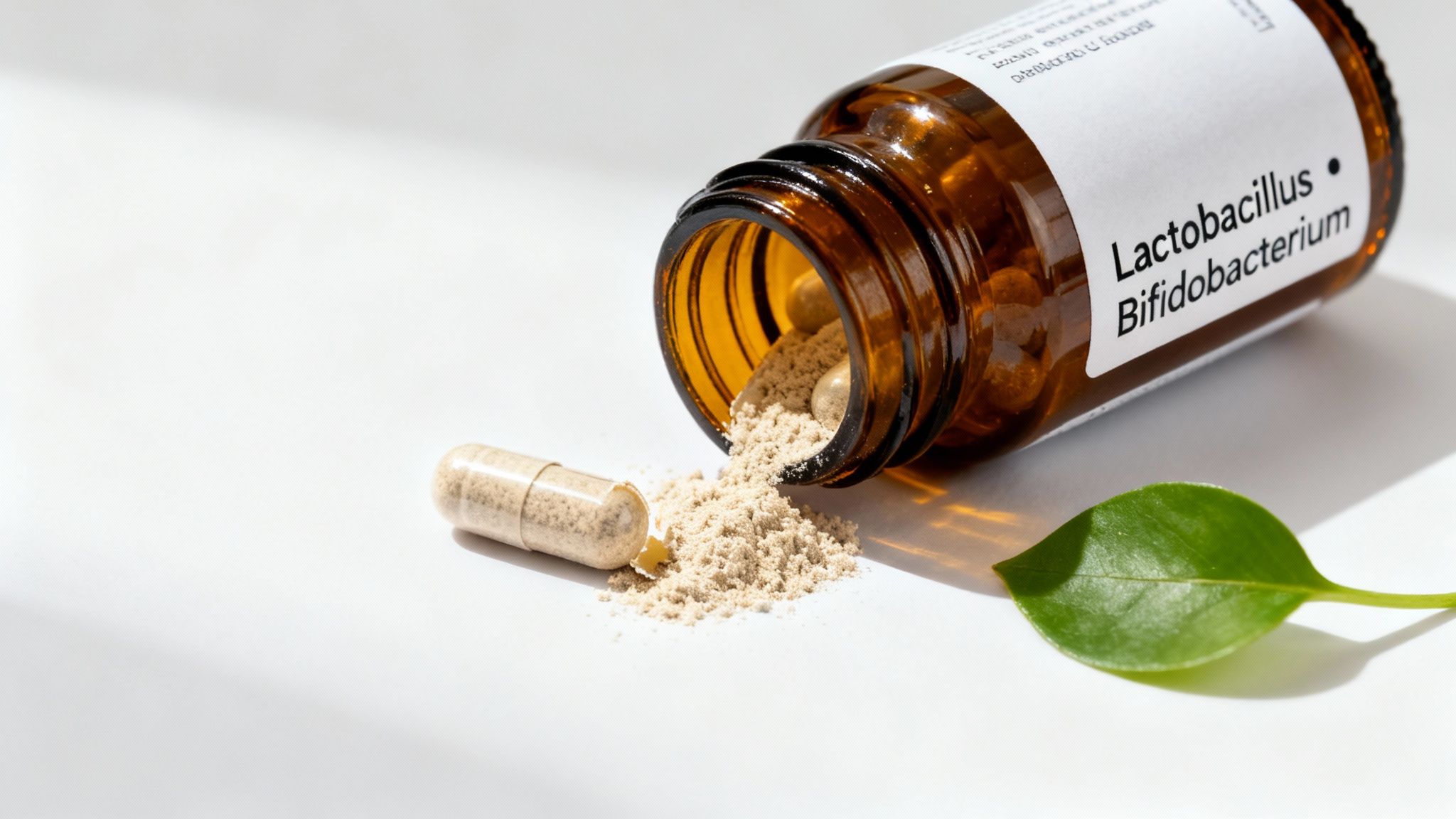
When your good bacteria ferment these fibers, they produce some incredible byproducts called short-chain fatty acids (SCFAs). One of the most important is butyrate, which is basically a superfood for the cells lining your colon. SCFAs are a huge part of why a healthy microbiome is linked to a strong gut barrier and lower inflammation.
The Most Common Prebiotic Fibers
Not just any fiber gets to be a prebiotic. To earn the title, a fiber must be shown to selectively feed beneficial gut bacteria. While you can get them from food, these are the heavy hitters you’ll often find in supplements.
- Inulin and Fructo-oligosaccharides (FOS): These are the rockstars of the prebiotic world. They're naturally found in things like chicory root, garlic, and onions, and they’re proven to give a serious boost to helpful Bifidobacteria strains.
- Galacto-oligosaccharides (GOS): Commonly derived from lactose (though often lactose-free in supplements), GOS is another favorite food for beneficial bacteria, helping them to crowd out the less desirable microbes.
- Resistant Starch: Just like its name sounds, this starch "resists" digestion until it reaches your colon. You can find it in green bananas, oats, and even potatoes or rice that have been cooked and then cooled.
Adding these fibers is like putting high-octane fuel into your gut’s engine, empowering the microbes you already have to work better.
Synbiotics: The All-in-One Approach
Product formulators have caught on to the powerful teamwork between probiotics and prebiotics. The result? Synbiotics. These are supplements that contain both the beneficial bacteria (the probiotic) and their food source (the prebiotic) in one capsule.
The logic is solid: giving the new bacteria a packed lunch helps them get settled and start working more effectively right away. It's a smart strategy to make sure you're getting the most out of your probiotic.
A Quick Word of Caution: Start Low and Go Slow. If you start a new prebiotic and feel a bit gassy or bloated, don't panic. That's actually a good sign! It means the fermentation party has started in your gut. To keep things comfortable, begin with half the recommended dose and slowly work your way up over a week or two as your gut gets used to the new fuel.
How to Choose a Good Prebiotic Supplement
When you're scanning labels, look for products that are transparent about what's inside. A quality supplement will clearly state the type of prebiotic fiber and the dosage. A clinically effective dose usually falls somewhere between 3 and 10 grams per day.
Here’s a simple checklist for getting started:
- Try Food First: Before jumping to a supplement, see if you can add more prebiotic-rich foods to your diet. Think asparagus, leeks, garlic, onions, and whole grains.
- Read the Ingredients: Look for a clean label. The best products have minimal fillers, artificial sweeteners, or other unnecessary additives.
- Pay Attention to Your Body: Everyone's microbiome is a little different. A dose that works wonders for a friend might be too much for you. Listen to your gut and adjust as needed.
By providing the right fuel, you're not just feeding your gut bacteria—you're cultivating a healthier internal ecosystem from the ground up.
Digestive Enzymes: Unlocking Your Nutrient Potential
Eating well is a great start, but it's only half the story. Your body still has to break down all that healthy food to actually use it. That's where digestive enzymes come in.
Think of them as a team of microscopic chefs inside your gut, each one wielding a specific tool for a specific job. These tiny proteins are biological catalysts, meaning they speed up the chemical reactions that dismantle your food into absorbable nutrients. Without them, even the most nutrient-dense meal would just pass right through.
The Three Main Enzyme Groups
Your body makes a whole host of different enzymes, but most of them fall into three main categories. Each group is a specialist, tasked with breaking down one specific type of macronutrient. This specialization ensures every part of your meal is handled efficiently.
- Amylase goes after carbohydrates. It starts working the moment food hits your mouth (it’s in your saliva!) and continues its job in the small intestine, breaking down complex starches into simple sugars your body can use for quick energy.
- Protease is the protein expert. Working in the stomach and pancreas, these enzymes chop up long, complex protein chains into smaller pieces (peptides) and individual amino acids—the essential building blocks for your muscles, tissues, and more.
- Lipase is in charge of fats. This pancreatic enzyme breaks down dietary fats, like triglycerides, into smaller fatty acids and glycerol. These are crucial for everything from storing energy to producing hormones.
When this internal "kitchen crew" isn't pulling its weight, you'll definitely feel it. That familiar bloating, gas, or heavy sensation after a meal is often a sign that digestion isn't running as smoothly as it should.
When Are Enzyme Supplements a Good Idea?
Let's be clear: not everyone needs to take digestive enzymes. A healthy gut usually produces plenty on its own. But for some people, they can be a total game-changer for digestive comfort and making sure you're actually absorbing nutrients from your food.
They can be particularly helpful if you have a known enzyme deficiency or a specific food intolerance. The classic example is lactose intolerance, which is simply a shortage of the lactase enzyme needed to break down milk sugar. Others find them useful for tackling discomfort after unusually high-fat or high-fiber meals.
This push for better digestion is a huge reason why the gut health supplement category is booming. The market was valued at a staggering US$12.37 billion in 2023 and is on track to hit US$21.11 billion by 2032. It’s clear many people are looking for this kind of support. You can dive into the full gut health supplement market analysis to see just how fast this trend is growing.
Key Distinction: Enzymes vs. Probiotics
People often mix these two up, but they have completely different jobs. Think of it this way: Digestive enzymes help you break down your food. Probiotics are beneficial bacteria that support the health of your gut ecosystem. Enzymes work on the meal itself; probiotics work on the environment where the meal is digested.
Choosing the Right Enzyme Formula
When you start shopping, you’ll see terms like "full-spectrum" or "broad-spectrum" everywhere. These products are a good starting point for most people, as they contain a blend of different enzymes designed to help you digest a little bit of everything.
To make sure you're getting a quality product, here's what to look for on the label:
- Specific Enzymes Listed: A good supplement will tell you exactly which enzymes are inside (e.g., amylase, protease, lipase, cellulase) instead of hiding behind a vague "proprietary blend."
- Activity Units: This is the most important part. Enzyme potency isn't measured in milligrams (mg); it's measured in activity units. These look like acronyms—DU for amylase, HUT for protease, or FIP for lipase. A higher number means a more potent, active enzyme.
- Targeted Formulas: If you know a specific food gives you trouble—like dairy, beans, or cruciferous veggies—you can find targeted formulas. These will contain higher doses of the specific enzyme you need, like lactase for dairy or alpha-galactosidase for legumes.
Understanding what these microscopic helpers do is the first step. From there, you can figure out if adding them to your routine is the right move to finally unlock the full nutritional power of your food.
How to Choose High-Quality Gut Health Supplements
Walking down the supplement aisle can be overwhelming. With bottles shouting promises from every shelf, how can you tell which ones are genuinely effective and which are just clever marketing? The trick is learning to read a label like a pro and knowing exactly what to look for.
Forget the flashy claims on the front of the box. Becoming a savvy supplement shopper means you'll know how to spot the real clues to quality and potency. This puts you in control, allowing you to choose the best supplements for your gut health with total confidence.

Look for Third-Party Testing Seals
Your first move should be to scan the label for a seal from an independent, third-party organization. The supplement industry, particularly in the United States, isn't as tightly regulated as pharmaceuticals. This means there's often no one checking to see if what's on the label matches what's in the bottle.
This is where groups like NSF International, USP (U.S. Pharmacopeia), and ConsumerLab step in. They act as independent watchdogs.
- Purity: They rigorously test for nasty contaminants like pesticides, microbes, or heavy metals.
- Potency: They verify that the product actually contains the ingredients—and the amounts—listed on the label.
- Performance: They even check to make sure the supplement can break down and be absorbed correctly by your body.
Finding one of these seals on a product is the single best indicator you're looking at a high-quality, safe supplement.
Scrutinize Probiotic Strains and Delivery
When you're shopping for probiotics, the details are what count. A vague "probiotic blend" on the label is a red flag. A quality product will name the specific strains, like Bifidobacterium lactis HN019 or Lactobacillus rhamnosus GG. These very specific names tell you the strains have been researched for particular health benefits.
Just as crucial is how those tiny organisms make it to your gut alive. Probiotics are delicate, and your stomach acid is a harsh environment that can easily destroy them before they have a chance to work.
Think of a supplement's delivery method as an armored vehicle for the probiotics. You need something that can get them safely past the stomach acid battlefield.
Look for terms like "delayed-release" or "acid-resistant capsules." This technology is designed to shield the microbes on their journey, ensuring the CFUs (Colony Forming Units) you paid for arrive alive in your intestines, ready to get to work.
Insist on Clean Formulas and Smart Formats
Finally, always flip the bottle over and read the "other ingredients" list. The best gut health supplements keep it simple. You want to see clean, minimal formulas, not a long list of unnecessary fillers, artificial colors, sweeteners, or potential allergens like gluten and soy.
The supplement's format also plays a role. In 2024, probiotics are the clear leader, making up over 82% of global revenue. Capsules still dominate with a 47.43% market share, largely because they offer precise dosing and can protect their contents. However, gummies are quickly catching up, with a projected growth rate of 7.21% through 2030, as people seek more pleasant ways to take their supplements. You can dive deeper into these trends at MordorIntelligence.com.
To help you put all this information into practice, here's a quick checklist for your next trip to the health food store or online shopping session.
Checklist for Buying Gut Health Supplements
| Quality Factor | What to Look For (Green Flags) | What to Avoid (Red Flags) |
|---|---|---|
| Verification | Seals from NSF, USP, or ConsumerLab. | No third-party testing seals mentioned. |
| Probiotic Strains | Specific, named strains (e.g., L. rhamnosus GG). | Vague terms like "probiotic blend" or "proprietary blend." |
| Probiotic Delivery | Delayed-release, acid-resistant, or enteric-coated capsules. | Standard gelatin capsules with no protective technology. |
| Ingredient List | Short, clean, and recognizable "other ingredients." | Long lists of fillers, artificial colors, flavors, or sweeteners. |
| Company Transparency | Clear website, accessible customer service, readily available testing info. | Exaggerated marketing claims, no easy way to contact them. |
Using this guide, you can confidently sort the good from the bad and make sure you're investing in a product that will actually support your health.
Choosing the right format with a clean formula ensures you get all the benefits without any of the junk. For more tips on finding products that align with your wellness goals, check out our full library of articles in the supplements category.
When to Talk to a Healthcare Professional
https://www.youtube.com/embed/Vx9Oy55lRR0
Starting a new supplement routine can feel like you're taking charge of your health, and in many ways, you are. But it's important to remember that supplements are potent substances, not a substitute for professional medical guidance. While many excellent gut health supplements are sold over the counter, trying to diagnose your own issues can be a risky game.
The safest and most effective approach is always to build a strategy with a professional. Think of a doctor or registered dietitian as your personal guide to gut health. They can help you make sense of your unique body and needs, ensuring the supplements you choose are a perfect fit, not just something you saw trending online. This partnership is especially critical when you're navigating specific health situations.
Navigating Special Health Circumstances
Some health conditions and life stages require a much more careful, professionally guided approach to supplementation. If any of these sound like you, it's definitely time to check in with an expert.
- Pre-existing Conditions: If you're managing a diagnosed digestive disorder like Inflammatory Bowel Disease (IBD), Crohn's, or Small Intestinal Bacterial Overgrowth (SIBO), the wrong supplement could easily make things worse. A specialist can point you toward targeted options that work with your treatment plan, not against it.
- Pregnancy and Breastfeeding: Your body's needs shift dramatically during this time. Any supplement, no matter how "natural" it seems, should get the green light from your doctor to ensure it's safe for you and your baby.
- Taking Prescription Medications: Supplements can absolutely interact with prescription drugs. Sometimes they can make a medication less effective, and other times they can cause dangerous side effects. For instance, some fiber supplements can block the absorption of certain meds if you take them too close together.
A professional can look at your entire health picture, spot any potential conflicts, and help you find the safest path forward.
When in doubt, always consult an expert. Their guidance ensures you aren't just taking supplements, but taking the right supplements for your specific situation, preventing unintended consequences and maximizing benefits.
When Symptoms Signal Something More
A little bloating or gas now and then can often be handled with diet changes and the right supplements. But some symptoms are red flags that shouldn't be ignored. They could point to a more serious underlying problem that needs a proper medical workup.
Book an appointment with your doctor right away if you experience any of these:
- Persistent Abdominal Pain: Chronic or severe pain is not a normal part of digestion.
- Unexplained Weight Loss: Losing weight without trying can be a sign that your body isn't absorbing nutrients correctly or that something else is going on.
- Blood in Your Stool: This is one symptom that always requires an immediate medical evaluation.
- Chronic Diarrhea or Constipation: If digestive issues just won't go away after a few weeks, it's time to get a professional diagnosis.
A healthcare provider can run the right tests to rule out serious conditions and give you a clear answer. This way, you're treating the root cause of your symptoms, not just covering them up with supplements. Their expertise is truly your best tool for building long-term gut health.
Common Questions About Gut Health Supplements
If you're thinking about adding gut health supplements to your routine, you probably have a few questions. That's a good thing. Knowing what to expect is key to building a strategy that actually works for your body.
Let's walk through some of the most common things people wonder about when they start this journey.
How Long Does It Take for Gut Health Supplements to Work?
This is the big one, and the honest answer is: it depends entirely on what you're taking. Some supplements give you pretty quick feedback, while others are a slow burn, working behind the scenes to rebalance your system.
Digestive enzymes, for instance, get to work right away. You’ll likely notice less bloating or heaviness after the very meal you take them with. Probiotics and prebiotics, on the other hand, are playing a much longer game.
It can take a solid 4-6 weeks of consistent use to really feel the lasting benefits from probiotics and prebiotics. Think of it like planting a garden—it takes time for the good seeds (bacteria) to take root, grow, and start improving the entire ecosystem.
So, patience is your best friend here. Before deciding a supplement isn't working, give it at least a month-long trial. That's the only way to get a true sense of how your body is responding.
Can I Get All My Gut Support from Food Alone?
A whole-foods, fiber-rich diet is, and always will be, the foundation of a happy gut. For many people, food is enough.
- Probiotic Foods: Things like yogurt, kefir, kimchi, and sauerkraut deliver live, beneficial bacteria straight to your system.
- Prebiotic Foods: Foods like garlic, onions, asparagus, and slightly unripe bananas are the perfect fuel for your good gut microbes.
But supplements can offer a concentrated, targeted boost that’s tough to replicate with food alone. They become especially helpful if you’re dealing with specific digestive issues, have dietary restrictions, or are bouncing back from a round of antibiotics that wiped the slate clean.
It's best to see supplements as a powerful ally to your diet, not a replacement for it.
Are There Side Effects to Taking Gut Health Supplements?
For the most part, gut health supplements are very safe, but you might hit a few bumps when you first start. Mild, temporary side effects are pretty common.
The usual suspects are a bit of extra gas and bloating. Annoying, yes, but it's often a sign that things are happening! The new prebiotics are fermenting and the probiotics are starting to shift the microbial balance. This initial adjustment phase typically clears up within a few days to a week.
My advice? Always start with a lower dose and work your way up to the recommended amount. This gives your gut a chance to get used to the new arrivals. If you're looking for other gentle options, exploring the best herbal teas for health can be a wonderfully soothing addition to your routine. And, of course, if you have any underlying health conditions or are on other medications, it's always smart to check in with your doctor first.
At The Happy Health Blog, we're committed to providing clear, evidence-based information to help you navigate your wellness journey. Explore our articles to build healthy habits that last. Find out more at https://thehappyhealthblog.com.
