


So, what should you actually eat before a workout? The short answer: a smart combination of easily digestible carbohydrates and a little bit of protein. This one-two punch is your secret weapon for sustained energy and muscle protection, making sure you get the absolute most out of every single session.
Fueling Your Body For Peak Performance
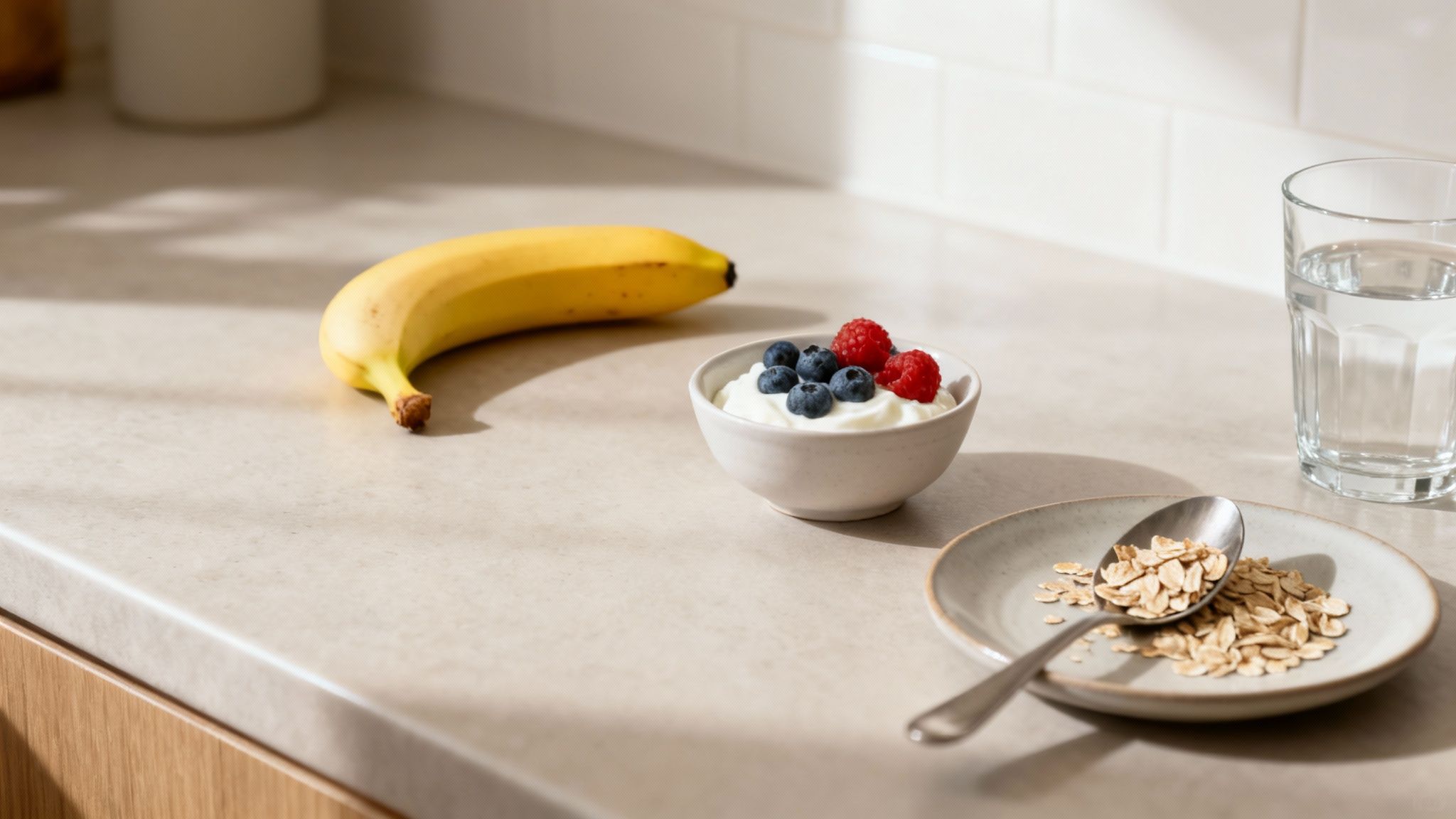
Think about your body as a high-performance engine. You wouldn't expect it to win a race running on fumes, right? Showing up to a workout on an empty tank can lead to a similar breakdown—fatigue, less strength, and maybe even a dizzy spell. What you eat right before you train directly fuels your energy, endurance, and ultimately, your results.
Don't worry, pre-workout nutrition isn't some complicated puzzle only elite athletes can solve. It’s a powerful tool anyone can use to smash their fitness goals. By making a few good choices, you’re setting yourself up for success, whether that means lifting heavy, running long, or flowing through a yoga class. The whole point is to give your body the resources it needs to perform at its best and keep it from raiding your muscle tissue for fuel.
Why Your Pre-Workout Meal Matters
The science here is pretty simple. Your body runs on glucose for energy, and it gets that glucose from carbohydrates. When you eat carbs before you exercise, you're topping off your glycogen stores—think of these as your body’s built-in, ready-to-use fuel tanks. This is what prevents you from "hitting the wall" halfway through your workout.
Adding some protein to the mix helps in a totally different but equally important way. It supplies the amino acids that protect your muscles from damage during your workout and actually kicks off the recovery process before you’ve even finished your last rep.
Together, this dynamic duo works to:
- Boost and sustain energy from your first set to your last.
- Prevent muscle breakdown by giving your body a much easier fuel source to use.
- Sharpen your focus and performance, helping you push harder for longer.
- Reduce post-workout fatigue by getting a head start on recovery.
Your pre-workout meal is your performance primer. It’s not just about stopping your stomach from growling; it’s about strategically loading your system with the exact fuel it needs to operate with power and efficiency.
The demand for effective pre-workout fuel has exploded, with the global market for these supplements projected to surpass USD 20.98 billion. This surge shows a growing awareness of just how critical proper fueling is. But you don't need a fancy powder; a lot of people are finding they can get the same, if not better, benefits from whole foods.
Research backs this up. Eating carbs 1-4 hours before you exercise has been shown to significantly top off those glycogen stores, which is a game-changer for endurance. If you're looking for other ways to get fired up for a workout, our guide on boosting energy without caffeine has some great natural alternatives.
The Three Pillars of Pre-Workout Nutrition
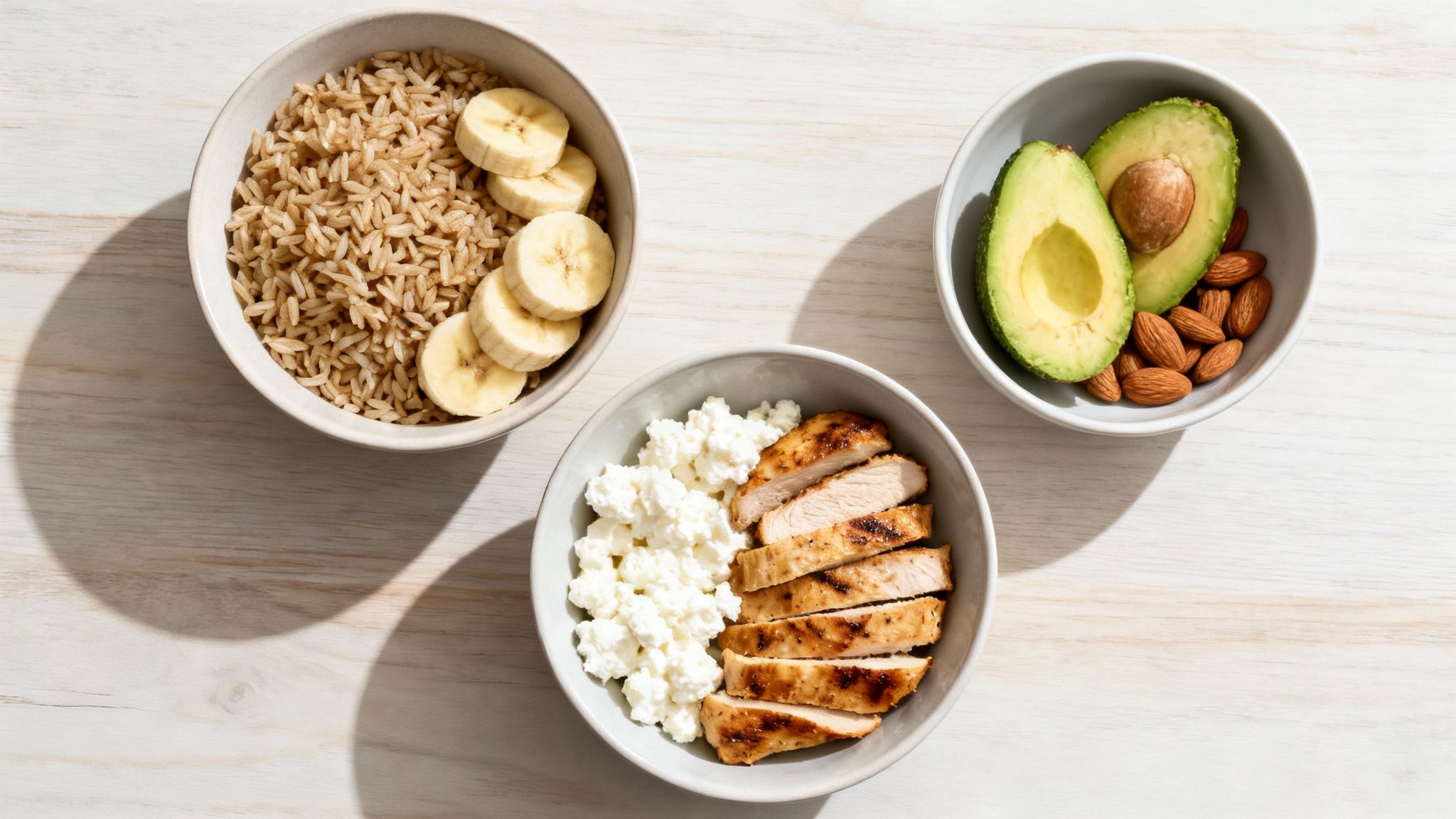
Figuring out what to eat before you train doesn't have to be complicated. It really boils down to three key players: carbohydrates, protein, and fats. Each of these macronutrients has a distinct job to do in getting your body ready for action.
Think of them as your personal pit crew. Each member has a specific role, and when they work together, your engine runs at peak performance. Let's break down exactly what each one does so you can fuel up with confidence, no matter what your workout looks like. Getting this mix right is the secret to sustained energy, better muscle protection, and ultimately, killer results.
Pillar 1: Carbohydrates—Your High-Octane Fuel
When it comes to powering through exercise, especially anything that gets your heart rate up, carbohydrates are king. They are your body's preferred and most efficient energy source.
When you eat carbs, your body converts them into glucose and stores them in your muscles and liver as glycogen. This glycogen is like having a fully charged battery pack ready to go. As soon as you start moving, your muscles tap directly into these stores to power every squat, sprint, and lift, helping you push harder and avoid hitting that dreaded wall.
But not all carbs are created equal, and timing is everything.
- Simple Carbohydrates: These are your "sprint fuel." They digest super fast, giving you a quick jolt of energy. A banana, a spoonful of honey, or a few rice cakes are perfect if you only have 30-60 minutes before your session.
- Complex Carbohydrates: Think of these as your "marathon fuel." They break down slowly, providing a steady, reliable stream of energy. Oatmeal, brown rice, or a slice of whole-grain toast are fantastic choices for a meal 2-3 hours before a longer workout, ensuring you don't run out of steam.
The closer your meal is to your workout, the simpler your carbs should be. This gives you that immediate energy boost without weighing you down or causing digestive issues mid-set.
Pillar 2: Protein—The Muscle Protector
If carbs are the fuel, protein is your muscle's personal bodyguard and repair crew. Exercise, by its nature, creates tiny micro-tears in your muscle fibers. This is a good thing—it's how you get stronger. But you need to give your body the right tools to handle the job.
Having some protein before you train sends a steady supply of amino acids into your bloodstream. These are the building blocks of muscle tissue. They do two crucial things: they help minimize muscle breakdown during your workout and kickstart the recovery process before you’ve even finished your last rep.
Imagine you're building a house. It’s way more efficient to have the lumber and tools (amino acids) delivered to the job site before the construction crew arrives. A little protein beforehand helps you build and maintain that hard-earned muscle more effectively.
You don't need a massive steak, either. A moderate amount is all it takes.
- A small tub of Greek yogurt
- A scoop of protein powder in water or a smoothie
- A couple of hard-boiled eggs
- A few slices of grilled chicken
Pairing a little protein with your carbs creates a powerful one-two punch: you get the energy to perform and the building blocks to recover.
Pillar 3: Fats—The Slow-Burning Fuel
Fats are absolutely essential for overall health, but their role right before a workout is a bit more specialized. While they are a very dense source of energy, they also take the longest to digest. This can be a double-edged sword.
For long, slow, low-intensity activities like a multi-hour hike or a gentle bike ride, fats can be a fantastic, slow-burning fuel source. But for the kind of workouts most of us do in the gym—like heavy lifting or HIIT—a high-fat meal beforehand can be a real performance killer.
Because fat slows down how quickly your stomach empties, it can leave you feeling heavy, sluggish, and even a bit nauseous. That's the last thing you want when you're trying to hit a new personal best.
It's best to keep your fat intake pretty low in the 1-2 hours before a workout. A small amount is fine—like a little almond butter on your toast or a handful of nuts—but save the avocado toast or cheesy omelet for another time.
Getting Your Pre-Workout Timing Just Right
Knowing what to eat is half the battle, but understanding when to eat is what truly separates a good workout from a great one. Timing isn't just a minor detail—it's often the difference between feeling powerful and energized or sluggish and sick to your stomach. Get it right, and you'll have a steady stream of fuel hitting your muscles exactly when they need it most.
Think of it like lighting a campfire. You wouldn’t just throw a huge log on a tiny spark and expect a bonfire. You start with small, quick-burning kindling and then add the bigger logs as the fire builds. Your digestive system works the same way. It needs time to break down food, and the type of fuel you give it depends entirely on how much time you have.
Let's break this down into three simple, practical time windows. Whether you've got a few hours to kill or you're literally running out the door, this roadmap will take the guesswork out of fueling up.
The 2–3 Hour Window: Your Ideal Pre-Meal Zone
If you have a couple of hours before you train, you've hit the jackpot. This is your prime opportunity to sit down for a complete, balanced meal. This window gives your body plenty of time to digest the food and convert it into readily available energy, perfectly topping off your muscle glycogen stores for a long, tough session.
The focus here should be on complex carbohydrates and a moderate amount of lean protein. The slow-releasing carbs provide that sustained energy that prevents a mid-workout crash, while the protein gets a head start on protecting and repairing your muscle tissue.
Here are a few solid meal ideas for this window:
- Grilled chicken breast with a side of brown rice and steamed broccoli.
- A classic bowl of oatmeal mixed with berries and a scoop of protein powder.
- Whole-wheat toast topped with a couple of scrambled eggs and some avocado.
You can also include a small amount of healthy fats in this meal. With this much time, your body can digest them without you feeling heavy or slow. It’s the perfect all-around approach to being fully fueled and ready for whatever your workout throws at you.
The 60-Minute Window: The Smart Snack Strategy
Let's be realistic—life gets busy, and a full meal isn't always in the cards. When you’ve only got about an hour to spare, the game plan shifts from a meal to a smart, targeted snack. The goal is simple: get a quick shot of energy without asking your stomach to do too much work.
At this point, you want to prioritize easily digestible carbohydrates. Keep the protein and fat to a minimum, as heavier foods will just sit in your stomach and could lead to cramping or nausea once you start moving. Think light, simple, and effective.
Some excellent choices for this timeframe include:
- A medium-sized banana with a tablespoon of peanut butter.
- A small bowl of Greek yogurt with a little honey drizzled on top.
- A couple of rice cakes with a thin layer of jam.
This snack is your performance bridge. It tops off your immediate energy levels and keeps hunger at bay without weighing you down, ensuring you feel light on your feet and ready to go.
The 30-Minute Window: Quick and Simple Fuel
Sometimes you’re scrambling and need fuel right now. When you have less than 30 minutes before a workout, your options get very specific. The absolute priority is simple, fast-acting carbohydrates that will hit your bloodstream almost immediately for a quick source of glucose.
Anything with significant fiber, fat, or protein is completely off the table. Those nutrients slow digestion and pull blood flow away from your muscles and toward your stomach—the exact opposite of what you want. You need something that’s practically pre-digested to give you that last-minute jolt.
Consider these grab-and-go options:
- A handful of dried fruit, like dates or raisins.
- A small fruit smoothie made with water instead of milk or yogurt.
- A sports gel or even a few gummy bears.
This last-minute fuel is the kindling for your fire. It burns hot and fast, giving you that immediate spark you need to start your workout strong.
The numbers don't lie: athletes who dial in their nutrition see performance jump by 10-15% in both strength and endurance, all thanks to optimized macros. Focus on complex carbs and moderate protein—think whole grain toast with peanut butter and a boiled egg. A single slice of whole grain bread offers about 15g of carbs and 4g of fiber, releasing energy steadily to power you through HIIT sessions where studies show a 7-10% better output compared to training fasted. The peanut butter adds 8g of healthy fats and 4g of protein per tablespoon, curbing hunger while providing sustained calories. Plus, an egg gives you 6g of complete protein and 250mg of choline for better focus. To learn more about the growing impact of pre-workout fuel, check out the latest analysis of the sports nutrition market.
Tailoring Your Fuel to Your Fitness Goals
Your pre-workout meal shouldn’t be a one-size-fits-all affair. A runner prepping for a marathon needs a completely different kind of fuel than a powerlifter trying to hit a new PR. The real secret to unlocking your potential is aligning your nutrition directly with your training goals.
Think of it like this: you wouldn't put the same gas in a drag racer as you would in a minivan for a cross-country trip. Each journey has unique demands. The same goes for your workouts. What you eat before you train should be a strategic choice designed to support what you're about to do, whether that's building muscle, boosting endurance, or managing your weight.
With just a few simple tweaks, you can transform your pre-workout snack from a simple stomach-filler into a powerful performance enhancer. Let’s break down how to customize your plate based on what you want to achieve.
This handy flowchart helps visualize how your food choices should shift depending on how much time you have before hitting the gym.
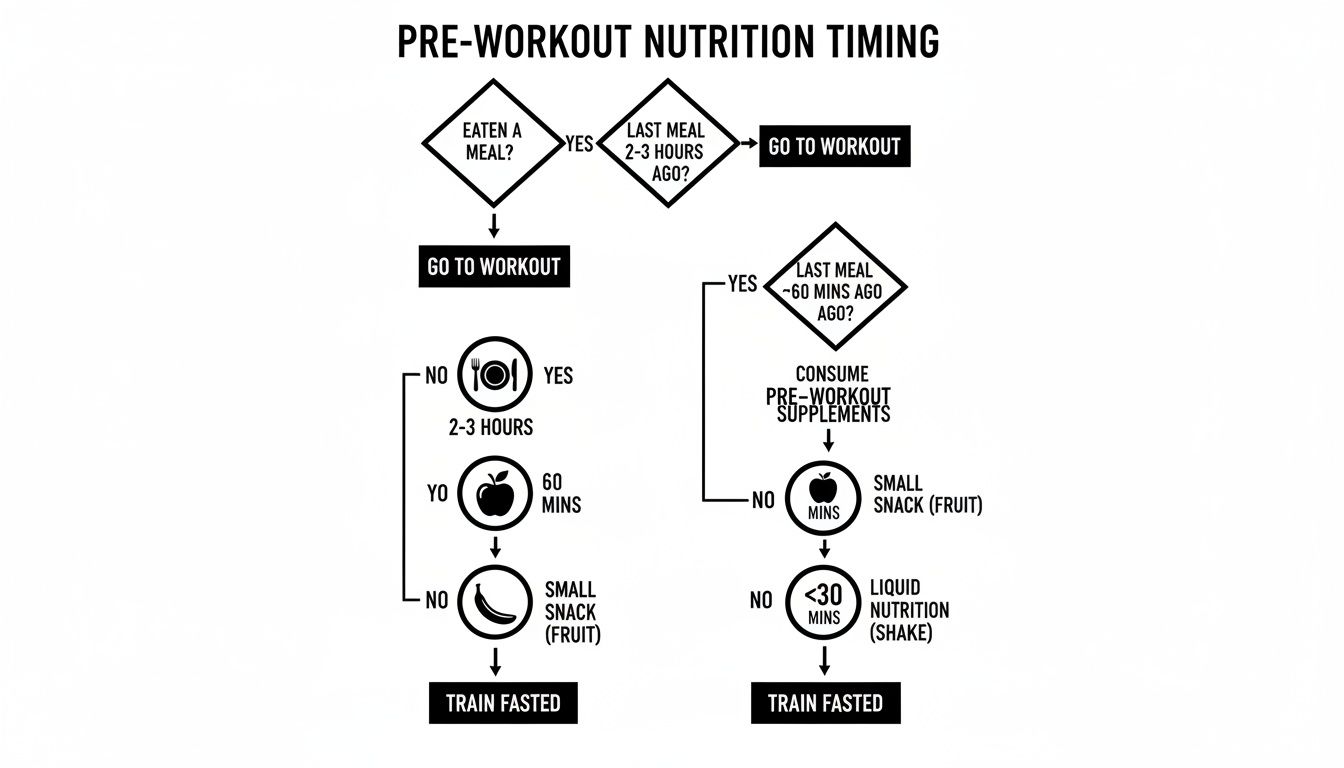
The main takeaway here is pretty simple: the closer you get to your workout, the more your food should focus on simple, fast-acting carbohydrates.
Fueling for Strength and Muscle Growth
When your mission is to lift heavy and build muscle, your pre-workout meal has two critical jobs. First, it needs to deliver enough energy to power you through those demanding sets. Second, it has to supply your muscles with the building blocks they need to kickstart the repair process. That means striking the right balance between carbohydrates and protein.
Carbs are non-negotiable for providing the immediate fuel needed for explosive movements like squats, deadlifts, and presses. If your glucose stores are low, your performance will tank, and you won’t be able to generate the intensity required for muscle growth.
Protein is just as crucial. Eating it before you train ensures a steady stream of amino acids is available in your bloodstream. This not only minimizes muscle breakdown during your workout but also gives your body a head start on recovery.
Struggling to get enough protein in your diet? Check out our guide on how to increase protein intake for some simple, practical tips.
Fueling for Endurance and Cardio
For endurance athletes—think runners, cyclists, and swimmers—the game is all about sustained energy over a long haul. The biggest enemy is "bonking" or hitting the wall, which is what happens when your muscle glycogen stores are completely depleted. Because of this, your pre-workout nutrition should be almost entirely focused on carbohydrates.
Protein still matters for overall muscle maintenance, but it takes a backseat right before a long cardio session. Fats and too much fiber should also be kept to a minimum, as they slow down digestion and can lead to some seriously uncomfortable gut issues mid-run or ride.
The goal is simple: top off your glycogen stores to absolute maximum capacity.
For endurance activities, your pre-workout meal is all about carb-loading. Think of it as filling up your gas tank to the brim before a long journey—you want as much fuel as possible to go the distance.
Fueling for Weight Loss
When weight loss is the primary goal, eating before a workout can feel a bit counterintuitive. But trust me, showing up to the gym on an empty stomach can seriously backfire. A smart, nutrient-dense pre-workout snack gives you the energy to train harder, burn more calories, and prevent that ravenous post-workout hunger that leads to bad food choices later.
The key is to pick foods that offer the most bang for your caloric buck—maximum energy for minimal calories. You'll want to focus on high-quality, easily digestible carbs and a small amount of lean protein to keep you feeling satisfied and protect your hard-earned muscle.
Pre-Workout Meal Ideas by Fitness Goal
To make this even clearer, here’s a table with some easy-to-implement meal and snack ideas tailored to your specific fitness objective.
| Fitness Goal | Nutrient Focus | Meal Example (2-3 hours before) | Snack Example (30-60 mins before) |
|---|---|---|---|
| Strength & Muscle | Carbs + Protein | Grilled chicken breast, sweet potato, and green beans. | Greek yogurt with a handful of berries. |
| Endurance & Cardio | High-Carb, Low-Fat/Fiber | Large bowl of oatmeal with banana slices and a drizzle of honey. | A medium banana or a couple of dates. |
| Weight Loss | Moderate-Carb, Low-Calorie | Small portion of quinoa with black beans and salsa. | An apple with a tablespoon of almond butter. |
Remember, these are just starting points. The perfect pre-workout fuel is the one that makes you feel strong, energized, and ready to tackle your workout without any digestive distress. Don't be afraid to experiment to find what works best for your body.
Fueling for Special Dietary Needs and Lifestyles
Trying to figure out pre-workout nutrition with specific dietary needs can feel like a puzzle, but it’s far from impossible. Whether you’re vegan, gluten-free, or curious about fasted training, the fundamental rules of fueling still apply. Your body needs accessible energy to perform, and that usually means carbs. It’s just a matter of picking the right sources for you.
Let's dive into some practical solutions. My goal here is to help you walk into your next workout feeling confident and properly fueled, no matter how you eat.
Vegan and Plant-Based Fueling
If you're following a vegan or plant-based diet, you're in luck—many of the best pre-workout foods are already on your menu. The goal is the same: find easily digestible carbohydrates, maybe with a little bit of protein.
For a quick and effective energy boost, you have some fantastic options:
- Bananas: There's a reason people call them nature's power bar. They're loaded with simple carbs and potassium.
- Dates: A couple of dates are a perfect way to get a concentrated dose of natural sugar for fast-acting energy.
- Oats: A small bowl of oatmeal, made with water or your favorite plant-based milk, offers a more sustained, slow release of energy.
- Plant-Based Protein: A simple smoothie with a scoop of plant-based protein powder and a piece of fruit gives you both carbs and protein to protect your muscles.
The trick is to combine these carb sources with a little plant-based protein to support muscle function and give your recovery a head start. Think apple slices with a spoonful of almond butter or, if you have more time, a small bowl of quinoa with lentils.
Gluten-Free and Low-Carb Options
Going gluten-free doesn't mean you have to skip out on effective pre-workout carbs. There are plenty of powerful, gluten-free choices that will give you the energy you need to crush your workout.
It’s all about simple, smart swaps:
- Rice Cakes: These are a fantastic blank canvas for a thin layer of jam or a drizzle of honey.
- Quinoa: Not just a carb source, this seed is also a complete protein, making it great for sustained fuel.
- Sweet Potatoes: An incredible source of complex carbohydrates and vital nutrients.
- Fruits: Every fruit is naturally gluten-free and offers a quick hit of energy.
For those on a low-carb or ketogenic diet, the game plan changes. Your body is already adapted to using fat for fuel, so you don't need to carb-load. Instead, a small snack rich in healthy fats and moderate protein—like a handful of almonds or a few slices of avocado—can provide the steady energy you need without knocking you out of ketosis.
Training on an Empty Stomach
The idea of "fasted cardio" has gained a lot of traction, especially for people looking to maximize fat burning. The theory is that when you work out without eating first, your body is more likely to tap into its fat stores for energy. But this approach isn't a one-size-fits-all solution.
Fasted training generally works best for low-to-moderate intensity sessions, like a steady jog or a relaxed bike ride. For high-intensity workouts (like HIIT) or heavy lifting, showing up on an empty tank can seriously sabotage your performance. You might experience early fatigue, dizziness, or even risk muscle loss.
Listen to Your Body: This is the golden rule. If you feel weak, dizzy, or just notice your performance is tanking, fasted training probably isn't the right move for you. Even a small, simple snack can make a huge difference.
While 29.4% of people who train use pre-workout supplements, whole foods often deliver more sustainable benefits. A simple apple with almond butter can outperform many processed options, sustaining energy 25% longer thanks to its blend of natural sugars, fiber, and healthy fats.
Plus, the magnesium in almonds has been shown to cut fatigue by up to 15% in endurance athletes. Pair that snack with a cup of coffee, and the caffeine can boost your metabolism by 11% and fat burning by 29%, creating an incredibly effective, all-natural pre-workout combo. You can find more data like this in research on the pre-workout supplements market.
Your Pre-Workout Nutrition Questions Answered
Even with the best plan, you're going to have questions. We all do! Let's clear up some of the most common ones so you can walk into your next workout feeling completely prepared.
Think of this as your quick-reference guide for those tricky, real-world situations that pop up.
Is It Bad to Work Out on an Empty Stomach?
Working out on an empty stomach, or "fasted training," has its time and place, but it's not a one-size-fits-all solution. For something low-key, like a gentle walk, it might give your body a slight nudge to burn more fat. That’s the upside.
The downside? If you’re planning anything intense or long, skipping your pre-workout fuel is a recipe for a lackluster session. Your performance will likely tank, and you might feel dizzy or lightheaded. Over time, it can even encourage your body to break down muscle for energy. The best advice is always to listen to your body. If you feel weak or sluggish, a small, easy-to-digest snack is your best friend.
Should I Eat the Same Thing Before Every Workout?
Definitely not. You need to match your fuel to the task at hand. Think of it this way: you wouldn't pack the same bag for a beach day as you would for a mountain hike, right? Your nutrition works the same way.
A long, grueling run demands sustained energy from complex carbs. A quick 30-minute lifting session, on the other hand, benefits more from a solid mix of carbs and protein. And for a gentle yoga class? You might not need much more than some water. Customizing your fuel to the workout's intensity and duration is how you get the best results.
How Much Water Should I Drink Before a Workout?
Don’t ever underestimate hydration! It’s every bit as important as what you eat. Staying hydrated is a game-changer for performance—it helps prevent those awful muscle cramps and keeps your body temperature in check when you’re really pushing it.
A great rule of thumb is to drink about 500-600 ml (16-20 oz) of water 2-3 hours before you start, plus another 240 ml (8 oz) about 30 minutes prior.
This gets you properly hydrated without leaving you feeling waterlogged. A quick tip? Keep an eye on your urine color throughout the day. A pale, lemonade-like yellow is the gold standard.
And remember, fueling isn't just about what happens before you train. What you eat afterward is just as critical for recovery. To get a head start, check out some of the best post-workout recovery foods to kickstart muscle repair and replenish your energy stores.
At The Happy Health Blog, we provide the guidance and motivation you need to make positive, lasting changes to your well-being, one article at a time. Explore our resources to take control of your health journey. https://thehappyhealthblog.com
