


So, you've been doing everything right. You're tracking your food, you're getting your workouts in, but the number on the scale just isn't moving anymore. It’s incredibly frustrating, I know. But the reality is that stalled weight loss is almost never about a lack of effort. It’s usually a sign that your body, being the incredibly smart machine it is, has adapted to your new routine.
The Frustrating Truth About Weight Loss Plateaus

Hitting a weight loss plateau is one of the most common and discouraging hurdles on any health journey. You kick things off with fantastic momentum, the pounds are dropping, and then… nothing. Progress grinds to a halt. It’s so easy to feel like you’ve failed or messed something up, but that’s rarely the case.
A weight loss plateau isn't a sign of personal failure. It’s a normal, predictable biological response from a body that is incredibly smart and designed for survival.
Your body is a creature of habit and craves stability, a state called homeostasis. When you start losing weight by eating less, your body doesn't see it as a win. It senses a potential famine and flips on its survival switches to conserve energy and stop you from losing any more.
Understanding Your Body's Response
This protective response is known as metabolic adaptation. As you get lighter, your body simply needs fewer calories to run itself. Think of it like a backpacker who has eaten most of their heavy food supplies; their pack is lighter, so it takes less energy to carry it up the mountain. Your body is the same way—it needs less fuel to go the same distance.
What this means is that the calorie deficit that was so effective at the beginning is no longer big enough to produce results. Your metabolism has downshifted a bit to match your new, lower body weight, creating a new balance point where your weight loss stalls. This is physiology, not a personal failing.
But that’s not the only thing going on. A few other culprits often team up to create this frustrating standstill:
- Hormonal Shifts: Hormones that control hunger, like ghrelin and leptin, can get out of whack. This often leads to increased hunger, making it much harder to stick to your plan.
- Unseen Lifestyle Factors: Are you stressed out? Not sleeping well? Chronic stress and lack of sleep can spike your cortisol levels, a hormone notorious for encouraging fat storage, especially around your belly.
- Declining Consistency: This one is sneaky. Maybe you've stopped measuring your olive oil, or your workout intensity has dipped slightly. These small, almost unnoticeable changes can add up, slowly chipping away at your calorie deficit until it disappears entirely.
The trick is to see the plateau for what it is: a sign that it’s time to adjust your strategy, not to give up.
Common Reasons for a Weight Loss Plateau
Let's break down the most common reasons your progress might have stalled. Think of this table as a quick diagnostic tool to help you pinpoint what might be going on.
| Factor | Brief Explanation | Actionable Tip |
|---|---|---|
| Metabolic Adaptation | Your metabolism has slowed to match your new, lower weight, reducing your daily calorie burn. | Incorporate strength training to build muscle, which burns more calories at rest. |
| Hidden Calories | Small additions like sauces, dressings, and sweetened drinks can add hundreds of calories. | Measure oils and dressings, and switch to zero-calorie beverages like water or herbal tea. |
| Stress and Sleep | High cortisol from stress and poor sleep can increase cravings and promote fat storage. | Prioritize 7-8 hours of quality sleep and practice stress-reducing activities like walking or meditation. |
| Workout Stagnation | Your body has become efficient at your current routine, burning fewer calories for the same effort. | Vary your workouts by adding new exercises, increasing intensity, or trying a different activity. |
Recognizing these factors is the first step. By understanding why your body is hitting the brakes, you can make smarter, more effective adjustments to get things moving again.
Why Your Metabolism Fights Back (And How to Win)
Ever feel like your body has a mind of its own? When it comes to weight loss, it kind of does. Think of your metabolism as your body’s furnace, constantly burning fuel (calories) to keep you alive. When you start your journey, you’re carrying a heavier load, so the furnace has to burn hotter just to get you through the day.
But as you lose weight, that load gets lighter. Your body, being incredibly efficient, doesn't see the need to burn so much fuel anymore. This is metabolic adaptation in a nutshell. It’s not your body trying to sabotage you; it’s just being smart and adjusting to its new, lighter reality. This is a major reason why the simple "eat less, move more" mantra eventually stops working.
The energy you burn just existing—breathing, thinking, circulating blood—is called your Basal Metabolic Rate (BMR). As your body gets smaller, your BMR naturally goes down because there's less of you to keep running. In fact, research shows that for every pound you lose, your daily calorie burn can drop by about 10-15 calories. That might not seem like a big deal, but lose 20 pounds, and suddenly you’re burning 200-300 fewer calories per day than you were before, even if your activity level is the same.
And just like that, the calorie deficit that was melting fat away a few weeks ago shrinks and vanishes. Welcome to the plateau.
Why Slashing Calories Even More Is a Trap
So, the scale is stuck. Your first instinct might be to get aggressive and cut your calories even further, right? It seems logical, but this is often where things go from bad to worse.
When you drastically slash your food intake, you’re sending a panic signal to your body that a famine has hit. Your ancient survival instincts kick in, and your body’s prime directive becomes one thing: conserve energy at all costs. It might slow your metabolism down even more, leaving you feeling exhausted, constantly hungry, and even more resistant to fat loss. It’s the definition of working harder, not smarter.
Your body is a survival machine, not a calculator. When it senses a severe and prolonged food shortage, it will slam the brakes on your metabolism to wait out the perceived crisis.
The trick isn’t to fight your body’s programming but to work with it. You can outsmart this metabolic slowdown with a few key strategies that tell your body it's safe, nourished, and doesn't need to be in panic mode.
How to Keep Your Metabolism Firing on All Cylinders
Instead of just eating less, the real solution lies in changing what your body is made of and the signals you’re sending it. This is how you keep your metabolic engine running strong and bust through that frustrating standstill.
Here are two of the most powerful things you can do:
1. Make Strength Training Your Priority
Cardio is fantastic for your heart, but when you're fighting a metabolic slowdown, strength training is your absolute best friend. Muscle is what we call "metabolically active," which is a fancy way of saying it burns calories even when you're just sitting on the couch. Fat, on the other hand, doesn't.
By lifting weights, using resistance bands, or doing bodyweight exercises, you're telling your body to hold onto—or even build—this precious, calorie-burning muscle.
- Fire up your BMR: The more muscle you have, the more calories you burn around the clock. This directly counters the natural drop in metabolism that comes with weight loss.
- Reshape your body: You might not see a huge drop on the scale, but you'll notice your clothes fitting better. That's because you're swapping bulky fat for dense, lean muscle.
- Get an "afterburn" effect: A good strength workout burns calories during the session, and your metabolism stays elevated for hours afterward as your body works to repair and build your muscles.
2. Take a Strategic "Diet Break"
This might sound counterintuitive, but one of the best things you can do for a stalled diet is to… stop dieting. For a little while, anyway.
A diet break is a planned, intentional period of 1-2 weeks where you bring your calories back up to your maintenance level (the amount needed to maintain your current weight). This isn't a free-for-all junk food binge; it’s a calculated move to signal to your body that the famine is over and food is plentiful again.
This simple act can help reset crucial hormones that govern your metabolism and hunger, like leptin and thyroid hormones, which often take a nosedive during long periods of dieting. Think of it as a tune-up for your metabolism. Many people are amazed to find that after a smart diet break, their body is primed and ready to start losing weight again once they return to a sensible deficit.
3. Rethinking Your Plate: Nutrient Quality Over Calorie Counts
It’s one of the most frustrating feelings in the world: you’re tracking every calorie, but you’re still hungry, you’re not satisfied, and the number on the scale just won’t move. If that’s you, it might be time to shift your focus from the quantity of your calories to the quality of your food.
The truth is, not all calories are created equal. The source of those calories has a massive impact on your hunger, your metabolism, and your body's ability to burn fat.
Think of your hunger hormones as a communication system. High-quality foods—packed with protein, fiber, and healthy fats—send clear signals to your brain that you're full and satisfied. On the other hand, highly processed, low-nutrient foods just confuse the signal, leaving you feeling hungry even when you've eaten enough calories.
The Power Trio: Protein, Fat, and Fiber
When someone asks me, "Why am I not losing weight?" one of the first places I look is their macronutrient balance. Dialing in your protein, healthy fats, and fiber is often the key to unlocking a stalled metabolism and getting back on track.
Protein is Your Satiety Superstar
Of all the macronutrients, protein is by far the most filling. Your body actually burns more calories just digesting it (this is called the thermic effect of food). More importantly, it helps you feel full and stay full, crushing cravings before they start. If you're looking for practical ways to get more of it, our guide on how to increase protein intake is a great place to start.
Healthy Fats Promote Fullness
Good fats, like those from avocados, nuts, seeds, and olive oil, are your best friends for stable energy. They slow down digestion, which helps prevent those wild blood sugar swings that leave you crashing and reaching for a snack an hour after you eat.
Fiber Adds Volume and Slows Digestion
Fiber is nature's appetite suppressant. It adds bulk to your meals without adding significant calories, physically filling your stomach to signal satiety. You’ll find it in whole grains, fruits, and especially vegetables, and it helps provide a slow, steady release of energy.
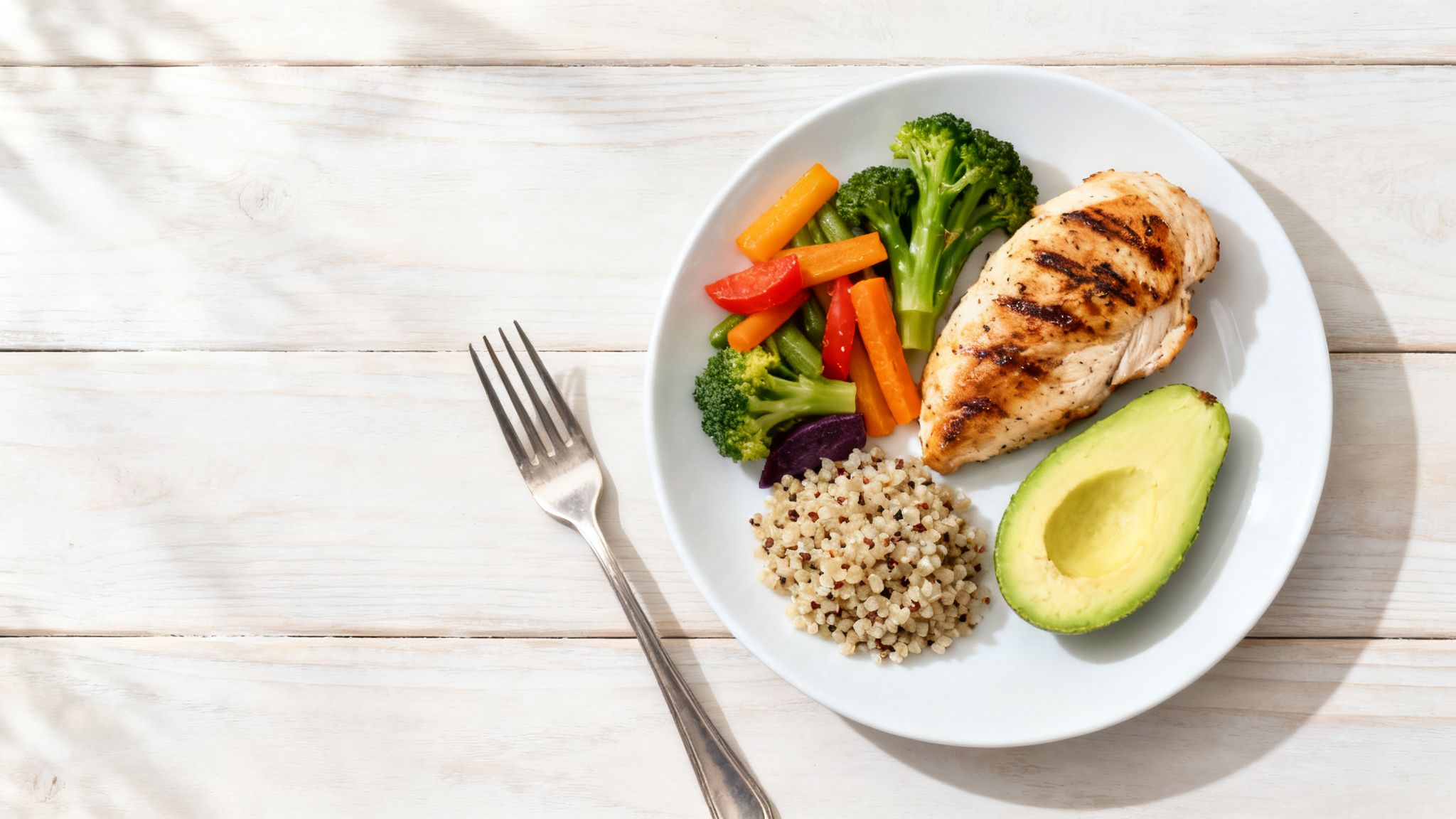
Imagine eating 400 calories of grilled chicken, broccoli, and quinoa. Now imagine eating 400 calories of crackers and cheese. The chicken meal, loaded with protein and fiber, will likely keep you satisfied for hours. The crackers? They’ll digest quickly, spike your blood sugar, and leave you hungry again in no time. Same calories, totally different outcomes.
Unmasking the Hidden Calorie Culprits
Even if you’re focusing on whole foods, calories can sneak into your diet in places you’d never expect. I call this "calorie creep," and it's a primary reason why weight loss stalls.
These little extras don't seem like much on their own, but they can easily add up to hundreds of calories by the end of the day.
- Sauces and Dressings: That "healthy" salad can quickly turn into a calorie bomb. Creamy dressings and sweet sauces can easily pack an extra 100-200 calories.
- Cooking Oils and Butters: Are you measuring the oil you use to cook? Just one tablespoon of olive oil is around 120 calories. If you're just free-pouring it into the pan, you could be adding two or three times that amount without realizing it.
- Sugary Beverages: Liquid calories are particularly sneaky because they don't make you feel full. That morning latte, afternoon soda, or glass of juice can derail your efforts without you even noticing.
- "Healthy" Snacks: A handful of nuts is a fantastic, nutrient-dense snack. But it's incredibly easy to turn a 150-calorie serving into a 400-calorie snack if you're mindlessly eating from the bag.
By moving your attention from just counting numbers to prioritizing nutrient-dense foods—and keeping an eye on these hidden extras—you can build an eating plan that actually works with your body, not against it. This isn't just about breaking a plateau; it's about nourishing yourself for good.
The Hidden Roadblocks: Stress, Sleep, and Hormones

If you’re nailing your diet and exercise routine but the scale just won’t budge, it's time to look beyond the obvious. The real answer to "why am I not losing weight?" often lurks in the invisible forces at play inside your body—specifically, stress, sleep, and hormones.
These three are so deeply intertwined they create a powerful feedback loop that can either turbocharge your progress or slam the brakes on it entirely.
Think of your body as a finely tuned orchestra. When stress is high and sleep is scarce, it's like the conductor walked off stage. Everything falls into disarray, and crucial hormones start playing out of sync. This internal chaos can bring fat loss to a grinding halt, no matter how perfectly you count your calories.
The Cortisol Connection: How Stress Stores Fat
When you’re constantly under pressure, your body pumps out the hormone cortisol. This is your "fight-or-flight" hormone, designed for short-term crises. The problem is, modern stressors like work deadlines, traffic, and financial worries keep it elevated around the clock.
This chronic flood of cortisol signals your metabolism to stop burning fat and start storing it. Even worse, it has a preference for storing that fat right around your midsection—the visceral fat that poses the biggest health risks.
But that's not all. Cortisol also messes with your appetite, cranking up your cravings for the exact foods you're trying to avoid: high-fat, sugary, and salty comfort foods. It’s a biological one-two punch that makes sticking to a healthy plan feel nearly impossible.
Chronic stress basically tells your body there’s a crisis. Its response? Stock up on energy (as fat) and seek out quick fuel (junk food). It's an ancient survival mechanism that works directly against modern weight loss goals.
The Sleep Deprivation Effect
It’s no secret that stress ruins sleep, and a lack of quality rest throws your hunger hormones into total chaos. Let's look at the two main players here: ghrelin and leptin.
- Ghrelin is your "go" hormone. It revs up your appetite, telling you it’s time to eat.
- Leptin is your "stop" hormone. It signals to your brain that you’re full and satisfied.
Studies show that just one night of bad sleep can cause ghrelin to spike and leptin to plummet. You wake up feeling hungrier than usual and find it much harder to feel full, creating the perfect storm for overeating. One study even found that women who slept fewer than four hours ended up eating 300 more calories the next day.
Getting 7-8 hours of quality sleep isn't a luxury; it’s a non-negotiable part of any serious weight loss plan. It helps keep cortisol in check, balances your appetite, and gives your body the time it needs to recover and repair.
When Your Hormones Are Working Against You
Beyond cortisol, other hormonal imbalances can throw up major roadblocks. Your body's chemistry is incredibly complex, and if certain systems are off-kilter, losing weight can feel like fighting a losing battle. The two most common culprits are thyroid issues and insulin resistance.
1. Thyroid Hormones: Your Metabolic Thermostat
Think of your thyroid gland as the thermostat for your metabolism. If it’s underactive (a condition called hypothyroidism), it’s like someone turned that thermostat way down. Your entire metabolism slows, which can lead to weight gain or make it incredibly difficult to lose weight, no matter what you do.
2. Insulin Resistance: The Fat-Storage Signal
Insulin's main job is to move sugar from your blood into your cells to be used for energy. But with insulin resistance, your cells start ignoring insulin's knock at the door. Your body's solution is to pump out even more insulin to get the message through. These constantly high insulin levels send a loud and clear signal to your body: store excess sugar as fat.
Getting a handle on these hormonal factors is crucial. While you can learn about how to balance hormones naturally, it’s always best to talk with a healthcare professional for a proper diagnosis. Tackling these hidden roadblocks is often the missing piece of the puzzle.
When Your Body Is Working Against You
It's one of the most frustrating feelings in the world: you've been so careful with your diet, you're hitting your workouts, you're managing stress, and you're getting enough sleep… but the number on the scale just won't budge. When you've checked all the usual boxes, it might be time to look a little deeper. Sometimes, the real reason you’re not losing weight has less to do with your habits and more to do with your underlying biology or even the medications you're taking.
This isn't about willpower or not trying hard enough. Certain medical conditions and prescriptions can completely change the game, forcing your body to operate by a different set of metabolic rules. Getting to the bottom of it starts with understanding these potential roadblocks so you can have a productive conversation with your doctor.
Medical Conditions That Can Stall Weight Loss
Think of your metabolism like a finely tuned engine. When every part is working correctly, it hums along efficiently. But if one critical component breaks down, the whole system can slow to a crawl. That’s exactly what happens with certain health conditions.
Here are a few of the most common culprits:
Hypothyroidism: Your thyroid is basically the gas pedal for your metabolism. An underactive thyroid (hypothyroidism) means your body isn't producing enough of the hormones that tell your cells to burn energy. The result? Your metabolic rate slows way down, making weight gain all too easy and weight loss feel nearly impossible.
Polycystic Ovary Syndrome (PCOS): This is a common hormonal disorder that affects millions of women. One of its key features is often insulin resistance, which means your body struggles to handle sugar properly. This can lead directly to increased fat storage, particularly around the midsection.
Insulin Resistance: You don't have to have PCOS to be insulin resistant. When your cells become "numb" to the hormone insulin, your pancreas has to work overtime, pumping out more and more of it. High insulin levels are a powerful signal to your body to store fat and can effectively prevent fat from being burned for energy.
This is all for your information, not for self-diagnosis. If any of this sounds familiar, the only way to get a real answer is to talk to a doctor who can run the right tests and give you a clear picture of what’s going on.
When Your Medications Are the Problem
It’s a tough pill to swallow, but sometimes the very medicine you need to stay healthy comes with the unwanted side effect of weight gain. These drugs can mess with your metabolism, crank up your appetite, or make you retain water—all things that can bring your weight loss journey to a grinding halt.
It's a tricky situation because these medications are often non-negotiable for managing a serious health condition. The goal isn't to ditch your meds, but to be aware of the potential effects so you can work with your doctor on a plan.
It's worth looking into whether your prescriptions could be a factor. The table below lists some common types of medications and conditions that can make weight management more challenging.
Potential Medical and Medication-Related Weight Loss Barriers
| Category | Examples | How It May Affect Weight |
|---|---|---|
| Antidepressants | SSRIs (e.g., Paxil), tricyclics | Can increase appetite and cravings for carbs. The exact mechanisms aren't fully understood but are well-documented. |
| Corticosteroids | Prednisone, cortisone | Used for inflammation (asthma, arthritis). Known to significantly increase appetite and alter fat distribution, often to the face and abdomen. |
| Diabetes Medications | Insulin, sulfonylureas | Ironically, some drugs used to lower blood sugar can promote weight gain by making it easier for the body to store glucose as fat. |
| Beta-Blockers | Metoprolol, atenolol | Prescribed for high blood pressure and heart conditions. Can slightly lower metabolic rate and may cause fatigue, reducing physical activity. |
| Hormonal Conditions | Hypothyroidism, PCOS, Cushing's syndrome | Directly disrupt the hormones that regulate metabolism, insulin sensitivity, and fat storage. |
| Antihistamines | Diphenhydramine (Benadryl), cetirizine (Zyrtec) | Some studies suggest a link between long-term use and weight gain, possibly by affecting appetite-regulating centers in the brain. |
This list isn't exhaustive, but it highlights just how many factors outside of diet and exercise can be at play.
If you suspect your medication is getting in the way, do not stop taking it. Your first and only move should be to schedule a conversation with the doctor who prescribed it. They might be able to switch you to an alternative with fewer side effects, adjust your dosage, or help you come up with a strategy to manage the impact. Your overall health comes first, and that always requires a team effort.
Your Action Plan to Break Through the Plateau
Alright, you understand why the scale might be stuck. Now for the important part: creating a solid plan to get things moving again. This isn’t about making drastic, unsustainable changes. It’s about being a detective, making smart tweaks, and working with your body.
Think of this as your personal troubleshooting guide. Instead of getting frustrated, let's just do a quick audit of your routine to find those little opportunities for improvement that can reignite your progress.
A Practical Audit of Your Routine
First things first, let’s go back to the fundamentals with an honest eye. It's amazing how small habits can shift over time, slowly chipping away at the calorie deficit that was working so well in the beginning.
Ask yourself these questions:
- Are my portions still accurate? "Calorie creep" is a real thing. It’s easy to start eyeballing oils, dressings, and nut butters after a while. Remember, a measured tablespoon of peanut butter looks a lot different than a heaping scoop from the jar.
- Has my daily movement dropped off? I'm not just talking about your scheduled workouts. Think about your day-to-day life. Are you taking the stairs less? Sitting more? Skipping that evening walk? Any drop in your non-exercise activity (NEAT) adds up and can quietly lower your daily calorie burn.
- How have my sleep and stress been? A single stressful week or a few nights of bad sleep can throw a wrench in the works. This isn't just about feeling tired; it raises cortisol and messes with your hunger hormones, making it so much harder for your body to let go of fat.
This flowchart is a great visual tool to walk you through the troubleshooting process, starting with the most important step.
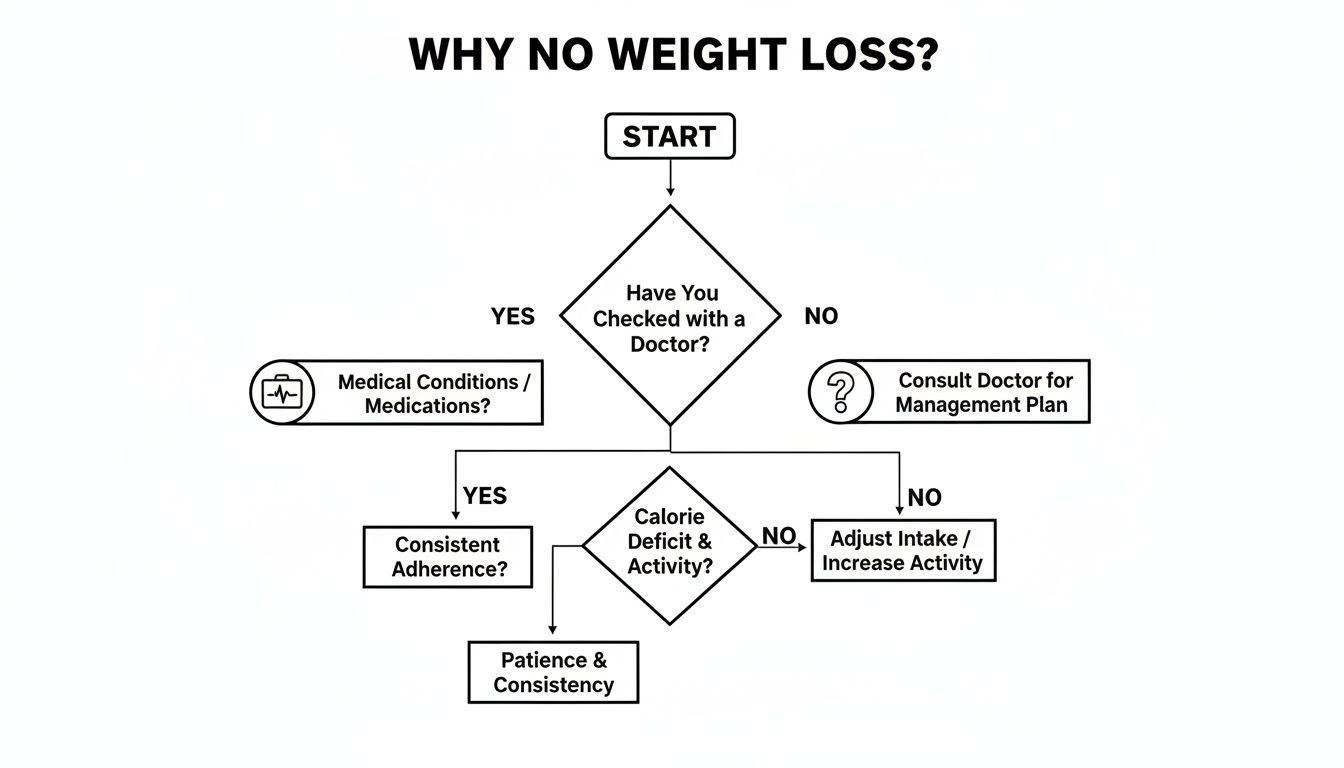
As you can see, the decision tree really drives home the point that ruling out medical issues is the right place to begin before you start fine-tuning your diet and lifestyle.
Actionable Strategies to Implement Today
After you’ve done a quick self-audit, it's time to put a few targeted changes into action. Don't try to do everything at once. Just pick one or two of these that feel right for you and focus on being consistent.
- Introduce Resistance Training: If you've only been doing cardio, adding 2-3 strength training sessions a week can be a total game-changer. Building lean muscle is one of the single most effective things you can do to give your resting metabolism a boost.
- Experiment with Meal Timing: This isn't a magic bullet, but some people find a lot of success with time-restricted eating, like a 16:8 intermittent fasting schedule. It's often just a simple way to help control your overall calorie intake and can improve insulin sensitivity.
- Prioritize Non-Scale Victories (NSVs): The number on the scale is just one piece of the puzzle, and frankly, it can be a frustrating one. To keep your motivation high, make sure you're celebrating all the other signs of progress.
Focus on these wins:
- Your clothes are fitting better.
- You have more energy to get through your day.
- You’re getting stronger or faster in your workouts.
- Lifting groceries or playing with your kids feels easier.
These NSVs are real, tangible proof that your hard work is paying off, even when the scale decides to be stubborn. If you want to dig deeper into your energy needs, our guide on how to calculate your calorie deficit can be incredibly helpful.
When to Seek Professional Support
If you've given these strategies an honest try for a few weeks and you're still feeling stuck, it might be time to call in some backup. This is not a sign of failure! In fact, it's a smart, proactive move to get an expert's perspective.
Consider reaching out to a professional if:
- You have a gut feeling that an underlying medical issue, like a thyroid problem or PCOS, could be at play.
- You have a history of disordered eating and need guidance from someone who understands that complexity.
- You simply feel overwhelmed and would benefit from a personalized plan created by a registered dietitian or a certified personal trainer.
A good professional can offer objective feedback, order any necessary tests, and help you build a safe and effective plan that’s designed specifically for you.
Got Questions About Weight Loss Plateaus? We've Got Answers.
When the scale suddenly grinds to a halt, it's easy to get frustrated and wonder what's going on. That big question—"Why am I not losing weight?"—usually splinters into a dozen others about what to do next. Let's tackle some of the most common ones with straightforward, evidence-based answers.
How Long Does a Weight Loss Plateau Last?
This is the million-dollar question, and unfortunately, there's no single timeline. A true plateau can hang around for a few weeks or even a few months. How long it sticks around really depends on how quickly you pinpoint the cause and tweak your game plan.
If the stall is from metabolic adaptation after losing a good amount of weight, it might not budge until you adjust your diet or exercise routine. But sometimes, it's just a temporary blip. Things like a salty dinner, a really tough workout, or hormonal shifts can cause water retention that masks your progress for a week or two. Patience is your best friend here.
Should I Do More Cardio or Lift More Weights?
When you're trying to bust through a plateau, both are good, but strength training often has the edge. Cardio is fantastic for burning calories in the moment, but lifting weights builds muscle, and muscle is your metabolic secret weapon. The more muscle you have, the higher your resting metabolism, which means you're burning more calories 24/7—even when you're just binge-watching your favorite show.
The best strategy is a tag-team approach. Aim for strength training 2-3 times per week to fire up your metabolic engine. Then, mix in cardio to boost your calorie deficit and keep your heart happy. It's a powerful one-two punch to get the scale moving again.
How Important Is Hydration for Weight Loss?
It’s a bigger deal than most people think. Staying hydrated can give your metabolism a small but meaningful nudge, as your body actually expends energy to warm the water you drink. Some studies even show that drinking plenty of water can help rev up your metabolism and curb cravings for sugary sodas and juices.
Water is also essential for helping your body metabolize fat for fuel. It helps with digestion, makes you feel fuller, and keeps your muscles working properly during exercise. A great starting point is to aim for at least 8 cups (64 ounces) a day.
Can Intermittent Fasting Break a Plateau?
Intermittent fasting (IF) can definitely be a useful tool for some people, but it isn't a silver bullet. The main way it works is by making it simpler to stay in a calorie deficit. By creating a shorter eating window—say, only eating between noon and 8 p.m.—you naturally cut down on opportunities for mindless snacking and extra calories.
There's also some research suggesting IF might improve insulin sensitivity, which helps your body handle blood sugar more effectively and store less fat. If you think your progress has stalled because of late-night grazing or oversized meals, giving a simple 16:8 fasting schedule a try could be the strategic shift you need.
At The Happy Health Blog, our goal is to give you clear, science-backed information so you can navigate your health journey with confidence. Explore our articles for more expert guidance on building sustainable habits for a healthier life.
