


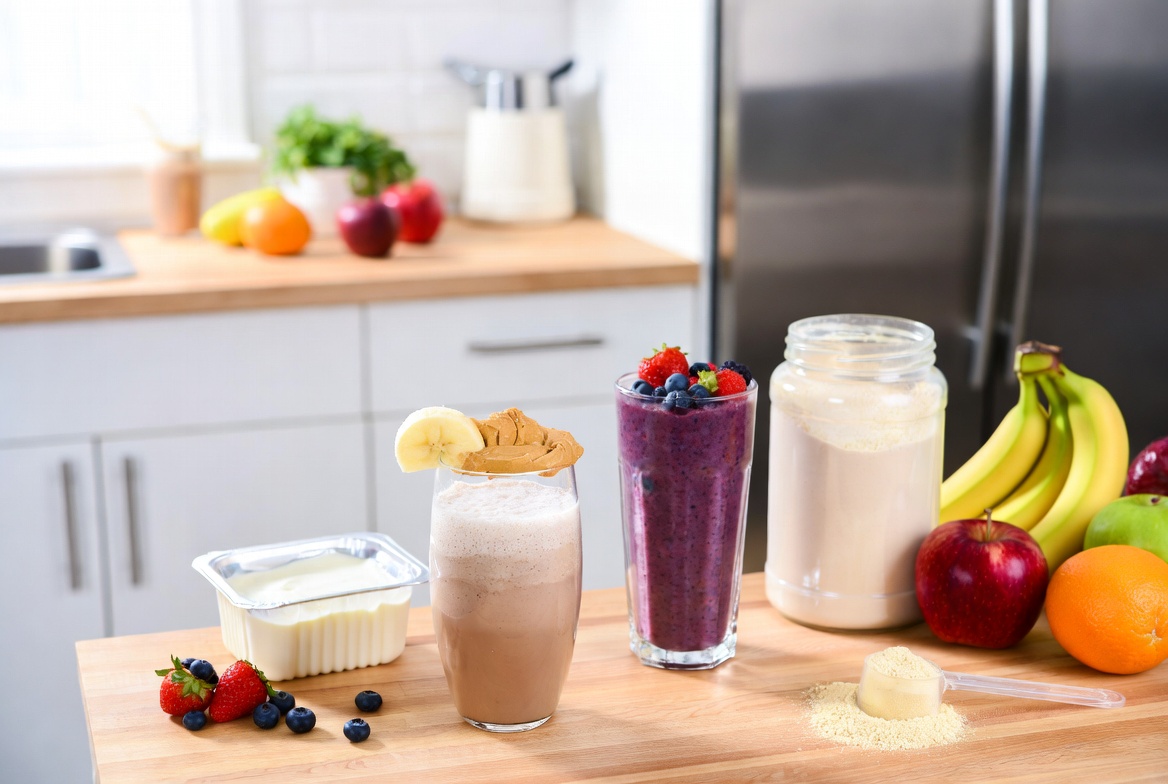
Increasing your protein intake doesn't have to be complicated. It really comes down to a few smart habits: making protein the star of every meal, choosing better snacks, and knowing your personal daily target. These small shifts can make a huge difference in your energy levels, muscle health, and how full and satisfied you feel all day long.
Why Prioritizing Protein Is a Game Changer for Your Health
It seems like everyone is talking about protein lately, and for good reason. It’s far more than a buzzword for athletes; it's one of the fundamental building blocks for a healthy, high-functioning body. Protein is absolutely essential for repairing tissues, building lean muscle, producing critical enzymes and hormones, and keeping your immune system strong. Yet, despite its importance, so many of us fall short of getting enough consistently.
When you start making protein a priority, the benefits are real and you can feel them in your daily life. Here's what you can expect:
- Feel Fuller, Longer: Protein is the most satiating of all the macronutrients. That means it keeps you feeling full, which can help crush cravings and naturally lead to eating fewer overall calories.
- Maintain and Build Muscle: Whether you're hitting the gym hard or just want to stay strong and capable as you age, protein provides the amino acids your body needs to repair and build muscle. If you're active, you'll also want to check out our guide on the best post-workout recovery foods.
- Steady, Crash-Free Energy: Unlike sugary carbs that send your energy levels on a rollercoaster, protein helps stabilize your blood sugar. The result? A much more consistent stream of energy throughout the day.
- Boost Your Metabolism: Your body actually burns more calories digesting protein compared to fats and carbs. This effect, known as the thermic effect of food, gives your metabolism a nice little boost.
The Growing Focus on Protein
If you're looking for ways to eat more protein, you're definitely not alone. In 2024, a massive 61% of American consumers said they were actively trying to increase their protein consumption—a huge jump from just 48% back in 2019. This shift shows just how much people value protein for its health benefits and its ability to keep them satisfied.
This guide is here to cut through the noise and give you simple, practical steps. We're not about restrictive diets or boring meal plans. We'll show you how to easily weave more protein into the life you're already living.
The secret to long-term success isn't a massive diet overhaul. It’s all about the small, consistent changes that build up over time—like swapping your morning bagel for Greek yogurt or adding edamame to your afternoon snack.
To get you started, I've put together a quick cheat sheet with some of the most effective strategies we'll be diving into. Think of this as your starting point for making your protein goals a reality.
Quick Guide to Boosting Your Protein Intake
| Strategy | Key Action | Example |
|---|---|---|
| Prioritize at Every Meal | Make a protein source the "star" of your breakfast, lunch, and dinner plates. | Starting your day with scrambled eggs instead of cereal. |
| Smart Snacking | Choose snacks that offer a solid dose of protein to bridge meals and curb hunger. | Grabbing a handful of almonds or a cheese stick instead of chips. |
| Incorporate Protein Boosters | Add high-protein ingredients to foods you already enjoy. | Stirring collagen or protein powder into your morning coffee or oatmeal. |
| Plan Ahead | Prepare protein-rich components at the beginning of the week for quick and easy meals. | Grilling a batch of chicken breasts or boiling eggs to use in salads and wraps. |
These are the core principles that, once they become habits, will make hitting your protein goals feel almost effortless.
Finding Your Personal Protein Target
Before you start swapping out foods or meal-prepping for the week, let's figure out what you're actually aiming for. The vague idea of "eating more protein" is a good start, but it's not a real strategy. What you need is a number—a daily target that turns that fuzzy goal into a clear, actionable plan.
The good news is, you don't need to be a nutritionist to find your number. The most practical way to estimate your protein needs is by looking at two simple things: your body weight and how active you are.
The Basic Protein Calculation
For a generally healthy adult who isn't very active, the standard recommendation is 0.8 grams of protein per kilogram (g/kg) of body weight. Think of this as the minimum your body needs to handle the basics, like repairing tissues and keeping your immune system running smoothly.
Here’s how to quickly figure that out:
- Find your weight in kilograms: If you weigh yourself in pounds, just divide that number by 2.2. For someone who is 154 pounds, that comes out to about 70 kilograms (154 ÷ 2.2 = 70).
- Multiply by the protein factor: Take your weight in kilograms and multiply it by 0.8. For our 70 kg person, that's 56 grams of protein per day (70 kg x 0.8 g/kg).
This 56-gram target is a solid starting point. It's the essential baseline to prevent deficiency.
But here’s something I’ve seen time and again: that 0.8 g/kg figure is truly the bare minimum. Most people, even those who are only moderately active, feel and perform better with a bit more. A higher intake is fantastic for feeling full, maintaining muscle, and just overall wellness.
Tailoring Your Target to Your Lifestyle
Your daily life plays a huge role in how much protein you really need. A person with a desk job has completely different requirements than someone training for a marathon or hitting the weights a few times a week. The more you move, the more protein your body demands to repair and rebuild muscle.
If you're active, you’ll want to aim higher—somewhere in the range of 1.2 to 2.0 g/kg of body weight. This is the sweet spot for optimizing muscle protein synthesis, which is just the fancy term for the process your body uses to build new muscle. For serious athletes or anyone focused on strength training, pushing toward the higher end of that range is often the key to better performance and faster recovery.
Let's look at our 70 kg (154 lb) person again, but this time with a more active lifestyle:
- Moderately Active (exercising 3-4 days a week): They might aim for 1.2 g/kg, which means their new target is 84 grams of protein daily.
- Highly Active (intense workouts 5+ days a week): They could bump it up to 1.6 g/kg, putting their daily goal at 112 grams.
See the difference? Now you have a concrete number to shoot for. Instead of just guessing, you have a metric to guide your meals and snacks, ensuring you’re giving your body exactly what it needs.
To make this even easier, the table below breaks down the common recommendations. Find the category that sounds most like you.
Daily Protein Intake Recommendations by Lifestyle
This table provides a snapshot of protein needs based on different activity levels. It's a great tool for helping you find a personalized starting point.
| Lifestyle Category | Activity Level | Recommended Protein (grams per kg of body weight) | Example (for a 70kg / 154lb person) |
|---|---|---|---|
| Sedentary | Primarily desk work with little to no structured exercise. | 0.8 – 1.0 g/kg | 56 – 70 grams |
| Moderately Active | Light to moderate exercise (e.g., brisk walking, jogging, light gym sessions) 2-3 times per week. | 1.1 – 1.4 g/kg | 77 – 98 grams |
| Active | Consistent, structured exercise (e.g., strength training, running) 4-5 times per week. | 1.4 – 1.7 g/kg | 98 – 119 grams |
| Highly Active / Athlete | Intense training or physically demanding job 5+ times per week, focusing on muscle growth or performance. | 1.6 – 2.2 g/kg | 112 – 154 grams |
Once you've identified your target range, you'll be amazed at how much clearer the path forward becomes. You're no longer just "eating more protein"—you're strategically fueling your body for your specific goals.
Building Your High-Protein Grocery List
Let’s be honest, hitting your protein goals doesn't start at the dinner table—it starts in the grocery store. Having a kitchen stocked with high-protein staples is the single best trick I know for staying on track. Think of your next grocery run less as a chore and more as a strategic mission for your health.
Instead of just wandering the aisles and hoping for the best, we’ll get specific. I'll break down the best protein sources by category (animal and plant-based) so you can grab exactly what you need. This isn't just a generic list; I'm including real-world protein counts to help you make smarter choices on the fly.
Your protein needs are unique to you, and they can vary dramatically based on how active you are.
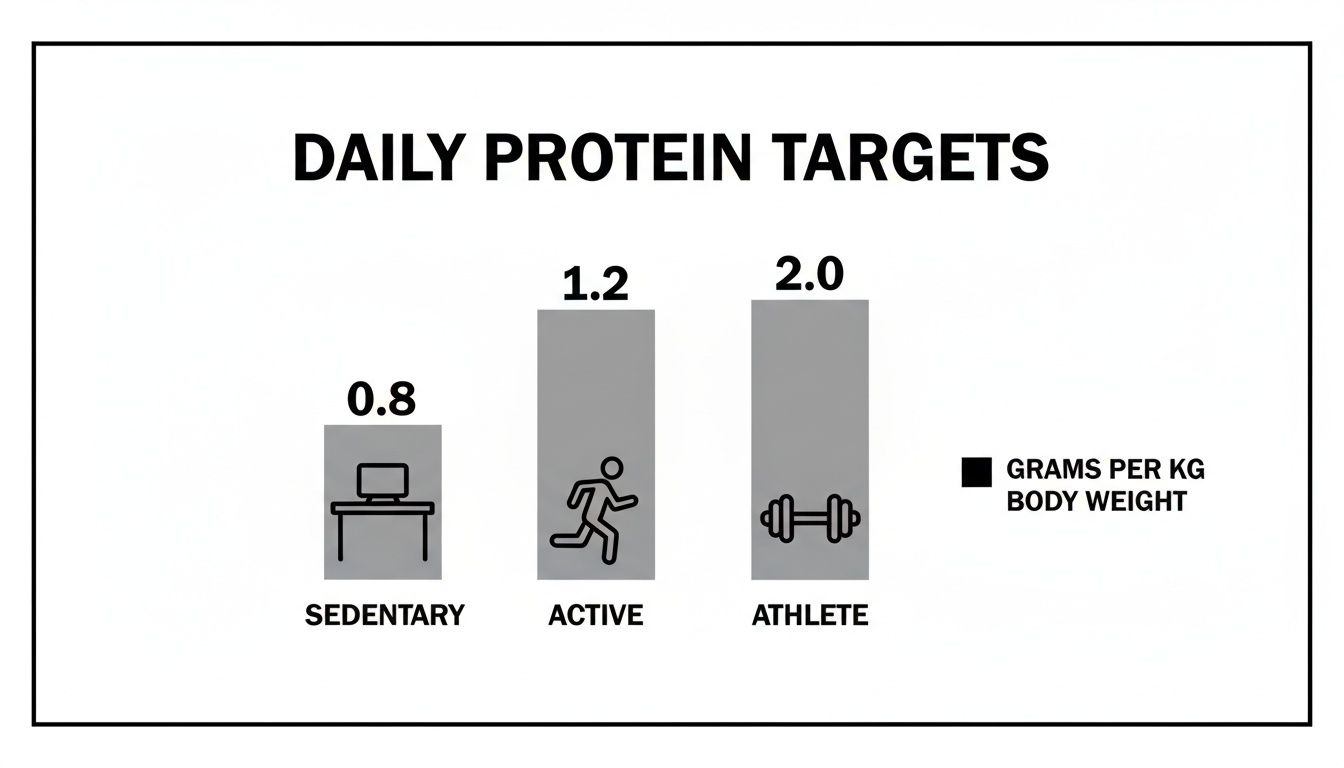
As you can see, a highly active person might need more than double the protein of someone with a sedentary lifestyle, which makes what you put in your cart even more important.
Animal-Based Protein Powerhouses
Animal products are what we call "complete" proteins, meaning they provide all nine essential amino acids your body can't make itself. From a pure efficiency standpoint, they are incredibly effective for boosting your intake.
Here are some of the most reliable and versatile options I always recommend:
- Chicken and Turkey Breast: This is a staple for a reason. A single 4-ounce (113g) serving of boneless, skinless chicken or turkey breast is loaded with a massive 30-35 grams of high-quality protein. It's a clean, lean foundation for countless meals.
- Lean Red Meats: Don't sleep on lean cuts of beef like sirloin or 93/7 ground beef. A 4-ounce serving delivers a solid 25-30 grams of protein and comes with the added bonus of iron and vitamin B12.
- Fish and Seafood: A 4-ounce salmon fillet gets you around 22 grams of protein plus a healthy dose of anti-inflammatory omega-3s. For a budget-friendly option, canned tuna is a powerhouse, offering about 25 grams of protein per can.
- Eggs: I call them nature's perfect protein. One large egg gives you 6 grams of protein, and they're affordable, endlessly versatile, and packed with choline for brain health.
My best advice? Build a foundation. If you keep your fridge and freezer stocked with a few of these core items, you'll always have a high-protein base ready to go. That consistency is what makes all the difference.
- Greek Yogurt: This is a total game-changer for breakfast and snacks. A standard 6-ounce (170g) container can pack 15 to 20 grams of protein—that's roughly double what you get from regular yogurt.
- Cottage Cheese: This dairy-aisle classic is making a huge comeback, and for good reason. Just a half-cup serving provides an impressive 12-14 grams of slow-digesting casein protein, which is fantastic for keeping you full for hours.
Essential Plant-Based Proteins
Whether you're fully plant-based or just want to add more variety to your diet, the plant kingdom has some incredibly powerful options. It's a total myth that you can't get enough protein from plants; you just have to know where to look.
Here are the plant-based staples that should be on your list:
- Lentils and Beans: A non-negotiable for your pantry. One cooked cup of lentils delivers about 18 grams of protein and a huge dose of fiber. Black beans and chickpeas are right behind, with around 15 grams per cup.
- Tofu and Tempeh: These soy-based foods are culinary chameleons. A 4-ounce serving of firm tofu has about 10-12 grams of protein. Tempeh, made from fermented soybeans, is even better, boasting a hefty 18-20 grams.
- Edamame: A fantastic snack or meal-booster. One cup of shelled edamame provides a solid 17 grams of complete protein.
- Quinoa: While it cooks like a grain, quinoa is technically a seed and a complete protein source. It provides about 8 grams of protein per cooked cup.
- Nuts and Seeds: Perfect for snacking or adding texture to meals. Almonds have 6 grams of protein per ounce (about 23 nuts). And don't forget powerhouse seeds like hemp and chia, which offer 9-10 grams in just a 3-tablespoon serving.
These items don't just add protein; they bring fiber, vitamins, and minerals that support your overall health. Learning to build meals around these ingredients is a great strategy for anyone. For more inspiration on how to put it all together, take a look at our clean eating meal plan.
Crafting High-Protein Meals from Morning to Night
Knowing which high-protein foods to stock up on is a great first step, but the real magic happens in the kitchen. This is where we put the knowledge into practice, turning that grocery haul into satisfying, protein-packed fuel that keeps you going all day. The goal is to make hitting your protein targets feel like a delicious upgrade, not a dietary chore.
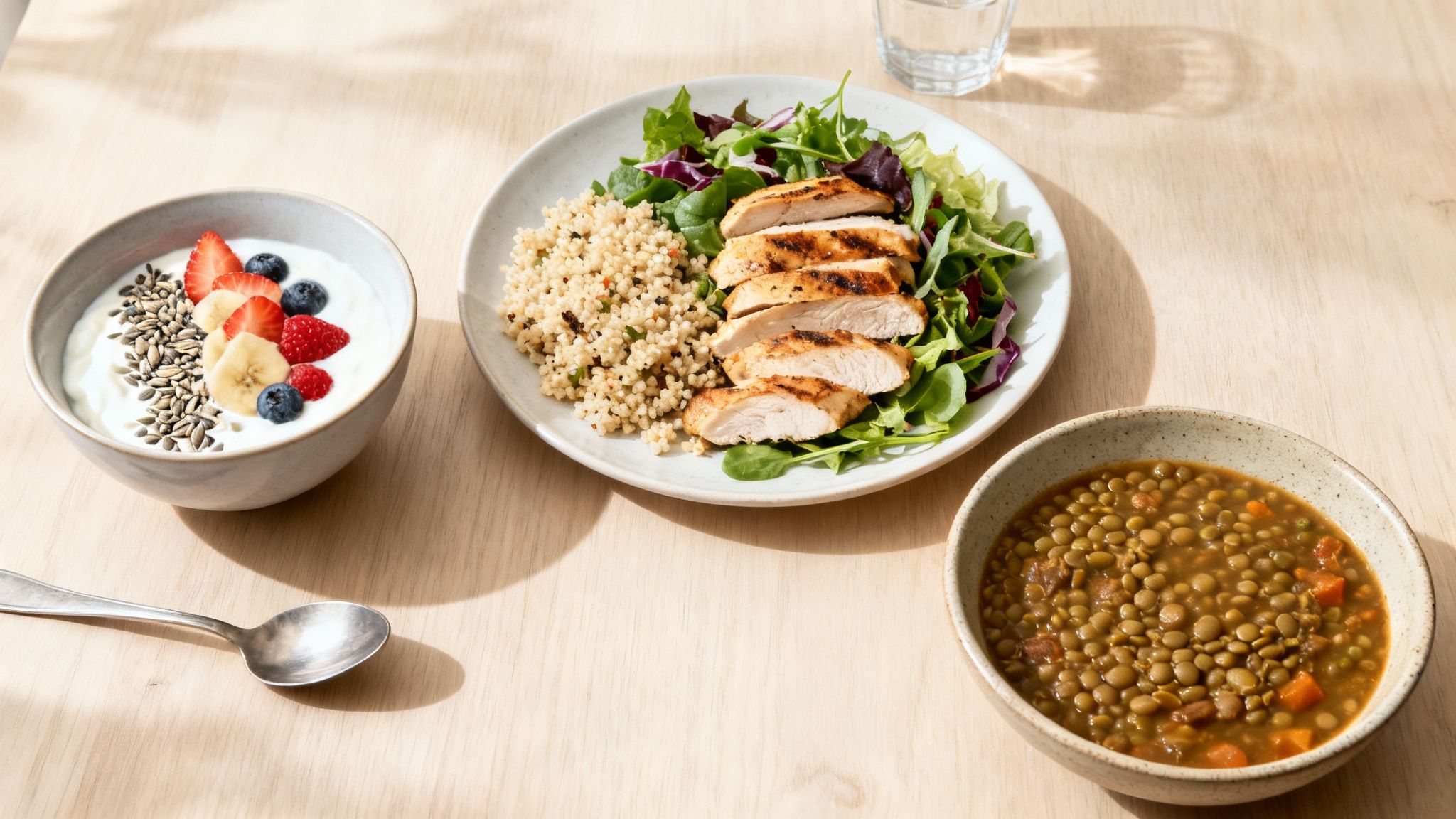
Forget the idea that you’re doomed to a life of plain chicken and broccoli. We're talking about creamy Greek yogurt bowls loaded with nuts, hearty lentil shepherd's pie, or spicy black bean burgers that will satisfy even the most committed meat-eater. It’s all about finding simple, smart combinations that you genuinely enjoy.
A key strategy I always recommend is protein pacing. Instead of saving the bulk of your protein for a massive dinner, you distribute it more evenly across all your meals and snacks. In fact, research points to 20-30 grams of protein per meal as a sweet spot for maximizing muscle protein synthesis—the crucial process your body uses to build and repair tissue.
Spreading your protein out this way keeps your body in a constant state of repair and provides a steady stream of energy, which is a game-changer for avoiding those dreaded afternoon slumps.
Reinventing Your Breakfast
Breakfast really sets the tone for the day, so it’s the perfect place to start strong with a solid protein hit. A protein-rich breakfast helps keep your blood sugar stable and makes you feel full and focused right through to lunch. So many classic breakfast foods are just carb-bombs, but it's surprisingly easy to make a change.
- Upgrade Your Yogurt: Swap your standard yogurt for Greek yogurt or Icelandic skyr. Just one bowl topped with a handful of almonds, a tablespoon of chia seeds, and some berries can easily get you over 20 grams of protein.
- Embrace Savory Options: Who says breakfast has to be sweet? Two scrambled eggs with a side of cottage cheese and a slice of whole-wheat toast can deliver a 25-30 gram protein punch.
- Boost Your Oatmeal: Your morning bowl of oats doesn’t have to be a carb-only event. Just stirring in a scoop of protein powder or a big spoonful of nut butter can add an extra 10-20 grams of protein instantly.
If you need some more inspiration, we've put together our favorite high-protein breakfast recipes to get your mornings off to a great start.
Building a Better Lunch and Dinner
Lunch and dinner are usually the easiest meals to pack with protein, but it’s just as easy to fall into a rut. The secret is to build your plate around your protein source first, then add in fiber-rich veggies and some complex carbs for balanced, lasting energy.
A simple mental model I use is the "protein-first plate": one palm-sized portion of protein, two fists of non-starchy vegetables, and one cupped hand of carbs.
So many people make the mistake of saving most of their protein for dinner. By spreading it out, you’re feeding your muscles a consistent supply of amino acids throughout the day, which is far more effective for satiety and recovery than one giant dose at night.
Here are a few simple but effective ideas to get you started:
- Power Salads: Don't just throw some lettuce in a bowl. Start with a bed of greens and top it with 4-6 ounces of grilled chicken, a can of tuna, or a cup of chickpeas. Load it up with colorful veggies and a sprinkle of sunflower seeds for a meal that actually fills you up.
- Hearty Soups and Stews: A good lentil or black bean soup is incredibly satisfying and full of plant-based protein. To bump it up even more, add some shredded chicken or a scoop of cooked quinoa.
- Smart Stir-Fries: Grab your favorite protein—shrimp, tofu, or lean beef strips—and sauté it with a mountain of broccoli, bell peppers, and snap peas. Serve it over a small portion of brown rice or quinoa for a perfectly balanced meal.
Sample High-Protein Day
Sometimes, seeing it all laid out makes it feel much more achievable. Here’s what a full day of eating could look like if you're aiming for a goal of around 120 grams with protein pacing in mind.
| Meal | Example Meal | Estimated Protein |
|---|---|---|
| Breakfast | 1 cup Greek yogurt with berries, 1 oz almonds | ~25 grams |
| Lunch | Large salad with 5 oz grilled chicken breast | ~40 grams |
| Snack | 1/2 cup cottage cheese with apple slices | ~14 grams |
| Dinner | 5 oz baked salmon with roasted asparagus and quinoa | ~35 grams |
| Total | ~114 grams |
This is just a template, of course, but it shows how quickly the numbers add up with just a bit of mindful planning. The real key is to see every meal and snack as an opportunity to inch closer to your daily protein goal.
Clever Hacks for an Effortless Protein Boost
Hitting your protein goals doesn't have to feel like a full-time job. Honestly, the best way to stick with it is to find small, clever ways to weave more protein into your day without a massive overhaul.
It’s all about finding those little opportunities. Instead of thinking about what you need to cut out, start looking for what you can add in. That simple shift in mindset makes the whole process feel less like a chore and more like a natural part of how you eat.
Practice Smart Swaps and Upgrades
One of the easiest wins is simply swapping out some of your usual ingredients for higher-protein alternatives. You'd be surprised how much these little changes add up over the week, and most of the time, you barely notice a difference in your meals.
Take a look at what you eat regularly. Is there a more protein-packed version available?
- Yogurt Power-Up: Ditch the regular yogurt and grab Greek yogurt or Icelandic skyr. This one simple move can easily double your protein, adding an extra 8-10 grams to your bowl.
- The Sour Cream Secret: Use plain Greek yogurt anywhere you'd use sour cream—on baked potatoes, in dips, or on tacos. The texture is practically identical, but the protein boost is a game-changer.
- Rethink Your Pasta: Next time you're at the store, look for pasta made from chickpeas or lentils. Instead of just carbs, you're getting a solid 12-15 grams of plant-based protein per serving before you even add a sauce.
These aren't about reinventing the wheel. They're about making smarter, more efficient choices that get you closer to your goal with almost zero extra effort.
Master the Art of the "Protein Sneak"
This is where things get really fun. I call it the "protein sneak," but the technical term is fortification. It's just the simple act of adding unflavored or complementary-flavored protein sources into foods that are usually low in protein.
This works wonders for things like oatmeal, soups, sauces, and smoothies. A high-quality, unflavored protein powder is your best friend for this. Collagen peptides, for example, dissolve into almost anything hot or cold without a trace.
One of my go-to tricks is stirring a scoop of unflavored collagen peptides into my morning coffee. It’s a completely tasteless, undetectable 10 grams of protein. It's probably the easiest protein I get all day.
Here are a few ways to put this into practice:
- Upgrade Your Oatmeal: After you’ve cooked your oats, stir in a scoop of vanilla or unflavored protein powder. Boom—an extra 20-25 grams of protein to kickstart your morning.
- Build a Better Smoothie: Smoothies are a blank canvas. A scoop of protein powder is obvious, but you can also toss in a few tablespoons of hemp seeds or a big spoonful of Greek yogurt to really amp it up.
- Fortify Soups and Sauces: Blend a scoop of unflavored protein powder or even some pureed white beans into your creamy soups or pasta sauces. It adds a protein and fiber boost while also making them thicker and more satisfying.
Make Meal Prep Your Secret Weapon
Meal prep isn't just a time-saver; it’s your defense against bad choices. When you're hungry and in a rush, you grab what's easy. Prepping your protein ahead of time makes the healthy choice the easy choice.
You don't even have to cook full meals. Just having some core protein components ready to go can make all the difference.
Try setting aside just an hour on a Sunday to get a few things ready for the week:
- Cook a big batch of protein: Grill or bake a few chicken breasts, some salmon fillets, or a pork tenderloin. Now you can slice them up for salads, wraps, or grain bowls in minutes.
- Boil a dozen eggs: Is there a more perfect grab-and-go snack? Each hard-boiled egg gives you about 6 grams of high-quality protein.
- Prep your base: Cook up a large pot of quinoa or a batch of lentils. This gives you a high-protein foundation for quick lunches and dinners all week long.
This simple routine takes the decision-making out of your meals. When the protein is already cooked and waiting for you, you're always just one step away from a balanced meal that fits your goals.
Still Have Questions About Upping Your Protein?
Embarking on a higher-protein diet often brings up a few questions, even when you have a solid plan. It's totally normal. Let's walk through some of the most common ones I hear to help you feel confident and clear about the path ahead.
"Are Protein Powders and Supplements Actually Necessary?"
Honestly, for most people, the answer is no. You can absolutely hit your protein goals with whole foods alone.
Think of supplements like whey, casein, or plant-based powders as tools for convenience, not a requirement. They're fantastic for a quick post-workout shake when you're short on time or for easily boosting a meal that's a little light on protein (like oatmeal or a smoothie). But they should never be your primary source—real food always comes first.
"Is It Possible to Get Enough Protein on a Vegan Diet?"
Yes, 100%. It just requires a bit more strategic planning than for an omnivore, but hitting high protein targets on a vegan diet is completely doable.
The secret is to be deliberate about including protein-rich plant sources in every single meal. That means making foods like these the stars of your plate:
- Tofu, tempeh, and edamame
- Lentils, chickpeas, and black beans
- Seitan (if you're not gluten-sensitive)
- Quinoa
- Nuts, seeds, and their butters
A smart move for vegans is to mix and match protein sources throughout the day. This helps ensure you're getting all the essential amino acids your body needs. A classic example is pairing rice and beans—together, they form a complete protein.
"Can You Eat Too Much Protein?"
This is a valid concern, but for most healthy people, the risk is quite low. The idea that a high-protein diet is inherently bad for your kidneys has been largely debunked, though it can be an issue for individuals with pre-existing kidney conditions.
For a healthy, active adult, research suggests that intakes up to 2.2 grams of protein per kilogram of body weight are safe. The body is pretty efficient at using what it needs. Just listen to your body's signals and make sure you're drinking plenty of water.
The bottom line: If you're healthy, your body can handle a high-protein diet just fine. The focus should be on balance and quality, not fear.
"How Important Is Protein Timing?"
You might have heard of the "anabolic window"—the idea that you must have a protein shake within 30 minutes of finishing your workout. The urgency of that window has been a bit overblown.
What's far more effective is spreading your protein intake evenly across the day.
Instead of cramming most of it into one massive dinner, aim for a steady supply. Hitting that 20–30 gram mark at each meal gives your muscles a consistent stream of amino acids for repair and growth, which is ultimately what we're aiming for.
Putting It All Together: Your High-Protein Action Plan
Alright, we've covered a lot of ground. You've seen how to calculate your protein needs, what foods to stock up on, and how to build better meals. But knowledge is only half the battle. The real magic happens when you start putting these ideas into practice.
Remember, this isn't about a massive, overnight diet overhaul. It’s about making small, smart choices that add up. The journey starts with just one or two simple changes that feel totally manageable.
Your First Steps
Feeling motivated is fantastic, but taking that first step is what truly matters. Let's make it easy. Don't put this off until next week—start small, start now.
- This Week's Grocery Run: Pick one new high-protein food to try. Grab some Greek yogurt, a bag of lentils, or a cut of fish you don't normally buy. Just one new thing.
- Tomorrow Morning: Give your breakfast a protein boost. It could be as simple as swapping your usual cereal for a couple of eggs or stirring a scoop of protein powder into your oatmeal.
The goal here isn't perfection, it's progress. Consistent, small steps are what build lasting habits and make a real difference in how you look and feel. You've got this.
At The Happy Health Blog, our goal is to give you the guidance and motivation to build a healthier life, one step at a time. For more expert-backed nutrition tips and actionable wellness advice, come visit us.
