

"Clean eating" is one of those terms you hear everywhere, but what does it actually mean? At its heart, it’s a simple idea: eating foods in their most natural, whole form. It's less of a strict diet and more of a lifestyle choice that puts nourishing your body with high-quality, minimally processed ingredients first.
What Does Clean Eating Actually Mean
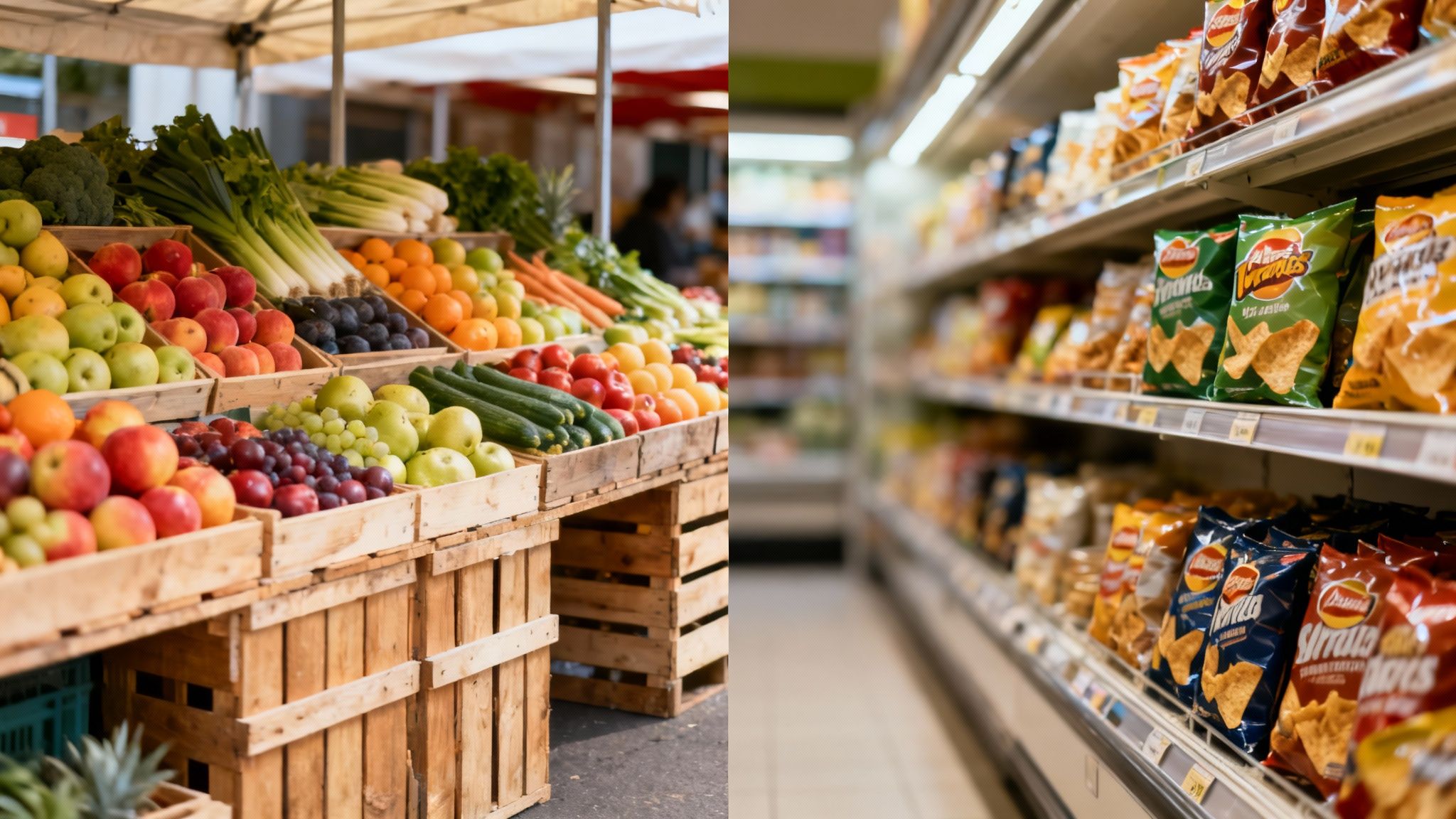
Picture a vibrant farmers' market, overflowing with fresh fruits, crisp vegetables, and quality cuts of meat. Now, imagine the middle aisles of a supermarket, stacked high with brightly colored boxes, bags, and cans. That contrast gets right to the core of clean eating.
The whole point is to favor the fresh, simple foods from the market over the heavily processed options that come from a factory. Think of it this way: you’re choosing an apple over an apple-flavored fruit snack, or grilled fish instead of breaded fish sticks.
This isn't about deprivation or following a complex set of rules. It’s about being mindful and choosing to fuel your body with wholesome ingredients that give you real energy and support your health. When you focus on whole foods, you automatically cut down on the stuff your body doesn’t need, like artificial additives, preservatives, unhealthy fats, and loads of added sugar.
The Shift Toward Fresher Foods
This mindful way of eating has really taken off. More and more, people want to know what's in their food and how it affects them. The trend toward natural eating habits is undeniable.
This shift was especially noticeable during the pandemic, when a survey found that over half of adults made some pretty big changes to how they eat. A huge chunk of them started leaning into fresher foods like produce (40%) and groceries without artificial ingredients (33%). You can dive deeper into the full research on global healthy eating trends to see how things have changed.
Clean Eating At A Glance
To make it even clearer, let's break down the key differences between a clean eating approach and the typical modern diet. This table offers a quick snapshot.
| Core Principle | Clean Eating Approach | Typical Modern Diet |
|---|---|---|
| Food Sourcing | Prioritizes whole, unprocessed foods like fruits, vegetables, lean proteins, and whole grains. | Relies heavily on packaged, processed, and convenience foods. |
| Ingredients | Emphasizes simple ingredient lists you can actually recognize and pronounce. | Often contains long lists of additives, preservatives, and artificial flavors. |
| Fats | Focuses on healthy, natural fats from sources like avocados, nuts, and olive oil. | Includes high amounts of refined oils and unhealthy trans fats. |
| Sugars | Limits added sugars, getting sweetness from natural sources like fruit. | High in refined sugars, corn syrup, and artificial sweeteners. |
| Cooking Method | Encourages home cooking with methods like grilling, steaming, and baking. | Leans toward fast food, pre-made meals, and deep-fried items. |
As you can see, the philosophy isn't about perfection. It’s about shifting the balance toward foods that are closer to their original source, giving your body the nutrients it was designed to use.
Understanding The Philosophy
Clean eating isn’t a rigid, one-size-fits-all plan. It’s a flexible framework you can adapt to your own tastes and lifestyle. The ultimate goal is just to nourish your body with the best fuel possible.
The philosophy is simple: Fill your plate with real, whole foods that your body recognizes and can use efficiently. This means prioritizing ingredients that are rich in vitamins, minerals, fiber, and high-quality protein.
This doesn't mean you have to give up everything you love. It’s about making smart, sustainable swaps. For instance, maybe you switch from white bread to a hearty whole-grain loaf, or you whip up your own salad dressing instead of buying a bottle full of sugar and preservatives. These small adjustments can add up to make a huge difference in how you feel, boosting your energy and supporting your health without ever feeling like you're on a "diet."
The Core Principles Of A Clean Eating Lifestyle
Think of "clean eating" less as a strict diet and more as a back-to-basics approach to food. It’s not about counting every calorie or banning entire food groups. Instead, it’s about choosing foods that are as close to their natural form as possible.
The whole idea is to nourish your body with simple, real ingredients. When you start making more meals from scratch, you take back control. You get to decide what goes on your plate, which means you can easily sidestep the hidden sugars, unhealthy fats, and weird additives lurking in so many packaged foods. The result? A diet naturally packed with the good stuff—vitamins, minerals, and nutrients your body loves.
Prioritize Whole, Unprocessed Foods
The absolute foundation of clean eating is building your meals around whole foods. These are foods that look pretty much the same as they did in nature. An apple, a fresh piece of salmon, a handful of almonds—they haven't been messed with much in a factory.
This doesn't mean everything has to be 100% "unprocessed." Minimally processed items are your friends here. Think pre-chopped veggies, canned beans, or frozen berries. They offer a ton of convenience without sacrificing nutrition. The goal is simply to cut back on ultra-processed foods, the ones with ingredient lists full of things you'd never stock in your own kitchen.
Here’s what to load up on:
- Fresh Fruits and Vegetables: Go for a rainbow of colors to get a wide mix of nutrients. Think bright berries, dark leafy greens, and vibrant sweet potatoes.
- Lean Proteins: Essential for building muscle and keeping you full. Great sources include chicken, fish, eggs, beans, and lentils.
- Whole Grains: Stick with grains in their complete form, like brown rice, oats, and quinoa. They're packed with fiber.
- Healthy Fats: Foods like avocados, nuts, seeds, and olive oil are fantastic for brain health and keeping hunger at bay.
Learn to Read Food Labels
Becoming a savvy label-reader is one of the most powerful skills you can develop on this journey. Food manufacturers are masters of marketing, and it's easy to be fooled by a healthy-looking package. The real story is always in the ingredient list.
A great rule of thumb? Look for short lists with names you recognize. If it’s a paragraph long and full of words that sound like a chemistry experiment, it's probably ultra-processed. Be especially wary of hidden sugars, which hide behind dozens of names like high-fructose corn syrup, dextrose, or sucrose.
When you focus on whole foods, you automatically limit your exposure to additives, preservatives, and artificial junk. Your body knows exactly what to do with simple, real ingredients.
This small habit puts you in the driver's seat, ensuring the food you buy actually matches your goals.
Emphasize Lean Protein and Healthy Fats
Protein and healthy fats are the power couple of a clean eating plan. Together, they keep you full, stabilize your blood sugar, and support everything from your muscles to your brain. So many modern diets are overloaded with refined carbs, which often leads to that dreaded afternoon energy crash.
Try to include a quality protein source with every meal. Many people, especially as they get older, don't get enough. And no, you don't have to live on chicken breast; plant-based powerhouses like chickpeas and quinoa are fantastic options. If you need some inspiration, our guide on how to increase protein intake has a ton of simple, effective tips.
Healthy fats are just as critical. While "fat" got a bad rap for years, we now know that good fats—like the omega-3s in salmon or the monounsaturated fats in olive oil—are vital. Swapping out saturated fats for these healthier alternatives can make a world of difference.
Healthy Protein and Fat Swaps
| Instead Of This… | Try This Clean Swap… |
|---|---|
| Breaded chicken nuggets | Grilled or baked chicken breast |
| Sugary breakfast cereal | A bowl of oatmeal with berries and nuts |
| Creamy, bottled salad dressing | A simple vinaigrette of olive oil and lemon juice |
| Flavored, sweetened yogurt | Plain Greek yogurt with fresh fruit |
Making these simple trades is an easy way to shift your diet toward foods that truly fuel you.
Limit Added Sugars and Refined Carbs
Finally, eating clean means being mindful of added sugars and refined carbs. These foods give you a quick spike of energy, but the crash that follows can leave you feeling tired and reaching for more junk food.
This isn't about deprivation. It's about being smarter with your choices. When you want something sweet, reach for whole fruit or use a small amount of natural sweeteners like pure maple syrup. For carbs, choose complex sources like vegetables, beans, and whole grains over white bread, pastries, and sugary drinks. They provide slow-release energy and fiber, which is a game-changer for digestive health and feeling full.
The Real Benefits Of Adopting Clean Eating Habits
When you start eating clean, you begin to connect the dots between what's on your plate and how you truly feel. This isn't about chasing some vague health goal; it’s about noticing real, positive changes in your day-to-day life. By swapping ultra-processed foods for whole ones, you're giving your body the high-quality fuel it needs to thrive.
One of the first things people notice is a huge difference in their energy levels. Think about that classic mid-afternoon slump. It’s often caused by the blood sugar rollercoaster that comes from eating processed foods high in refined sugar. You get a quick spike, followed by a hard crash.
Clean eating smooths out that ride. When you pair complex carbs (like sweet potatoes or quinoa) with lean protein and healthy fats, you get a slow, steady release of energy. No more dramatic peaks and valleys—just sustained vitality that carries you through the entire day.
This decision tree gives you a great visual for how to think about your food choices and their impact.
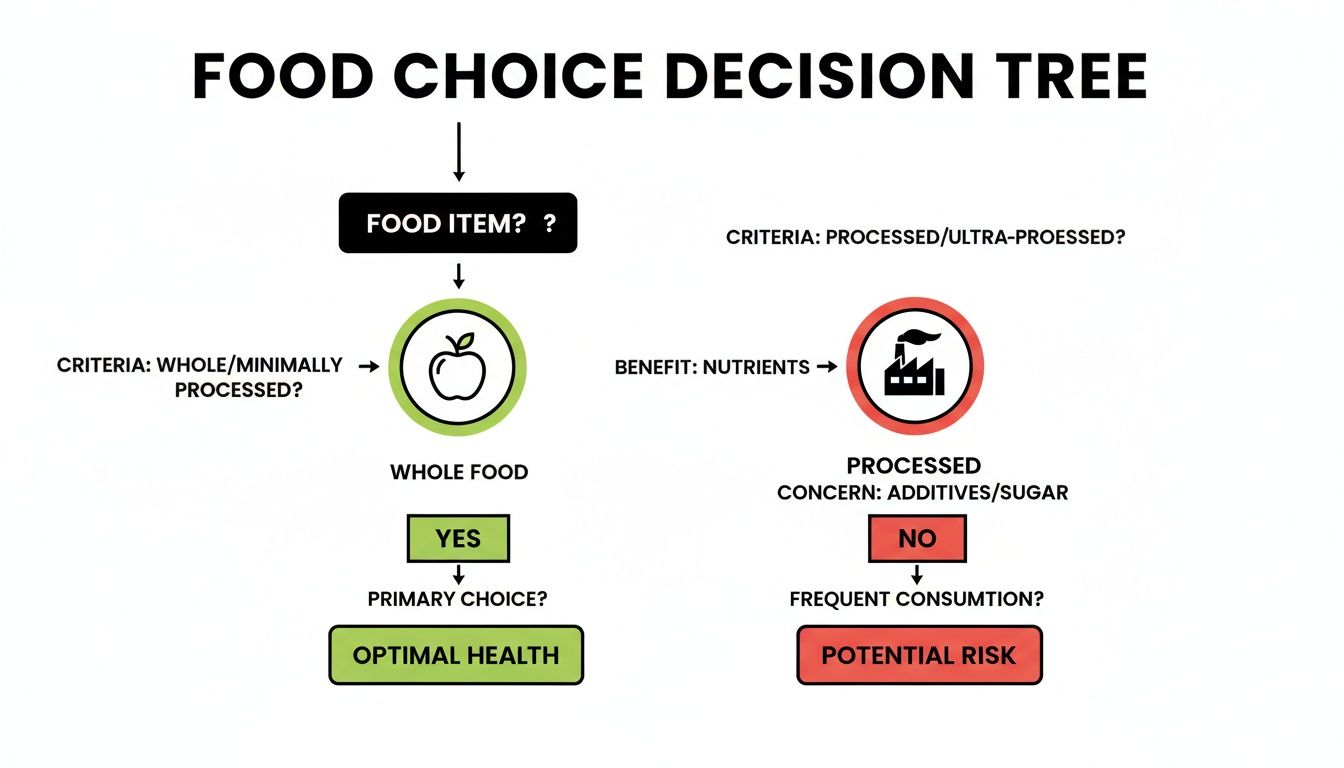
As you can see, choosing whole foods is a straightforward path to better health, whereas processed options often come with baggage.
Better Digestion And Gut Health
Another major perk is a happier digestive system. Whole foods are packed with dietary fiber, something most modern diets are seriously lacking. Fiber is crucial for keeping things moving, helping you avoid common issues like bloating and constipation.
But fiber does more than that—it’s also a prebiotic. That means it's food for the good bacteria living in your gut. A healthy gut microbiome is linked to everything from a stronger immune system to a better mood and less inflammation. By feeding these tiny allies with fruits, veggies, and whole grains, you're building a foundation for wellness from the inside out. If you want to take a deeper dive into fighting inflammation, this anti-inflammatory meal plan is a great resource.
Weight Management And Clearer Skin
Clean eating is also a fantastic approach for reaching and maintaining a healthy weight. Whole foods are naturally more filling because they contain more fiber and water. This means you feel satisfied with fewer calories, making it easier to manage portions without that nagging feeling of deprivation.
By focusing on the quality of your food, you naturally support your body's ability to regulate its weight. It’s not about restriction; it’s about providing superior nourishment.
The benefits can even show up on your skin. Many people find that cutting back on processed sugar and refined carbs leads to a clearer complexion. High-sugar diets can trigger the inflammation and hormonal shifts that lead to acne. On the other hand, fueling up on antioxidant-rich fruits and vegetables helps protect your cells from damage, giving you that healthy, natural glow.
A Practical Guide To Starting Your Clean Eating Journey
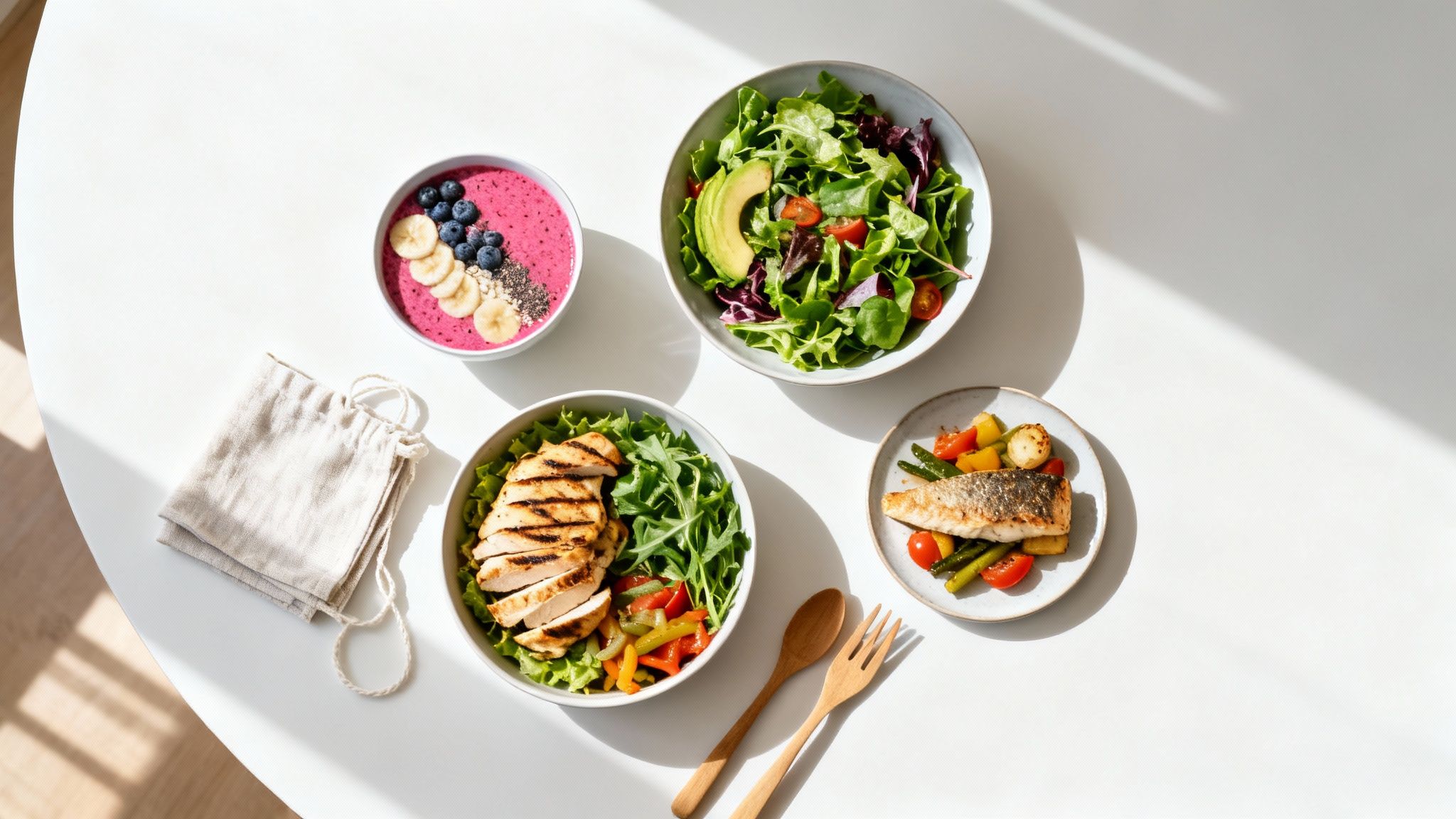
Knowing the theory behind clean eating is one thing, but actually putting it on your plate is where the real change begins. The great news? You don't need to be a professional chef or completely gut your pantry to get started.
It's all about making small, smart choices that build on each other. Think of it less like a massive renovation and more like a series of simple, satisfying upgrades. Each fresh meal you make is another step toward feeling fantastic.
Let's walk through exactly how you can start today.
A Sample Day Of Clean Eating
To give you a real-world picture of how simple and satisfying this can be, here’s what a typical day of clean eating might look like. This isn't a strict rulebook—it's just a bit of inspiration to show you how easy it is to build balanced, energizing meals.
- Breakfast: Kick off your morning with a warm bowl of oatmeal. Use whole rolled oats with water or unsweetened almond milk, then top it with fresh berries for a pop of flavor and antioxidants. A sprinkle of chia seeds adds fiber and healthy fats to keep you going.
- Lunch: Think big, colorful salads. Start with a base of mixed greens like spinach and arugula, then add grilled chicken or a scoop of chickpeas for protein. Toss in some crunchy cucumber, bell peppers, and cherry tomatoes, and finish with a simple dressing of extra virgin olive oil and lemon juice.
- Dinner: Keep it classic and delicious. A beautiful piece of baked salmon seasoned with herbs, a side of roasted sweet potatoes for those good complex carbs, and some steamed broccoli for a nutrient punch. It’s a meal that's packed with omega-3s, vitamins, and fiber.
- Snacks: When hunger hits between meals, grab a handful of almonds, a crisp apple with a spoonful of natural peanut butter, or a small bowl of plain Greek yogurt. These options give you the protein and fiber you need to stay full.
For more ideas to keep things interesting, check out our comprehensive clean eating meal plan for structured guides that make your week a breeze.
Your Clean Eating Grocery List
The grocery store can feel like a minefield, but a good list is your best map. A simple trick I always recommend is to shop the perimeter of the store first. That's usually where you'll find all the fresh, whole foods like produce, meat, and dairy. The middle aisles? That's typically processed food territory.
A smart grocery list is your ultimate tool for staying on track and avoiding those tempting impulse buys. It’s all about stocking your kitchen for success.
Your list should center on these key categories:
- Fresh Produce: Load up on a rainbow of fruits and veggies—leafy greens, broccoli, bell peppers, sweet potatoes, berries, apples, you name it.
- Lean Proteins: Think chicken or turkey breast, fish like salmon and cod, and plenty of plant-based powerhouses like lentils, chickpeas, and black beans.
- Healthy Fats: Don't forget avocados, nuts (almonds and walnuts are great), seeds (chia and flax), and a good quality extra virgin olive oil.
- Whole Grains: Stick to the good stuff like rolled oats, quinoa, brown rice, and 100% whole-wheat bread or pasta.
- Dairy or Alternatives: Plain Greek yogurt, milk, or unsweetened plant-based milks like almond or soy.
Having these staples on hand means you’re always just a few minutes away from a healthy, delicious meal.
Simple Food Swaps For A Cleaner Diet
One of the easiest ways to start is by making a few simple swaps. You don't have to give up your favorite types of meals—just upgrade the ingredients. Here are a few common examples to get you started.
| Instead Of This | Try This Clean Swap | Why It's Better |
|---|---|---|
| Sugary Breakfast Cereal | Oatmeal with Fresh Berries | Provides sustained energy from fiber and complex carbs, with no added sugar crash. |
| White Bread | 100% Whole-Grain Bread | Offers more fiber, B vitamins, and minerals, and it's less processed. |
| Creamy, Bottled Salad Dressing | Olive Oil & Lemon Juice | Avoids hidden sugars, unhealthy fats, and artificial ingredients found in many store-bought dressings. |
| Potato Chips | A Handful of Raw Almonds | Delivers healthy fats, protein, and fiber to keep you full, instead of empty calories and sodium. |
| Soda or Sugary Juice | Sparkling Water with a Lime Squeeze | Hydrates you without a single gram of added sugar or artificial sweeteners. |
These small changes might seem minor, but they add up to a huge impact on your overall health and energy levels over time.
Smart Meal Prep Strategies
Meal prepping is, without a doubt, a total game-changer for sticking with clean eating, especially when life gets hectic. It’s simply the act of preparing some meals or ingredients ahead of time. This little bit of planning saves you from grabbing unhealthy convenience food when you're tired and hungry.
You don't have to cook an entire week's worth of food at once. Even small prep steps make a big difference.
Here are a few easy ways to get ahead of the game:
- Batch Cook Grains: Make a big pot of quinoa or brown rice on Sunday. You can then toss it into salads, use it for grain bowls, or serve it as a quick side dish all week.
- Prep Your Protein: Grill or bake several chicken breasts, or hard-boil a half-dozen eggs. Having protein ready to go makes assembling a meal incredibly fast.
- Wash and Chop Veggies: Take a few minutes to wash and chop raw veggies like carrots, bell peppers, and celery. Store them in containers for easy snacking or to throw into a stir-fry.
- Portion Out Snacks: Divide nuts and seeds into small, single-serving bags. It’s perfect for portion control and makes for an effortless grab-and-go option.
Just an hour or two on a Sunday can set you up for a week of stress-free, healthy eating. It’s one of the best investments you can make in yourself.
Sorting Fact from Fiction: Common Clean Eating Myths
Like any popular health trend, "clean eating" has picked up its fair share of myths along the way. These misconceptions can make the whole idea feel overwhelming, exclusive, or just plain confusing. Let's cut through the noise and get straight to what clean eating is—and isn't—all about.
One of the most persistent myths is that you need a fat wallet to eat clean. We've all seen the images of pristine, high-end organic markets and exotic-looking ingredients that seem to cost a fortune. But that's just marketing.
At its heart, clean eating is about getting back to basics with whole foods, and that's something anyone can do, on any budget. It's not about tracking down rare "superfoods" or stocking up on pricey supplements; it’s about making smart choices with simple, nutrient-packed staples.
Myth #1: "Clean Eating Is Too Expensive"
This is probably the biggest hurdle for most people, but it’s also one of the easiest myths to bust. With a bit of planning and savvy shopping, you can absolutely eat well without breaking the bank.
Here are a few tricks I've learned over the years:
- Shop with the seasons. When fruits and vegetables are in season, there's a lot more of them, which drives the price way down. They also happen to taste a whole lot better.
- Don't be afraid of the freezer aisle. Frozen produce is a game-changer. It’s picked at its prime and flash-frozen, so all the nutrients are locked in. It’s often cheaper than fresh, lasts for months, and is perfect for tossing into smoothies, soups, or a quick stir-fry.
- Hit the bulk bins. Things like oats, brown rice, quinoa, and dried beans are significantly cheaper when you buy them in bulk. Plus, you can get the exact amount you need, which cuts down on both cost and food waste.
It's true that marketers have capitalized on the "clean label" trend, and younger consumers are often willing to pay a premium for it. One report found that 46% of Millennials and 45% of Gen Z will pay more for these products, while only 19% of Baby Boomers will. But you don't have to buy into the hype. The foundation of a healthy diet, which costs about USD 4.46 per person daily, is still out of reach for many worldwide, highlighting why focusing on affordable whole foods is so important. You can dig into the numbers in this market research on healthy food trends.
Myth #2: "It's All About Restriction and Guilt"
This is a big one, and it's a valid concern. The "clean eating" movement has sometimes been criticized for creating a rigid "good" vs. "bad" food mentality. When you start labeling foods, it's easy to fall into a trap of guilt and anxiety, which is the exact opposite of a healthy relationship with food.
But that’s a distortion of the core idea. Think of clean eating as a flexible guide, not a strict diet with a long list of forbidden foods. The real goal is simply to add more nourishing, whole foods to your plate—not to achieve a perfect record of "purity."
The real spirit of clean eating is about progress, not perfection. It’s about making choices that help you feel your best, while leaving plenty of room for the foods you enjoy without a side of guilt.
When you start thinking of foods as "clean" or "dirty," you set yourself up for an all-or-nothing mindset. Having a slice of birthday cake doesn't erase all the healthy choices you've made. Real, sustainable wellness is built on balance and flexibility, and on seeing food as a source of both nourishment and joy. Adopting a forgiving, positive approach is what makes this a lifestyle you can stick with for the long haul.
Your Questions About Clean Eating Answered
Even with the best intentions, diving into a new way of eating brings up a ton of questions. Let's tackle some of the most common ones I hear. The idea here is to give you clear, practical answers that will help you handle everything from the grocery aisle to a night out with friends.
Think of clean eating less as a strict set of rules and more as a flexible mindset. It’s about making mindful choices that help you feel your best, no matter what’s on the menu.
Is Organic Always Better for Clean Eating?
This is probably the number one question people ask, and the short answer is: not necessarily.
While organic farming avoids synthetic pesticides and fertilizers, which is great, the label “organic” doesn’t automatically make a food “clean.” The real heart of clean eating is choosing whole, minimally processed foods.
For example, a non-organic apple is always a cleaner choice than a box of certified organic, highly processed fruit snacks loaded with added sugar. If your budget has room for organic produce, that's fantastic. But if it doesn't, don't stress. Just give your conventional fruits and vegetables a good wash.
The core principle is simple: prioritize whole foods over processed ones. A conventionally grown carrot will always beat an organic cracker.
My advice? Focus your energy and your wallet on buying more fresh vegetables, fruits, and lean proteins, whether they carry the organic label or not. That’s the shift that truly moves the needle for your health.
How Can I Eat Clean When Dining Out?
Going out for a meal shouldn't feel like a test you have to cheat on. With a little bit of planning, you can absolutely enjoy yourself at a restaurant while sticking to your clean eating goals. The key is to be proactive.
A quick look at the menu online before you go is a total game-changer. It lets you spot the healthier options ahead of time, so you don't feel rushed or pressured when the server arrives.
When you're ready to order, here are a few simple tricks:
- Look for simple cooking methods: Scan the menu for words like "grilled," "steamed," "baked," or "roasted." Try to steer clear of anything described as "fried," "creamy," or "breaded."
- Ask for things on the side: Don't hesitate to request sauces, gravies, or dressings on the side. This simple move puts you in complete control of how much you use. You can also ask to swap fries for steamed veggies or a side salad.
- Build a plate of basics: Focus on the fundamentals. Order a lean protein (like fish or chicken), a healthy carb source (like a baked sweet potato or brown rice), and a big helping of vegetables.
Most restaurants are more than willing to accommodate these small requests. You can build a delicious, satisfying meal that fits perfectly with your lifestyle.
Can I Still Enjoy Treats and Desserts?
Yes! A thousand times, yes. A healthy lifestyle is about balance, not deprivation. Completely forbidding your favorite foods is a recipe for disaster—it just leads to intense cravings and feelings of failure if you "give in."
A much more sustainable approach is to find cleaner ways to satisfy that sweet tooth.
Instead of a store-bought cake full of refined sugar and preservatives, you could try baking your own with whole-wheat flour, a natural sweetener like maple syrup, and real fruit. Or, for something even easier, a bowl of fresh berries with a scoop of plain Greek yogurt is a fantastic, clean dessert.
The goal isn't to eliminate treats but to upgrade them. And when you do decide to have a more traditional dessert, enjoy it. Savor every bite without a shred of guilt, and then simply get back to your normal, wholesome eating habits at your very next meal. This flexible mindset is what turns clean eating from a diet into a lifestyle you can actually stick with.
At The Happy Health Blog, our goal is to provide you with the knowledge and confidence to build a healthier life. Explore more expert-backed articles on nutrition, wellness, and balanced living at https://thehappyhealthblog.com.
