


When it comes to immune support, it's easy to get lost in a sea of miracle cures and marketing hype. But the truth is, a strong immune system isn't built on a single, magical ingredient. It’s built on a foundation of essential nutrients working together.
Think of Vitamin C, Vitamin D, and Zinc as your body's nutritional front line. Each one has a specific, vital job to do in keeping your internal security force sharp, responsive, and ready for action.
Your Practical Guide to Immune Support Vitamins
Let's cut through the noise. Building a resilient immune system isn’t about chasing fads. It's about consistently giving your body the fundamental tools it needs to defend itself.
Imagine your immune system as a highly coordinated team of first responders. These vitamins are their gear, their communication network, and their fuel. Without them, the response to a threat can be sluggish and weak, leaving you more vulnerable to getting sick. This guide is your no-nonsense roadmap to understanding what really works.
What to Expect From This Guide
We're going to move beyond the headlines and get into the nitty-gritty of how these nutrients actually work inside your body. You'll walk away knowing not just what to take, but why it matters.
Here’s what we’ll cover:
- The A-Team: We’ll do a deep dive into the most critical nutrients, explaining their unique roles in keeping you healthy.
- Science, Simplified: Forget the textbook jargon. We'll break down the complex biology in a way that makes perfect sense.
- Food First, Supplement Smartly: You’ll learn the best foods to load up on and get clear, safe advice on when a supplement might be a good idea.
By the end of this article, you won’t just know which vitamins are important—you’ll understand the crucial role they play in your health. This foundational knowledge empowers you to make informed, proactive decisions for long-term wellness.
Before we dive in, here’s a quick overview of the key players we'll be discussing.
Key Nutrients for a Resilient Immune System
This table gives you a snapshot of the most important nutrients for a healthy immune system, what they do, and where you can find them.
| Nutrient | Primary Immune Function | Top Food Sources |
|---|---|---|
| Vitamin C | Acts as a powerful antioxidant, protecting immune cells from damage and supporting their production. | Citrus fruits, bell peppers, strawberries, broccoli, kiwi |
| Vitamin D | Modulates the immune response, helping to prevent over-reactions and enhancing pathogen-fighting cells. | Fatty fish (salmon, mackerel), fortified milk, sunlight |
| Zinc | Crucial for the development and function of immune cells; a deficiency can severely impair immunity. | Oysters, red meat, beans, nuts, whole grains |
| Vitamin A | Maintains the integrity of mucosal barriers (in the gut and respiratory tract), the body's first line of defense. | Sweet potatoes, carrots, spinach, eggs, fortified dairy |
| Selenium | An antioxidant that helps lower oxidative stress, which in turn enhances immune response. | Brazil nuts, seafood, meat, whole grains |
This is just a starting point, of course. True immune resilience is built on a lifestyle of smart, consistent choices. That means a balanced diet, regular movement, and good sleep are non-negotiable—you can learn more in our complete guide on how to boost your immune system.
Now, let’s get started on your targeted nutritional strategy.
How Vitamins Actually Fuel Your Body's Defenses
To really get a handle on which vitamins are best for immune support, we have to look at how they actually work. It’s not about finding one magic bullet. Instead, think of it as equipping a highly skilled, complex team with the right tools for the job. Your immune system is like a sophisticated army with several specialized units.
First, you have the innate immune system. These are your first responders, always on patrol and ready to attack any unfamiliar invader on sight. Then you have the adaptive immune system, which is more like your army's special forces. This group learns to recognize specific enemies, creating a "memory" to launch a faster, more targeted strike if that same bug ever comes back.
Vitamins and minerals are the high-quality fuel, advanced gear, and critical communication devices that both of these squads need to function at their best. Without them, the whole defense operation starts to break down.
The Role of Vitamins as Co-Factors
So many essential immune processes are driven by enzymes—proteins that kickstart chemical reactions. But here’s the thing: most enzymes can't work alone. They need a little helper molecule, called a co-factor, to get them going.
This is where many vitamins and minerals come into play. They act as mission-critical co-factors, essentially plugging into enzymes and flipping the "on" switch.
- Zinc, for example, is a crucial co-factor for the development and activation of T-lymphocytes. These are key soldiers in your adaptive "special forces" squad. Without enough zinc, these cells can't be trained or deployed properly.
- Similarly, Vitamin C acts as a co-factor for a whole host of enzymes that help immune cells grow and function, allowing them to mature and carry out their protective duties.
Imagine an elite soldier holding a high-tech rifle that's missing its battery. The soldier is trained, the weapon is powerful, but without that small power source, it's completely useless. That's what vitamins are to your immune system—the essential battery.
This infographic shows how a few of the most important nutrients branch out to provide unique support, all feeding into the central goal of robust immunity.
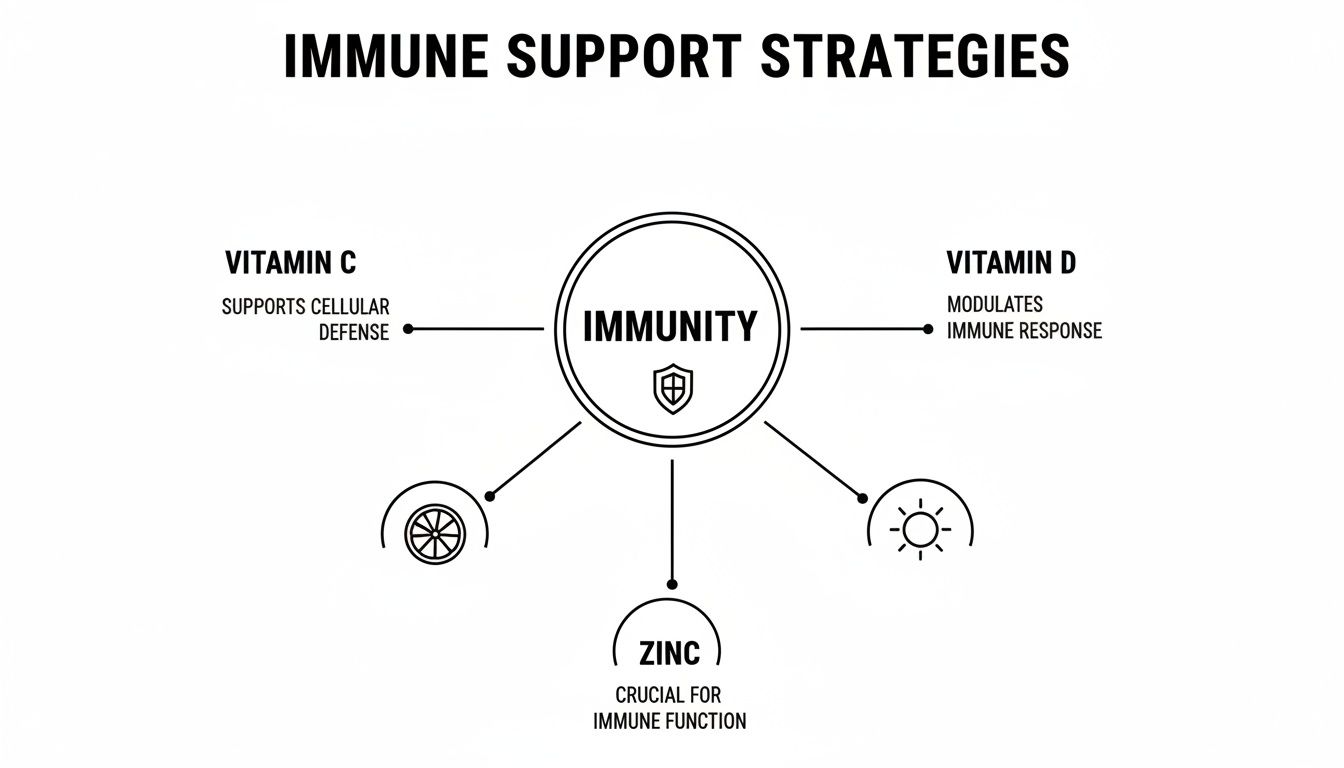
It’s a great visual reminder that a strong immune system isn't built on a single pillar but is fortified by a team of key players working together.
Antioxidants as Cellular Bodyguards
Fighting off an infection is a messy, high-energy battle. In the heat of it all, your own immune cells produce unstable molecules called free radicals. While this is a normal part of the process, too many free radicals create something called oxidative stress. This is like friendly fire—it can damage your own healthy cells, including the very immune soldiers doing the fighting.
This is where antioxidant vitamins come to the rescue.
Antioxidants like Vitamin C and Vitamin E act as personal bodyguards for your immune cells. They neutralize these dangerous free radicals, protecting your cells from damage so they can keep fighting without becoming casualties themselves.
A strong defense also relies heavily on the health of your gut, which is home to a staggering 70-80% of your immune cells. To dig deeper into this incredible connection, check out our guide on the best probiotics for gut health. It explores why a balanced microbiome is so fundamental to your overall immunity.
Once you understand these mechanisms, it's clear that giving your body the right vitamins isn't just about fighting sickness. It’s about equipping your internal army with everything it needs for surveillance, communication, and effective defense, day in and day out.
Vitamin C: The Classic Immune System Protector
When you feel that first tell-tale tickle in your throat, what's your first move? For most of us, it’s a big glass of orange juice or a vitamin C supplement. This nutrient has a rock-solid reputation as the go-to immune booster, and it’s a reputation that’s well-earned. But its power goes way beyond just being "good for a cold."
At its core, Vitamin C is one of the most powerful antioxidants in your body's arsenal. Think of your immune cells as soldiers on the front lines. The very act of fighting off invaders creates a lot of metabolic "exhaust" in the form of free radicals. This is like friendly fire—it can damage the very soldiers you need to win the battle.
Vitamin C steps in as their personal bodyguard. It neutralizes these damaging free radicals, shielding your immune cells so they can stay in the fight longer and work more effectively. It’s not just a passive shield; it's an active reinforcement.
Powering Up Your Immune Cells
Beyond its antioxidant role, Vitamin C gets its hands dirty by directly fueling your immune response. It plays a critical part in encouraging both the production and function of key white blood cells, especially the specialized forces known as phagocytes and lymphocytes.
Phagocytes are your immune system’s cleanup crew; they literally swallow and digest pathogens like bacteria and viruses. Lymphocytes are the intelligence unit, creating a "memory" of past invaders to launch a faster, more effective counter-attack next time.
Vitamin C helps these vital cells grow, mature, and do their jobs properly, making sure your internal army is fully staffed and well-equipped. It supports every phase of the immune process, from spotting a threat to clearing the infection and getting things back to normal.
Key Takeaway: Vitamin C is more than just a shield. It actively ramps up the production and performance of your most important immune cells, giving your body more soldiers and better weapons to fight off illness.
This hands-on role has real, tangible benefits when you're under the weather. It’s not just an old wives' tale; solid science confirms that it can help reduce how long you're sick and how miserable you feel.
How Much Vitamin C Do You Really Need?
While oranges get all the credit, plenty of other foods are absolutely packed with Vitamin C—some even more so. Covering your bases with a good diet is always the best place to start.
Some top-tier food sources include:
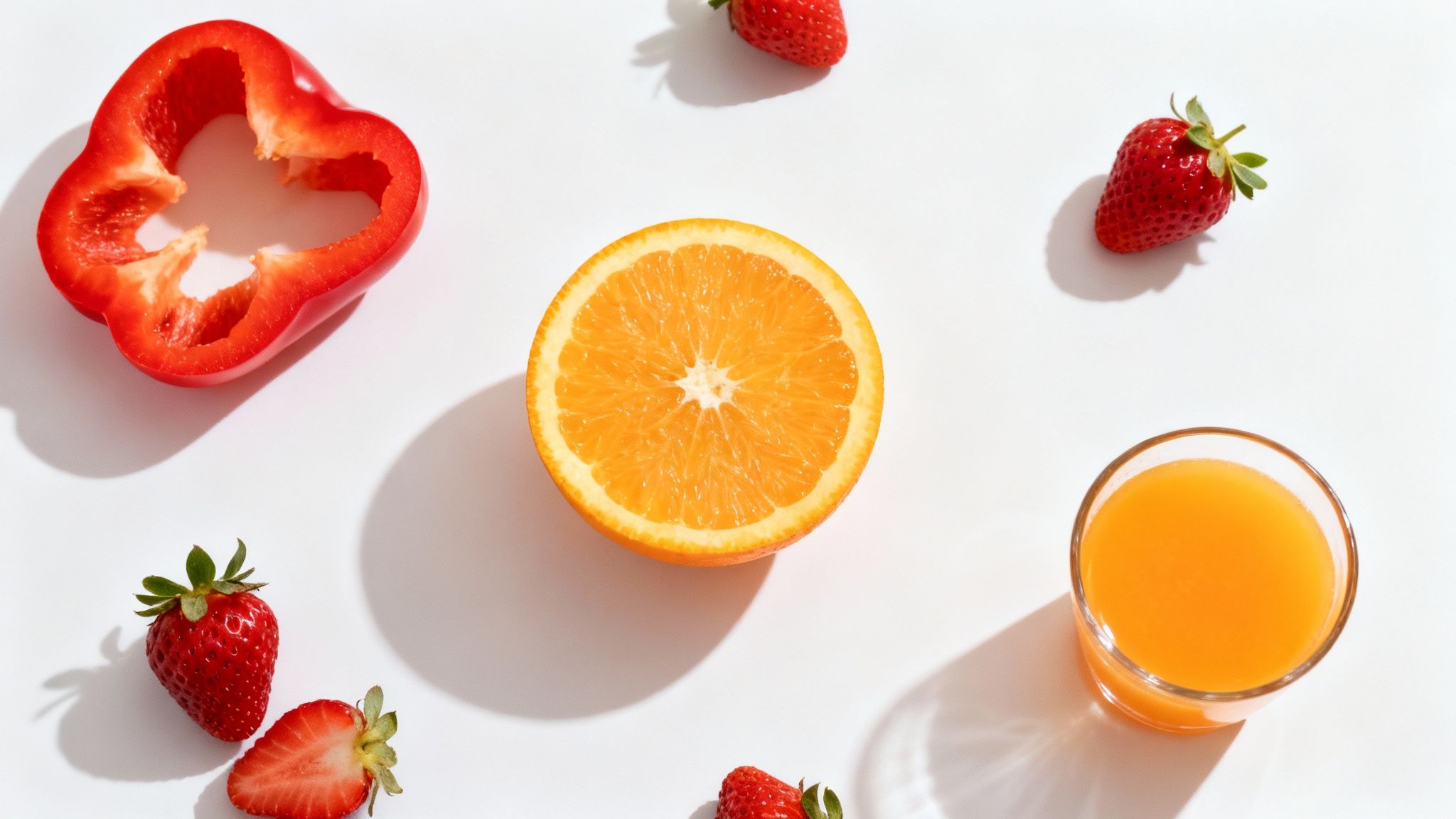
- Red Bell Peppers: A single medium red bell pepper can deliver over 150 mg of Vitamin C, blowing an orange out of the water.
- Strawberries: One cup of these sweet berries gives you nearly 90 mg.
- Broccoli: You'll get around 80 mg of Vitamin C from a cup of broccoli, plus a host of other great nutrients.
- Kiwi: This fuzzy little fruit is a powerhouse, offering over 60 mg each.
The recommended daily intake for an average adult is 75-90 mg, a goal that’s pretty easy to hit if you're eating your fruits and veggies. But here's the catch: when your body is under stress or actively fighting an illness, its demand for Vitamin C skyrockets.
This is where supplementation can make a real difference. Studies have shown that taking 1 to 2 grams (1,000 to 2,000 mg) of Vitamin C daily can shorten the duration of a common cold by 8% in adults and 14% in children. Its impact is even more dramatic in serious cases. One compelling clinical study found that high-dose intravenous Vitamin C significantly cut the mortality risk for hospitalized patients with COVID-19. You can read more about these clinical findings to see the full scope of the research.
The evidence is clear: while a healthy diet provides the foundation, extra Vitamin C can be a powerful tool for shoring up your defenses, especially when you need them most. It’s a classic for a reason—it’s a cornerstone nutrient that delivers reliable, science-backed support for your immune system.
Vitamin D: The Sunshine Vitamin's Role in Immunity
We all know Vitamin D is essential for strong bones, but its role in the immune system is just as critical—and often overlooked. It's called the "sunshine vitamin" because our skin makes it when exposed to sunlight, but it functions less like a vitamin and more like a powerful hormone, sending signals all over the body.
Think of Vitamin D as the conductor of your immune orchestra. It doesn't just turn up the volume on one type of cell. Instead, it modulates the entire response, making sure it's powerful when needed but also controlled. This balancing act is crucial for preventing the immune system from overreacting, which can lead to the damaging inflammation seen in autoimmune conditions and severe illnesses.
It’s all about helping your body mount a smart, efficient defense—one that attacks real threats without causing a lot of collateral damage.
Strengthening Your Body’s First Line of Defense
One of Vitamin D’s most important jobs is to reinforce your body's physical barriers against germs. The linings of your gut and respiratory tract are like the castle walls of your immune system. Vitamin D helps keep the "bricks"—the cells that make up these linings—cemented tightly together.
When those connections are strong, it's much harder for viruses and bacteria to breach the walls and get into your bloodstream. A Vitamin D deficiency can weaken these barriers, leaving you more vulnerable to pathogens. At the same time, it also ramps up the function of pathogen-fighting cells, making your frontline soldiers better at their job.
Vitamin D acts as both a gatekeeper and a trainer for your immune cells. It helps keep invaders out while also ensuring your internal defense teams are well-prepared and don't mistake friendly cells for enemies.
This dual role is why maintaining adequate levels is so vital for respiratory health, a connection backed by a huge body of research.
The Link Between Vitamin D and Respiratory Health
The evidence tying low Vitamin D levels to a higher risk of respiratory infections is pretty compelling. It’s no coincidence that people living in regions with less sunlight are often more susceptible to colds and the flu during winter months, which is partly due to lower Vitamin D synthesis.
The connection is direct and well-documented:
- Activating Defenses: Vitamin D helps activate key immune cells like T-cells and macrophages, which are responsible for hunting down and destroying invading pathogens.
- Controlling Inflammation: It also helps regulate the production of inflammatory cytokines, preventing the dangerous "cytokine storms" that cause severe symptoms in some respiratory illnesses.
- Improving Outcomes: Multiple studies have linked healthy Vitamin D levels with better outcomes from respiratory infections, including less severe symptoms and shorter illnesses.
In fact, major reviews have confirmed that supplementation provides a protective benefit against acute respiratory infections, especially for people who start out with a deficiency. The sweet spot for optimal immune function is a serum level between 40-60 ng/mL. Research looking at COVID-19 outcomes found that taking Vitamin D supplements was significantly associated with reduced odds of severe disease. You can dive into the clinical details in this extensive study on Vitamin D's immune role.
How to Get Enough Vitamin D
Unlike many other vitamins, our diet isn't the most reliable source of Vitamin D. While some foods have it, sunlight is really the main event.
Here’s how you can make sure you're getting enough:
- Sensible Sun Exposure: Aim for 10-30 minutes of midday sun on your arms and legs a few times a week, without sunscreen. The exact time you need depends on your skin tone, where you live, and the time of year.
- Dietary Sources: Try to incorporate foods like fatty fish (salmon, mackerel), fortified milk and plant-based milks, and egg yolks into your diet.
- Smart Supplementation: For many of us, especially those in northern latitudes or with limited sun exposure, a supplement is the most reliable way to maintain optimal levels. A common recommendation is 1,000-2,000 IU daily, but the best approach is to get your levels tested and talk to your doctor to figure out the right dose for you.
Given its powerful influence on your immune system's intelligence and control, keeping your Vitamin D levels in check is one of the smartest things you can do for your health all year round.
Essential Immune Support Minerals Like Zinc and Selenium
Vitamins often get all the attention, but your immune system relies on more than just A, C, and D to do its job. Certain minerals are the unsung heroes, acting as the keys that turn on your body's most critical defense mechanisms. Two of the most important players here are zinc and selenium.
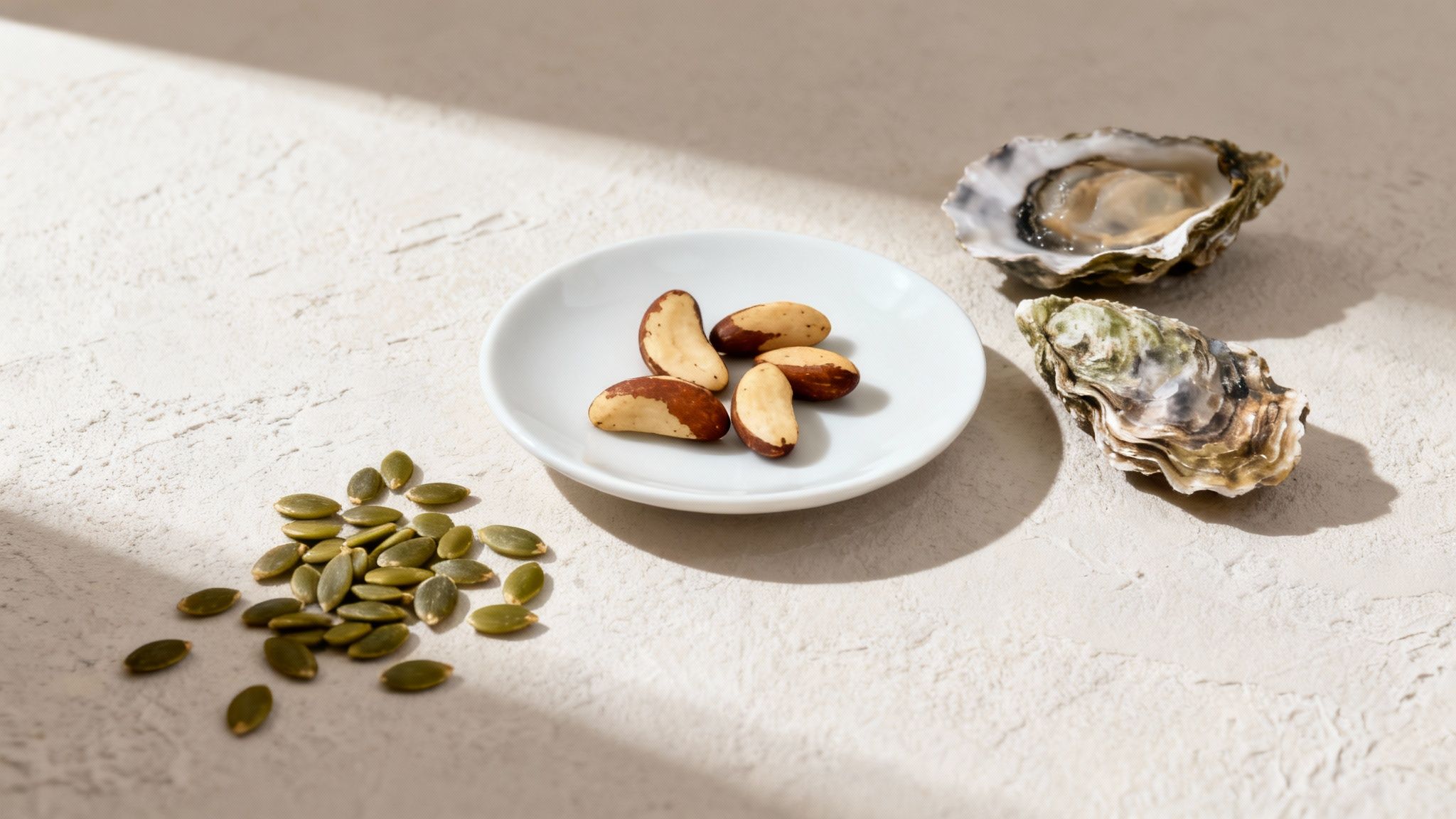
These two powerhouse minerals have distinct yet complementary jobs. You can think of zinc as the drill sergeant responsible for getting your immune soldiers trained and ready for action. Selenium, on the other hand, is the maintenance crew that cleans up the battlefield afterward. Both are absolutely essential for a strong, resilient defense.
Zinc: The Immune Cell Trainer
Zinc is a trace mineral, but its impact is massive. It's involved in hundreds of critical reactions in the body, especially those needed for immune cells to grow, develop, and talk to each other. It’s a foundational piece for both your innate (first-response) and adaptive (specialized) immune systems.
Without enough zinc, your body struggles to produce and activate T-lymphocytes. These are the "special forces" of your immune system, designed to hunt down and destroy infected cells. A zinc deficiency leaves these elite soldiers stuck in basic training, unable to deploy when an invader shows up.
We see this mineral’s direct impact most clearly when we're already sick. Several studies have found that taking zinc lozenges within 24 hours of noticing the first sniffles can significantly shorten how long a common cold lasts.
Zinc is a gatekeeper for immune function. Its presence is non-negotiable for producing and deploying effective immune cells. Low levels can directly translate to a weaker, slower response to pathogens.
Selenium: The Antioxidant Protector
While zinc trains the troops, selenium protects the entire system from friendly fire. When your immune cells go on the attack, they generate a ton of oxidative stress—think of it as molecular shrapnel that can damage your own healthy tissues if it isn't cleaned up.
Selenium's main job is to form a core part of powerful antioxidant enzymes, most importantly glutathione peroxidase. This enzyme is one of your body's master antioxidants, working tirelessly to neutralize harmful free radicals and keep inflammation in check.
This role is all about maintaining balance. By taming oxidative stress, selenium helps ensure your immune response is forceful enough to defeat a threat but not so over-the-top that it causes unnecessary damage. It’s what protects your own cells during the heat of battle.
Food Sources and Supplement Strategies
The best way to get these crucial minerals is through your diet. They often work together, and a balanced, food-first approach ensures your immune system gets the full toolkit it needs to function properly.
Top Mineral-Rich Foods
| Mineral | Excellent Food Sources |
|---|---|
| Zinc | Oysters, red meat, poultry, beans, nuts, and pumpkin seeds. |
| Selenium | Brazil nuts (just one or two a day meets your needs!), seafood (tuna, halibut), and meat. |
While food is always the ideal source, supplementing can be a smart move, particularly with zinc when you feel a cold coming on. The key is moderation. The recommended daily intake for adults is roughly 11 mg of zinc and 55 mcg of selenium. Taking high doses of zinc for a long time can actually interfere with your body's ability to absorb copper, so it’s always a good idea to talk with a healthcare provider before starting a new supplement.
By making sure you have enough of both, you’re giving your body’s defenses a well-rounded and solid foundation.
Putting It All Together: A Holistic Approach to Immunity
It's easy to get caught up in the specifics of which vitamin does what, but true immune resilience isn't built from a single supplement bottle. The best vitamins for your immune system are team players, and they work most effectively as part of a much bigger strategy.
Think of it this way: vitamins are like premium fuel for your car. They're essential for top performance, but they can't fix a flat tire or a faulty engine. In the same way, even the best supplements can't cancel out the impact of poor sleep, chronic stress, or a diet lacking in real nutrition. These foundational lifestyle factors are what your immune system is built on. Get those right, and vitamins can elevate your defenses from good to great.
Building Your Immune Resilience Checklist
A truly robust immune system comes from daily habits that work together in harmony. It's all about synergy—where the combined effect of your actions is far more powerful than the sum of its parts. The goal is to create an internal environment where your immune cells can thrive, communicate effectively, and respond to threats with speed and precision.
Here are the non-negotiable pillars that make any vitamin regimen work harder for you:
- Prioritize Quality Sleep: Seriously. Aim for 7-9 hours of solid, uninterrupted sleep a night. This is when your body gets to work producing and releasing cytokines, a type of protein that helps coordinate the immune response by targeting infection and inflammation.
- Manage Your Stress: Chronic stress keeps your cortisol levels high, and over time, that hormone can actively suppress your immune system. You don't need a huge overhaul; simple practices like meditation, deep breathing exercises, or even a quick walk can make a real difference.
- Eat a Nutrient-Dense Diet: Fill your plate with whole foods. We're talking colorful fruits and vegetables, lean proteins, and healthy fats. This approach provides the vast spectrum of micronutrients your immune cells need to function at their peak.
- Move Your Body Regularly: You don't have to run a marathon. Moderate, consistent exercise boosts circulation, which helps immune cells travel through your body more efficiently to do their job. Just 150 minutes of moderate activity per week is a great target.
True immunity is a lifestyle, not a quick fix. Vitamins are powerful allies, but they are most effective when they support a body that is already well-rested, well-nourished, and well-cared-for.
Your Sustainable Action Plan
Feeling overwhelmed? Don't be. The key is to avoid overhauling your entire life at once and instead focus on making small, sustainable changes. Just pick one area from the checklist to work on this week. Maybe that means going to bed 30 minutes earlier or tossing a handful of spinach into your smoothie.
As these small habits become second nature, you'll be building a stronger natural defense system brick by brick. The vitamins and supplements you take will then act as powerful reinforcements, filling nutritional gaps and giving your immune system the targeted support it needs to keep you healthy.
Focusing on a diet that calms inflammation is a fantastic starting point. For ideas, check out our anti-inflammatory meal plan. This complete approach ensures you aren’t just supplementing—you’re building a truly resilient immune system from the ground up, ready for whatever comes its way.
Your Questions About Immune Vitamins, Answered
When you're trying to support your immune system, a lot of questions come up. How much is too much? Can I just eat better? When should I take my supplements? It's easy to get overwhelmed. Let's clear up some of the most common questions we get, so you can feel confident you're making the right choices for your health.
Our aim is to give you the practical, straightforward answers you need to build a routine that actually works.
Can I Get All the Nutrients I Need From Food Alone?
That's the million-dollar question, isn't it? In a perfect world, yes. A well-rounded, nutrient-dense diet should always be your foundation. Whole foods offer a complex mix of vitamins, minerals, fiber, and phytonutrients that work together in ways a pill simply can't mimic. A food-first approach is non-negotiable.
But let's be realistic—modern life can get in the way. Some nutrients are just plain tough to get enough of from diet alone. Vitamin D is the classic example; our bodies make most of it from sun exposure, not food, so deficiency is incredibly common, especially in the winter. Others, like zinc or vitamin C, might be needed in higher amounts during times of stress or illness, or for people with dietary restrictions.
Think of a targeted supplement as a nutritional safety net. It’s there to intelligently fill in the gaps, making sure your immune system isn’t running on empty.
Is It Possible to Overdo It With Immune Vitamins?
Yes, absolutely. When it comes to supplements, more is definitely not better. Taking too much of certain nutrients can be counterproductive or even harmful. The key is understanding the difference between two main types of vitamins.
- Fat-Soluble Vitamins (A, D, E, K): Your body holds onto these, storing them in your fat cells. If you consistently take high doses, they can build up over time and reach toxic levels.
- Water-Soluble Vitamins (C and B vitamins): Your body doesn't store these for long. Whatever you don't use gets flushed out in your urine. While it's harder to reach a toxic level, extremely high doses can still cause issues like digestive distress.
It's not just vitamins, either. High doses of minerals like zinc can interfere with the absorption of other essential minerals, like copper. Your best bet is to stick to the recommended daily allowance (RDA) on the product label, unless you're working directly with a healthcare provider who has a clear picture of your individual needs.
What’s the Best Time of Day to Take My Supplements?
Timing can actually make a big difference in how well your body absorbs certain nutrients. It’s not overly complicated, but a little planning goes a long way. Consistency is the most important thing, but here’s a simple guide to get the most out of your routine:
- Take with a meal (especially one with some fat): Fat-soluble vitamins like Vitamin D and Vitamin E need fat to be absorbed properly. Taking them with a meal containing avocado, nuts, olive oil, or fish makes a world of difference.
- Take with food (to avoid an upset stomach): Zinc can be a bit rough on an empty stomach, sometimes causing nausea. Pairing it with any meal or snack usually solves the problem.
- Take whenever is convenient: Vitamin C is water-soluble, so you have more flexibility. That said, because your body doesn't store it, some people prefer to split their dose—taking half in the morning and half in the evening—to keep levels more stable throughout the day.
When in doubt, always read the directions on the bottle. And if you're taking multiple supplements or medications, your pharmacist is a fantastic resource for personalized advice.
At The Happy Health Blog, our commitment is to provide clear, science-backed information for your wellness journey. For more practical guidance on nutrition, fitness, and living a healthier life, explore more of our articles.
