


If you've ever dealt with that familiar, fiery feeling climbing up your chest after a meal, you know what acid reflux is all about. An acid reflux diet isn't some complex, restrictive plan; it's simply a smarter way of eating to keep that uncomfortable burn at bay. It’s about understanding what soothes your system and what sets it off.
Think of it as making simple, strategic swaps. You might trade your morning coffee for a calming herbal tea or opt for grilled chicken instead of the fried version. The whole idea is to manage stomach acid and prevent it from making its way back up into your esophagus, where it causes all that irritation.
Understanding the Acid Reflux Diet
Let's break down what's happening inside. Imagine your stomach has a little gate at the top called the lower esophageal sphincter, or LES. Its job is to open to let food in and then snap shut to keep stomach acid where it belongs. When you have acid reflux, that gate can get a bit lazy, relaxing when it shouldn't.
Certain foods and drinks are notorious for either weakening this gate or cranking up the acid production in your stomach. When that happens, you get the splashback that causes heartburn. By being more intentional with your food choices, you can help that little gate do its job properly and dial down the acid. This approach is often the most powerful first step in managing gastroesophageal reflux disease (GERD).
Core Principles of the Diet
The philosophy behind an acid reflux diet is pretty straightforward. You're not eliminating entire food groups forever, but rather tilting the scales in your favor with two main goals in mind:
Embrace Soothing Foods: You'll want to focus on foods that are naturally low in acid and fat but high in fiber. Think things like oatmeal, bananas, lean proteins, and plenty of leafy greens. These foods are gentle on your digestive system.
Limit Trigger Foods: This means cutting back on the usual suspects known to cause trouble. We're talking about spicy meals, fatty or fried foods, acidic fruits like tomatoes and citrus, chocolate, and caffeine.
Making these changes doesn't have to be a massive overnight project. It’s all about small, consistent adjustments that add up to big relief over time.
Diet makes a huge difference, and you're not alone in this. GERD affects nearly one in seven adults worldwide, with a global prevalence of 13.98%. In North America, where diets are often higher in fat and processed foods, that figure jumps to 19.1%. You can discover more insights about the global impact of GERD.
Personalizing Your Approach
Here’s the most important thing to remember: acid reflux is personal. The spicy curry that gives your friend grief might not bother you at all, while a seemingly innocent glass of orange juice could be your biggest trigger.
This is why a food diary is your best friend. For a week or two, just jot down what you eat and any symptoms you feel. This simple practice helps you connect the dots and pinpoint your unique triggers. The goal is to create a plan that works for you, empowering you to enjoy your meals without fearing the aftermath.
To get you started, here is a quick-reference guide that summarizes the key dietary swaps you can make right away.
Quick-Start Acid Reflux Diet Cheat Sheet
| Dietary Principle | Embrace These (Foods & Habits) | Limit These (Foods & Habits) |
|---|---|---|
| Choose Low-Acid Fruits & Veggies | Bananas, melons, cauliflower, broccoli, leafy greens, fennel. | Citrus fruits (oranges, lemons), tomatoes, pineapple, onions, garlic. |
| Opt for Lean Proteins | Grilled/baked chicken or fish, tofu, beans, egg whites. | Fried or fatty meats, bacon, sausage, full-fat dairy. |
| Select Healthy Fats | Avocado, walnuts, olive oil, sunflower seeds. | Fried foods, fast food, creamy sauces, butter, cheese. |
| Mind Your Grains | Oatmeal, whole-grain bread, brown rice, couscous. | High-fat baked goods (croissants, donuts), processed snacks. |
| Drink Smart | Water, herbal tea (chamomile, ginger), plant-based milks. | Coffee, alcohol, carbonated drinks, citrus juices. |
| Rethink Your Habits | Eat smaller, more frequent meals. Stay upright after eating. | Eating large meals, lying down after eating, eating 2-3 hours before bed. |
This table is a great starting point, but remember to listen to your body and adjust based on what works best for you.
Why Your Food Choices Impact Acid Reflux
To get a handle on acid reflux, it helps to first picture what’s going on inside your body. Imagine a small, muscular gate at the top of your stomach—this is the lower esophageal sphincter (LES). Its job is to act like a one-way door, swinging open to let food in and then sealing shut to keep harsh stomach acid from splashing back up into your esophagus.
Acid reflux is what happens when that gate doesn't close all the way or opens when it shouldn't. Stomach acid escapes, flowing back up and irritating the delicate lining of your esophagus. That's the painful, burning feeling we call heartburn. An acid reflux diet is all about choosing foods that help keep that gate working properly, rather than ones that weaken it or crank up your stomach's acid production.
This visual guide really simplifies the strategy, showing you which foods tend to help and which ones are common troublemakers.
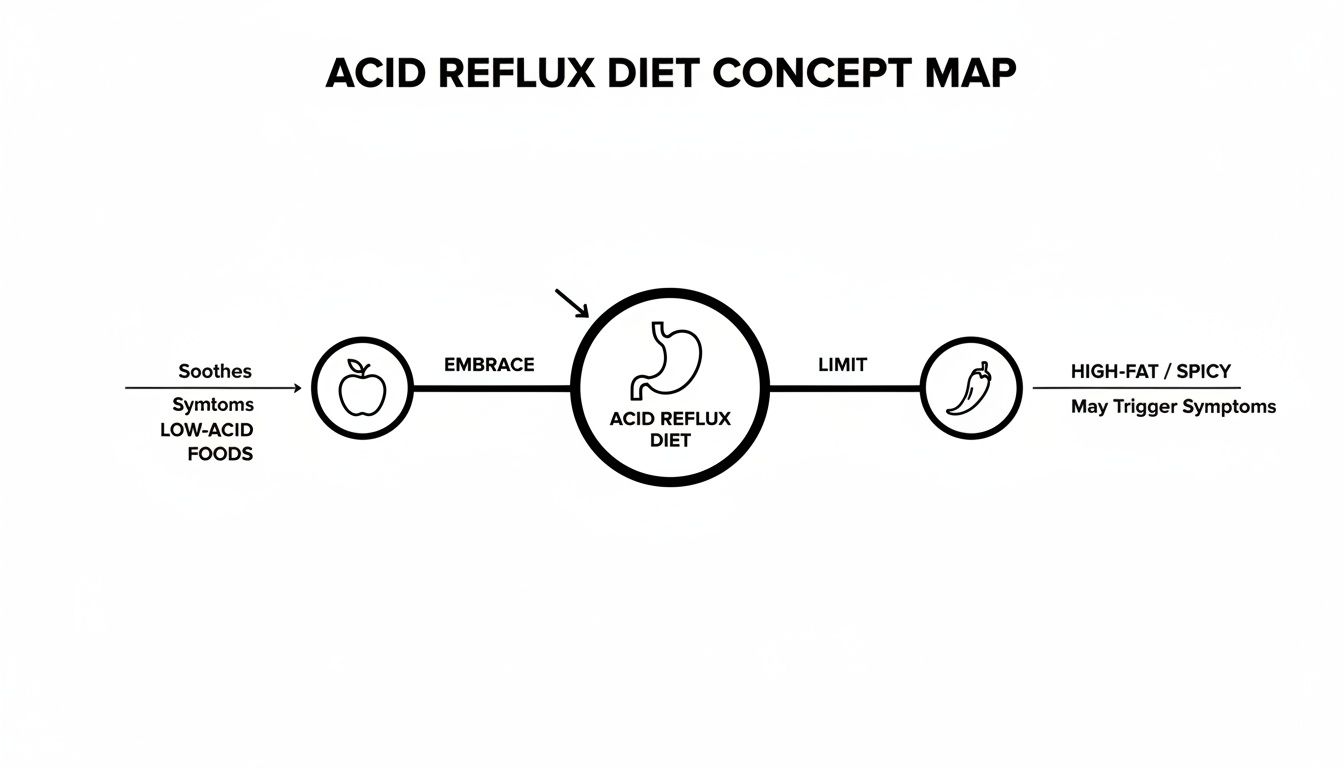
As you can see, the path is pretty clear: some foods support your digestive balance, while others work against it.
How Specific Foods Trigger Symptoms
It turns out certain foods can either mess with that LES gate directly or change the environment in your stomach for the worse. This isn't about labeling foods as "good" or "bad"—it's about understanding the real, physical reactions they trigger inside you. Knowing the 'why' makes it so much easier to make smart choices.
High-fat foods are a classic example. Greasy cheeseburgers, fried foods, and rich, creamy sauces all take a lot longer for your stomach to break down. This means they sit in your stomach for hours, which can ramp up acid production and build pressure that literally pushes up against the LES, forcing it open.
On top of that, fatty meals can trigger the release of a hormone called cholecystokinin (CCK). This hormone tells the LES to relax, which is the last thing you want. It's like leaving the gate wide open for acid to escape.
The Role of Acidity and Irritation
Beyond just weakening the LES, some foods cause trouble by directly irritating your esophagus or by simply adding more acid to the mix. This is where things like citrus and spicy foods enter the picture.
Your stomach is a tank, built to handle powerful acid. Your esophagus, on the other hand, is not. When you eat acidic foods like oranges or tomatoes, they might not cause reflux on their own. But if your LES is already a bit leaky, that acid makes the resulting heartburn feel a whole lot worse.
Spicy foods, loaded with compounds like capsaicin, can be a double-whammy. For many people, they not only irritate an already-inflamed esophagus but can also slow down digestion, giving reflux more time and opportunity to happen.
Here’s a quick breakdown of how common culprits contribute to the problem:
- High-Fat Foods: They slow down digestion and can cause the LES to relax, creating a perfect storm for acid backsplash.
- Acidic Foods: They don't typically cause reflux, but they can dramatically worsen the pain when it happens.
- Spicy Foods: These can directly irritate the esophagus and, in some people, slow digestion down.
- Caffeine and Chocolate: Both contain methylxanthine, a substance that can relax the LES muscle, making it less effective at staying sealed.
- Carbonated Drinks: All those bubbles in soda and seltzer expand in your stomach, increasing pressure that can push the LES open from below.
Once you see these cause-and-effect connections, it’s clear that an acid reflux diet isn't just a list of random rules. It's a practical, targeted strategy to help your digestive system do its job and keep that all-important valve firmly closed.
Building Your Reflux-Friendly Plate
Now that you understand what’s happening inside your body during an acid reflux episode, we can get to the good stuff: figuring out what to eat. It's time to stock your kitchen with foods that will help you feel your best.
This isn't about deprivation or eating bland, boring meals. Far from it. This is about discovering delicious new foods and creating plates that work with your body. Think of it as a strategic kitchen restock—by adding more of the right things, you'll naturally have less room for the foods that give you trouble.
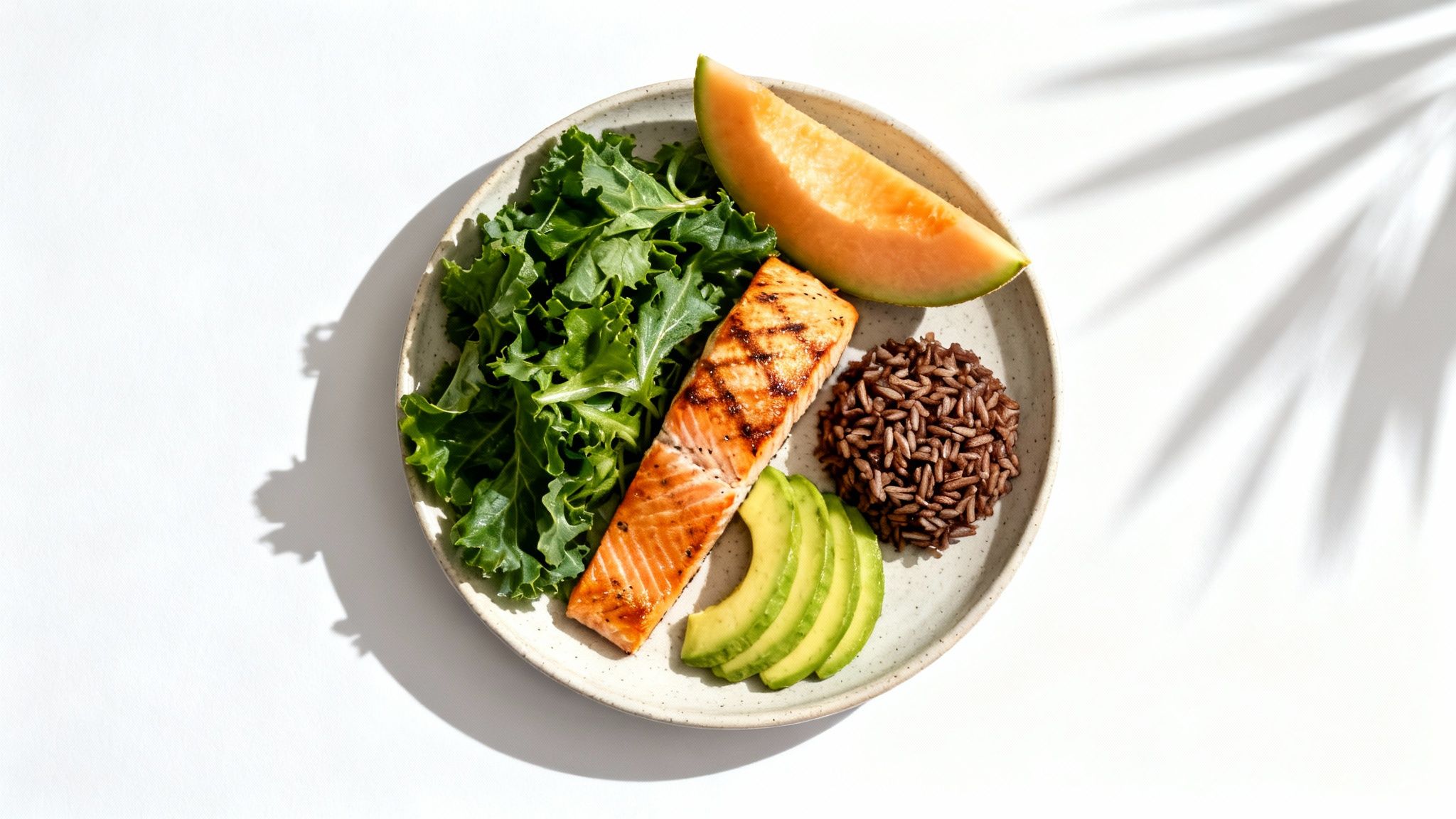
Let's break down the core food groups that will form the backbone of your new eating plan.
Alkaline Powerhouses
Many of the foods that trigger reflux are highly acidic. The most straightforward counter-strategy? Balance them out with foods that are more alkaline (higher on the pH scale). These foods can help buffer and neutralize stomach acid, creating a calmer internal environment.
Your best bet is to load up on colorful fruits and vegetables—just steer clear of the citrus family for now. They’re naturally low in the fat and sugar that can cause digestive trouble.
Here are a few excellent alkaline choices to get you started:
- Leafy Greens: Spinach, kale, and their leafy cousins are nutritional workhorses.
- Melons: Cantaloupe and honeydew are refreshing, low-acid fruit options.
- Bananas: This is the perfect grab-and-go snack; some people find it even helps coat an irritated esophagus.
- Root Vegetables: Think carrots, sweet potatoes, and beets. They're all reliably gentle on the stomach.
- Cauliflower and Broccoli: These are incredibly versatile and easy to add to almost any meal.
Lean Protein Builders
Protein is absolutely essential for helping your body repair tissue. It also keeps you feeling full, which is key to preventing overeating—a classic reflux trigger. But not all protein is created equal. Fatty cuts of meat can sit in your stomach for too long, encouraging more acid production and relaxing that all-important lower esophageal sphincter (LES).
Lean proteins are your friend. They get digested more efficiently and support your digestive system without weighing it down. Stick to cooking methods like baking, grilling, poaching, or broiling that don't add a lot of extra fat.
Pro Tip: When you're eating chicken or turkey, always take the skin off. A surprising amount of fat is stored in the skin, so going skinless is a simple but powerful swap for managing reflux.
Make these lean proteins a regular part of your meals:
- Skinless Chicken and Turkey: The MVPs of a reflux-friendly diet.
- Fish: Salmon, tilapia, and cod are fantastic choices. They provide healthy omega-3 fatty acids without being excessively greasy.
- Tofu and Tempeh: Great plant-based options that are naturally low in fat.
- Beans and Lentils: These are double-winners, packed with both protein and fiber for all-around digestive health.
Soothing Healthy Fats
It's true that high-fat meals are a major problem for reflux, but your body still needs fat to function. The secret is choosing the right kind of fat. Unsaturated fats are much gentler on your system, can help reduce inflammation, and deliver key nutrients.
Try swapping out butter, lard, and heavy cream dressings for these much kinder alternatives:
- Avocado: Creamy, delicious, and loaded with healthy monounsaturated fats.
- Olive Oil: Your new go-to for cooking and salad dressings.
- Nuts and Seeds: Almonds, walnuts, chia seeds, and flaxseeds are excellent in moderation.
Just remember, portion size still matters, even with healthy fats. A little goes a long way in adding flavor and satisfaction without overwhelming your stomach.
Gentle Grains and Fiber
Fiber is one of your greatest allies in the fight against reflux. It keeps everything moving through your digestive system smoothly. When food doesn't sit in your stomach for a long time, there's simply less opportunity for it to reflux back up.
There’s a reason oatmeal is such a classic recommendation for GERD—it actually absorbs some of the excess stomach acid while adding valuable fiber. Whenever you're choosing grains, go for the whole-grain option.
- Oatmeal: You can’t go wrong starting your day with a warm bowl.
- Brown Rice: A perfect, versatile base for any lean protein and veggie.
- Whole-Grain Bread: Be a label detective! Look for 100% whole grain.
- Couscous and Quinoa: Both are quick to cook and very easy on the stomach.
By intentionally building your meals around these four food groups, you're not just avoiding triggers. You're creating a positive, nourishing plan that puts you back in control of your health.
Navigating Common Acid Reflux Trigger Foods
While filling your plate with soothing foods is a fantastic start, knowing what to leave off the plate is just as important. Think of it as learning the other half of the equation. Understanding the common culprits behind acid reflux is your first real step toward getting symptoms under control.
The best way to approach this is by becoming a detective for your own body. Everyone's different, and a food that causes a major flare-up for one person might be perfectly fine for another. Still, there are some usual suspects known for fanning the flames of heartburn.
Why Certain Foods Cause Flare-Ups
The connection between what we eat and GERD is crystal clear—and it's become a major public health issue. Between 1990 and 2021, the number of GERD cases worldwide exploded by 80%, jumping from 450.76 million to a staggering 825.60 million. Researchers have drawn a direct line from this spike to the widespread adoption of Western diets, which are often heavy in fatty meats and acidic foods like tomatoes. If you're interested in the data, you can read the full research about GERD and dietary patterns to see the global picture.
So, how exactly do these foods cause trouble? Let's break it down.
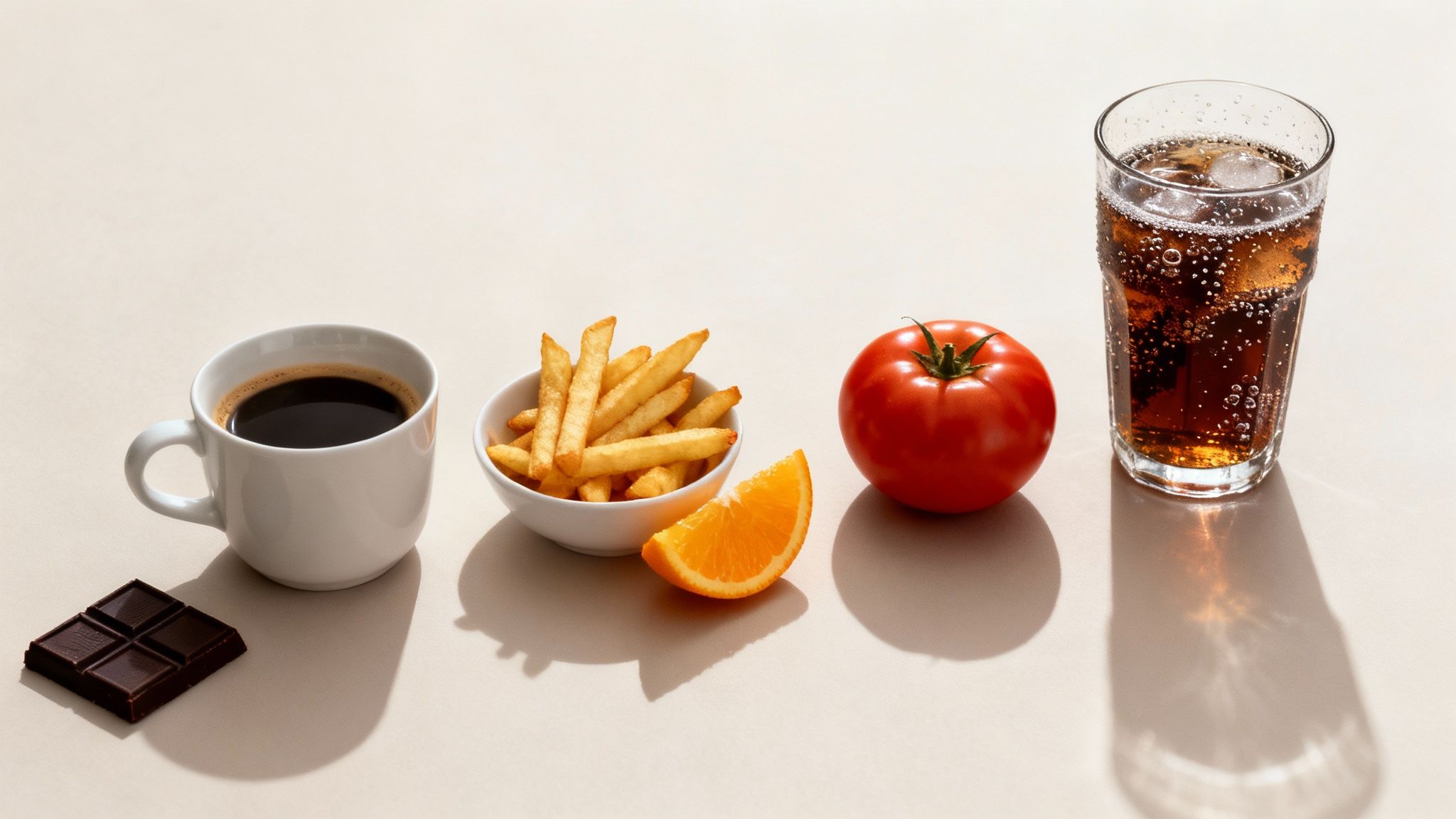
- High-Fat and Fried Foods: That greasy burger, those french fries, or a rich, creamy sauce all have one thing in common: they slow down digestion. Food sits in your stomach for longer, which increases pressure and makes it more likely for acid to get pushed back up where it doesn't belong.
- Citrus Fruits and Tomatoes: While oranges, lemons, and tomatoes don't cause reflux, their high acid content can be brutal on an already-irritated esophagus. They essentially pour salt in the wound, making existing heartburn feel much worse.
- Chocolate and Caffeine: Your morning coffee or that afternoon chocolate fix might feel non-negotiable, but they contain compounds that can relax the lower esophageal sphincter (LES). The LES is the muscular gate between your stomach and esophagus; when it gets lazy, stomach acid can splash right back up.
- Carbonated Drinks: The bubbles in soda, seltzer, and other fizzy drinks release gas into your stomach. This expansion creates internal pressure that can literally force the LES to open from below.
- Spicy Foods: Ingredients like chili peppers contain capsaicin. This compound can directly irritate the lining of your esophagus and, for some people, can also slow down digestion, adding to the problem.
- Onions and Garlic: These are potent triggers for many, especially when eaten raw. The exact reason isn't always clear and can vary from person to person, but they consistently top the list of reflux-inducing foods.
Becoming a Trigger Food Detective
This list is just a guide, not a strict rulebook. The most effective acid reflux diet is one that's personalized to you. This is where keeping a food diary becomes your most powerful tool.
For a week or two, just write down what you eat, when you eat, and any symptoms that follow. It doesn't need to be fancy—a small notebook or an app on your phone will do just fine.
Keep your food diary entries simple and specific. For example: "8 AM: Oatmeal with banana, no symptoms. 12 PM: Grilled chicken salad with vinaigrette, mild heartburn around 1 PM. 7 PM: Tomato-based pasta, significant heartburn within 30 minutes." This level of detail helps you quickly identify patterns.
After a short time, you’ll start to see clear connections emerge. This personal data is far more valuable than any generic "foods to avoid" list you'll ever find online.
The Power of a Personalized Plan
Once you've identified your personal triggers, you can start building a truly custom eating plan. This isn't about saying you can never have a bite of pizza or a small piece of chocolate again. It's about being empowered with knowledge.
You can now make informed choices. Maybe you have a tiny portion of a trigger food, or you make sure the rest of your meal is extremely reflux-friendly to create some balance. This detective work shifts you from a mindset of restriction to one of control, letting you finally build a diet that brings relief without the fear.
Your 3-Day Acid Reflux Diet Meal Plan
Okay, theory is one thing, but what does this actually look like on a plate? Knowing what to eat is half the battle; seeing it laid out in a simple plan makes it feel real and, more importantly, doable.
I've put together this sample 3-day meal plan to take the guesswork out of your first few days. It’s all about gentle, nourishing foods that won’t provoke your symptoms. Think of it as a launchpad, not a rigid prescription. Feel free to swap proteins, mix and match meals, or toss in different GERD-friendly veggies based on what you love and what’s in your fridge. The goal here is to build confidence and show you how satisfying this way of eating can be.
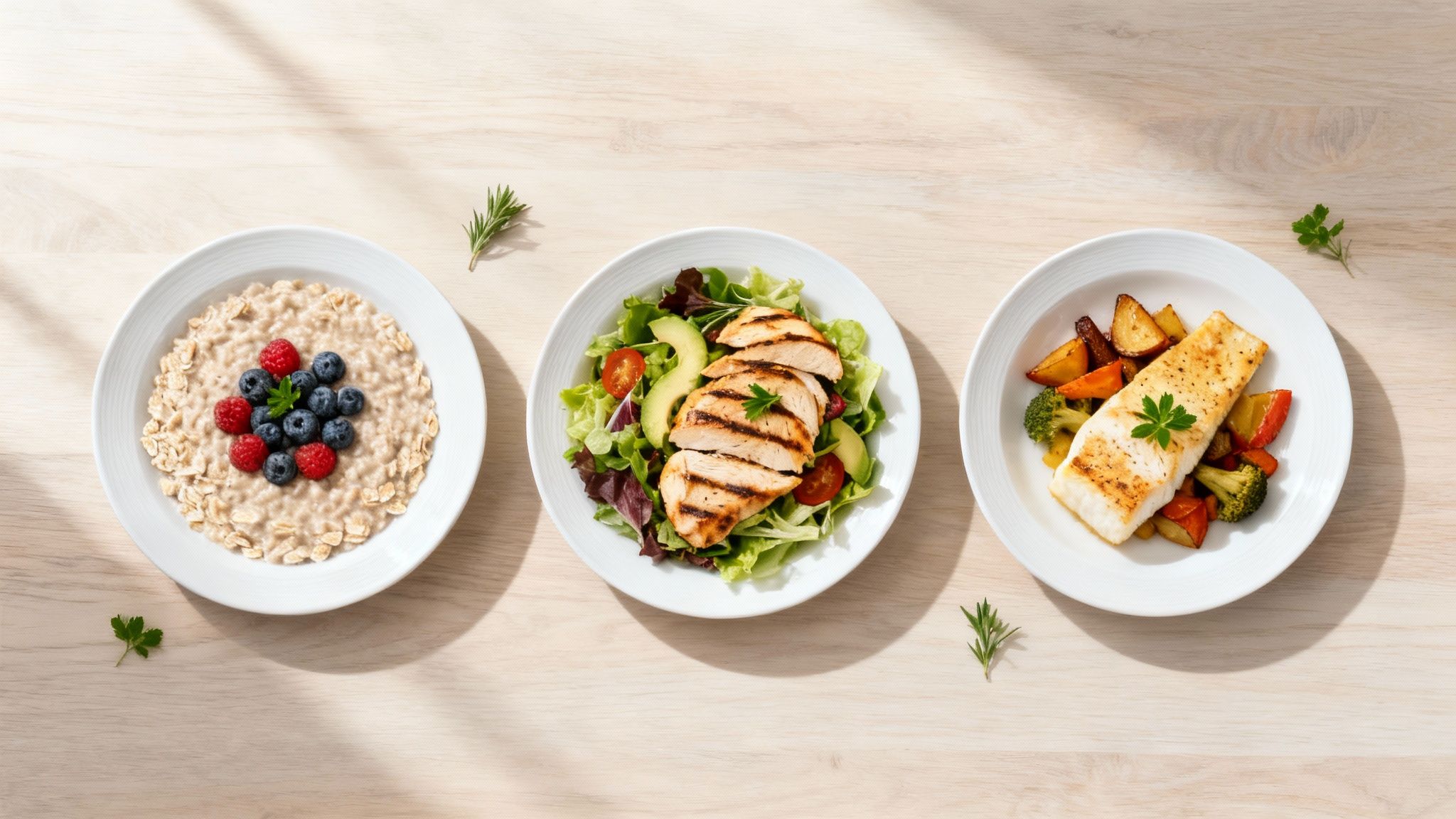
Here's a sample plan to get you started.
Sample 3-Day GERD-Friendly Meal Plan
| Day | Breakfast | Lunch | Dinner | Snack Idea |
|---|---|---|---|---|
| Day 1 | A warm bowl of oatmeal (made with water or almond milk) topped with sliced bananas and a sprinkle of cinnamon. | Large salad with mixed greens, cucumber, grilled chicken breast, and a light olive oil vinaigrette. | Baked tilapia with dill, served with steamed asparagus and brown rice. | A ripe banana or a small handful of almonds. |
| Day 2 | A soothing green smoothie with spinach, banana, and almond milk. | Leftover baked tilapia and rice, or a turkey and avocado wrap on a whole-wheat tortilla. | Lean ground turkey stir-fry with broccoli, carrots, and mushrooms (use ginger and a touch of low-sodium soy sauce for flavor). | Sliced melon (like cantaloupe or honeydew). |
| Day 3 | Scrambled egg whites with a side of sautéed spinach and one slice of whole-grain toast. | A bowl of hearty lentil soup (ensure it’s made without a tomato base). | Lemon-Herb Baked Cod served with roasted sweet potatoes and green beans. | A small bowl of plain, low-fat yogurt with a few berries (if dairy isn't a trigger for you). |
This structure gives you a clear idea of how to build satisfying meals that are kind to your digestive system. As you get more comfortable, you can start experimenting with other GERD-friendly foods.
If you suspect underlying inflammation is contributing to your reflux, you might also get some great ideas from this anti-inflammatory meal plan, as many of the core principles overlap.
Easy Reflux-Friendly Recipes
To make this even easier, here are two of my favorite simple recipes from the meal plan that you can whip up right away.
Recipe 1: Soothing Green Smoothie
This is my go-to for a gentle, nutrient-packed start to the day. It’s incredibly easy on the stomach.
- Ingredients: 1 ripe banana, 1 large handful of spinach, 1/2 cup unsweetened almond milk, 1 tablespoon of almond butter, and 1/2 cup of ice.
- Instructions: Just toss everything into a blender and blend until it's completely smooth. If it's a bit too thick for your liking, add another splash of almond milk.
Recipe 2: Lemon-Herb Baked Cod
This one’s a real crowd-pleaser and proves that a reflux-friendly dinner doesn't have to be bland. It’s full of bright, fresh flavor.
- Ingredients: 2 cod fillets, 1 tablespoon of olive oil, 1 teaspoon of dried dill, 1 teaspoon of dried parsley, a pinch of salt and pepper, and 1 lemon, thinly sliced (use cautiously if citrus is a trigger).
- Instructions: First, preheat your oven to 400°F (200°C). Place the cod fillets in a baking dish, drizzle them with olive oil, and sprinkle on the herbs, salt, and pepper. If you tolerate lemon well, you can lay a few thin slices right on top of each fillet. Bake for 12-15 minutes—you’ll know it’s done when the fish flakes easily with a fork.
Lifestyle Habits That Support Your Diet
While changing what you eat is a huge part of managing acid reflux, how you live your day-to-day life is just as important. Think of your diet as the fuel and your lifestyle as the engine—they have to work together. A few smart adjustments can dramatically reduce the pressure on your digestive system and help your body keep acid where it belongs.
These aren't complicated changes, but consistency is key. They work by tackling the physical mechanics behind reflux, like gravity and abdominal pressure, giving your dietary efforts the backup they need to really work.
Master Your Mealtime Habits
When it comes to reflux, how and when you eat can be just as critical as what you eat. If you rush through a massive meal, you're creating the perfect storm for reflux. It overwhelms your stomach and puts a ton of pressure on that little valve at the bottom of your esophagus, the LES.
Instead, try to practice mindful eating. Slow down. Chew your food thoroughly. Really pay attention to your body’s fullness cues. This simple shift alone can prevent overeating and give your stomach the time it needs to do its job without getting overstuffed—a primary trigger for that acid backsplash.
The "Three-Hour Rule" is a total game-changer for so many people with GERD. Make it a hard-and-fast rule to stop eating at least three hours before you lie down for bed. This gives your stomach plenty of time to empty, meaning acid levels are much lower when you go horizontal.
Adjust Your Physical Environment
You'd be surprised how much relief you can get from simple tweaks to your posture and even your wardrobe. Anything that constricts your midsection—think tight jeans, snug belts, or shapewear—can literally squeeze your stomach and force acid upward. Choosing comfortable, looser-fitting clothing is such an easy win.
Gravity is also your best friend in this fight. Elevating the head of your bed by 6 to 8 inches can make a world of difference, especially overnight. You can do this with wedge pillows designed for reflux or just by putting sturdy risers under the legs of your headboard. That gentle incline helps keep stomach acid from creeping up while you sleep.
Here are a few other lifestyle adjustments that can have a big impact:
- Stay Upright After Meals: Resist the urge to slump on the couch or lie down right after a meal. Try to stay upright for at least two hours.
- Manage Stress: Stress is a well-known trigger. It can ramp up acid production and even make you more sensitive to the burn. Things like meditation, gentle yoga, or deep breathing exercises can help calm both your nervous system and your stomach.
- Maintain a Healthy Weight: Extra weight, especially around the belly, puts constant pressure on your abdomen, making it a major risk factor for GERD.
By weaving these habits into your routine, you create a complete, well-rounded strategy for managing reflux. Diet is the foundation, but these lifestyle tweaks provide the structural support you need for lasting success. If you're looking for other ways to help your digestive system, you might find some useful tips in our guide to the best supplements for gut health.
Answering Your Acid Reflux Diet Questions
Jumping into a new eating plan can feel like navigating a maze. A few good signposts can make all the difference, turning confusion into confidence. Let's clear up some of the most common questions people have when they start an acid reflux-friendly diet.
How Long Until I Feel Better?
For many people, a noticeable drop in symptoms can happen within just one to two weeks of sticking to the plan. But this isn't a hard-and-fast rule. The timeline really depends on how severe your GERD is and how diligent you are with your new habits.
The magic word here is consistency. A single trigger food might set you off right away, but the real goal is to give your esophagus time to heal from the irritation. Think of this as a long-term adjustment, not just a quick fix.
Can I Ever Eat My Favorite Foods Again?
Absolutely! The goal isn't to banish your favorite foods forever. Once your symptoms have calmed down and your esophagus has healed, you can often bring back certain foods in moderation. The best strategy is to be strict for a few weeks first.
After that "cooling off" period, try reintroducing one food at a time, starting with a small portion. This is your chance to become a detective and figure out your personal triggers. You might find you can handle a little coffee now and then, or that a bit of tomato sauce is fine as long as you've eaten carefully the rest of the day. Some people even find success with less common approaches, which we explore in our guide on using apple cider vinegar for acid reflux.
Remember, this is about finding a sustainable balance, not permanent deprivation. It's about knowing your body's boundaries so you can make smart choices without living in fear.
When Should I See a Doctor?
Diet and lifestyle changes are powerful tools, but they aren't always enough. It's really important to talk to a doctor if your symptoms are severe, frequent (happening more than twice a week), or just aren't getting better.
And be on the lookout for red flags. You should seek medical advice right away if you experience any of the following:
- Trouble swallowing
- Unexplained weight loss
- Vomiting or black, tar-like stools
A doctor can give you a proper diagnosis, make sure nothing else is going on, and talk about other treatments, like medication, if you need them.
At The Happy Health Blog, our goal is to give you clear, practical advice to help you feel your absolute best. You can find more articles and tips at https://thehappyhealthblog.com to support your journey to better health.
