


It’s a frustratingly common story. You’re bone-tired, having spent the entire day looking forward to collapsing into bed. But the second your head hits the pillow, your mind decides it's time to host a party for every worry, to-do list item, and "what if" scenario it can conjure. This is bedtime anxiety in a nutshell.
When the house goes quiet and the day’s distractions fade away, all the unprocessed stress and nagging thoughts you’ve been pushing aside finally have the stage. This cycle doesn't just steal your rest; it can take a real toll on your overall health.
Why Your Brain Goes Into Overdrive at Night

It’s a classic paradox, isn't it? You spend all day dreaming of your pillow, only for your brain to flick on like a spotlight the moment you lie down. If this feels familiar, know that you are far from alone. The quiet darkness of a bedroom is the perfect environment for anxiety to make its grand entrance.
During the day, your mind is constantly occupied. You're bouncing between work tasks, running errands, or just talking with people. These activities serve as a mental buffer, keeping those deeper, more intrusive thoughts at bay. But when nighttime comes, that buffer disappears.
Without the usual distractions, your brain finally has the space to process the day's events, unresolved issues, and worries about the future. It’s not a personal failing; it's just what a busy mind does when it finally gets a moment of stillness.
Unfortunately, this often kicks off a vicious cycle:
- You start dreading bedtime. You know the racing thoughts are waiting for you, so you begin to feel anxious about feeling anxious.
- The anxiety shows up right on cue. As predicted, your mind starts to spiral. You’re suddenly agonizing over tomorrow’s meeting or replaying an awkward conversation from last week.
- Sleep feels impossible. All that worry triggers stress hormones like cortisol, putting your body on high alert. Relaxation and sleep feel completely out of reach.
This isn’t just a minor annoyance—it's a massive issue. Research shows that globally, 8 in 10 adults show signs of sleep disruption, with anxiety often being a primary cause. In the U.S., a staggering 45% of people point to mental health struggles as the main reason they lie awake at night.
When this pattern isn't addressed, it can lead to chronic sleep deprivation, which only fuels more anxiety and can easily contribute to burnout. Learning how to recover from burnout is crucial, as it’s so often tangled up with these kinds of persistent sleep problems.
Understanding why your brain is going into overdrive is the first real step toward breaking the cycle. Once you recognize what's happening, you can start using specific strategies to quiet the noise and finally get the peaceful night's rest you deserve.
Crafting a Personal Wind-Down Ritual

Forget generic sleep advice. The key to calming nighttime anxiety is creating a personalized wind-down routine that sends a clear signal to your brain: the day is officially over. This isn’t about ticking off boxes on a rigid checklist. It's about discovering what genuinely soothes your nervous system.
The goal here is to build a predictable, sensory-rich ritual. When you do this consistently, you effectively train your mind to associate these specific actions with rest, short-circuiting that anxious spiral before it even begins. Think of it as your own gentle, reliable off-ramp from the buzzing highway of your day.
Externalize Your Worries With a Worry Journal
One of the most powerful things I've seen work for clients is getting the thoughts out of their head and onto paper. When your mind is racing, your concerns feel like a giant, unsolvable knot. A "worry journal" is a practical tool to untangle it all and offload that mental weight.
Here’s a simple, effective way to do it:
- Set a timer. Give yourself just 10-15 minutes, about an hour before you plan to sleep. This isn't deep journaling; it's a focused brain dump.
- List every worry. On one side of the page, write down everything—big or small—that's making you anxious. Don't edit or judge, just get it out.
- Pinpoint one small action. On the other side, next to each worry, write down one tiny, concrete step you can take to address it. If a worry is completely out of your hands, simply acknowledge that by writing, "I cannot control this."
So, if you’re stressed about a big presentation, your action step might be: "Review slides for 15 minutes tomorrow at 9 a.m." By creating a plan, you give your brain permission to let that worry go for the night. You've parked it somewhere safe.
Engage Your Senses to Calm Your Nervous System
Anxiety isn't just in your head; it’s a full-body experience. That's why engaging your senses with calming inputs is so effective—it can physically dissolve the tension your body is holding onto. This is where you can get creative and find what truly works for you.
Try incorporating sensory elements that you find deeply soothing:
- Soothing Scents: Aromatherapy isn't just fluff; essential oils like lavender and chamomile have been shown to promote real relaxation. A diffuser works great, but even a few drops on a tissue near your pillow can do the trick.
- Calming Sounds: Find audio that truly relaxes you, whether it’s a guided meditation, a sleep story, ambient noise like rainfall, or a playlist of gentle, instrumental music. The key is to avoid anything with jarring changes in volume or tempo.
- Warmth and Touch: A warm bath with Epsom salts is fantastic for relaxing tense muscles. Or, you can find a similar comfort by sipping on a warm, non-caffeinated drink. For ideas, check out our guide on the best herbal teas for health.
By making your wind-down a multi-sensory experience, you create an immersive, grounding environment. This makes it much harder for anxious thoughts to find a foothold because you're actively choosing to focus on pleasant, physical sensations instead.
Master Your Breath to Release Physical Tension
When you're anxious, your breath often gets shallow and quick, kicking your body into "fight-or-flight" mode. Deliberately slowing your breath is one of the fastest, most direct ways to switch that off and tell your nervous system it's safe to relax.
One classic and highly effective technique for this is Progressive Muscle Relaxation (PMR). It’s a simple practice of tensing and then releasing different muscle groups, which brilliantly teaches you to become aware of—and then let go of—hidden physical tension.
Try this simple sequence while lying in bed tonight:
- Start with your feet. Breathe in and squeeze all the muscles in your toes and feet, holding for about 5 seconds.
- Breathe out and release all the tension at once. Really notice the difference—that feeling of warmth and release.
- Slowly work your way up your body, repeating this tense-and-release pattern for your calves, thighs, abdomen, arms, and even the muscles in your face.
This practice does double duty: it relieves physical stress and gives your racing mind a simple job to do, pulling you out of your thoughts and grounding you firmly in your body.
Designing a Sleep Environment That Calms Anxiety
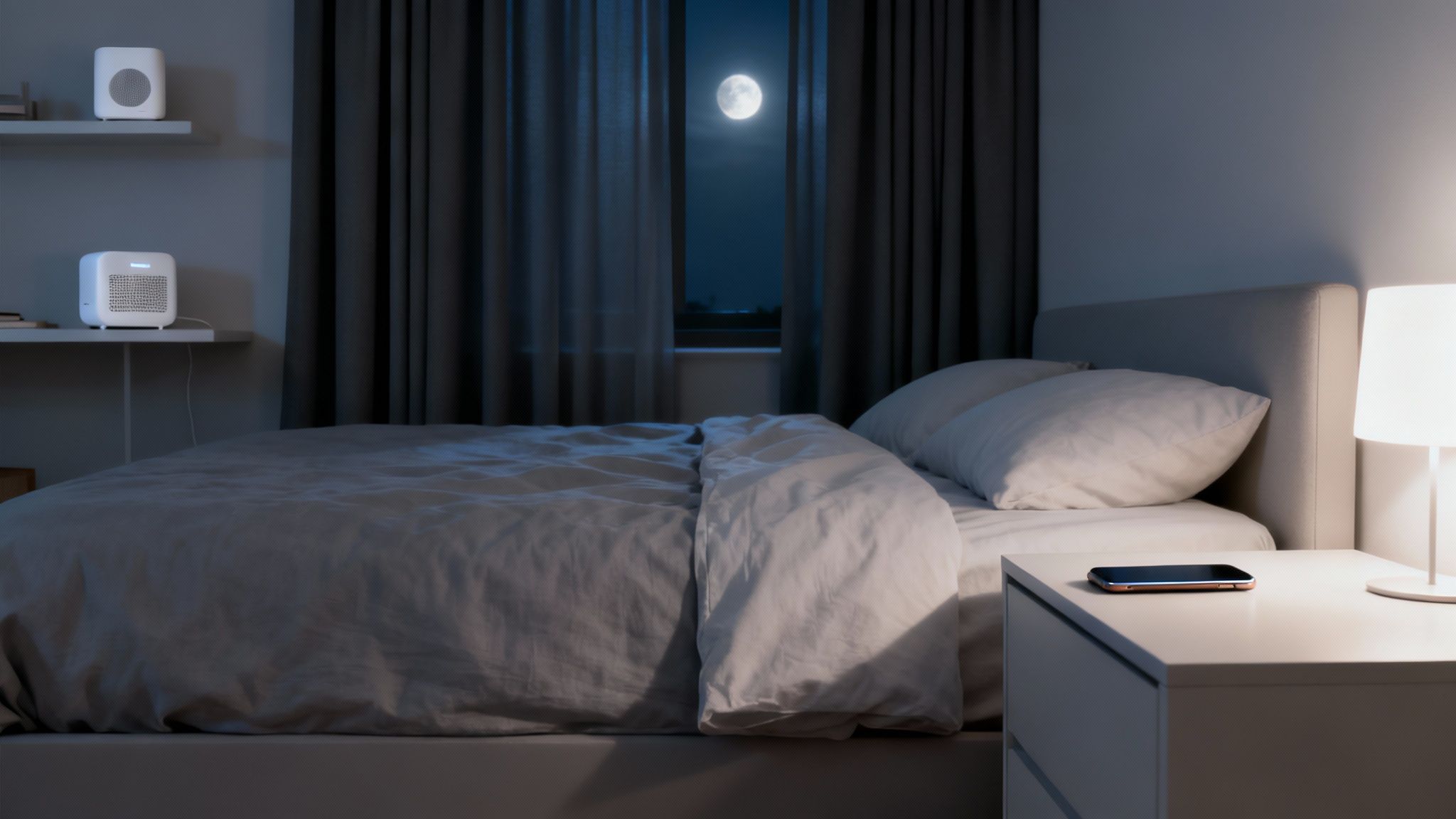
Your bedroom needs to be a sanctuary. It should be the one place your brain automatically associates with rest and safety, not a battleground for late-night stress. Creating an environment that actively soothes your nervous system is a surprisingly powerful tool for managing bedtime anxiety. This isn’t just about fluffy pillows; it's about deliberately curating the sensory inputs your brain receives.
Think about it: every little thing in your room, from the quality of the light to a pile of unfolded laundry, sends a signal to your brain. When you’re already on edge, these signals can either crank up your anxiety or gently nudge you toward peace. By taking control of your environment, you're giving your mind a head start on winding down before you even get into bed.
Master the Light to Protect Your Sleep Hormones
If there's one environmental villain when it comes to sleep, it's light. Specifically, the blue light blasting from your phone, tablet, and TV. This isn't a small thing—it actively tricks your body into suppressing melatonin, the crucial hormone that signals your brain that it's nighttime.
When your melatonin levels are low, your brain stays stuck in alert mode, which is fertile ground for anxious thoughts to grow. The fix is to create your own "digital sunset."
Give yourself a 60-90 minute screen-free buffer before you plan to sleep. This isn't negotiable. Putting the screens away allows your melatonin to rise naturally, priming your body and mind for rest.
Instead of doomscrolling, swap in a screen-free activity:
- Read a real book under a warm, dim lamp.
- Listen to a calming podcast or audiobook.
- Do some light stretching or tidy up for the next day.
This one change can dramatically cut down on the mental chatter that feeds nighttime anxiety, making it much easier to drift off.
Create a Quiet and Uncluttered Space
Your brain is always scanning your surroundings, even when you're not paying attention. A messy, cluttered room can create a low-grade sense of chaos and mental "to-do" lists, adding to your feeling of unease. A tidy space, even a mostly tidy one, sends a message of order and calm.
You don't need to go full minimalist. Just taking five minutes to put things away can make a huge psychological impact.
Noise is the other big disruptor. Total silence can sometimes make anxious thoughts seem deafening, while sudden sounds can jolt you right back into high alert. The key is finding a consistent, soothing background noise.
- White Noise Machines: A good machine creates a blanket of sound that masks jarring noises like traffic or a slamming door.
- Nature Sounds: The sound of gentle rain or ocean waves can be incredibly relaxing, giving your mind something peaceful to focus on instead of your worries.
- A Simple Fan: Often, the steady hum of a fan is all you need to create a consistent, predictable soundscape that helps you feel secure.
By thoughtfully managing the light, sound, and general order of your bedroom, you’re doing more than just practicing good sleep hygiene. You’re building a fortress of calm—a reliable sanctuary where your anxious mind finally feels safe enough to let go.
Mental Techniques to Tame a Racing Mind

When your mind is racing at night, it can feel like you're in a losing battle with your own thoughts. But the goal isn’t to completely silence your mind—that’s nearly impossible. The real key is learning how to work with it. Some of the most practical and effective strategies for this come from a field called Cognitive Behavioral Therapy for Insomnia (CBT-I), which offers simple, powerful tools you can start using tonight.
These techniques help shift your relationship with sleep, dialing down the pressure and anxiety that make rest feel like a chore. And you're not alone in this struggle. In the U.S., a 2023 survey revealed that 17% of Americans had trouble falling asleep because of this very issue, while another 20% were waking up in the middle of the night, often with their minds buzzing with anxiety. You can dig deeper into these findings in the full sleep report.
Reframe Your Anxious Thoughts
Anxious thoughts at bedtime tend to feel like absolute truths, don’t they? They're often catastrophic, focusing on all the negative consequences of not sleeping. The first step is to see these thoughts for what they are: predictions, not facts.
A classic example is the thought, "If I don't fall asleep right now, I'll be a complete wreck tomorrow and ruin my big presentation." This single idea creates a mountain of pressure, making sleep even less likely.
Instead of just accepting that thought, gently challenge and reframe it.
- Anxious Thought: "I'll be useless tomorrow if I don't sleep."
- Balanced Reframe: "I might be tired, but I've managed on less sleep before. I can still handle the day. It’s not ideal, but it’s definitely not a disaster."
This small shift in perspective can take the edge off immediately. You’re acknowledging the reality of feeling tired without letting it spiral into a catastrophe, which instantly lowers the stress you feel in that moment.
Break the Bed-Anxiety Connection
If you spend hours tossing and turning every night, your brain begins to associate your bed with frustration and wakefulness instead of rest. This is a core concept in CBT-I known as stimulus control. The goal is simple: re-establish your bed as a place only for sleep and intimacy.
If you've been lying awake for what feels like more than 20-30 minutes, get out of bed. Go to another room and do something quiet and calming in dim light, like reading a boring book or listening to soft music. Only return to bed when you feel sleepy again.
I know, it sounds counterintuitive to get out of bed when you want to sleep. But it's a crucial step. It breaks the exhausting cycle of trying to "force" sleep, which just amps up your bedtime anxiety. By getting up, you’re teaching your brain that the bed is for sleeping, and the couch is for worrying.
Try a Counterintuitive Approach
Have you ever noticed that the harder you try to fall asleep, the more elusive it becomes? Experts call this "sleep performance anxiety"—the fear of not being able to perform the simple act of sleeping. An unconventional but surprisingly effective technique to fight this is called paradoxical intention.
Instead of trying to force yourself to sleep, you gently try to stay awake. Just lie in bed with your eyes open and tell yourself, "I'm just going to rest here and stay awake for a few more minutes."
This simple mental flip can work wonders:
- It removes the pressure. You’re no longer failing at the "task" of sleeping.
- It reduces anxiety. By giving up the struggle, the stress hormones that keep you on high alert begin to subside.
- It often leads to sleep. Without the pressure and anxiety, your body's natural sleep drive can finally take over.
This isn't about pulling an all-nighter. It’s about gently giving up the fight, which is often exactly what your mind and body need to finally relax and drift off.
How Your Daytime Habits Impact Your Nightly Calm
The anxiety you feel at bedtime rarely just appears out of nowhere the moment your head hits the pillow. In my experience, it’s almost always the end result of small choices and habits from throughout your entire day. If you want to find calm at night, you have to start thinking about your whole 24-hour cycle.
Your daytime actions are constantly tinkering with your body's chemistry and stress levels, setting the stage for either a racing mind or a peaceful wind-down. This isn't just an individual struggle, either; it's a global one. Recent data on global sleep trends and insights reveals that overall sleep quality has taken a nosedive, with mounting stress being a major reason people just can't switch off.
Mind Your Stimulants and Depressants
What you put into your body—and when—plays a massive role in your nighttime anxiety. The two biggest offenders I see are caffeine and alcohol, and their effects linger for much longer than most people realize.
That afternoon coffee might feel like a lifeline, but caffeine has a half-life of about five hours. This means that a 2 PM latte can still have your nervous system fired up at 10 PM, making it incredibly difficult to unwind. If you’re already prone to anxiety, that extra stimulation can easily push you from feeling alert into feeling agitated. We dive deeper into this topic in our article explaining how energy drinks can affect your well-being.
Then there's alcohol. It might feel like it’s relaxing you, but it’s a notorious sleep saboteur. As your body processes it overnight, your sleep becomes lighter and more fragmented. You’re far more likely to jolt awake in the middle of the night, often with a racing heart and a confusing sense of dread.
A simple rule of thumb: Try to cut off all caffeine at least eight hours before your intended bedtime. For alcohol, avoid it entirely in the last three hours before you plan to sleep.
The Power of Mindful Movement
Physical activity is one of the most powerful and natural anti-anxiety tools we have. Seriously. Exercise helps your body metabolize stress hormones like cortisol and gives you a nice boost of feel-good endorphins. The trick is getting the timing and intensity right for you.
A heart-pumping workout earlier in the day can work wonders for your mood and help solidify your internal body clock. But for many people, doing that same intense exercise too close to bedtime can be like a shot of adrenaline, leaving them wired instead of tired.
Think about how you can fit movement into your day:
- Morning or Afternoon: A brisk walk, a run, or a solid gym session can dramatically lower your overall stress load for the day ahead.
- Evening: Shift to gentle activities. Think restorative yoga, light stretching, or even just a slow, mindful walk around the block to release physical tension without revving up your engine.
By consciously managing what you consume and how you move, you're not just going through your day—you're actively lowering your baseline anxiety. It’s a proactive approach that ensures when it's finally time for bed, you aren't left fighting a day's worth of accumulated stress.
Burning Questions About Bedtime Anxiety
Let's dig into some of the most common questions I hear about anxiety at night. Getting straight answers to these can make a real difference as you work toward getting better sleep.
Is That Sudden Jolt of Adrenaline as I'm Falling Asleep Normal?
Yes, absolutely. That startling sensation of falling or a sudden twitch that snaps you awake is called a hypnic jerk, and it's surprisingly common. While it can definitely be unsettling, it's almost always harmless.
I've found these jolts tend to happen more often when we're stressed, anxious, or have overdone it on the caffeine. The relaxation techniques we've talked about—especially deep breathing and progressive muscle relaxation—are great for settling your nervous system down, which can often make these jerks less frequent.
Do Supplements Like Melatonin or Magnesium Actually Work?
For some people, they can be a helpful piece of the puzzle, but they aren't a magic cure for bedtime anxiety. It's really important to know what each one does.
- Magnesium is great for muscle relaxation and can have a gentle calming effect on your entire nervous system, which can be a real ally against anxiety.
- Melatonin, on the other hand, is a hormone that signals to your body that it's time to sleep. It helps regulate your internal clock but doesn't do much to address the root causes of your racing thoughts.
Before you even think about starting a new supplement, please talk to your doctor or a healthcare professional. They can help you figure out if it’s a good idea for you, recommend the right dosage, and make sure it won’t interfere with anything else you're taking.
Remember, supplements are just that—supplemental. They work best when you combine them with the behavioral strategies in this guide, not as a standalone solution.
What's the Line Between Bedtime Anxiety and an Anxiety Disorder?
This is a really important distinction to make. Bedtime anxiety usually revolves around worries specifically about sleep, or it’s the day’s leftover stress finally bubbling up when everything gets quiet. The anxiety is mostly tied to the context of going to bed.
A clinical anxiety disorder, like Generalized Anxiety Disorder (GAD), is different. It involves persistent, excessive worry that bleeds into many areas of your life, not just sleep. If your anxiety feels overwhelming, follows you around all day, and gets in the way of your ability to function, it might be more than just a bedtime issue. In that case, the best next step is to get an evaluation from a mental health professional.
At The Happy Health Blog, our goal is to give you the practical knowledge and tools you need for a healthier, more balanced life. For more expert-backed articles on mental well-being, nutrition, and fitness, you can explore all our resources at The Happy Health Blog.
