


If you've ever found yourself staring into the fridge at 5 PM with no idea what to make for dinner, you know the feeling. Weekly meal planning is the surprisingly simple secret to ending that nightly chaos for good.
At its core, it's just a three-part rhythm: decide on your meals for the week, build a shopping list from that menu, and do a little prep work upfront. This small bit of planning completely changes the game, taking the guesswork and stress out of your evenings.
The Real Impact of Weekly Meal Planning
Before we get into the nuts and bolts of how to plan, let's talk about the why. This isn't just about organizing your recipes; it’s about taking back control of your budget, your health, and your precious time.
More Than Just a Schedule
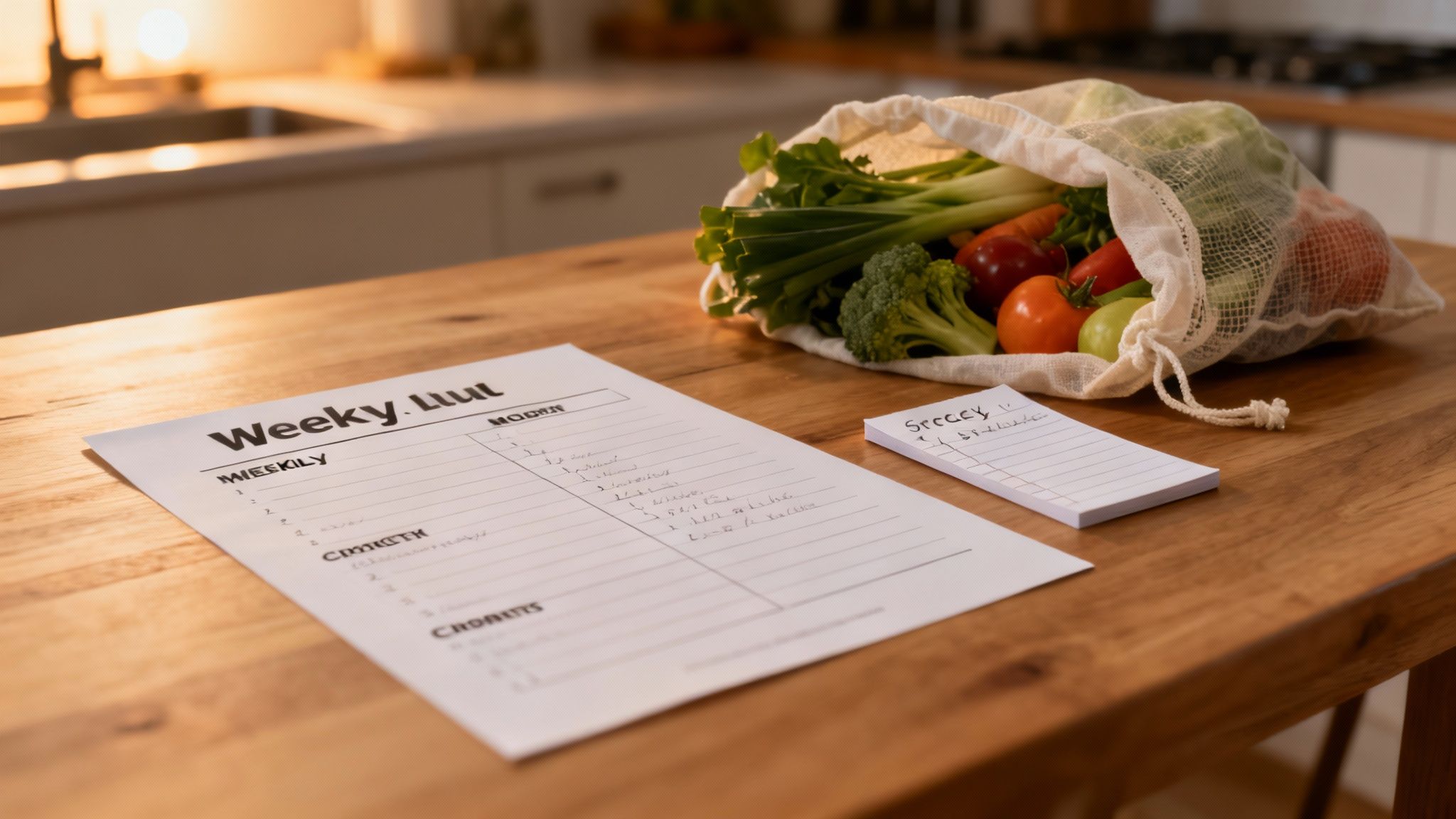
Try to think of your meal plan not as a strict set of rules, but as a roadmap. It gives you direction, so you aren't stuck making frantic decisions every day. Knowing what's coming up for dinner frees up so much mental space that you can use for things you actually enjoy.
This proactive mindset pays off in some very real ways:
- Slash Your Grocery Bill: When you shop with a list, you buy only what you need. That means fewer impulse buys and a lot less food waste.
- Eat Healthier, Effortlessly: Planning is your chance to be intentional about what you eat. You can build balanced meals that actually line up with your health goals.
- Kiss Dinnertime Stress Goodbye: Just knowing the "what's for dinner?" question is already answered brings a huge sense of calm to a busy week.
A well-crafted meal plan is your secret weapon against decision fatigue. It automates one of the most repetitive daily choices, giving you back precious time and mental clarity.
Below is a quick look at the advantages you can expect when you start planning your meals.
Quick Benefits of Weekly Meal Planning
| Benefit Area | How Meal Planning Helps |
|---|---|
| Finances | Prevents impulse buys, minimizes food waste, and reduces expensive takeout orders. |
| Health | Enables you to create balanced meals, control portion sizes, and avoid unhealthy last-minute choices. |
| Time & Energy | Eliminates daily decision-making, streamlines grocery shopping, and makes cooking faster with prep. |
| Sustainability | Reduces your household food waste by ensuring everything you buy has a purpose. |
These benefits aren't just hypotheticals; they're the real-world results that have turned meal planning into a widespread practice.
You're in Good Company
This isn't some niche life hack—it's a full-blown movement. The global market for meal planning apps hit an incredible USD 1.2 billion in 2023 and is expected to reach USD 3.6 billion by 2032.
What’s driving this? People are tired of the guesswork and are turning to simple tools to manage their diets and well-being. With a 67% market share and over 87 million users, app-based planners show a massive shift toward more intentional eating. You can find more details on these meal planning market growth and trends.
By starting this habit, you're joining millions of others who are actively taking charge of their health, finances, and time. Now, let's walk through exactly how you can do it, too.
Laying the Groundwork for a Meal Plan That Actually Works
Let’s be honest: a successful meal plan isn't about fancy spreadsheets or rigid, unforgiving rules. It's a flexible game plan that bends and flows with your real life—your budget, your schedule, and what you genuinely feel like eating. Nailing this foundation is the key to creating a weekly meal plan you’ll actually stick with.
This whole process kicks off with a quick, honest look at your current situation. Before you even think about specific recipes, you need to get a clear picture of what you're working with. A few simple questions will cut through the noise and help you set realistic expectations for the week ahead.
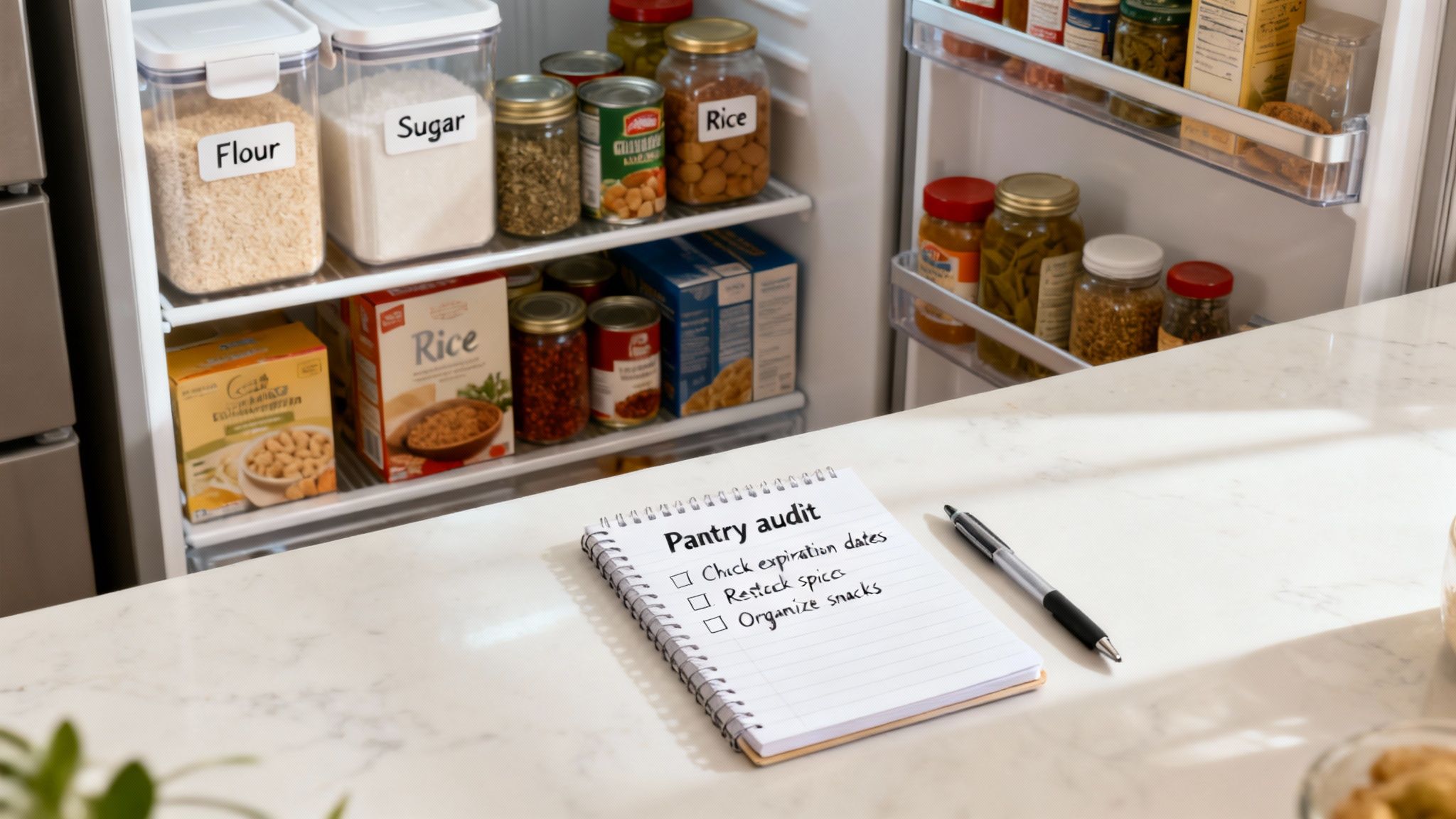
Figure Out Your Goals and Your Guardrails
First things first, take a minute to define what a "win" looks like for you this week. Your answers here will act as guardrails, making every other decision down the line so much easier.
Think about these key areas:
- Your Food Budget: How much are you comfortable spending on groceries? Having a number in mind—even a rough estimate—is crucial for making smart choices at the store.
- Your Time Commitment: Pull up your calendar and be real with yourself. How many nights do you truly have the time and energy to cook a full meal? If Wednesday is jam-packed, maybe that's a leftover night or a 20-minute dinner.
- Your Household's Needs: Are there any picky eaters, allergies, or dietary restrictions in the mix? Planning around these from the start prevents mealtime battles later.
- Your Health Objectives: Are you trying to sneak in more veggies, cut back on carbs, or get more protein? If you’re focused on protein, for instance, you can learn how to increase protein intake with smart meal planning to hit your targets.
Answering these questions upfront stops you from creating an overly ambitious plan that completely unravels by Tuesday. It’s all about designing a system that serves you, not the other way around.
Always "Shop" Your Own Kitchen First
This is my number one tip for slashing grocery bills and preventing food waste: before you even think about making a list, audit your own kitchen. Take a quick inventory of what you already have.
Check these three zones:
- The Pantry: What grains, canned goods, or spices are hiding in the back? You might find a forgotten can of chickpeas or a box of quinoa that could anchor a meal.
- The Fridge: Is there a half-used jar of salsa, some leftover roasted veggies from the weekend, or a block of cheese that needs using up?
- The Freezer: What’s in there? That lone chicken breast or bag of frozen peas is a perfect starting point for dinner.
By building meals around what you already own, you make sure nothing goes to the compost bin. That half-bag of spinach can be wilted into pasta, and those sad-looking carrots can become the base for a delicious soup.
A pantry audit isn't just about saving money; it's a creative exercise that sparks new meal ideas from ingredients you already have, reducing waste and simplifying your shopping list.
This simple habit turns meal planning from a chore into a fun puzzle. How can you combine that frozen ground turkey with the can of black beans and that jar of salsa? Just like that, you have the makings of a taco night, and you've barely added anything to your grocery list.
Build Your Go-To Recipe Arsenal
One of the biggest obstacles to consistent meal planning is decision fatigue. Who has the energy to find brand-new, exciting recipes every single week? I certainly don't.
The solution is to create a "recipe arsenal"—a curated list of 10-15 trusted, go-to meals that you know how to make and that your family actually likes. This is your secret weapon.
This core collection of recipes becomes the backbone of your weekly rotation. It completely removes the pressure of the constant search for what's new, while still giving you plenty of variety. Your arsenal should include a mix of different meal types to fit any kind of day.
A well-rounded arsenal might look something like this:
- Quick 20-Minute Meals: Things like a simple chicken stir-fry or a cheesy tomato tortellini for those chaotic weeknights.
- Slow Cooker Favorites: A "set it and forget it" pot roast or a comforting chicken tortilla soup.
- One-Pan Dinners: Sheet-pan sausage and veggies. Easy to cook, even easier to clean up.
- Comfort Food Classics: Your family’s favorite lasagna or a hearty chili that never disappoints.
When you have this list handy, you can just plug these proven winners into your weekly plan. No stress, no last-minute scrambling. You can always try one new recipe a week to keep things interesting, but your arsenal ensures you’re never starting from a blank slate.
Alright, you’ve got your goals locked in and you know what’s already hiding in your kitchen. Now for the fun part: mapping out your meals. This is where the magic happens, turning those abstract goals into a real-life plan for delicious food. The trick is to find a system that gets you excited without feeling like a total chore.
Forget the endless, mind-numbing scroll through recipe sites. The real pros lean on simple, repeatable frameworks that make building a menu quick and painless. These methods give you just enough structure to keep you on track but with plenty of wiggle room.
Nail Down a Simple Menu-Building Method
One of the easiest and most effective strategies I’ve seen is using theme nights. It’s a simple trick that assigns a food category to each day of the week, which instantly slashes decision fatigue. Think of it as a helpful prompt, not a rigid rule.
Your theme nights can be as loose or specific as you want. Here are a few classics to get you started:
- Meatless Monday: A perfect excuse to work more plants into your diet.
- Taco Tuesday: Who doesn't love a build-your-own taco night?
- Pasta Wednesday: Fast, comforting, and you can toss just about anything in.
- Soup & Sandwich Thursday: A simple, cozy combo for a busy evening.
- Pizza Friday: Kick off the weekend with homemade pies or your favorite takeout.
Another game-changer is the "Cook Once, Eat Twice" philosophy. This is all about making leftovers your best friend—on purpose. When you’re cooking, just make more than you need. For instance, roast a whole chicken on Sunday for dinner, then shred the leftover meat for chicken salad sandwiches or quick tacos later in the week.
This approach is a massive time-saver. It frees you from having to cook an entire meal from scratch every single night, which is a lifesaver on those days when you're running on fumes.
A great weekly meal plan isn't about seven unique, gourmet dinners. It's about building a rhythm of new meals, intentional leftovers, and planned nights off that actually fits your life.
Craft a Menu That's Balanced and Realistic
Once you’ve got a method in mind, start penciling in your meals. Remember to think about breakfast, lunch, and dinner, but don’t pressure yourself to plan intricate recipes for all of them. Simple is sustainable.
For most of us, breakfast is something quick like oatmeal or yogurt. Lunch is often last night's dinner. I recommend focusing most of your planning energy on dinners since they usually require the most prep. And don't forget to schedule in nights out or a designated "leftover night" to clear out the fridge before things go bad.
This is also a great time to tune into what’s happening with food trends, which often reflect what people are prioritizing—like health and savings. With food prices on the rise, 41% of people have adopted new eating patterns like high-protein or mindful eating. In the UK, for instance, the demand for 'filling' meals shot up to 29.2% as shoppers started bulking up dishes with affordable carbs. These trends show how a good plan can help you adapt to a changing economy and hit your personal health goals. You can learn more about how consumer eating trends are evolving with meal planning.
Create a Shopping List That Actually Works
With your menu set, it’s time to build a shopping list that gets you in and out of the store without wasting time or money. A scattered, brain-dump list is a recipe for forgotten items and impulse buys. The secret is categorization.
Instead of just jotting things down as you think of them, group them by store section. This one simple tweak turns your grocery run from a chaotic scavenger hunt into an efficient, streamlined mission.
Organize your list to mirror the layout of your local grocery store:
- Produce: All your fresh fruits and veggies.
- Meat & Seafood: Chicken, ground beef, fish, etc.
- Dairy & Refrigerated: Milk, eggs, cheese, yogurt.
- Pantry/Dry Goods: Grains, pasta, canned goods, spices.
- Frozen Foods: Frozen veggies, fruits, or proteins.
Before you head out the door, do one last sweep of your pantry, fridge, and freezer. Cross off anything you already have. This final check stops you from buying a third jar of mustard when two are already hiding in the back of the fridge. A well-organized list not only saves you time but also keeps you from overspending on things you don’t actually need. If you're looking for inspiration on what to put on that list, our guide to a clean eating meal plan has some fantastic ideas for wholesome ingredients.
Mastering Meal Prep Without Losing Your Sunday
You've got a solid menu and a shopping list that would make any organizer proud. Now for the final piece of the puzzle: actually making the food. This is where meal prep comes in—the secret to making your week run unbelievably smoothly. But let's get one thing straight right away: meal prep does not have to mean chaining yourself to the kitchen for eight hours every Sunday.
The real goal is to find a prep rhythm that works for your life. You don't have to cook seven complete, multi-course dinners at once. A little bit of focused work upfront can save you a ton of time and "what's for dinner?" stress later.
Find Your Prep Style
There are a bunch of ways to tackle meal prep, and the best one is simply the one you'll stick with. If the thought of spending hours batch cooking makes you want to order takeout, that's okay! The whole point is to make life easier.
See which of these approaches feels right for you:
- Batch Cooking: This is the classic method most people picture. You cook huge batches of entire meals—a big pot of chili, a tray of lasagna, a hearty lentil soup—and portion them out for the week. It’s fantastic if you love having a full meal ready to go.
- Component Prepping: This is my personal favorite because it offers so much flexibility. Instead of full meals, you just prep the building blocks. You might wash and chop all your veggies, marinate some chicken, cook a big container of quinoa, and whip up a jar of salad dressing. Then, during the week, you can mix and match these components to build different meals in minutes.
- Assembly-Line Prep: Think of this as creating your own personal "meal kit" delivery service. You gather and portion out all the raw ingredients for specific meals. For example, you could put everything for a single stir-fry into one container or create individual smoothie packs for the freezer. When it's time to cook, you just grab a kit and go.
A Sample 90-Minute Power Prep Session
To show you just how efficient this can be, here’s a game plan that will set you up for a week of easy eating in just an hour and a half. The secret is all about smart multitasking.
- First 15 Minutes: Get the Grains Going. Start with whatever takes the longest to cook. Get a pot of brown rice, quinoa, or farro simmering on the stove. While that's happening, preheat your oven.
- Next 30 Minutes: Roast & Bake. Toss your chopped veggies (broccoli, sweet potatoes, bell peppers) with some olive oil and seasoning, then spread them on a baking sheet to roast. On another oven rack, you can bake a few chicken breasts or salmon fillets at the same time.
- Next 30 Minutes: Chop & Mix. While your oven and stove are doing the heavy lifting, turn your attention to the fresh stuff. Wash and chop raw veggies for salads and snacks, like cucumbers, celery, and carrots. This is also the perfect window to mix a quick vinaigrette or get some protein marinating for later in the week.
- Final 15 Minutes: Cool, Portion & Label. Once everything is cooked, let it cool down before you stash it away. Divide your grains, proteins, and roasted veggies into airtight containers. And please, always label and date everything! Trust me, this tiny step saves you from playing "mystery leftover" roulette on Thursday.
Meal prep isn’t about perfection; it’s about progress. Even 30 minutes of washing and chopping vegetables on a Sunday can completely change the dynamic of your Tuesday night dinner.
Meal planning is also a powerful tool for wellness that goes beyond just the food. With rates of eating alone having risen by 53% in the U.S. since 2003, making time for shared meals can significantly boost happiness. By planning ahead, you free up time and energy to connect with others over a meal, a practice shown to improve social well-being. Dive into the research on how sharing meals supports happiness and social connections for more insights.
This simple process flow visualizes how to organize your weekly meal planning from themes to your final shopping list.
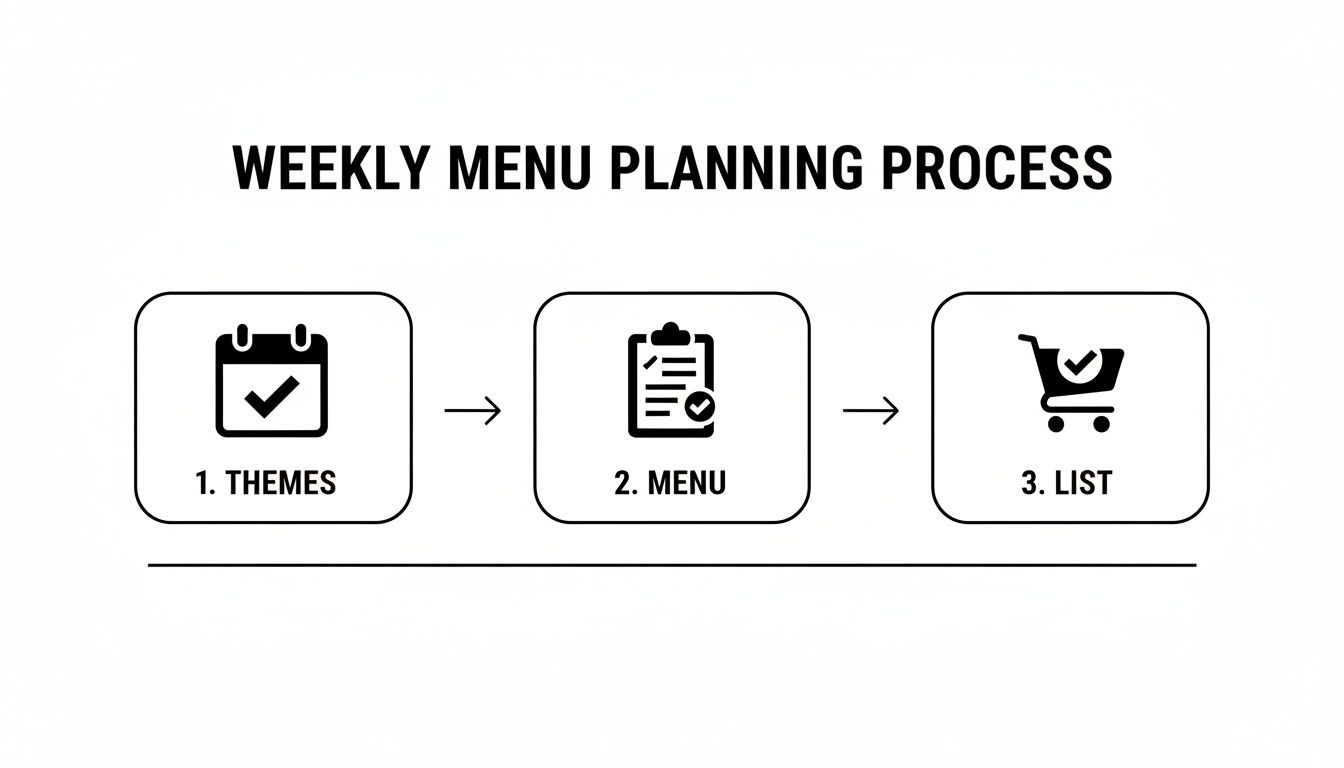
This visual breaks down the core workflow into three manageable stages, showing how a structured approach simplifies the entire process.
Food Safety and Storage Essentials
All your hard work is for nothing if the food doesn't stay fresh and safe to eat. Proper storage is a total non-negotiable.
- Use the Right Containers: A good set of clear, airtight containers (glass or BPA-free plastic) is a game-changer. Seeing what’s inside means you'll actually use it.
- Cool Foods Quickly: Never, ever put a steaming-hot container of food directly into the fridge. Let it cool on the counter for about an hour, or until it’s close to room temp. This prevents the temperature inside your fridge from rising and encouraging bacteria growth.
- Know Your Timelines: A good rule of thumb is that most cooked leftovers are safe for 3-4 days in the refrigerator. If you know you won't get to something within that window, just pop it in the freezer.
Sample Meal Plans and Printable Templates
It's one thing to talk about meal planning in theory, but it’s another to see it laid out for a real week. To help you get started, I’ve put together a few sample plans for different goals and lifestyles.
Think of these as a jumping-off point, not a strict set of rules. The whole idea is to find what works for you, so feel free to borrow ideas, swap recipes, and make these plans your own.
The Budget-Friendly Weekly Meal Plan
Eating well on a budget is totally achievable. The trick is to lean on inexpensive staples like beans, lentils, seasonal produce, and versatile proteins like chicken thighs or ground turkey. This plan is all about making every ingredient count and keeping food waste to a minimum.
- Monday: Black Bean Burgers on whole wheat buns with a side of homemade sweet potato fries.
- Tuesday: For dinner, whip up a big batch of Lentil and Vegetable Soup. You can use any leftover black bean burger from last night, crumbled into a salad for a super-filling lunch.
- Wednesday: Leftover Lentil Soup makes for an easy lunch. Dinner is a simple Pasta with Marinara, bulked up with whatever veggies you have, like sautéed zucchini and onions.
- Thursday: Your leftover pasta is today's lunch. For dinner, make some easy Sheet Pan Chicken Thighs roasted with potatoes and carrots.
- Friday: Shred any leftover roasted chicken and use it for tacos with corn tortillas, salsa, and a simple cabbage slaw.
- Weekend: Time for a "kitchen sink" frittata or a simple rice bowl to use up any remaining bits and pieces from the week.
A High-Protein Weekly Meal Plan
If you’re focused on fitness, building muscle, or just want meals that keep you feeling full longer, prioritizing protein is key. This menu is built around lean proteins, complex carbs, and plenty of vegetables to keep you fueled all week long.
Here’s an example of what your dinners might look like when you’re aiming for a protein-packed evening meal.
Sample High-Protein Weekly Dinner Plan
| Day of the Week | Dinner Idea |
|---|---|
| Monday | Grilled Salmon with Quinoa and Steamed Asparagus |
| Tuesday | Turkey Chili Topped with a dollop of Greek Yogurt |
| Wednesday | Chicken and Vegetable Skewers with a side of Brown Rice |
| Thursday | Lean Ground Beef Stir-fry with Broccoli and Bell Peppers |
| Friday | Shrimp Scampi served with Zucchini Noodles |
| Saturday | Steak with a Large Spinach and Avocado Salad |
| Sunday | Leftover Turkey Chili or a dedicated meal prep session for the week ahead |
Structuring your dinners this way helps ensure you’re getting quality protein every evening, which is great for muscle recovery and keeping those late-night cravings at bay.
A Quick and Easy Vegetarian Meal Plan
Going meatless definitely doesn't mean you're chained to the stove. This plan is all about speed, using quick-cooking proteins like chickpeas, tofu, and eggs along with tons of fresh produce for vibrant, delicious meals that come together in a snap.
Many plant-forward diets are also great for reducing inflammation. For more ideas, you can check out our guide to building a satisfying anti-inflammatory meal plan.
- Breakfasts: Keep it simple by rotating through options like Greek yogurt with berries, oatmeal, or scrambled eggs.
- Lunches: Dinner leftovers are your best friend here! It saves so much time and cuts down on waste.
- Dinners:
- Monday: 20-Minute Spinach and Tomato Tortellini.
- Tuesday: Chickpea Curry with coconut milk, served over rice.
- Wednesday: Build-Your-Own Veggie Burrito Bowls with black beans, corn salsa, and avocado.
- Thursday: Sheet Pan Tofu and Broccoli tossed in a simple peanut sauce.
- Friday: Homemade Veggie Pizzas on naan bread—super easy and fun.
The best meal plan is the one you can actually stick with. It should feel less like a chore and more like a tool that brings a little calm to your week. Start with one of these templates, and then don't be afraid to make it your own.
Your Printable Meal Planning Toolkit
To make this whole process even easier, I've created a few printable resources for you. These are the exact tools I use to take the guesswork out of organizing my week and move from a plan on paper to food on the table.
- Weekly Menu Planner: A clean, simple grid where you can map out your breakfasts, lunches, and dinners for the week ahead.
- Categorized Grocery List: I’ve organized this list by store section (produce, dairy, pantry) to help you get in and out of the grocery store in record time.
- Pantry Inventory Checklist: Before you shop, use this handy sheet to "shop your kitchen" first. You’ll use up what you have and only buy what you truly need.
Common Meal Planning Questions Answered
Even with the best game plan, life has a funny way of throwing curveballs. Sticking with a new routine like meal planning is bound to come with a few hurdles, and that’s completely normal. The trick is to have a few solutions ready so you don’t get discouraged and give up.
Think of these little challenges less as failures and more as opportunities to make your system even better. A great meal plan isn’t a rigid set of rules; it’s a flexible framework designed to make your life easier. Let’s walk through some of the most common questions that pop up when you're getting the hang of this.
What if I Get Bored Eating the Same Things?
This is the big one. Food boredom is the number one killer of a good meal-planning habit. Nobody wants to be stuck in a never-ending loop of the same five meals. The secret to keeping things interesting is to introduce newness in small, totally manageable ways.
- Try One New Recipe a Week: Don’t feel like you have to reinvent your entire menu. Just pick one new recipe to try each week or even every other week. If it’s a winner, awesome! Add it to your collection. If it’s a dud, no big deal.
- Rethink Theme Nights: "Taco Tuesday" doesn't have to mean ground beef in a hard shell every single time. One week it could be fish tacos with a zesty slaw, the next it could be taco-stuffed sweet potatoes, and the week after that, a loaded taco salad. The theme gives you a starting point, but you can get creative from there.
- Switch Up Your Sides: The exact same grilled chicken can feel like a completely different meal depending on its supporting cast. Serve it with roasted broccoli and potatoes one night, then pair it with a fresh corn and black bean salsa the next.
How Do I Handle Unexpected Events?
Life happens. A friend calls for a last-minute dinner, you get stuck late at work, or you’re just not in the mood for what you planned. A meal plan that works has to be able to roll with the punches.
My favorite strategy is to build in flexibility from the get-go. I always designate one night a week as a "flex night." This might be a planned leftover night, or it could be a super simple pantry meal like pasta with marinara, a fancy omelet, or a loaded grilled cheese.
When an unexpected invitation pops up, you simply swap it with your flex night. Another great move is to freeze one of your planned meals. If you were supposed to make chili on Thursday but end up going out, just pack it up and freeze it for a busy night next week.
A meal plan is a tool to reduce stress, not a contract you're locked into. The goal is to feel more in control, and that includes having the freedom to change your plans without guilt.
Is Meal Planning Worth It for Just One Person?
Absolutely! In fact, it can be even more powerful. Planning meals for one is a fantastic way to slash your grocery bill and dramatically cut down on food waste, especially since most stores package food in family-sized portions.
The key here is to embrace the "cook once, eat twice (or three times!)" mindset. When you make a recipe, eat one portion for dinner and immediately pack the leftovers into single-serving containers. Boom—you've got easy grab-and-go lunches or another dinner ready for later in the week.
This approach also lets you build a personal stash of healthy, homemade "ready meals." A big batch of soup, curry, or lasagna can be portioned out and frozen, giving you incredible options that are way healthier and cheaper than anything from the freezer aisle.
How Can I Make One Meal for a Family of Picky Eaters?
Trying to please a household of different tastes can feel like an impossible puzzle, but I've found a simple solution that works wonders: deconstruct your meals. Instead of serving a fully assembled dish, lay out all the components and let everyone build their own plate.
This approach works beautifully for so many meals:
- Taco Bars: Set out bowls with seasoned meat or beans, lettuce, cheese, tomatoes, salsa, and sour cream.
- Pasta Stations: Offer a couple of different sauces, some protein (like meatballs or grilled chicken), and various veggie toppings.
- Grain Bowls: Start with a base of quinoa or rice and let everyone add their preferred protein, roasted veggies, and dressing.
Here’s another powerful tip: get everyone involved in the planning. When you sit down to map out the week, let each family member pick one dinner. This gives them a sense of ownership and guarantees they'll be excited for at least one meal, which seriously cuts down on complaints and makes dinnertime a lot more peaceful for everyone.
At The Happy Health Blog, our mission is to give you the practical, expert-backed advice you need to build a healthier and more balanced life. Explore our articles for more tips on nutrition, fitness, and overall well-being. Start your journey today at https://thehappyhealthblog.com.
