

Here's how nutrition and wellness really fit together: think of nutrition as the raw materials you give your body, and wellness as the overall state of thriving that results from using those materials well. It's like building a house. Nutrition provides the strong bricks, solid wood, and clear glass. Wellness is the beautiful, sturdy, and comfortable home you live in.
Understanding the Connection Between Nutrition and Wellness
It’s a common mistake to chase nutrition and wellness as separate goals. In reality, they're completely intertwined. Lasting health isn't just about eating your greens; it's about building a lifestyle where healthy eating feels like second nature because it supports your overall well-being.
Let's stick with that house analogy. You can have the best building materials in the world (good nutrition), but if your construction methods are sloppy—you're not getting enough sleep, you're constantly stressed, or you never move your body—the final structure will be weak. The walls might crack and the foundation might crumble.
On the flip side, wellness is the expert craftsmanship that puts those materials together. It’s the thoughtful design, the regular upkeep, and the care you put into maintenance. This includes all the other lifestyle pieces that work hand-in-hand with the food you eat.
How They Build on Each Other
To really get it, you have to see how they influence one another day in and day out:
Nutrition Fuels Wellness: What you eat directly impacts your energy, your mood, how clearly you think, and how well your body fights off sickness. A diet rich in nutrients gives you the essential building blocks for a resilient body and a sharp mind—the very definition of wellness.
Wellness Guides Nutrition: When you start prioritizing feeling good, your food choices naturally follow. Making time for good sleep, managing stress, and moving your body regularly tends to quiet the cravings for junk food and makes you actually want whole foods that make you feel energized.
True wellness isn't about chasing perfection. It’s about being intentional. It's the conscious choice to build habits that nourish your whole self, and nutrition is the foundation that makes every other effort so much more effective.
Trying to achieve a state of genuine well-being without a solid nutritional base is like trying to run a marathon on an empty tank. No amount of exercise can fully undo a poor diet, and stress-relief techniques don't work nearly as well when your brain and body are starved of key nutrients.
This guide will take you beyond the buzzwords and show you how to actually weave nutrition and wellness together in your daily life for real, lasting results.
How Food Fuels Your Body and Mind
Every single thing you eat sends a direct message to your body and brain, shaping everything from your energy levels to your mood. Thinking about food this way is the first step in moving from just eating to truly nourishing yourself. This isn't about rigid rules or restrictions; it's about understanding how to use food as a powerful tool to feel your absolute best.
At its core, the food on your plate breaks down into two main nutrient categories: macronutrients and micronutrients. Think of your body as a high-performance car. The macronutrients—carbohydrates, proteins, and fats—are the different types of fuel it runs on. They provide the raw energy for every single thing you do.
But fuel alone isn't enough, right? Your car also needs engine oil, coolant, and a functioning electrical system. That’s where micronutrients—vitamins and minerals—come in. They're the behind-the-scenes crew, facilitating thousands of chemical reactions that allow your body to actually use the energy from your food.
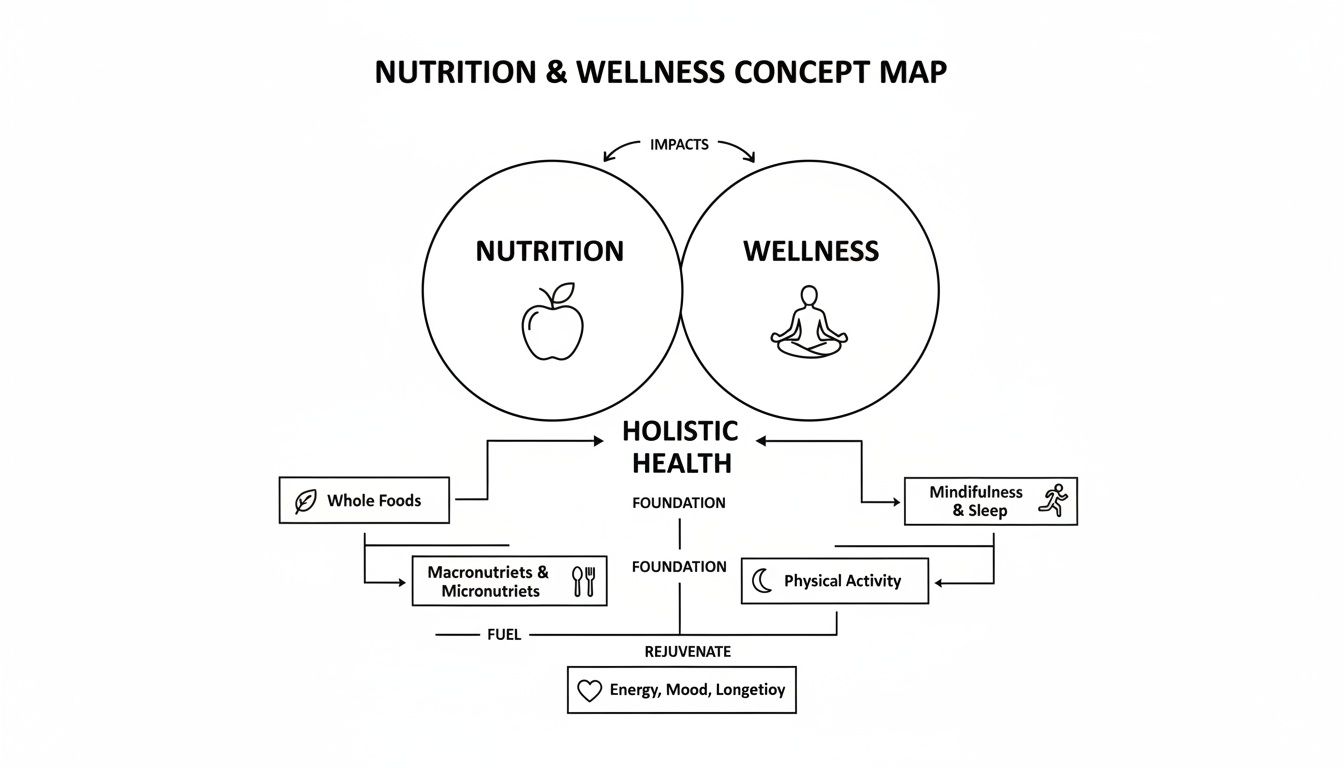
As you can see, a solid nutritional foundation is the launchpad for achieving bigger wellness goals like mental clarity and physical vitality.
The Building Blocks of Energy and Focus
Let's start with the basics. Macronutrients are the heavy lifters, providing the energy and structure your body needs to function daily. Getting the right balance isn't just about calories; it's the key to unlocking stable energy and sharp mental focus.
Here’s a simple way to think about the big three and how to choose them wisely.
Your Guide to Macronutrients
| Macronutrient | Primary Role in the Body | Healthy Food Sources |
|---|---|---|
| Proteins | The "builders." They repair tissues, create hormones and enzymes, and support your immune system. They're also key for feeling full and satisfied. | Chicken, fish, eggs, lentils, beans, tofu, Greek yogurt, nuts, and seeds. |
| Carbohydrates | Your brain's preferred fuel source. They provide the primary energy for your body's cells, tissues, and organs. | Whole grains (oats, quinoa), fruits, sweet potatoes, beans, and vegetables. |
| Fats | Essential for brain health, absorbing vitamins (A, D, E, K), and reducing inflammation. They are a concentrated source of long-lasting energy. | Avocados, olive oil, nuts, seeds, and fatty fish like salmon. |
Balancing these three at every meal is the secret sauce for sustained energy and avoiding those dreaded afternoon slumps.
Your Gut: The Second Brain
Beyond the macros and micros, there's a bustling city of trillions of microorganisms living in your gut—your gut microbiome. This internal ecosystem is so influential that scientists often call it our "second brain." Why? Because it communicates directly with your central nervous system through what's known as the gut-brain axis.
A healthy, diverse microbiome helps regulate digestion, immunity, and even your mood and stress response. When you feed it a steady diet of fiber-rich foods like fruits, vegetables, and whole grains, you're helping the good bacteria thrive. This, in turn, can lead to better mental clarity and emotional resilience.
On the flip side, a diet high in processed foods and sugar can throw this delicate balance out of whack, contributing to inflammation, brain fog, and mood swings. This connection is a huge piece of the modern wellness puzzle: a happy gut is truly fundamental to a happy mind.
The gut health movement has completely changed how we view food, turning our meals into medicine for our microbiome. It's no wonder the probiotic industry is projected to soar from $47.80 billion to $84.6 billion by 2032, as people actively seek out products to boost their immunity and mood.
The link is undeniable. If you're looking for ways to support your digestive system even more, you can check out our guide on the best supplements for gut health.
Balancing Blood Sugar for Stable Moods
Another massive way food impacts your mind is through blood sugar. Ever feel irritable, tired, and totally unfocused after a sugary snack? That's the classic blood sugar rollercoaster.
When you eat simple carbs or sugary foods alone, your blood sugar spikes dramatically and then crashes, taking your mood and energy down with it. This constant up-and-down puts a lot of stress on your body.
The fix is surprisingly simple. By building meals that combine fiber, protein, and healthy fats, you slow down how quickly sugar enters your bloodstream. This leads to much more stable energy levels and a more even-keeled mood all day long. For example, pairing an apple (carb) with a handful of almonds (protein and fat) will keep you going far longer than eating that apple alone. Making these small, strategic choices is a game-changer for both your physical energy and your mental well-being.
Building Your Plate for Optimal Wellness
Knowing the science is great, but the real magic happens when you translate that knowledge into delicious, energizing meals. This is where we step out of the textbook and into your kitchen. We're going to focus on simple, sustainable strategies that make healthy eating feel like second nature, not a chore.
It all starts with one core idea: nutrient density.
Think of it as getting the biggest bang for your buck, nutritionally speaking. A nutrient-dense food packs a ton of vitamins, minerals, and other good stuff into a relatively small number of calories. For example, a handful of spinach is worlds away from a handful of sugary candy in terms of what it gives your body.
When you prioritize these powerhouse foods, you’re giving your body the high-quality raw materials it needs to thrive, without weighing it down with empty calories. This simple shift in mindset changes the focus from what you can't have to all the amazing things you can add to your plate.
The Healthy Plate Model: A Simple Visual Guide
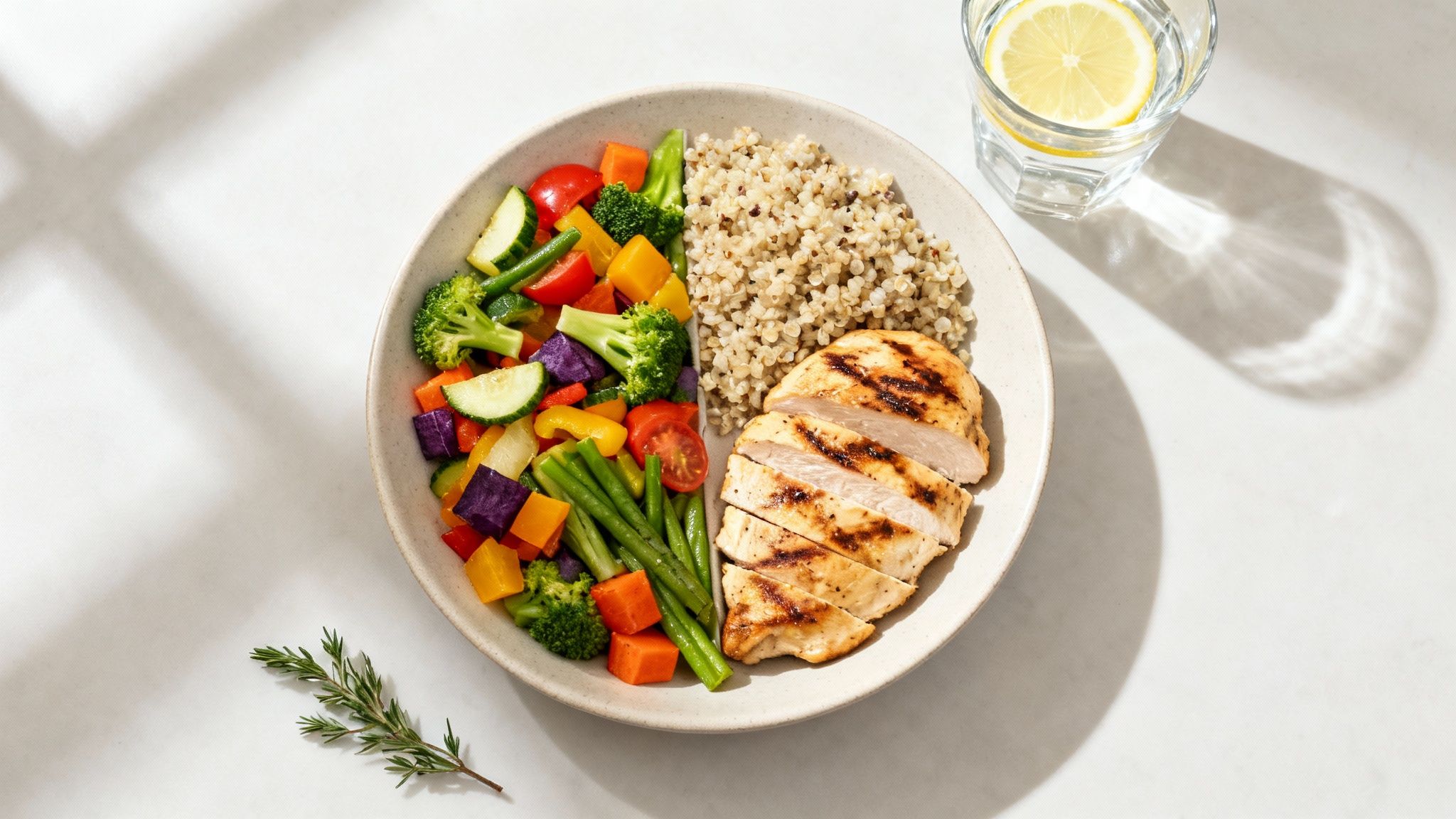
One of the most practical tools I've found for building a balanced meal is the Healthy Plate Model. It’s a straightforward visual guide that lets you ditch the complicated calorie counting and macro tracking for good. It just works.
Picture your dinner plate and mentally divide it up:
- Fill Half Your Plate (50%) with Fruits and Vegetables: This is where you load up on vitamins, minerals, fiber, and antioxidants. Make it a goal to "eat the rainbow"—deep greens, bright reds, vibrant oranges—to get the widest possible range of nutrients.
- Fill One Quarter (25%) with Lean Protein: This section is for the building blocks—things like grilled chicken, fish, beans, lentils, or tofu. Protein is essential for repairing muscle, supporting your immune system, and, crucially, keeping you feeling full and satisfied.
- Fill One Quarter (25%) with Whole Grains or Starchy Veggies: This is your fuel source, providing the complex carbs your brain and body need for lasting energy. Think quinoa, brown rice, oats, or a baked sweet potato.
This simple formula almost automatically creates a balanced meal, making sure you get a great mix of macros and micros without having to overthink it. It's a foundational piece of any effective clean eating meal plan and helps you build a genuinely positive relationship with food. If you want to see how this works in practice, check out our guide on creating a simple clean eating meal plan.
The Critical Role of Soil Health
Here's something you might not think about: the nutrient density of our food doesn't just start at the grocery store. It starts in the ground.
Unfortunately, many modern farming practices have stripped the soil of its essential minerals. This means the food grown in that soil is often less nutritious than it was generations ago. That’s why movements like regenerative agriculture are so important.
The Global Wellness Institute's Nutrition for Healthspan Initiative notes a growing awareness among consumers about this very issue. People are actively seeking out foods rich in vitamins and minerals, understanding that our health is directly linked to the health of the soil. In fact, research shows that produce from depleted soils can contain up to 38% fewer nutrients than crops grown in healthy, organically managed land. It’s a powerful reminder that supporting better farming is a huge part of the overall wellness puzzle. You can read more about this trend from the Global Wellness Institute.
Smart Swaps and Hydration Habits
Often, building a healthier plate isn’t about a massive overhaul. It’s about making small, consistent upgrades that really add up over time. These simple swaps can dramatically boost the nutritional value of your meals without feeling like a sacrifice.
Small changes are the building blocks of lasting habits. Swapping refined grains for whole grains is one of the easiest and most impactful upgrades you can make for your energy levels and digestive health.
Here are a few easy exchanges to get you started:
- White Rice → Brown Rice or Quinoa: You’ll get a major boost in fiber, protein, and key minerals.
- Sugary Cereal → Oatmeal with Berries: This gives you slow-release energy and antioxidants instead of a quick sugar rush and crash.
- Creamy Dressings → Olive Oil and Vinegar: You’re choosing inflammation-fighting healthy fats over unhealthy additives and sugars.
And finally, let’s not forget about water. Proper hydration is non-negotiable. Water is essential for every single process in your body, from absorbing nutrients to regulating your temperature. While aiming for around eight glasses a day is a good starting point, the best advice is to listen to your body—your needs will change based on your activity level and the weather. Simply keeping a water bottle nearby is one of the easiest and most powerful things you can do for your wellness journey.
Lifestyle Habits That Amplify Your Nutrition
Think of your nutrition plan as the foundation of a house. It's absolutely essential, but it can't stand strong on its own. To really build a structure of lasting health, you need to add the walls and roof: supportive lifestyle habits like sleep, stress management, and physical activity.
You can have the perfect diet, but if you’re ignoring these other areas, you’re actively working against yourself. It's like trying to fill a bucket with a hole in it. For example, just one night of bad sleep can completely derail your appetite hormones, leaving you craving junk food the next day. Let's break down how these pieces fit together to create a powerful synergy for your well-being.

The Undeniable Power of Quality Sleep
Sleep isn't just about resting; it's a critical period of maintenance and repair for your entire body. When it comes to how we eat, its role is huge. While you're in deep sleep, your body is busy managing two key appetite hormones: ghrelin, which shouts "I'm hungry," and leptin, which says "I'm full."
When you skimp on sleep, ghrelin levels shoot up and leptin levels drop. This hormonal cocktail is a recipe for disaster, triggering intense cravings and making you feel hungry even when you don't need food. Your body isn't just tired; it's biologically programmed to hunt for quick, easy energy—usually in the form of sugar and refined carbs.
Getting 7-9 hours of quality sleep each night is one of the most powerful things you can do to support your nutrition goals. It helps regulate your appetite, strengthens your willpower, and gives your body the chance to properly use the food you’ve eaten.
To get better sleep, start by building a consistent routine. Go to bed and wake up at roughly the same time every day (yes, even on weekends!). Turn your bedroom into a sleep sanctuary—keep it cool, dark, and quiet. It also helps to power down screens at least an hour before bed, which allows your body's natural melatonin production to kick in.
How Stress Management Protects Your Progress
Chronic stress is another major roadblock on the path to wellness. When you're constantly on edge, your body is flooded with the hormone cortisol. While cortisol is useful in a true fight-or-flight situation, high levels over a long period of time can throw your metabolism and digestive system into chaos.
Cortisol can slow digestion, trigger inflammation, and even tell your body to store more fat, especially around your midsection. It's also the culprit behind stress-eating, driving cravings for high-fat, high-sugar "comfort foods." This means that even with a great diet, unchecked stress can prevent your body from getting the full benefit of those healthy nutrients.
Learning to manage stress isn't a luxury; it's a non-negotiable part of any healthy eating plan.
- Mindful Movement: Try activities like yoga or tai chi, which pair gentle physical movement with calming breathwork.
- Breathing Exercises: Even a few minutes of simple, deep breathing can lower cortisol and settle your nervous system.
- Time in Nature: Research has repeatedly shown that spending time outdoors is a powerful natural stress-reducer.
Creating a small relaxation ritual before bed can also work wonders. You might want to explore our guide to the best herbal teas for health to find a soothing blend that helps you unwind and signal to your body that the day is done.
Movement: The Key to Nutrient Utilization
Finally, let's talk about movement. Regular physical activity is the spark that helps your body put all those good nutrients to work. Exercise dramatically improves insulin sensitivity, meaning your cells get much better at pulling glucose from your bloodstream to use for energy instead of storing it as fat. This is key for stable energy and maintaining a healthy weight.
But it’s not just about burning calories. Think of movement as a tune-up for your body's metabolic engine. It also delivers a powerful mood boost by releasing endorphins, which helps curb stress and the urge to eat emotionally.
The trick is to find something you actually enjoy doing. Whether it's a brisk walk, a dance class, or lifting weights, what matters most is consistency, not intensity. Aim for a balanced routine that includes cardiovascular work, strength training, and flexibility to build a strong, efficient body that thrives on the good fuel you give it.
Let's Clear Up Some Common Nutrition Myths
It’s easy to get lost in the world of nutrition. One day you hear something is a superfood, the next it’s the enemy. This section is here to cut through that noise. We'll tackle some of the most stubborn myths out there so you can feel confident, not confused, about the food on your plate.
Making smart choices starts with having the right information. Let's get to the facts.
Myth 1: All Carbs Are Bad
This might be one of the most persistent and damaging myths around. The idea that all carbs are dietary villains just isn't true. Lumping a sweet potato in with a bag of candy ignores the huge difference between them. Your body, and especially your brain, runs on carbohydrates—it's their preferred source of fuel.
The real secret is knowing which kind to reach for.
- Refined Carbs: Think white bread, pastries, and sugary drinks. These have been processed and stripped of their good stuff, like fiber. They hit your system fast, causing a quick spike in blood sugar followed by a crash that leaves you drained and craving more.
- Complex Carbs: These are the good guys, found in whole foods like vegetables, fruits, beans, and whole grains. They're packed with fiber, which means they digest slowly, giving you steady, reliable energy and keeping your gut happy.
So, instead of cutting out an entire food group, just make smarter swaps. Carbohydrates aren't the problem; low-quality, highly processed foods are. A healthy diet absolutely includes these essential energy providers.
Myth 2: You Need to "Detox"
The promise of a "detox" or "cleanse" is tempting—a quick fix to wash away toxins with a fancy juice or a strict diet. The reality? Your body already has an incredibly powerful, built-in detoxification system.
Your liver, kidneys, lungs, and skin are working 24/7 to filter out and get rid of anything your body doesn't need.
A trendy juice cleanse isn't doing the work you think it is. Your organs are the real heroes here. The best way to help them is with good food, plenty of water, and solid sleep—not by starving yourself for a few days.
Most of these "detox" plans are missing key nutrients like protein and fiber, which is why they often leave you feeling weak and miserable. If you really want to support your body's natural cleansing ability, just ease its workload. Cut back on processed foods and alcohol, and fill your plate with whole foods that give your organs the fuel they need to do their job right.
Myth 3: Eating Fat Makes You Fat
For years, fat was the ultimate bad guy. This led to a flood of low-fat and fat-free products that were often pumped full of sugar to make them taste good. We now know this idea is not only wrong, but it's also kept people from eating fats that are absolutely essential for good health.
Your body needs healthy fats for some pretty important jobs:
- Brain Health: Your brain is actually about 60% fat. It relies on dietary fats, like omega-3s, to stay sharp and function correctly.
- Nutrient Absorption: Certain vitamins—A, D, E, and K—are "fat-soluble." This means your body literally cannot absorb them without fat in your meal.
- Hormone Production: Fats are the fundamental building blocks for making critical hormones that regulate everything from your mood to your metabolism.
The conversation shouldn't be about avoiding fat, but about choosing the right type of fat. Healthy sources like avocados, olive oil, nuts, seeds, and fatty fish actually fight inflammation and help you feel full and satisfied, which can prevent overeating. Good fats aren't just allowed; they're a non-negotiable part of a healthy lifestyle.
Your Action Plan for Better Health
Thinking about a total health overhaul can feel like standing at the base of a mountain. You look up, and the peak seems impossibly far off. The idea of climbing it all in one go is enough to make anyone give up before they even start.
But here’s the secret every successful climber knows: you don't conquer a mountain with one giant leap. You do it with one steady, manageable step at a time. This is the absolute key to building nutrition and wellness habits that actually last. Forget trying to change your entire life overnight. The real goal is to focus on small, consistent actions that stack up over time. Progress, not perfection, is the only thing that matters.
Start With One Small Change
Instead of trying to do everything at once, just pick one thing. Seriously, just one or two simple habits to focus on for the next week. The trick is to choose something so achievable it almost feels too easy. This strategy builds confidence and makes healthy living feel empowering, not like a chore.
Need some inspiration? Pick one of these that feels right for you:
- Add one more color to your dinner plate. It’s a simple visual cue that you're getting a wider variety of vitamins and minerals.
- Take a 10-minute walk after lunch. This little break gets your digestion going, fights off the afternoon slump, and clears your head.
- Drink one extra glass of water today. Hydration is the foundation for everything, from your energy levels to your ability to think clearly.
- Swap one sugary drink for water or herbal tea. This is an incredibly easy win for cutting empty calories and keeping your blood sugar stable.
Once that first habit feels automatic—like brushing your teeth—you can layer on another one. This slow, steady process is how you create change that sticks for good.
The best wellness plan isn't the "perfect" one you read about online. It's the one you can actually stick with. It’s all about creating a system of small, positive choices that fit into your real life.
Setting Realistic Goals for Lasting Success
To make these new habits permanent, you need to get specific. A vague goal like "I'm going to eat healthier" is impossible to track and easy to abandon. You have to make it concrete.
For example, turn "eat healthier" into "I will add a serving of leafy greens to my lunch three times this week." See the difference? That's a clear target. You either did it or you didn't, which makes it easy to measure your progress.
Remember, this is your journey. It’s about feeling better, having more energy, and building a foundation of health that supports you in everything you want to do. Every small step is a powerful investment in a lifetime of nutrition and wellness. You have the tools now—so what's your first step going to be?
Answering Your Top Nutrition Questions
It's completely normal to have a ton of questions when you're starting out. Honestly, the world of nutrition and wellness can feel like a maze of conflicting advice, and it's easy to get stuck.
Let's clear up some of the most common stumbling blocks so you can move forward with confidence.
"I'm So Overwhelmed. Where Do I Even Begin?"
The simplest advice is often the best: start small. Seriously. Trying to overhaul your entire life overnight is a fast track to burnout. Instead, just pick one tiny thing to focus on for a week.
Maybe it's drinking one more glass of water a day. Or adding a handful of spinach to your dinner. It could even be a 15-minute walk on your lunch break. Once that one habit feels like second nature, then you can add another. This slow-and-steady approach builds incredible momentum without the stress.
The goal here is progress, not perfection. Every small win is a building block for the next, creating a ripple effect that leads to big, lasting changes in how you feel.
"Do I Have to Give Up All My Favorite Foods?"
Not a chance. A healthy lifestyle is all about balance, not deprivation. In fact, the most sustainable approach focuses more on what you can add to your plate—like more colorful veggies or lean proteins—rather than what you need to take away.
Real wellness has room for the foods you love. Enjoying your favorite dessert or a slice of pizza is part of a normal, happy life. The key is to enjoy them in moderation while making sure the bulk of your diet is packed with good stuff. This creates a positive relationship with food, free from guilt, which is far more likely to stick.
"How Long Until I Actually See Results?"
Ah, the million-dollar question! While bigger physical goals like weight loss or building muscle take time and consistency, many of the best benefits of eating well show up surprisingly fast.
You can often start to feel a difference within the first one to two weeks. These early victories are huge motivators.
- More Energy: When you balance your meals, you can say goodbye to that classic afternoon slump.
- Better Digestion: A little more fiber can make a world of difference in your gut health and regularity.
- Sharper Focus: Your brain runs on nutrients! Giving it the right fuel leads to better mental clarity.
- Deeper Sleep: Cutting back on late-night sugar or caffeine can have an almost immediate impact on your sleep quality.
Focus on these "non-scale victories." They're the clearest signs that your new habits are already making a real difference and will give you the encouragement you need to keep going for those long-term goals.
At The Happy Health Blog, our whole mission is to give you clear, evidence-based guidance to make your health journey a success. You can find more articles and resources at https://thehappyhealthblog.com.
