


Ever find yourself staring into the mirror, wondering, "Why am I always so tired and have no energy?" It’s an exhausting and deeply frustrating place to be. But you're not alone in feeling this way, and more importantly, this is almost always a problem you can solve.
Think of your energy like a bank account. Daily activities, stress, and less-than-ideal habits are constant withdrawals. Rest, good food, and self-care are your deposits. When you’re constantly overdrawn, you feel completely bankrupt.
Decoding Your Constant Fatigue

If you feel isolated by your exhaustion, it might help to know you're part of a massive, albeit tired, global community. A huge global analysis found that a staggering 20.4% of adults—that’s about one in five people—report feeling fatigued on a regular basis.
Even more telling, chronic fatigue that sticks around for more than six months affects 10.1% of adults all over the world. You can dig into the full research about these fatigue statistics to see just how widespread this issue really is.
This guide is your roadmap to auditing your personal energy budget. We’ll help you spot the hidden withdrawals that are draining you and show you how to start making consistent, high-value deposits back into your account.
Identifying Your Personal Energy Drains
Feeling tired isn't a single problem; it's a symptom with a whole host of potential causes. Your low energy could be coming from one big issue or, more often than not, a combination of smaller, interconnected factors. Getting to the bottom of these is the first real step toward reclaiming your get-up-and-go.
To help you start connecting the dots, we've put together a quick table highlighting the usual suspects.
Quick Guide to Common Energy Drains
| Common Cause | What It Feels Like | Quick Tip |
|---|---|---|
| Poor Sleep | Waking up groggy, needing caffeine to start the day, afternoon slumps. | Prioritize a consistent sleep schedule, even on weekends. |
| Nutrient Gaps | Cravings for sugar or carbs, feeling "hangry," general weakness. | Focus on whole foods and balanced meals to stabilize blood sugar. |
| Dehydration | Brain fog, headaches, feeling sluggish even after a good night's rest. | Keep a water bottle handy and sip throughout the day, not just when thirsty. |
| Chronic Stress | Feeling "wired but tired," mentally exhausted, trouble relaxing or shutting off. | Introduce small, 5-minute mindfulness or breathing breaks into your day. |
| Sedentary Lifestyle | Feeling stiff, unmotivated, and lethargic; getting tired from small tasks. | Aim for a short walk or some light stretching to get your blood moving. |
This table is just a starting point. Your personal journey begins with figuring out which of these—or other culprits—might be draining your reserves. The most common ones tend to fall into a few key categories:
- Lifestyle Habits: The way you sleep, move your body, and even hydrate has an immediate and direct impact on how you feel every single day.
- Nutritional Gaps: The food you eat is literally the fuel for your body's engine. Putting in the wrong kind of fuel, or not enough of it, will absolutely cause performance issues.
- Mental and Emotional Load: Think of chronic stress and burnout like a bunch of apps running in the background on your phone. They silently drain your battery life all day long, even when you're not actively using them.
- Underlying Medical Conditions: Sometimes, that nagging fatigue is your body's check-engine light. It’s a signal that something else under the hood needs attention.
Think of your body as a complex machine. When the 'check engine' light (your fatigue) comes on, it’s a signal to look under the hood, not just to keep driving until you run out of gas.
By taking a closer look at these areas, you can start moving from feeling perpetually drained to feeling back in control of your life.
How Modern Life Drains Your Energy Battery
Ever feel like you’re running on empty, constantly wondering, "why am I always tired and have no energy?" The culprit often isn’t some big, obvious problem. Instead, it’s the quiet, steady drip of modern life that saps your vitality, a lot like those background apps that secretly drain your phone’s battery.
The first step to feeling recharged is figuring out what’s causing these energy leaks in the first place.

So many of these drains are woven right into our work culture. In fact, a staggering 97% of workers deal with at least one major workplace risk factor for fatigue, from long hours to high-pressure demands. Even worse, over 80% of employees are hit with two or more of these risks simultaneously, making it feel almost impossible to keep your energy up day after day. You can see more of the data on how work contributes to fatigue on bodytrak.co.
It’s clear our environment often stacks the odds against us. That’s why it’s so critical to get a handle on the lifestyle factors we actually can control.
The Myth Of Just Getting More Sleep
Clocking more hours in bed doesn't automatically solve the problem. The real key is sleep quality, not just quantity. Think of your body as a smartphone. High-quality sleep is like plugging into a fast charger overnight—you wake up with a full 100% charge.
But poor sleep habits are like using a frayed, faulty cable. You might be in bed for a full eight hours, but you’re only getting a trickle charge. You wake up feeling like you’re starting the day at 60%.
What causes this "trickle charge" effect? Two major culprits stand out:
- Inconsistent Sleep Schedules: Going to bed and waking up at random times throws your body's internal clock for a loop. It never gets the signal to drop into the deep, restorative sleep cycles you need.
- Blue Light Exposure: That glow from your phone, tablet, or TV right before bed is a big problem. It messes with melatonin, the hormone that tells your brain it's time to power down, delaying deep sleep and leaving your rest fragmented.
The Surprising Exercise Paradox
When you’re exhausted, lacing up your sneakers is probably the last thing on your mind. Herein lies the exercise paradox: the act of expending energy is precisely what creates more energy in the long run. So, how does that work? It all happens at a cellular level.
Your body is home to trillions of tiny power plants called mitochondria. Their job is to convert food and oxygen into the fuel that powers everything you do, from blinking to thinking.
When you exercise regularly, you send a signal to your body to build more of these little power plants. More mitochondria mean a bigger energy factory, making everyday tasks feel so much easier. So while a workout might feel tough in the moment, it’s actually an investment that pays you back with huge energy dividends. If you're not sure where to start, our guide on how to start exercising can help you take those first simple steps.
The Hidden Drain Of Dehydration
Even being just a little dehydrated can tank your energy levels. When you don't drink enough water, your blood volume actually decreases. This makes your heart have to work much harder to pump oxygen and nutrients to your muscles and organs—a process that burns through a ton of energy.
The result? You feel sluggish, foggy, and just plain tired. It's so common for people to mistake thirst for hunger or fatigue. They'll reach for a coffee or a snack when what their body really needs is a simple glass of water to get its energy production back on track.
Your body is about 60% water. Letting that level drop by just 1-2% is enough to tank your physical and mental performance, leaving you feeling drained for no apparent reason.
Responding To Our Always-On Culture
Finally, let's talk about our modern culture, which tends to treat "busy" like a badge of honor. We’re always connected, always available, and constantly flooded with information. This relentless pace puts us in a state of chronic, low-grade stress.
This "always-on" mindset keeps your nervous system on high alert, which is incredibly draining over time. Taking moments to intentionally disconnect—by putting your phone in another room, walking in nature, or just sitting in silence for five minutes—isn't lazy. It’s an essential act of recharging your mental and physical batteries.
By pinpointing these modern energy drains, you can start making small but powerful changes to finally reclaim your vitality.
2. Fueling Your Body For Lasting Energy
Let's be honest: when you're constantly asking, "why am I always tired and have no energy," the answer is very often sitting right on your plate.
Food is so much more than a way to fill your stomach. It's the raw material your body uses to create energy. Think of your body as a high-performance car. You wouldn't put cheap, low-grade fuel in the tank and expect a smooth ride, yet that's exactly what many of us do with our food.
Sugary snacks and refined carbs are like that low-grade fuel. They give you a quick, sputtering burst of energy, but it's always followed by an inevitable stall. A balanced meal, on the other hand, is premium fuel—it provides a steady, reliable source of power that keeps your engine running strong all day.

The Sugar and Caffeine Rollercoaster
When you're wiped out, what's the first thing you reach for? For most people, it's a cup of coffee or a sugary treat. While they feel like a quick fix, they actually trap you in a boom-and-bust cycle that leaves you feeling even more drained in the long run.
That sugar rush causes a massive spike in your blood sugar, which feels great for a moment. But then your body releases a flood of insulin to deal with it, causing your blood sugar to crash. This is what brings on the brain fog, irritability, and intense cravings for more sugar. And so the cycle begins again.
Caffeine isn't much better. It doesn't actually create energy; it just borrows it from your future reserves by masking your fatigue. This can mess with your sleep, meaning you wake up tired and immediately need more caffeine just to function. It's a vicious cycle.
Building Your Energy-Stabilizing Plate
Getting off this rollercoaster means changing how you build your meals. The goal is to keep your blood sugar stable and give your body the nutrients it needs to produce real, sustainable energy.
Focus on getting these three things on your plate at every single meal:
- Lean Protein: This is your foundation for feeling full and maintaining steady energy. It digests slowly, which helps prevent those wild blood sugar swings. Think chicken, fish, eggs, tofu, beans, and lentils.
- Healthy Fats: Fats are crucial for brain function and hormone production, and they also help you feel satisfied after a meal. Avocado, nuts, seeds, and olive oil are fantastic sources.
- Fiber-Rich Carbohydrates: Ditch the white bread and pasta. Instead, choose complex carbs like sweet potatoes, brown rice, quinoa, and lots of vegetables. The fiber ensures a slow, steady release of energy, not a quick spike and crash.
One of the best ways to put this into practice is with your first meal of the day. For some great ideas that will stop that dreaded mid-morning slump, check out these high-protein breakfast recipes.
A balanced plate isn't about restriction; it's about addition. By adding protein, healthy fat, and fiber to your meals, you naturally stabilize your energy and reduce cravings for the sugary foods that drain you.
Key Nutrients Your Body Craves For Energy
Beyond the big three (protein, fat, and carbs), certain micronutrients are absolute powerhouses for energy production. If you're low in any of these, it could be the hidden reason you feel so tired all the time.
Let's look at the major players and where to find them:
Iron: This mineral is essential for making hemoglobin, the protein in red blood cells that ferries oxygen around your body. Without enough oxygen, your cells can't work efficiently, leading to that deep, profound fatigue. Find it in red meat, poultry, beans, and dark leafy greens like spinach.
B Vitamins: Think of this group, especially B12, as the spark plugs for your body's engine. They are absolutely critical for converting the food you eat into usable energy at the cellular level. Great sources include meat, eggs, dairy, and fortified cereals.
Magnesium: This mineral is a true workhorse, involved in over 300 biochemical reactions in the body, including energy creation. Low levels can lead directly to fatigue and muscle weakness. Load up on nuts, seeds, whole grains, and leafy greens to get your fill.
You don't need a complete diet overhaul to make a difference. Start small. Try adding a source of protein to your breakfast or swapping a sugary soda for a glass of water and a handful of almonds. These simple changes are like making powerful deposits into your energy bank account.
The Invisible Weight of Mental and Emotional Burnout
Your physical energy and mental well-being aren’t two separate things; they're completely intertwined. If you’ve dialed in your sleep, nutrition, and exercise but are still asking yourself, “why am I so tired all the time?” the answer might be hiding in the invisible weight of your mental and emotional state.
Think of your brain like a computer’s processor. Every single thought, worry, and decision you make takes up processing power. When you're wrestling with chronic stress or anxiety, it’s like running dozens of resource-heavy programs in the background. It doesn’t just slow down your thinking—it drains your physical battery, too.
How Chronic Stress Drains Your Battery
Chronic stress forces your body into a constant, low-level "fight or flight" mode. This system was designed for short, intense bursts—like running from a predator—not for running 24/7. When your nervous system is always on high alert, it’s continuously siphoning off your energy reserves, leaving you feeling wiped out even if you haven't done much at all.
This state of constant readiness is physically exhausting. Your muscles stay tense, your heart rate remains just a bit too high, and your brain never truly gets the all-clear signal to power down and recover. It's like having a slow, steady leak in your energy tank that, over weeks and months, can leave you running on empty.
The Exhausting Weight of Anxiety and Depression
Mental health conditions like anxiety and depression have a huge, physical impact on your energy levels. These aren't just "feelings"—they are physiological states that demand an incredible amount of your body's resources.
- Anxiety and Hyper-Vigilance: Anxiety often puts you in a state of hyper-vigilance, where your mind is constantly scanning the horizon for potential threats. This mental surveillance is exhausting and torpedoes your sleep quality because your brain simply can't switch off. You end up in a vicious cycle: waking up tired and then spending the day in a state of anxious, energy-draining alertness.
- The Gravity of Depression: Depression can feel like you're trying to move through life wearing a lead-lined vest. It crushes motivation and makes even the smallest tasks, from getting out of bed to making a simple meal, feel like climbing a mountain. This isn't a lack of willpower; it's a biochemical state that directly messes with the brain's energy and reward systems.
Emotional exhaustion is just as real and just as taxing as physical exhaustion. Your brain and body are one system, and when your mind is carrying a heavy load, your body feels every ounce of it.
The Modern Challenge of Decision Fatigue
Our constantly-on world has introduced another subtle but powerful energy drain: decision fatigue. From deciding what to wear to fielding dozens of emails and notifications, your brain makes thousands of little decisions every single day. Each choice, no matter how small, chips away at a finite amount of mental energy.
By the end of the day, that decision-making "muscle" is completely worn out. This is exactly why it feels so much harder to pick a healthy dinner or drag yourself to the gym in the evening than it does in the morning. This mental exhaustion spills over directly into physical fatigue, leaving you feeling completely spent.
When your mental and emotional reserves are running low, it’s vital to find ways to recharge. Learning how to recover from burnout has become an essential skill for managing your energy in today's world. You don’t need a complete overhaul; sometimes gentle, restorative practices can make all the difference.
- Mindfulness and Breathing: Taking just five minutes to focus on your breath can help calm your nervous system, pulling you out of "fight or flight" and into a more restful state.
- Setting Boundaries: Saying "no" to extra commitments and protecting your downtime isn't selfish—it's a critical energy-preservation strategy.
- Connecting with Nature: Even a short walk outside can lower stress hormones and restore a bit of mental clarity, giving you a noticeable energy boost.
Simply recognizing that your mental state is a cornerstone of your physical vitality is the first, most important step toward getting your energy back.
When Your Fatigue Needs A Doctor's Visit
You've done everything right—you’re sleeping more, cleaning up your diet, and getting regular exercise. Yet you’re still asking yourself, "why am I always so tired?" While lifestyle habits are usually the main culprits, sometimes that persistent exhaustion is your body's check-engine light, signaling an underlying medical issue that needs a professional eye.
It can be tough to tell the difference between normal tiredness and something more serious. Lifestyle fatigue typically has a clear cause: a few rough nights of sleep, a stressful week at work, or pushing it too hard at the gym. The good news is that it usually gets better with rest and healthier habits.
Medical fatigue, however, is a different beast entirely. It's a deep, persistent exhaustion that a good night's sleep or a relaxing weekend can't seem to touch. This kind of fatigue feels bone-deep and often shows up with other strange symptoms. Knowing the potential medical causes isn't about diagnosing yourself, but about arming you with the right information for a productive conversation with your doctor.
Common Medical Causes Of Deep Fatigue
Several health conditions are notorious for draining your energy reserves. They often work behind the scenes, messing with the very systems your body relies on to function and leaving you feeling perpetually stuck in low-power mode.
- Thyroid Disorders: Think of your thyroid gland as your body's thermostat—it regulates your metabolism. If it becomes underactive (hypothyroidism), your entire system slows to a crawl, leading to major fatigue, weight gain, and a constant feeling of being cold.
- Anemia: This condition, most often from an iron deficiency, means you don't have enough healthy red blood cells to ferry oxygen to your tissues. Without enough oxygen, your cells can't produce energy efficiently, resulting in profound weakness and exhaustion.
- Sleep Apnea: This is a disorder where you repeatedly stop and start breathing during sleep. Those little pauses, which you might not even be aware of, jolt you out of the deep, restorative stages of sleep. The result? You wake up feeling exhausted, no matter how many hours you spent in bed.
- Diabetes: When your body can't manage blood sugar properly, that sugar stays stuck in your bloodstream instead of entering your cells to be used for fuel. This cellular energy crisis is a direct cause of deep-seated fatigue.
While the symptoms of mental burnout can feel purely psychological, the flowchart below shows how that feeling of being drained can look different depending on the root cause.
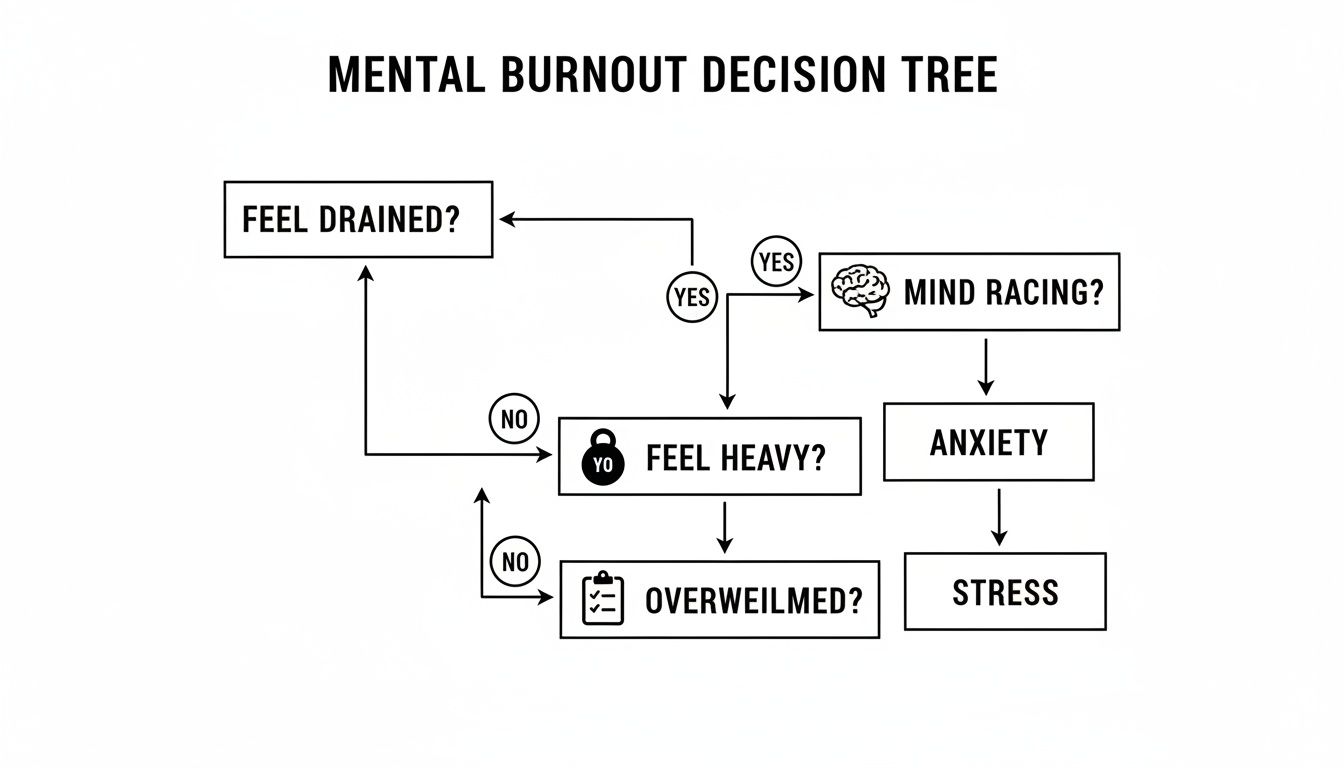
This visual can help you start to distinguish between the heavy, sluggish feeling that often comes with depression and the overwhelmed, racing mind of anxiety—both of which are major reasons people feel constantly tired.
More Complex Conditions To Consider
Beyond the more common suspects, a few complex and chronic illnesses have unrelenting fatigue as their trademark symptom. These can be trickier to diagnose, but they are crucial to rule out if your exhaustion is severe and unexplainable.
For some people, persistent tiredness is the main sign of a serious illness. For instance, 1.3% of U.S. adults live with myalgic encephalomyelitis/chronic fatigue syndrome (ME/CFS), a debilitating condition where fatigue gets dramatically worse after even minor physical or mental effort. This is a perfect example of why severe, long-lasting exhaustion that isn't fixed by rest deserves a thorough medical workup. You can read more about these findings on ME/CFS prevalence from the CDC.
Autoimmune diseases like rheumatoid arthritis or lupus are another major cause of fatigue. With these conditions, the immune system mistakenly attacks healthy tissues, sparking widespread inflammation that burns through a massive amount of your body's energy.
Red Flags That Signal It's Time For An Appointment
Knowing when to stop tweaking your lifestyle and start seeking medical advice is crucial. If any of the following sound familiar, it’s time to schedule a visit with your doctor.
Book an appointment if your fatigue:
- Is persistent: It’s been hanging around for more than a few weeks without any obvious reason.
- Is severe: It’s getting in the way of your ability to work, socialize, or handle daily tasks.
- Doesn't improve with rest: No matter how much you sleep, you still wake up feeling just as tired.
- Is accompanied by other symptoms: Think unexplained weight loss or gain, shortness of breath, fever, night sweats, or new aches and pains.
- Worsens after activity: You experience a "crash" in energy a day or two after even minor physical or mental effort.
Being armed with this knowledge makes you a better advocate for your own health. When you can clearly communicate your symptoms, you help your doctor connect the dots, uncover the real reason you're always tired, and finally get you on the path to feeling better.
Your Practical Action Plan To Reclaim Your Energy
Figuring out why you're so tired is half the battle. Now, let’s get into the good stuff—turning that knowledge into real, tangible action.
This isn't about a massive, intimidating life overhaul. It's about small, sustainable wins that create momentum. The goal is for you to walk away from this guide feeling not just informed, but genuinely equipped to start making a change today.
Your First Week Energy Reset
Forget perfection. The real magic happens with consistency. Here’s a simple template to help you start rebuilding your energy reserves this week. Just focus on one simple tweak for your morning, afternoon, and evening routine.
Morning Kickstart (5 Minutes): Before you even think about grabbing your phone, spend just five minutes doing some gentle stretches. This simple act gets your blood flowing and sends a clear signal to your body that it’s time to wake up, helping you feel more alert without that initial jolt of caffeine.
Afternoon Fuel-Up: The classic afternoon slump is almost always caused by a carb-heavy, nutrient-poor lunch. To avoid it, build your meal around the energy-stabilizing trio: protein, healthy fat, and fiber. Think a big salad with grilled chicken, a scoop of avocado, and tons of colorful veggies. It works.
Evening Wind-Down: This one is a game-changer. Set a hard rule: no screens for the last 30-60 minutes before bed. Put the phone away and swap the scrolling for a book, some light stretching, or calm music. This gives your brain the signal it needs to produce melatonin, the hormone that's crucial for deep, restorative sleep.
A Smart Approach To Supplements
While some supplements can be incredibly helpful for energy, it's important to see them for what they are: tools to fill specific, identified gaps. They are not a magic fix for a poor diet, chronic stress, or a chaotic sleep schedule.
Before you even think about starting a new supplement, a conversation with your doctor is non-negotiable. They can run simple blood tests to see if you actually have a deficiency and recommend a safe, effective dose. This step alone can save you from wasting money or, worse, taking something you don't need.
Your diet should always be your primary source of nutrients. However, if testing reveals a shortfall, some of the most common culprits tied to fatigue are worth discussing with your doctor.
Evidence-Based Supplements for Energy Support
Here’s a look at a few well-researched supplements that play a direct role in how our bodies produce and use energy.
| Supplement | How It Helps Energy | Food Sources | Consult a Doctor If… |
|---|---|---|---|
| Iron | Absolutely essential for creating hemoglobin, the protein that carries oxygen in your blood. Low iron means less oxygen for your tissues and brain, leading to profound fatigue. | Red meat, poultry, beans, spinach, lentils, fortified cereals. | You experience heavy menstrual periods, are pregnant, vegetarian/vegan, or have unexplained exhaustion and pale skin. |
| Vitamin B12 | A key player in converting the food you eat into usable cellular energy (ATP). It's also vital for red blood cell formation and neurological function. | Meat, fish, poultry, eggs, dairy products, fortified nutritional yeast. | You follow a strict vegan diet, have digestive issues like Crohn's, or experience fatigue with tingling/numbness. |
| Vitamin D | Often called the "sunshine vitamin," it helps mitochondria—your cellular powerhouses—work more efficiently. | Fatty fish (salmon, mackerel), fortified milk, egg yolks, sun exposure. | You have limited sun exposure, live in a northern climate, or experience bone pain and muscle weakness alongside fatigue. |
| Magnesium | Involved in over 300 biochemical reactions in the body, including energy production. It helps regulate blood sugar and supports muscle and nerve function. | Leafy greens, nuts, seeds, whole grains, dark chocolate. | You have muscle cramps, anxiety, or sleep problems in addition to low energy. |
Remember, this isn't a shopping list. It's a starting point for an informed conversation with a healthcare professional who can guide you based on your specific needs.
The journey to reclaiming your energy is a marathon, not a sprint. Start with these small, manageable steps. You’re building a strong foundation for lasting vitality, one good habit at a time.
Your Questions About Fighting Fatigue, Answered
After digging into the science behind why you might feel so drained, you probably still have a few practical questions. Let's tackle some of the most common ones that come up when people are trying to get their energy back.
How Long Does It Take to Feel More Energetic After Making Changes?
Honestly, it really depends on what’s causing the fatigue and how consistent you are with the changes. There's no one-size-fits-all timeline.
If your tiredness is rooted in lifestyle habits, like not getting enough sleep or eating poorly, you might start noticing small improvements within a week or two. For instance, just getting 7-9 hours of solid sleep for a few nights in a row can feel like a game-changer.
On the other hand, if you're dealing with a nutrient deficiency, like low iron or vitamin B12, it's a longer road. It can take several weeks, or even a few months, of consistent supplementation and diet adjustments to rebuild your body’s reserves. Patience is your best friend here.
Can I Just Drink More Coffee to Solve My Tiredness?
It's tempting, right? But think of caffeine as a high-interest loan on your energy. It doesn't actually give you more energy—it just tricks your brain into ignoring the signals that you’re tired.
Relying on coffee often spirals into a frustrating cycle. You drink more to stay awake, which messes with your sleep at night, making you even more exhausted the next day. True, lasting energy comes from fixing the underlying problems: getting enough restorative sleep, eating nourishing food, moving your body, and managing stress. A morning coffee is fine, but it’s a temporary patch, not a permanent fix.
Relying on caffeine to get through the day is like turning up the car radio to ignore a strange engine noise. It masks the problem but doesn't fix what's happening under the hood.
What Blood Tests Should I Ask My Doctor to Check for Fatigue?
If you’ve made changes and are still dragging yourself through the day, it's definitely time to chat with your doctor. They'll know what to look for, but going in with some knowledge can help you have a more productive conversation.
Here are a few common tests doctors often run to investigate persistent fatigue:
- Complete Blood Count (CBC): A great starting point to check for anemia, which is a classic cause of feeling wiped out.
- Thyroid Panel (TSH): This will show if your thyroid is underactive (hypothyroidism), a condition famous for tanking your energy levels.
- Key Nutrient Levels: It's smart to check ferritin (which shows your iron stores), Vitamin B12, and Vitamin D. Deficiencies in any of these are well-known energy-sappers.
Remember, this is a team effort. Be open and detailed about all your symptoms, and your doctor can pinpoint the most relevant tests for you.
Here at The Happy Health Blog, our goal is to give you clear, trusted information to help you feel your absolute best. For more expert-backed tips on nutrition, wellness, and boosting your energy, check out our other articles at The Happy Health Blog.
