


Finding a snack that's both satisfying and aligns with your health goals can often feel like a challenge. When the afternoon slump hits, high-sugar, low-nutrient options from the vending machine or pantry can seem all too tempting. Effective snacking isn't about restriction; it's about making smart, strategic choices that provide sustained energy and keep you feeling full between meals. This is where mastering the art of the 150 calorie snack becomes a powerful tool for managing hunger and maintaining your wellness objectives.
This guide moves beyond generic advice to offer a definitive resource for expertly curated 150 calorie snacks. We have compiled a comprehensive list of options, from protein-packed powerhouses that curb cravings to sweet treats and savory bites that satisfy without derailing your progress. Each suggestion is designed to fit seamlessly into a busy lifestyle.
You will find actionable tips, precise portioning guidance, and nutritionist-backed insights to transform your approach. Forget guesswork and get ready to discover delicious, energizing snacks that support your well-being. This list provides the practical details you need, including macronutrient estimates and quick preparation instructions, empowering you to make healthier choices consistently and confidently. Let's explore the snacks that will fuel your day effectively.
1. Greek Yogurt Parfait (Single-Serving Cup)
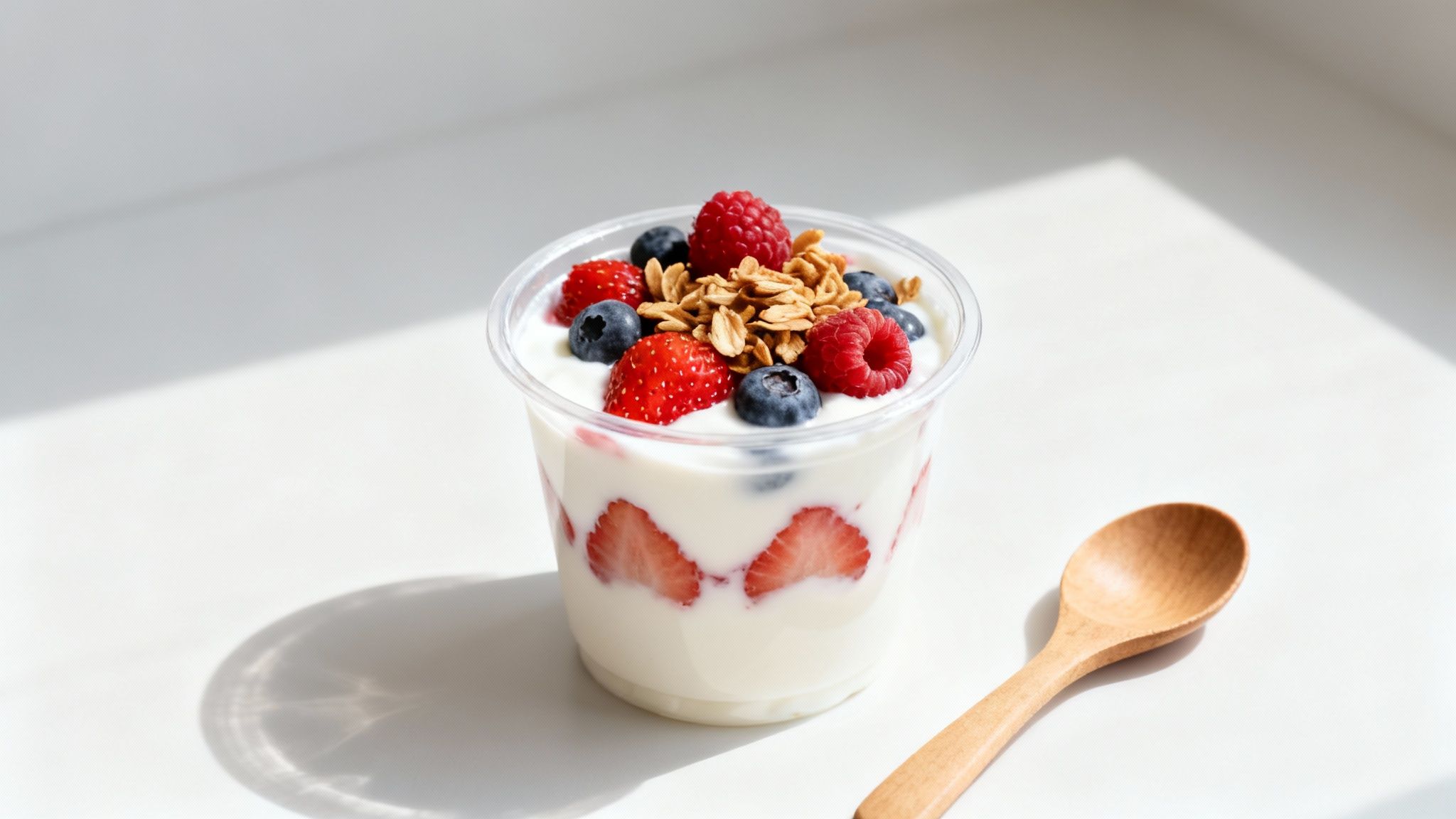
A single-serving Greek yogurt parfait is one of the most effective 150 calorie snacks for bridging the gap between meals. This balanced snack combines protein, carbohydrates, and healthy fats, providing sustained energy and promoting satiety to prevent overeating later. Its primary ingredient, Greek yogurt, contains nearly double the protein of regular yogurt, making it a powerhouse for muscle maintenance and fullness.
Snack Breakdown and Preparation
Crafting this snack is simple and highly customizable. Start with a standard 5.3-ounce (150g) container of plain, non-fat Greek yogurt as your base. This foundation provides a substantial protein boost while keeping calories and sugar low.
- Portion Size: 1 single-serving cup (5.3 oz) of plain, non-fat Greek yogurt, 1/4 cup of mixed berries, and 1 tablespoon of granola.
- Approximate Macros: 150 calories, 15g protein, 14g carbs, 3g fat.
- Preparation: Simply layer the yogurt, berries (like blueberries or raspberries), and granola in a small cup or jar. For grab-and-go convenience, prepare several in advance and store them in the refrigerator.
Expert-Backed Tips for Success
To maximize the benefits, always choose plain, unsweetened Greek yogurt. Flavored varieties often contain significant amounts of added sugar that can turn a healthy snack into a dessert. Adding your own fresh fruit provides natural sweetness and a dose of antioxidants.
Nutritionist Note: "The combination of high protein from the yogurt and fiber from the berries makes this an ideal snack for managing hunger. The protein-fiber duo slows digestion, leading to a more gradual release of energy and prolonged feelings of fullness."
For those managing their energy intake for weight management goals, understanding how snacks like this fit into your daily needs is key. You can learn more about calculating your personal calorie needs to better inform your snacking choices. For dietary substitutions, use a dairy-free yogurt like almond or coconut-based options and a nut-free granola if needed. This snack is best consumed mid-morning or mid-afternoon when you need a reliable energy lift to carry you to your next meal.
2. Apple with Almond Butter (1 Medium Apple + 1 Tbsp)
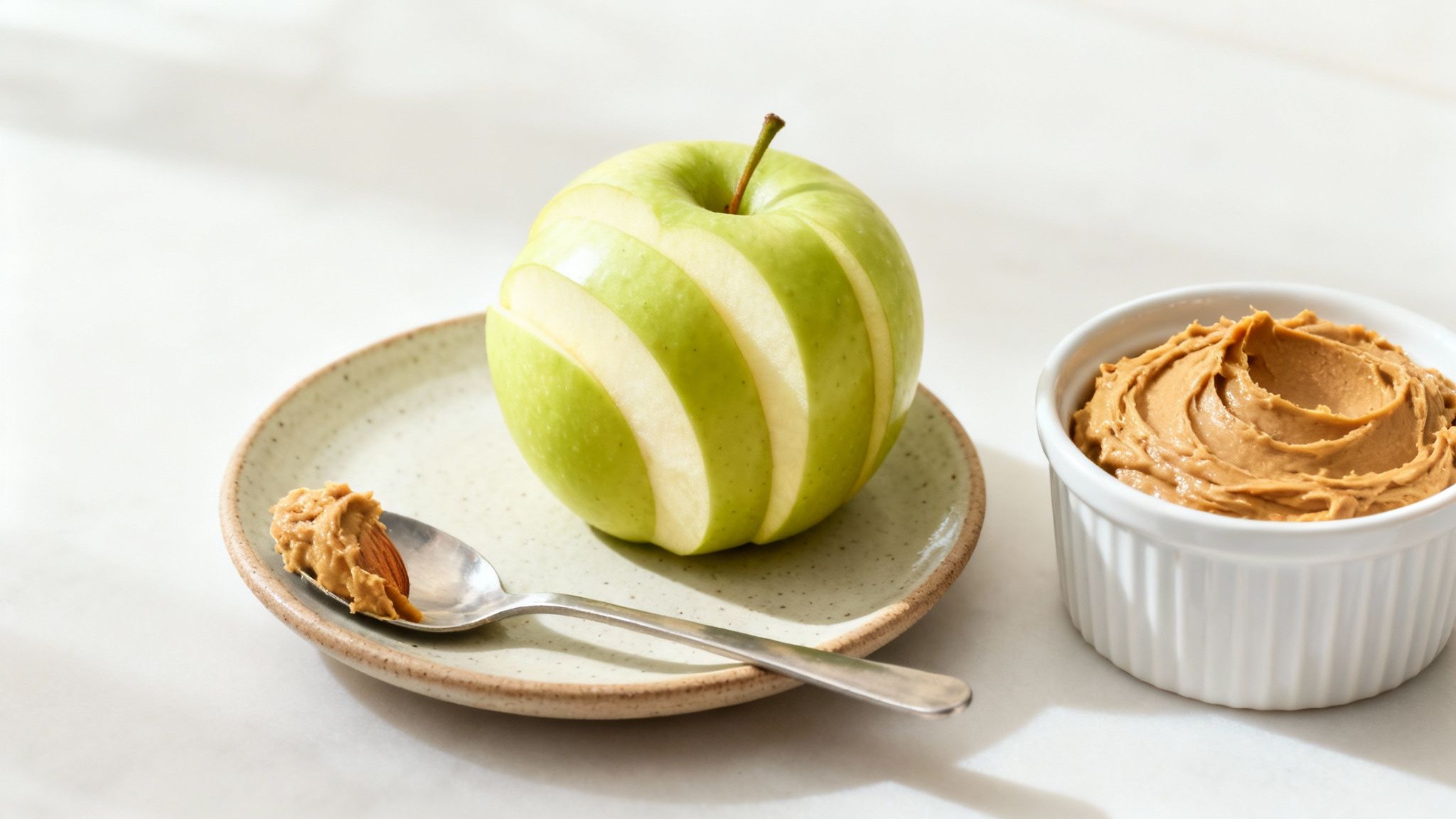
Pairing a crisp apple with creamy almond butter is a timeless and effective snack that masterfully balances natural sweetness, fiber, and healthy fats. This combination provides a quick source of energy from the apple's carbohydrates, while the protein and fat from the almond butter ensure that energy is released slowly and steadily. This synergy helps curb cravings and provides a satisfying crunch, making it an excellent choice for a 150 calorie snack.
Snack Breakdown and Preparation
The beauty of this snack lies in its simplicity and minimal preparation time. Selecting a medium-sized apple and pairing it with a measured tablespoon of natural almond butter is all it takes to create a nutrient-dense snack that feels substantial.
- Portion Size: 1 medium apple (approx. 95 calories) and 1 tablespoon of natural almond butter (approx. 95 calories).
- Approximate Macros: 190 calories, 4g protein, 28g carbs, 9g fat.
- Preparation: Slice a medium apple, such as a Gala or Granny Smith, and serve it with one level tablespoon of almond butter. For on-the-go snacking, pack the slices and a single-serving almond butter packet separately to prevent browning.
Expert-Backed Tips for Success
To keep this snack truly healthy, opt for natural almond butter with no added sugars or hydrogenated oils; the ingredient list should simply be almonds and perhaps a touch of salt. Leaving the skin on the apple is also crucial, as it contains a significant portion of the fruit's fiber and powerful antioxidants like polyphenols.
Nutritionist Note: "The combination of soluble fiber from the apple and monounsaturated fats from the almond butter works wonders for satiety. This duo slows down gastric emptying, which helps regulate blood sugar levels and keeps you feeling full and focused between meals."
This snack is particularly effective in the afternoon when energy levels often dip. For those with nut allergies, sunflower seed butter is an excellent alternative that provides a similar texture and nutritional profile. If you're looking for other healthy pairings, check out these ideas for healthy food combinations that maximize nutrient absorption and health benefits.
3. Hard-Boiled Egg with Whole Grain Crackers
A hard-boiled egg paired with whole grain crackers is a classic, nutrient-dense choice among 150 calorie snacks. This powerful combination offers high-quality protein and healthy fats from the egg, plus fiber-rich complex carbohydrates from the crackers. This pairing provides a steady release of energy, making it highly effective at curbing hunger and stabilizing blood sugar levels between meals.
Snack Breakdown and Preparation
This snack requires minimal preparation, especially if the eggs are cooked in advance. A single large egg contains a wealth of nutrients, including choline for brain function and all nine essential amino acids, making it a complete protein source.
- Portion Size: 1 large hard-boiled egg and 5-7 whole grain crackers (such as Triscuit or Mary's Gone Crackers).
- Approximate Macros: 148 calories, 8g protein, 12g carbs, 7g fat.
- Preparation: Boil eggs ahead of time and store them in the refrigerator for up to a week. When ready to eat, simply peel one and serve it alongside your measured portion of crackers.
Expert-Backed Tips for Success
To get the most out of this snack, choose crackers that list a whole grain as the first ingredient. This ensures you are getting the maximum fiber and B vitamins. Look for low-sodium options to keep your daily intake in check, and add a pinch of sea salt or black pepper for flavor without extra calories.
Nutritionist Note: "The protein in the egg and the fiber from the crackers work together to slow down digestion. This synergy is excellent for satiety, helping you feel fuller for longer and preventing the urge to reach for less healthy, high-sugar options."
For individuals looking to build or maintain muscle, incorporating protein-rich snacks is essential. You can discover more strategies for boosting your protein intake to support your fitness goals. For dietary needs, gluten-free crackers made from seeds or brown rice are an excellent substitution. This snack is ideal for a mid-afternoon slump when you need both mental focus and physical energy.
4. String Cheese with Mixed Berries
String cheese paired with mixed berries is a classic, convenient, and surprisingly sophisticated 150 calorie snack. This combination delivers a satisfying mix of protein, healthy fats, fiber, and micronutrients. The part-skim mozzarella provides quality protein and calcium for bone health, while the berries offer natural sweetness, vitamins, and powerful antioxidants to combat inflammation. This pairing is excellent for steady energy release and curbing hunger pangs effectively.
Snack Breakdown and Preparation
Assembling this balanced snack requires no cooking and minimal effort, making it ideal for busy schedules. The simplicity of a pre-portioned cheese stick and a simple scoop of berries makes it a foolproof choice for maintaining calorie control.
- Portion Size: 1 stick of part-skim mozzarella string cheese and 1 cup of mixed berries (strawberries, blueberries, raspberries).
- Approximate Macros: 150 calories, 8g protein, 16g carbs, 6g fat.
- Preparation: Simply pair one string cheese stick with a cup of fresh or thawed frozen berries. For on-the-go snacking, pack the cheese in a small insulated bag with an ice pack and carry the berries in a separate small container.
Expert-Backed Tips for Success
To get the most out of this snack, opt for frozen berries, which are just as nutritious as fresh ones but are available year-round at a lower cost. When selecting your cheese, look for brands made from milk without rBST (recombinant bovine somatotropin) for a higher-quality option.
Nutritionist Note: "The protein and fat from the cheese slow down the absorption of the natural sugars from the berries, preventing a rapid spike in blood sugar. This makes it an excellent snack for sustained energy and focus, particularly during a mid-afternoon slump."
This snack is especially useful for those seeking a quick, no-fuss option that supports both satiety and muscle maintenance. For a dairy-free alternative, you can substitute the string cheese with a handful of almonds (about 12-14) to maintain a similar protein and fat profile. This snack is perfect for post-workout recovery or as a portable option to take to work or school.
5. Roasted Chickpea Snack Pack
A crunchy, savory roasted chickpea snack pack is an excellent plant-based option among 150 calorie snacks. This snack is packed with fiber and protein, making it exceptionally effective at curbing hunger and stabilizing blood sugar levels. Chickpeas, also known as garbanzo beans, are legumes that offer a satisfying crunch when roasted, serving as a healthy alternative to chips while providing sustained energy release.
Snack Breakdown and Preparation
Whether homemade or store-bought, roasted chickpeas are simple to portion out for a perfectly balanced snack. Their combination of complex carbohydrates and plant-based protein makes them a smart choice for maintaining energy without a subsequent crash.
- Portion Size: 1/2 cup of cooked, roasted chickpeas (approximately 2.5 oz or 70g).
- Approximate Macros: 150 calories, 7g protein, 22g carbs, 4g fat.
- Preparation: To make your own, rinse and thoroughly dry a can of chickpeas. Toss them with one teaspoon of olive oil and your favorite seasonings (like paprika, cumin, and garlic powder). Roast at 400°F (200°C) for 25-30 minutes until golden and crispy.
Expert-Backed Tips for Success
For ultimate convenience, prepare a large batch over the weekend. Once cooled completely, store the roasted chickpeas in an airtight container at room temperature for up to five days. This makes them an easy grab-and-go option for busy weekdays. Experiment with different flavor profiles like BBQ, ranch, or zesty Mediterranean blends to keep your snacking routine interesting.
Nutritionist Note: "The resistant starch found in chickpeas acts as a prebiotic, feeding beneficial gut bacteria and supporting digestive health. This, combined with their high fiber content, makes them a fantastic snack for promoting satiety and overall gut wellness."
This snack is ideal for anyone seeking a vegan, gluten-free, or nut-free option. It's particularly effective as a mid-afternoon pick-me-up to combat energy slumps or as a pre-workout snack to fuel performance. For a store-bought version, look for brands like Biena Snacks that offer pre-portioned packs with minimal added ingredients.
6. Dark Chocolate with Almonds (1 oz + 0.5 oz)
Indulging in dark chocolate and almonds offers a satisfying and health-conscious way to curb cravings between meals. This powerful pairing combines the rich antioxidants of dark chocolate with the healthy fats and protein of almonds, creating a decadent yet balanced 150 calorie snack. It’s an ideal choice for those seeking a treat that supports heart health and provides a gentle energy boost without the sugar crash associated with milk chocolate.
Snack Breakdown and Preparation
This snack requires no preparation, only careful portioning to stay within the calorie goal. Combining about one ounce of high-cacao dark chocolate with a half-ounce of almonds delivers a satisfying crunch and rich flavor profile.
- Portion Size: 1 oz (about 28g) of dark chocolate (70% cacao or higher) and 0.5 oz (about 12-14) of raw almonds.
- Approximate Macros: 150 calories, 3g protein, 11g carbs, 12g fat.
- Preparation: Simply measure out your portions. Using a food scale is the most accurate method. For convenience, create pre-portioned bags to grab on the go.
Expert-Backed Tips for Success
To get the most out of this snack, opt for dark chocolate with at least 70% cacao. This ensures a higher concentration of beneficial flavonoids and polyphenols and a lower sugar content. Savor each bite by letting the chocolate melt slowly on your tongue to enhance satisfaction.
Nutritionist Note: "The healthy monounsaturated fats in almonds combined with the fiber slows the absorption of sugar from the chocolate, preventing a rapid spike in blood glucose. This makes it an excellent snack for sustained energy and mood stabilization, particularly during a mid-afternoon slump."
This snack is perfect for taming a sweet tooth in a mindful way. The combination of textures and rich flavors can feel more substantial and satisfying than other sugary alternatives. For an enhanced mindful snacking experience, try pairing it with a warm cup of herbal tea. You can learn more about the benefits of mindful eating to further appreciate nutrient-dense snacks like this one. If you have a nut allergy, roasted edamame or pumpkin seeds can provide a similar crunchy, savory contrast.
7. Hummus with Veggie Sticks (2 Tbsp + 1.5 Cups Raw Vegetables)
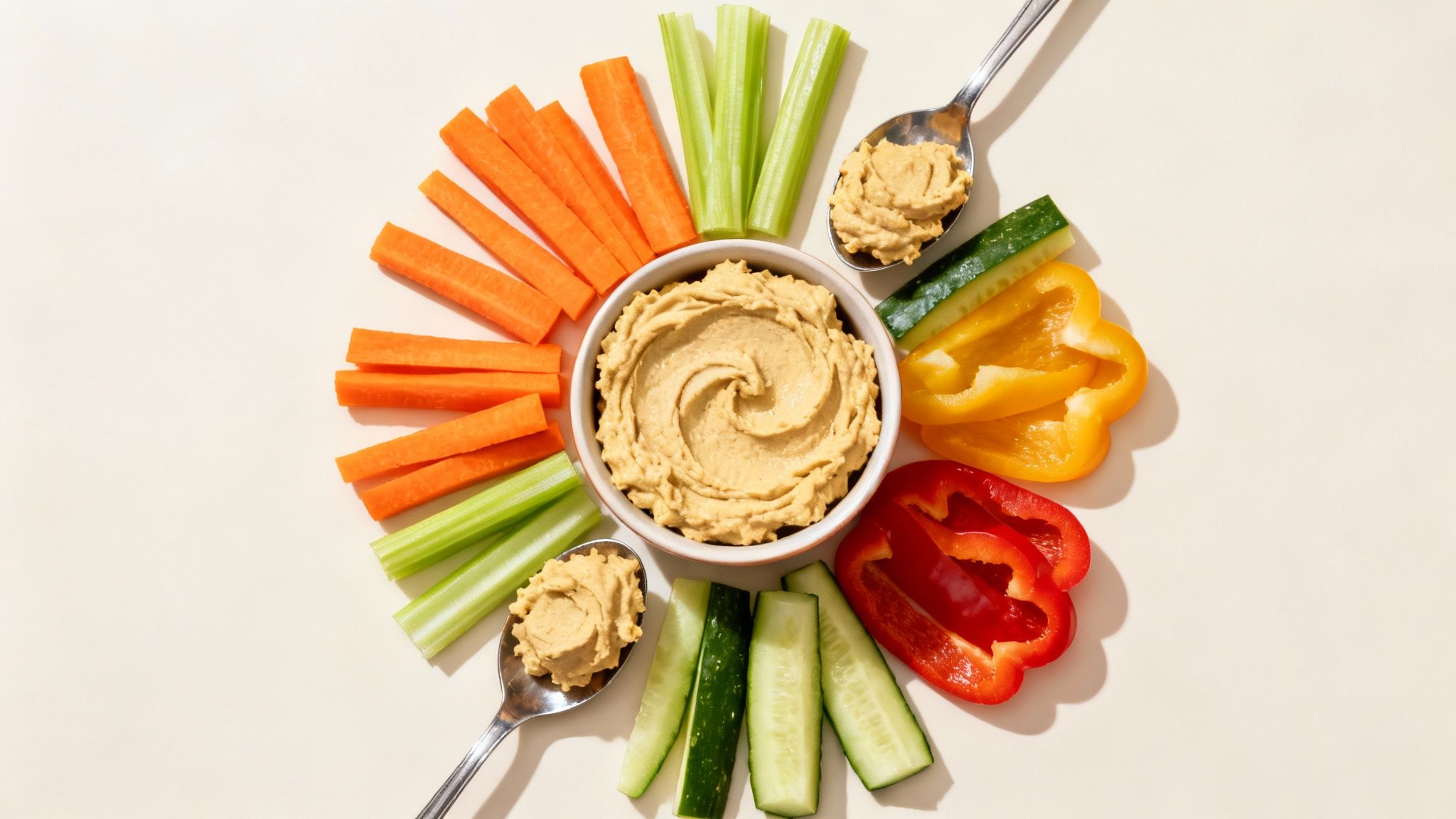
Hummus with fresh vegetable sticks is a classic example of a high-volume, nutrient-dense snack that fits perfectly into a 150 calorie budget. This savory pairing combines plant-based protein and healthy fats from the hummus with fiber and micronutrients from the vegetables. The result is a crunchy, satisfying snack that takes up a lot of space on your plate and in your stomach, helping you feel full and nourished between meals.
Snack Breakdown and Preparation
This snack is incredibly easy to assemble using either store-bought or homemade ingredients. The key is to measure your hummus portion and load up on a colorful variety of non-starchy vegetables to maximize volume and nutrient intake without adding significant calories.
- Portion Size: 2 tablespoons of traditional hummus with 1.5 cups of mixed raw vegetable sticks (e.g., carrots, celery, bell peppers, cucumbers).
- Approximate Macros: 150 calories, 5g protein, 15g carbs, 8g fat.
- Preparation: Portion two tablespoons of hummus into a small container. Wash and chop your vegetables into dippable sticks. For meal prep, store the hummus and veggies in separate airtight containers to maintain freshness and crunch.
Expert-Backed Tips for Success
To keep this snack healthy, always check the ingredients list on store-bought hummus. Opt for brands with simple ingredients like chickpeas, tahini, lemon juice, and olive oil, avoiding those with excessive sodium or added preservatives. Making your own hummus at home with canned chickpeas is a great way to control the sodium and fat content.
Nutritionist Note: "The combination of fiber from the vegetables and protein and fat from the hummus is excellent for stabilizing blood sugar levels. This makes it an ideal afternoon snack to prevent the dreaded 3 p.m. energy slump and curb cravings for high-sugar alternatives."
For a successful weight management strategy, high-volume foods are essential. You can learn how to incorporate more high-volume, low-calorie foods to enhance satiety. If you have a sesame allergy, consider a bean dip made without tahini, such as a black bean or white bean dip. This snack is perfect for anyone seeking a savory, crunchy option that supports both energy levels and fullness.
8. Mixed Nuts Single-Serve Packet (1 oz)
A single-serve packet of mixed nuts is a powerhouse of nutrition, making it an excellent choice for one of the most convenient 150 calorie snacks available. This snack is packed with healthy fats, plant-based protein, and fiber, delivering long-lasting energy and promoting heart health. The combination of monounsaturated and polyunsaturated fats helps keep you full, effectively curbing hunger between meals.
Snack Breakdown and Preparation
Portion control is key with nuts, as their calorie density can add up quickly. A one-ounce serving is the perfect size for a satisfying snack that fits within a low-calorie framework. Pre-portioned packets make this effortless, but you can also create your own.
- Portion Size: 1 ounce (about a small handful or 1/4 cup) of mixed nuts like almonds, walnuts, and cashews.
- Approximate Macros: 160 calories, 6g protein, 6g carbs, 14g fat. (Adjust portion slightly to hit 150 calories).
- Preparation: The easiest method is to purchase single-serve packets. Alternatively, buy raw or dry-roasted nuts in bulk and portion them into small, reusable bags or containers for a week's worth of grab-and-go snacks.
Expert-Backed Tips for Success
To ensure you're getting the most nutritional benefit, opt for raw or dry-roasted nuts without added oils, sugars, or excessive salt. Reading the ingredient label is crucial. Pairing nuts with a piece of fruit, like an apple, can add volume and hydration, making the snack even more satisfying.
Nutritionist Note: "Nuts are a fantastic source of healthy fats and micronutrients like magnesium and zinc. The combination of fat, protein, and fiber provides a slow, steady release of energy, which is ideal for preventing the afternoon slump and stabilizing blood sugar levels."
Incorporating portion-controlled, nutrient-dense snacks like mixed nuts is a smart strategy for anyone managing their calorie intake. You can discover how to build a satisfying 1500-calorie meal plan that includes these kinds of healthy choices. For those with nut allergies, roasted chickpeas or sunflower seeds can provide a similar crunchy, savory experience. This snack is perfect for when you need a portable, non-perishable option that will keep you energized on a busy day.
8-Item Comparison: 150-Calorie Snacks
| Item | 🔄 Implementation Complexity | ⚡ Resource & Prep (portability, storage) | ⭐ Expected Outcomes (effectiveness) | 💡 Ideal Use Cases | 📊 Key Advantages |
|---|---|---|---|---|---|
| Greek Yogurt Parfait (Single-Serving Cup) | Low — ready-to-eat; DIY assembly simple | Requires refrigeration; single-serve cups available | High protein (~15g), probiotics, calcium; high satiety | Post-workout, mid-morning snack, chilled on-the-go | Versatile flavors, probiotic benefits, supports muscle recovery |
| Apple with Almond Butter (1 Medium + 1 Tbsp) | Low — minimal prep (slice + spoon) | No refrigeration; very portable; use pre-portioned packets | Balanced macros (~4g protein), fiber, steady energy | Travel, desk snack, craving sweet but whole-food option | Portable, inexpensive, natural sources of fiber and healthy fats |
| Hard-Boiled Egg with Whole Grain Crackers | Medium — requires advance cooking or purchase | Portable if pre-cooked; best refrigerated for longer storage | Complete protein (~8g), choline, sustained energy with complex carbs | Meal prep, quick protein boost, savory snack | Complete amino acids, affordable, stabilizes blood sugar |
| String Cheese with Mixed Berries | Low — grab-and-go but refrigerated | Needs refrigeration; berries seasonal (frozen OK) | Moderate protein (~7g), calcium, antioxidants | Kids’ snack, calcium-focused, quick satisfying treat | Calcium + antioxidants, enjoyable flavor combination |
| Roasted Chickpea Snack Pack | Medium — roast at home or buy ready-made | Shelf-stable if packaged; portion control required | Plant protein (~6g), high fiber, resistant starch for gut health | Vegan/vegetarian snack, savory craving, meal-prep batches | Plant-based protein, high fiber, customizable seasonings |
| Dark Chocolate with Almonds (1 oz + 0.5 oz) | Low — precise portioning required | No refrigeration; measure portions to control calories | Antioxidants (flavonoids), healthy fats, ~4g protein; mood benefits | Mindful indulgence, dessert substitute, stress-relief snack | Satisfies sweet cravings with nutrient-dense ingredients |
| Hummus with Veggie Sticks (2 Tbsp + 1.5 cups) | Medium — chopping and portioning needed | Requires refrigeration; cut veggies have shorter shelf life | Moderate protein (~5g), high fiber, high-volume for satiety | Weight-management, high-volume snacking, nutrient-dense option | High volume + micronutrients, hydrating, supports digestion |
| Mixed Nuts Single-Serve Packet (1 oz) | Low — ready-to-eat; portion control important | Shelf-stable and highly portable | High healthy fats (~14g), ~5g protein; very satiating, calorie-dense | Travel, quick energy, long-lasting snack | Portable, long shelf life, heart-healthy fats and minerals |
Make Every Bite Count: Your Next Steps to Smarter Snacking
Navigating the world of snacking doesn't have to be a complex puzzle of calorie counting and deprivation. As this extensive guide has demonstrated, a well-chosen snack is a powerful tool for managing hunger, stabilizing energy levels, and fueling your body between meals. We've explored over 30 diverse 150 calorie snacks, from protein-packed options like Greek yogurt and hard-boiled eggs to satisfyingly sweet dark chocolate and fruit pairings. The common thread among all these ideas is their ability to deliver both flavor and function within a specific caloric framework.
The true value of these snacks lies not just in their low-calorie nature, but in their nutritional density. By choosing a snack rich in protein, fiber, or healthy fats, you're making a strategic decision to support satiety and prevent the energy crashes often associated with processed, high-sugar alternatives. This intentional approach transforms snacking from a mindless habit into a mindful practice that supports your overall wellness goals.
Key Takeaways for Sustainable Snacking
The most crucial takeaway is that preparation is the cornerstone of success. Having healthy options readily available is the single most effective way to avoid reaching for less nutritious choices when hunger strikes. Another key insight is the importance of listening to your body. Are you craving something savory and crunchy, or sweet and creamy? Honoring these cues with a balanced choice from this list can increase satisfaction and prevent overindulgence later.
Ultimately, mastering the art of the 150 calorie snack is about empowerment. It’s about understanding that you can nourish your body effectively without sacrificing taste or convenience. This knowledge equips you to make consistently better choices, whether you're at your desk, on the road, or relaxing at home.
Your Action Plan for Smarter Snacking
To translate this knowledge into action, start small and build momentum. Don't try to overhaul your entire pantry overnight. Instead, commit to these simple, actionable steps:
- Select Your Starters: Choose two or three snack ideas from our list that genuinely appeal to you. This week, you might try prepping hummus with veggie sticks and portioning out mixed nuts.
- Schedule Prep Time: Dedicate just 20-30 minutes on a Sunday to prepare your snacks for the week. Boil a batch of eggs, wash and chop carrots, or create single-serving bags of roasted chickpeas.
- Stock Your Environment: Place your prepped snacks in the most visible, accessible part of your fridge or pantry. Make the healthy choice the easy choice.
- Practice Mindful Eating: When you enjoy your snack, take a moment to savor it without distractions. This simple act can significantly enhance satisfaction and help you recognize your body's fullness signals.
By integrating these small, consistent habits, you're building a sustainable foundation for long-term health. These aren't just snacks; they are strategic investments in your energy, focus, and well-being. Every mindful bite is a step toward a more vibrant and energized you.
Ready to dive deeper into building healthy, sustainable habits? For more expert-backed nutrition guides, delicious recipes, and practical wellness tips, explore The Happy Health Blog. We are your trusted resource for turning complex health information into simple, actionable steps for a happier life. The Happy Health Blog
