


When you're trying to decide between barley and oats, the best choice really hinges on what you’re trying to achieve with your diet. If your main goal is blood sugar control and staying full longer, barley is the clear winner with its higher fiber content and lower glycemic index. But if you're after a quick, creamy breakfast staple, it's hard to beat the convenience and comfort of oats.
A Quick Look: Barley vs. Oats At a Glance
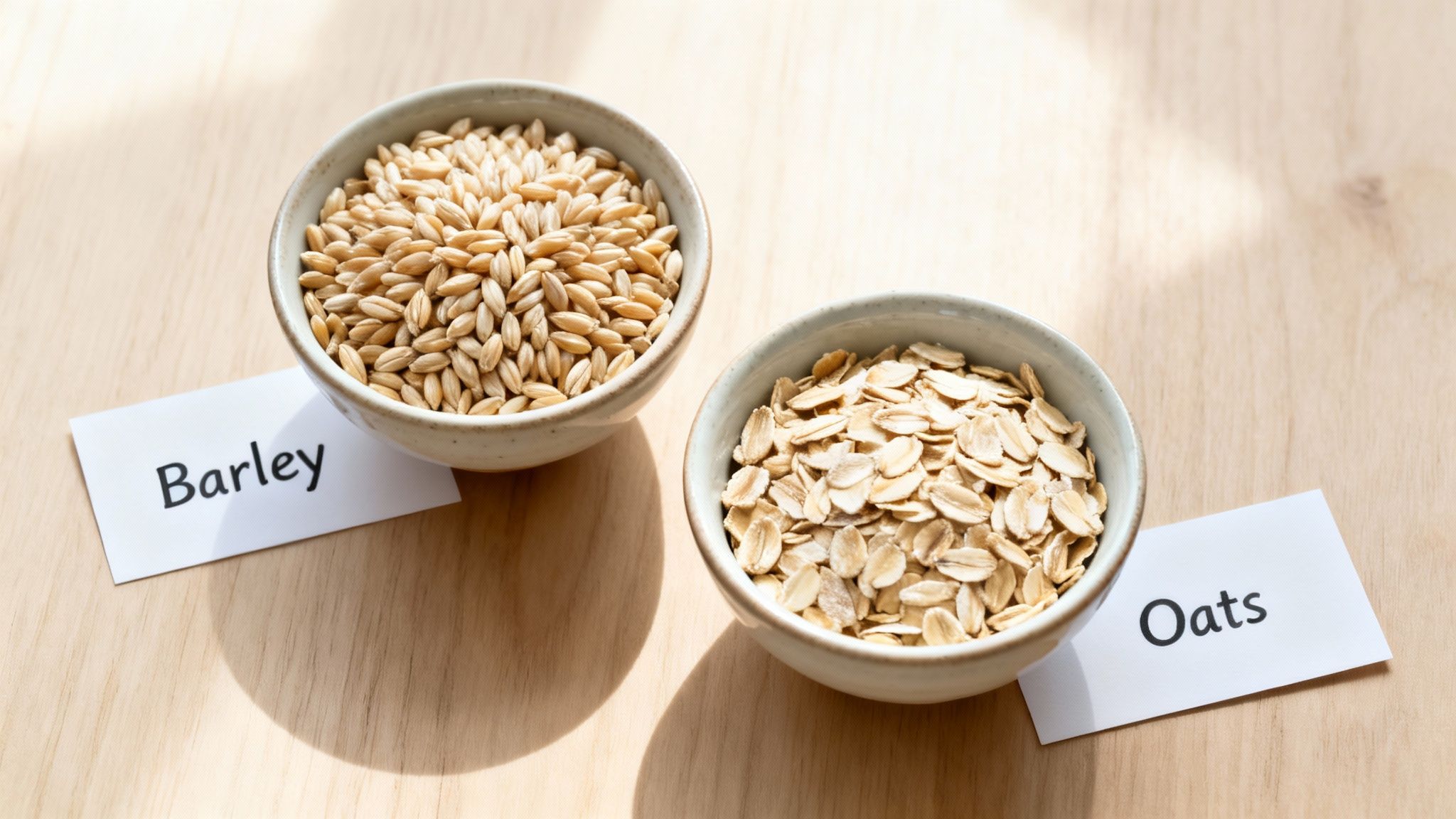
At first glance, barley and oats look like nutritional twins. Both are whole grains celebrated for their heart-healthy soluble fiber. Dig a little deeper, though, and you'll find key differences in their texture, how they're used in the kitchen, and the specific health benefits they offer.
Knowing these subtle but important distinctions can help you pick the right grain for the right meal. Barley’s satisfyingly chewy bite makes it a fantastic, hearty addition to soups, stews, and grain salads. Meanwhile, the soft, comforting texture of oats makes them perfect for a classic bowl of porridge or as an ingredient in baking.
Core Differences Summarized
To make things simple, here's a side-by-side look at what sets these two grains apart. This table gives you a quick snapshot before we get into the nitty-gritty of their nutritional profiles and specific health impacts.
| Feature | Barley | Oats |
|---|---|---|
| Total Fiber | Higher (~17g per 100g) | Lower (~10g per 100g) |
| Glycemic Index (GI) | Very Low (25-35) | Low to Medium (42-60) |
| Texture | Chewy and firm | Soft and creamy |
| Cooking Time | Longer (25-60 minutes) | Shorter (5-15 minutes) |
| Gluten Content | Contains gluten | Naturally gluten-free* |
| Best For | Blood sugar control, soups, grain bowls | Quick breakfast, baking, smoothies |
A quick but important note: While oats are naturally gluten-free, they are very often cross-contaminated during processing. If you have celiac disease or a gluten sensitivity, you absolutely must look for oats that are certified gluten-free.
So, what’s the takeaway here? Barley takes a bit more time to cook but pays you back with exceptional fiber content and better blood sugar regulation. Oats are all about convenience and versatility, making them an incredibly easy way to get a nutritious meal on the table fast. As we continue, you'll see how these traits play out in real-world health benefits and kitchen creativity.
Analyzing The Nutritional Profiles
When you put barley and oats side by side, you're looking at two nutritional powerhouses. Both are packed with complex carbs, plant-based protein, and a solid lineup of essential minerals. But the real story is in the details—specifically, the subtle differences in their fiber and antioxidant profiles that can steer your choice depending on your health goals.
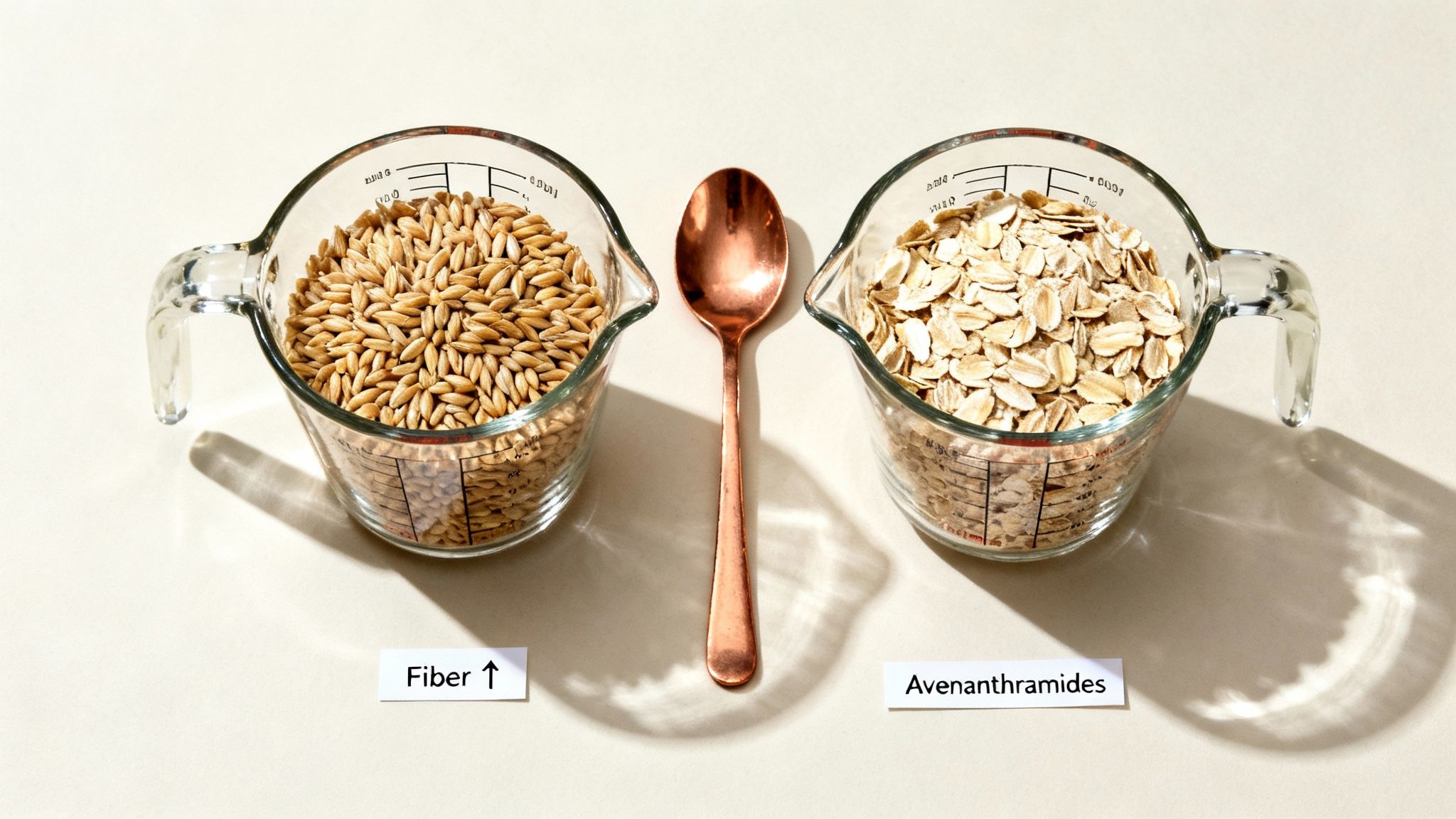
If we're talking sheer fiber content, barley pulls ahead. A 100-gram serving of uncooked hulled barley packs about 17 grams of fiber, which is a significant jump from the 10 grams you'll find in the same amount of rolled oats. For anyone serious about boosting their fiber intake for digestive regularity and staying full longer, that difference is hard to ignore.
The Power Of Beta-Glucan Fiber
What really makes both these grains special is a type of soluble fiber called beta-glucan. This is the workhorse behind many of their acclaimed health perks, from helping lower cholesterol to giving your immune system a boost. And while both grains are loaded with it, barley typically contains a higher concentration.
That extra beta-glucan is why barley is such a champion for metabolic health. It forms a gel-like substance in your gut, which slows down digestion and the absorption of sugar into your bloodstream. This translates to better blood sugar control and a powerful feeling of fullness.
Key Insight: While both grains are excellent sources of beta-glucan, barley's higher concentration gives it an edge in promoting satiety and regulating blood sugar, making it a powerful tool for appetite control.
This fiber also doubles as a prebiotic, nourishing the good bacteria in your gut. A healthy microbiome is foundational to overall wellness, and adding fiber-rich grains like barley is a fantastic way to support it. If you're looking to go a step further, exploring the best supplements for gut health can complement a diet rich in whole foods.
Comparing Micronutrients And Antioxidants
Once you move past fiber, the micronutrient competition between barley and oats gets pretty close. They both bring a wealth of minerals to the table, but each has its own standout features.
- Barley is an excellent source of selenium, an essential mineral that acts as an antioxidant, supports thyroid health, and helps protect your cells from oxidative stress. It also delivers a solid dose of manganese, magnesium, and niacin.
- Oats have a unique ace up their sleeve: avenanthramides. These are powerful antioxidants found almost exclusively in oats. Research has linked them to anti-inflammatory and even anti-itching effects, which could play a role in protecting your heart.
When it comes to protein, it's nearly a tie. Both grains provide a respectable 10-12 grams per 100-gram serving. They aren't complete proteins by themselves, but they add valuable amino acids to your diet, especially when you pair them with other plant foods like beans or lentils.
So, which one should you choose? It’s not about one being definitively "better." It’s about matching their strengths to your needs. If your main goals are maximizing fiber and getting a tight rein on blood sugar, barley is your top contender. But if you're drawn to unique anti-inflammatory compounds in a grain that cooks a bit faster, oats are an exceptional choice.
Impact On Heart Health And Blood Sugar Control
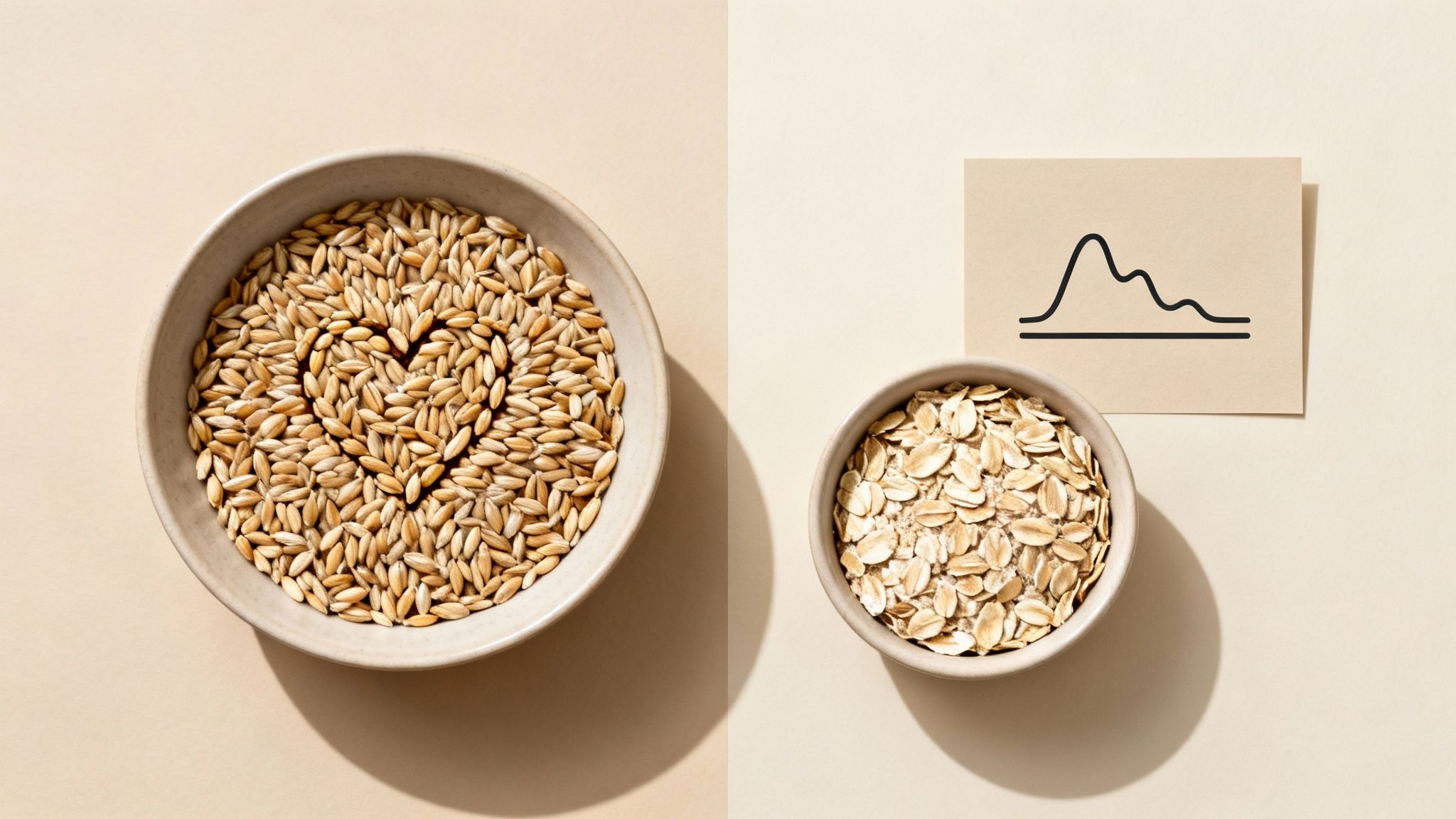
When we talk about the health benefits of barley vs oats, especially for your heart and blood sugar, one compound stands out: beta-glucan. This powerful soluble fiber is the star player in both grains, responsible for most of their impressive cardiovascular and metabolic perks.
So how does it work? In your gut, beta-glucan forms a thick, gel-like substance. This gel is surprisingly effective at trapping cholesterol-filled bile acids, preventing your body from reabsorbing them. To make more bile, your liver has to pull LDL (the "bad" cholesterol) from your bloodstream, which ultimately helps lower your overall LDL levels. It's a simple but brilliant mechanism for reducing a major heart disease risk factor.
The Glycemic Index Advantage
While both grains are winners for heart health, the contest for blood sugar management is a bit more one-sided. This is where the glycemic index (GI)—a scale measuring how quickly a food raises blood glucose—really tells the story.
Barley has a remarkably low GI, typically landing somewhere between 25 and 35. This puts it in the elite category of low-GI grains. Oats are still a solid choice, but their GI is higher and more variable, usually ranging from 42 to 60 depending on the cut (steel-cut is lower on the scale than rolled or instant).
What does this mean for you? Barley's lower GI translates to a much slower, more gradual release of sugar into your bloodstream. You get sustained energy without the sharp spikes and crashes that can tax your metabolic system.
This slow-and-steady energy release makes barley a fantastic tool for anyone looking to improve their insulin sensitivity. If you're managing pre-diabetes or trying to head off metabolic problems, making barley a regular part of your diet is a smart move. Gaining a better understanding of what metabolic syndrome is can really highlight why dietary choices like this are so crucial.
Here's a direct look at how barley and oats stack up in their key health contributions.
Health Benefit Comparison: Barley vs Oats
| Health Benefit | Barley | Oats | Key Nutrient Responsible |
|---|---|---|---|
| Cholesterol Reduction | Excellent – High beta-glucan content effectively lowers LDL cholesterol. | Excellent – Also rich in beta-glucan, providing similar LDL-lowering benefits. | Beta-Glucan (Soluble Fiber) |
| Blood Sugar Control | Superior – Very low GI (25-35) ensures a slow, steady release of glucose. | Good – Moderate GI (42-60) offers good control but is less potent than barley. | Low Glycemic Index |
| Digestive Health | Excellent – High in total fiber, supporting regularity and a healthy gut microbiome. | Very Good – A solid source of fiber, though slightly less than barley. | Total Dietary Fiber (Insoluble & Soluble) |
| Satiety & Fullness | Superior – The combination of higher fiber and lower GI promotes longer-lasting fullness. | Good – Helps with satiety, but the effect may be less prolonged than with barley. | Fiber Content & GI |
This table shows that while both are incredibly healthy, barley often has a slight edge, particularly when it comes to managing blood sugar and keeping you feeling full longer.
Practical Implications For Your Diet
So, which one should you choose? It really depends on what you’re trying to achieve with your diet.
- For Aggressive Blood Sugar Management: If your main goal is to lower your A1c, improve insulin response, or manage type 2 diabetes, barley's low GI gives it a clear advantage. Its slow-digesting carbs provide stable energy for hours.
- For General Heart Health: You can't go wrong with either. Both barley and oats are packed with enough beta-glucan to make them excellent staples in a heart-friendly diet.
- For Satiety and Weight Management: Barley often wins here. Its higher fiber content and lower GI work together to keep you feeling full and satisfied, which can be a huge help in managing appetite.
Of course, you don’t have to pick just one. The best approach is often to enjoy both! Try oats for a quick, comforting breakfast and use chewy, nutty barley in soups, salads, or as a hearty side dish. This way, you get the unique benefits of each grain while supporting both your heart and your metabolism.
Production, Sustainability, and Their Global Footprint
When we pit barley against oats, the comparison goes far beyond what's on our plates. These two grains play vastly different roles in global agriculture, and their environmental impact tells an interesting story. Thinking about where our food comes from adds a whole new dimension to the choice.
Barley is a true survivor. It's an ancient grain celebrated for its ruggedness, capable of growing in all sorts of climates—from temperate zones to high-altitude fields. It has a remarkable tolerance for drought and even salty soils, which makes it a lifeline for farmers in some of the world's most challenging agricultural regions.
Oats, on the other hand, are a bit more particular, preferring cooler, wetter weather. This naturally narrows their growing range compared to the globe-trotting barley. But what oats do, they do incredibly well. They are superstars for soil health; their deep, fibrous root systems are fantastic at preventing erosion. Farmers often use them as a cover crop, planting them in rotation with crops like corn and soybeans to smother weeds and build up rich organic matter in the soil.
A Tale of Two Markets: Global Production and Scale
The sheer scale of production for these grains couldn't be more different, and that directly influences how we use them. Barley is a massive global commodity, a cornerstone of agriculture that extends well beyond the human food market.
When you look at the numbers, the difference is stark. Barley is the world's fourth most important cereal crop, trailing only corn, wheat, and rice. Global production hovers around 140 million metric tons each year. Oats are a much smaller player, with annual production closer to 18-19 million metric tons. This isn't just a global trend; it plays out regionally, too. In the European Union, for instance, the 2023 harvest yielded 47.4 million tonnes of barley but only 5.9 million tonnes of oats—a ratio of nearly 8-to-1. You can dive deeper into these production estimates and market dynamics to see the full picture.
So, why the huge gap? It comes down to barley's dual identity. The vast majority of the world's barley isn't grown for our soup bowls. It's destined for two major industries: animal feed and malting, which supplies the essential ingredient for brewing beer and distilling whiskey. Oats are grown almost exclusively for human consumption, fueling the demand for breakfast cereals, oatmeal, and baked goods.
The Bottom Line: Barley's immense production scale isn't driven by its use as a food grain for people, but by its critical role in feeding livestock and fueling the malting industry. It's a foundational crop in the global agricultural system.
Ultimately, your choice in the grocery aisle connects you to two very different agricultural worlds. Opting for barley supports a massive, multifaceted industry. Choosing oats supports a crop grown primarily for direct human nourishment and valued for its ability to improve soil health through sustainable farming practices. It's a decision that reflects not just your personal health goals, but also which part of the global food economy you want to support.
Cooking and Culinary Uses for Barley and Oats
Nutrition facts are one thing, but the real magic of barley and oats happens in the kitchen. This is where their unique textures and flavors come to life, guiding which one you'll reach for. Oats are famous for their soft, creamy consistency, while barley offers a distinctly firm and satisfyingly chewy bite that makes meals feel more substantial.
Oats have certainly earned their reputation as the king of quick, comforting breakfasts. Rolled oats transform into a smooth porridge in just a few minutes, while steel-cut oats provide a slightly heartier, nuttier texture. Their mild flavor makes them a perfect canvas for almost anything, from sweet berries and maple syrup to a savory fried egg with a drizzle of chili oil.
Mastering Barley in the Kitchen
Barley, on the other hand, asks for a little more time and planning, but the payoff is incredible depth and texture. You'll typically find two main types at the store:
- Pearled Barley: In this version, the outer bran has been polished away. This means it cooks much faster (usually around 25-30 minutes) and has a softer texture. It’s fantastic for making creamy risottos (sometimes called "orzotto") or for thickening up soups and stews.
- Hulled Barley: This is the real whole-grain deal, with only the tough, inedible outer hull removed. It takes longer to cook, anywhere from 45 to 60 minutes, but you’re rewarded with more nutrients and a much chewier, robust texture that’s perfect for grain salads and hearty winter soups.
Here’s a little pro tip for cooking hulled barley: soak it overnight. This simple step can cut down the cooking time significantly and helps make its nutrients easier for your body to absorb.
Creative Uses Beyond the Breakfast Bowl
While oats are a breakfast legend, their versatility extends far beyond porridge. When ground into flour, they create wonderfully moist and tender baked goods like cookies, muffins, and quick breads. You can also use whole rolled oats as a binder in meatloaf and veggie burgers, or even toast them to make a savory granola for sprinkling over salads.
Barley really comes into its own in savory dishes where its texture can be the star. Think of a vibrant Mediterranean salad tossed with chewy hulled barley, crisp cucumbers, tomatoes, feta, and a zesty lemon-herb dressing. It also holds its ground beautifully in a slow-simmered beef and barley soup, soaking up all that rich broth without ever turning to mush. Adding these grains into your main meals is a great way to build a more diverse and wholesome diet, which fits right in with the principles of an anti-inflammatory meal plan.
When it comes down to it, choosing between barley and oats in the kitchen is all about the final dish you have in mind. If you’re after creamy comfort and speed, oats are your best bet. But for a hearty, satisfying chew and a nutty flavor that elevates savory meals, barley is the grain to grab.
Which Grain Is Right For Your Health Goals?
So, when you're standing in the grain aisle, how do you decide between barley and oats? The truth is, it’s not about one being definitively "better" than the other. It's about matching the right grain to your personal health goals, taste preferences, and even your schedule.
Think of it this way: if your main goal is rock-solid blood sugar control and staying full for hours, barley is your champion. Its incredibly low glycemic index means you get a slow, sustained energy release without the dreaded sugar crash. That higher fiber content also works wonders for satiety, making it a fantastic tool for managing hunger.
But what if you need something fast, easy, and comforting? That's where oats really shine. They cook up in minutes, delivering a creamy, satisfying breakfast that's hard to resist. For anyone with a packed morning schedule or athletes needing a quick pre-workout carb source, oats offer a perfect blend of convenience and solid nutrition.
Making the Gluten-Free Decision
For many, the choice is made for them by one simple, non-negotiable factor: gluten. This is where the two grains diverge completely.
Barley contains gluten, period. It is absolutely off-limits for anyone with celiac disease or a non-celiac gluten sensitivity. Oats, on the other hand, are naturally gluten-free, but there's a catch—cross-contamination during processing is a major risk.
If you need to avoid gluten, your only safe bet between these two is to look for oats specifically labeled certified gluten-free. This certification is your guarantee that they were grown, harvested, and packaged in a way that prevents any contact with wheat, barley, or rye.
Beyond the nutritional nitty-gritty, how you want your meal to feel plays a huge role. Do you prefer something with a bit of a bite, or do you lean toward something smooth and creamy? This chart can help you think through texture.
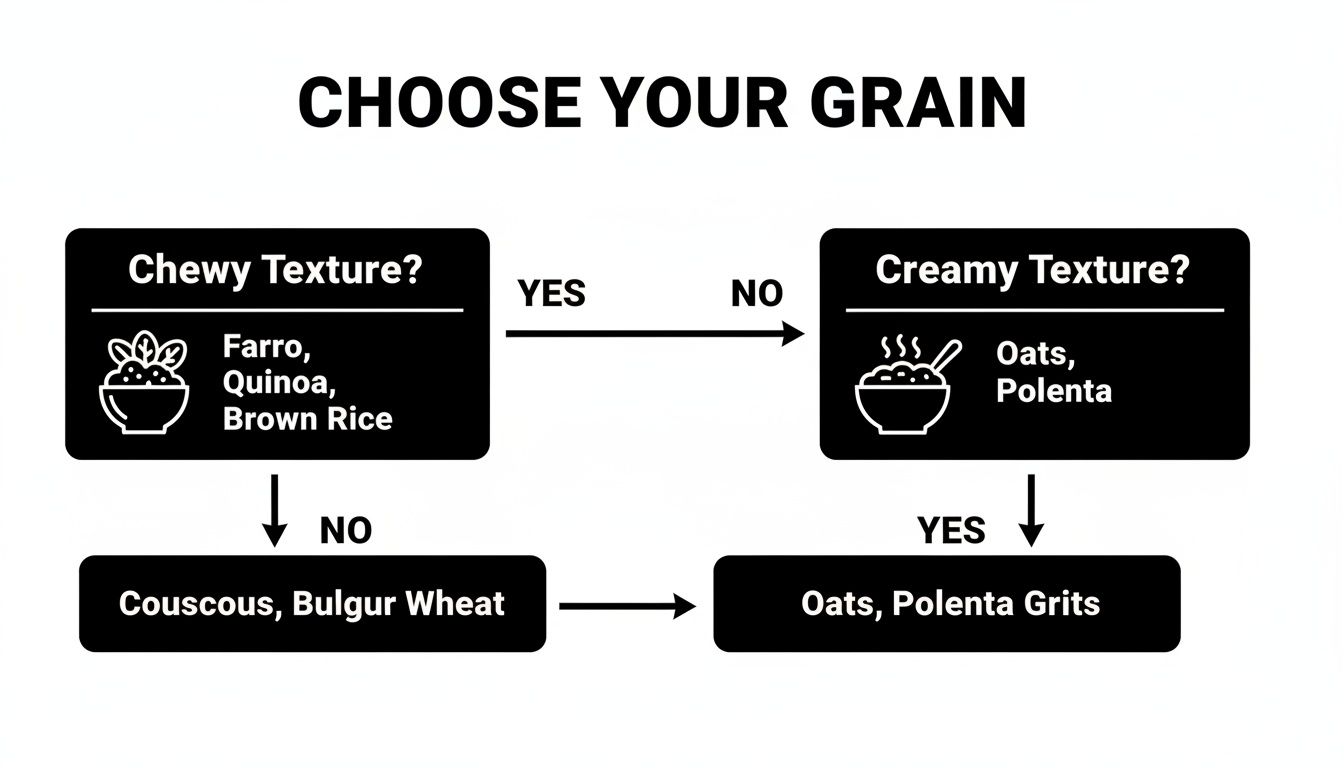
At the end of the day, your choice comes down to your priorities. Go for barley when you want that chewy texture and a metabolic health boost. Reach for oats when you need something creamy, quick, and convenient.
Honestly, both are fantastic whole grains that can easily fit into a healthy diet. Why not keep both in your pantry? You can use them for different meals and recipes, enjoying the unique benefits each one brings to the table.
Common Questions About Barley and Oats
Even after a deep dive into barley and oats, some practical questions always pop up. Let's tackle a few of the most common ones I hear.
For Weight Loss, Is Barley or Oats Better?
Honestly, both are fantastic choices if you're focused on weight management. Their high fiber content is brilliant for keeping you feeling full and satisfied long after you've eaten.
If I had to pick one, though, I'd give barley a slight advantage. It generally packs more of that special beta-glucan fiber and has a lower glycemic index. This combination is a powerhouse for keeping your appetite and blood sugar in check, which can be a real game-changer for weight loss.
Can I Just Swap Barley for Oats in a Recipe?
This is a tricky one, and the short answer is: probably not. While you can certainly make a hot porridge with either, they behave very differently. Barley takes significantly longer to cook and has a distinct, satisfyingly chewy bite, whereas oats cook up creamy and soft.
When it comes to baking, a direct swap is usually a bad idea. They absorb liquid differently and have completely different textures, so you'd likely end up with a disappointing result. It's best to stick to recipes specifically designed for one grain or the other.
What About Gluten? Is Barley Safe?
No, barley is definitely not gluten-free. It’s a wheat relative that contains gluten, making it unsafe for anyone with celiac disease or non-celiac gluten sensitivity.
Oats, on the other hand, are naturally gluten-free. The problem is they are often grown and processed alongside wheat, leading to cross-contamination. If you need to avoid gluten for health reasons, you absolutely must look for oats that are explicitly marked as certified gluten-free. This label is your assurance that they've been handled carefully to prevent any contact with gluten-containing grains.
