


So, let's get right to it: Are energy drinks actually bad for you?
It’s not a simple yes or no. For a healthy adult, having one every now and then probably won’t cause any major issues. But when they become a regular habit, that’s when the health risks really start to stack up. This guide is here to cut through the flashy marketing and give you a straight, science-backed look at what’s happening inside your body when you crack open that can.
Moving Past The Hype To Understand The Real Risks
Energy drinks are everywhere—fueling late-night study sessions, powering through long commutes, and rescuing us from the dreaded afternoon slump. With a market flooded with over 500 different products, it's a massive industry expected to rocket past $50 billion in sales by 2033. Their soaring popularity forces us to ask a crucial question: what’s the real price we pay for that quick burst of energy?
We're going to break down the serious impacts on your heart, uncover the hidden dangers of all that sugar, and even look at the surprising ways these drinks mess with your mental health and sleep. Think of this as your personal guide to seeing the complete picture, so you can make choices that are right for you. The goal here isn't to scare you, but to empower you with clear, honest information.
A Quick Look at Risks vs. Benefits
Before we get into the nitty-gritty, it's helpful to see the trade-offs side-by-side. Most people grab an energy drink for a quick fix, but those temporary perks often come with long-term consequences that are all too easy to ignore.
Here's a quick comparison of why people reach for them versus the potential health problems they can trigger.
Energy Drinks At-a-Glance Risks vs Perceived Benefits
This table provides a quick summary of the potential health risks associated with energy drink consumption compared to their short-term perceived benefits.
| Area of Impact | Potential Risks | Perceived Benefits |
|---|---|---|
| Cardiovascular System | Increased blood pressure, heart palpitations, and risk of arrhythmias. | Short-term feeling of alertness and increased heart rate. |
| Metabolic Health | High sugar intake can lead to weight gain and insulin resistance. | A quick burst of energy from simple carbohydrates. |
| Mental Well-being | Can heighten anxiety, cause jitters, and disrupt sleep patterns. | Temporary improvement in focus and reaction time. |
| Long-Term Habits | May create a cycle of dependency for managing daily fatigue. | A convenient tool for combating tiredness. |
The main takeaway? The pros are temporary, while the cons can have lasting effects.
The fundamental problem is that energy drinks offer a short-term loan of energy from your body's reserves, but the repayment often comes with high interest in the form of potential health complications.
This overview really just scratches the surface. By understanding both what you gain and what you risk, you can make a much better call on whether that temporary boost is worth it. Now, let’s dive into exactly what's inside these cans and how each ingredient really affects your body.
So, What's Actually in an Energy Drink?
Ever wondered what’s really behind that jolt of energy—the one that feels way more intense than your morning coffee? When you peel back the label on an energy drink, you’re not just looking at a beverage. You’re looking at a carefully engineered cocktail designed to kick your system into overdrive.
Think of it less like a simple drink and more like a high-octane fuel mix. While the can might look innocent enough, it’s packed with stimulants that work together, creating an effect far more powerful than any single ingredient on its own. Understanding this chemical teamwork is the key to figuring out whether energy drinks are a friend or foe to your health. Let's break down the main players.
The Caffeine Kick… and Overload
At the heart of every energy drink is caffeine, the stimulant we all know. But the amount in these drinks can be shocking. Your average 8-ounce cup of coffee has about 90-100 milligrams of caffeine. By comparison, a single energy drink can slam your system with anywhere from 80 to over 300 milligrams.
This huge dose is what blocks adenosine, the brain chemical that signals sleepiness, giving you that temporary rush of alertness. But in such high concentrations, it’s also the main reason for the racing heart, spiked blood pressure, and jitters that many people feel. For context, most health authorities suggest a daily limit of 400 milligrams for healthy adults—a number you can easily hit with just one or two cans.
A Sugar Bomb or a Chemical Swap
After caffeine, sugar is the next heavy hitter. A single can of a popular brand can pack between 27 and 54 grams of sugar, often as high-fructose corn syrup. That’s like spooning up to 13 teaspoons of sugar straight into your body, which triggers a massive blood sugar spike followed by that all-too-familiar, energy-sapping crash.
But what about the sugar-free versions? These drinks swap sugar for artificial sweeteners like aspartame, sucralose, or acesulfame potassium. While they sidestep the calorie and blood sugar issues, a growing body of research is starting to question their long-term impact on our gut health and metabolism. Going "sugar-free" doesn't necessarily mean you're in the clear.
More Than Just Caffeine: The Other Stimulants
Energy drinks rarely stop with just caffeine and sugar. They often layer in other compounds to intensify the effects, creating a blend that can really push the body to its limits.
- Guarana: This South American plant is another natural source of caffeine. By adding guarana, manufacturers can pump up the total caffeine content without making the number on the nutrition label look quite so alarming. It’s a sneaky way to add more fuel to the fire.
- Taurine: This is an amino acid that our bodies use to support brain development and regulate minerals. The high doses found in energy drinks are marketed to boost athletic and mental performance, but how it interacts with massive amounts of caffeine is still a bit of a gray area for scientists.
- B Vitamins: You’ll often see B vitamins (like B3, B6, and B12) listed in enormous amounts, sometimes well over 100% of your daily need. While these vitamins are essential for turning food into energy, your body can only absorb a certain amount at once. The rest is just flushed out, making their inclusion feel more like a marketing gimmick than a real health benefit.
The problem isn't any single ingredient in isolation. It's the high-dose, synergistic "stacking" of multiple stimulants at once. This forces your body to process an intense chemical mixture it was never built to handle.
This complex recipe is exactly why an energy drink feels so different from a cup of coffee. You’re not just getting a simple boost; you’re setting off a physiological event. This internal chemical storm is what paves the way for some of the more serious health impacts we’re about to cover, especially when it comes to your heart.
How Energy Drinks Affect Your Heart Health
When you crack open an energy drink, you’re doing more than just getting a quick boost. You're kickstarting a major physiological event, and your heart is right at the center of it. The powerful combination of high-dose caffeine and other stimulants puts immediate and significant stress on your entire cardiovascular system.
Think of your heart as an engine built to run at a steady, predictable pace. Downing an energy drink is like flooding that engine with high-octane racing fuel. It suddenly revs everything to its absolute limit, far beyond what it’s designed to handle. This abrupt acceleration is exactly why you might feel your heart pounding in your chest after finishing a can.
This concept map breaks down the main ingredients responsible for that intense reaction.
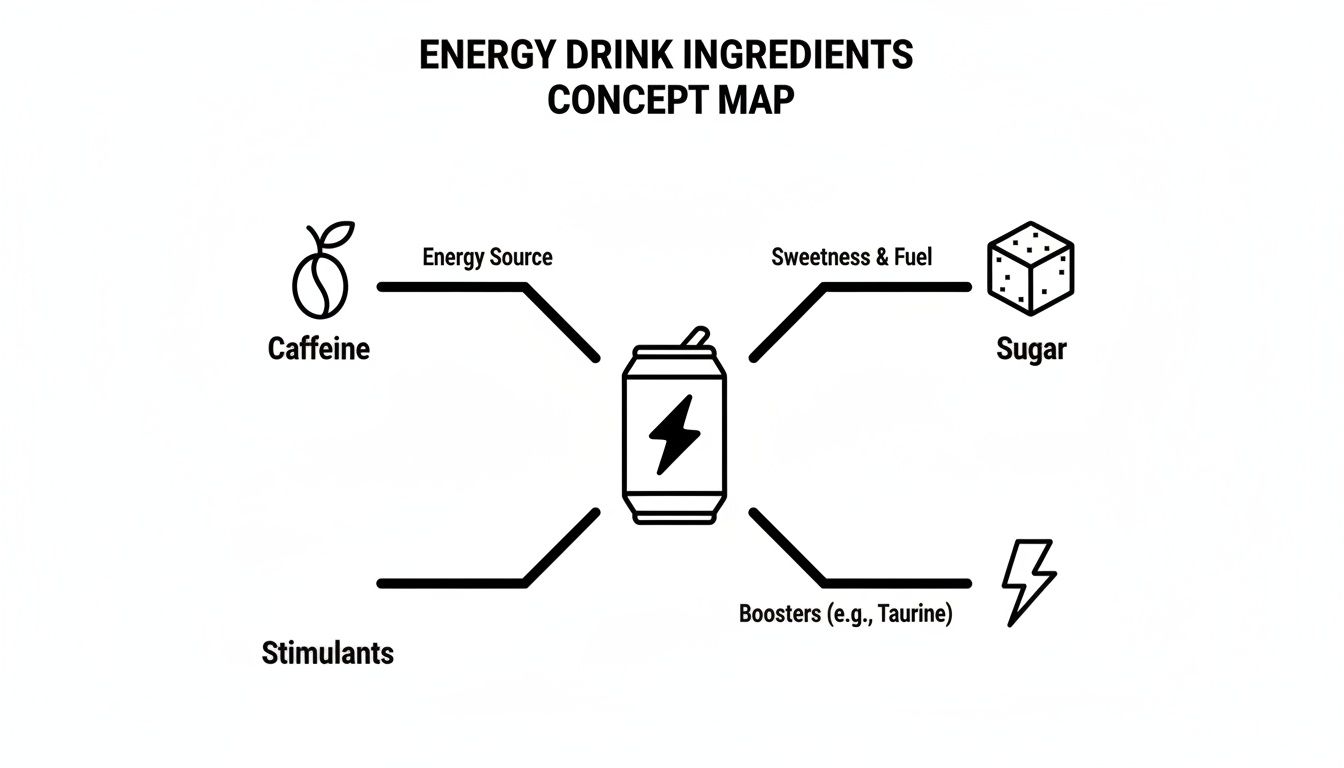
It’s the way caffeine, sugar, and other stimulants work together that creates an effect far more powerful than any one of them could alone.
The Immediate Cardiovascular Impact
The moment an energy drink hits your system, your heart feels it. Scientific studies have shown these drinks can trigger a number of immediate and concerning changes, even in perfectly healthy people.
- Elevated Blood Pressure: The potent blend of stimulants can cause blood vessels to constrict, forcing your heart to work much harder to pump blood. The result is a temporary but sharp spike in blood pressure.
- Increased Heart Rate: High doses of caffeine directly stimulate the heart muscle, making it beat faster and, in some cases, irregularly. This is what causes that "racing heart" feeling or palpitations.
- Heart Rhythm Disturbances: Perhaps the most serious risk is the potential to disrupt the heart's normal electrical rhythm. Research shows energy drinks can prolong the QT interval—a specific part of the heartbeat cycle. A longer QT interval can increase the risk of serious and even life-threatening arrhythmias.
These aren't just abstract warnings. The real-world consequences are showing up in emergency rooms nationwide.
The numbers tell a scary story. Back in 2007, the CDC reported 1,145 ER visits by adolescents aged 12 to 17 for energy drink-related problems. By 2011, that number had jumped to 1,499. This trend isn't just limited to teens; total annual ER visits related to energy drinks doubled from 10,068 in 2007 to 20,783 in 2011. With 80 to 500 mg of caffeine per serving, these drinks are clearly linked to acute cardiac events. You can read more about these alarming trends from Harvard's T.H. Chan School of Public Health.
Are Energy Drinks Bad For Healthy Hearts Too?
One of the most dangerous myths out there is that energy drinks are only a problem for people with pre-existing heart conditions. While it’s true that those individuals are at higher risk, the intense stimulant cocktail is strong enough to cause significant cardiac stress in anyone.
When you mix hundreds of milligrams of caffeine with other stimulants like guarana and taurine, you get a synergistic effect—meaning their combined impact is far greater than the sum of their parts. This physiological overload can strain even a healthy heart, pushing it into a state of acute stress. The danger is amplified when people consume them before intense exercise or mix them with alcohol, both of which add even more strain to the cardiovascular system.
Chronic Use and Long-Term Damage
While the immediate effects are alarming, the potential long-term damage from regular consumption is just as serious. Constantly subjecting your heart to these cycles of extreme stimulation is like repeatedly redlining a car's engine. Over time, that chronic stress can wear down the parts and lead to permanent problems.
Here are some of the biggest long-term concerns:
- Increased Risk of Hypertension: Regularly forcing your blood pressure to spike can contribute to chronic high blood pressure (hypertension), which is a major risk factor for heart disease and stroke.
- Cardiomyopathy: There have been case studies linking excessive, long-term energy drink use to cardiomyopathy. This is a condition where the heart muscle weakens and enlarges, making it much less efficient at pumping blood.
- Endothelial Dysfunction: The high sugar and stimulant content can damage the endothelium, the delicate lining of your blood vessels. This makes them less flexible and more prone to plaque buildup over the years.
Ultimately, that short-lived boost comes at a high cost to your heart. Once you understand the immediate strain and the potential for cumulative damage, it becomes clear why relying on these drinks is a gamble with your cardiovascular health.
The Hidden Impact of Sugar and Sweeteners
Beyond the immediate jolt from caffeine, the sugar in most energy drinks kicks off a completely different—and often more damaging—chain reaction in your body. That intense sweetness is a huge part of the appeal, but it comes at a steep metabolic price, feeding a vicious cycle of crashes and cravings.
Think of your body's energy system like a well-tended campfire. A steady supply of good fuel, like complex carbs and protein, keeps it burning evenly. Downing a sugary energy drink is like dousing that fire with gasoline. You get a massive, immediate flare-up, but it burns out just as fast, leaving you with even less energy than when you started.
This is the classic "sugar crash." The sudden flood of sugar forces your pancreas into overdrive, pumping out insulin to get all that glucose out of your bloodstream. The response is often so aggressive that it overcorrects, causing your blood sugar to plummet and leaving you feeling tired, irritable, and craving more sugar to get back up.
The True Cost of Liquid Sugar
This constant rollercoaster of sugar spikes and crashes does more than just wreck your afternoon. Over time, making high-sugar drinks a habit is directly linked to some serious, long-term health problems. The empty calories contribute directly to weight gain and mess with your body's ability to manage blood sugar effectively.
The sugar overload in these drinks is a sneaky saboteur for your waistline and long-term health. A typical can packs 21 to 34 grams of sugar—usually from sucrose, glucose, or high-fructose corn syrup. That kind of regular intake puts you squarely on the path toward obesity and type 2 diabetes. The high caloric load from sugar promotes rapid energy spikes followed by crashes, irritability, and sustained weight gain, setting the stage for chronic issues. Comprehensive scientific reviews show just how much sugary drinks can impact your health.
Regularly consuming this much liquid sugar puts you on a fast track to developing a cluster of dangerous conditions. It's a key driver for weight gain, insulin resistance, and eventually, type 2 diabetes. These symptoms often group together into what's known as what metabolic syndrome is.
The cycle is simple but destructive: You feel tired, so you grab an energy drink. The sugar gives you a temporary high, followed by a crash that makes you feel even more drained. To combat the new wave of fatigue, you reach for another can, perpetuating a pattern that strains your metabolic system day after day.
Are Sugar-Free Options a Safe Haven?
With everyone more aware of sugar's downsides, many people switch to "sugar-free" or "zero-calorie" energy drinks, thinking they’re a healthier choice. While they do get rid of the sugar spike and crash, they bring in a whole new set of concerns centered on artificial sweeteners like sucralose, aspartame, and acesulfame potassium.
These sweeteners give you that intense sweetness without the calories, but they aren't just a free pass. A growing body of research suggests they might not be the harmless alternative we once thought.
Here’s what science is beginning to uncover:
- Impact on Gut Microbiome: Your gut is home to trillions of bacteria that are critical for everything from digestion to your immune system. Some studies suggest that artificial sweeteners can throw off the delicate balance of this ecosystem, which could lead to negative health outcomes down the road.
- Metabolic Confusion: A few researchers believe that tasting something intensely sweet without getting the expected calories can confuse your body's natural response to sugar. This disconnect might mess with your appetite signals and even how your body handles real sugar in the future.
- Cravings and Taste Preference: When you constantly consume hyper-sweetened drinks, you can actually reset your taste buds. Naturally sweet foods like fruit start to seem bland, which can push you toward craving even more intensely sweet, processed junk.
Ultimately, while swapping a sugary can for a sugar-free one might feel like a smart move, it’s more of a sidestep than a solution. You're still hitting your body with a high dose of caffeine and other stimulants while adding chemicals whose long-term effects are still being figured out. Neither option gets to the root cause of your fatigue, instead offering a temporary fix with its own set of potential consequences.
Beyond the Buzz: Sleep, Anxiety, and Your Kidneys
That initial jolt from an energy drink feels great, but the effects don't stop there. The intense blast of stimulants can send ripples through your entire system, affecting your mental health, sleep, and even your body's hardworking filtration system—the kidneys. These are the quiet damages that can accumulate over time.

It’s a classic catch-22. You grab an energy drink to shake off fatigue, but that very habit can trap you in a cycle of poor rest. The caffeine gives you a few hours of alertness, but it does so by hijacking your body's natural sleep-wake cycle.
The Caffeine-Anxiety Connection
Ever notice how that "wired" feeling can quickly turn into jitters and restlessness? That’s your central nervous system being pushed into overdrive. For many people, especially those already prone to stress, that huge caffeine hit is enough to trigger a significant spike in anxiety.
This is where the cycle gets vicious. You're tired, so you drink an energy drink. The caffeine hangs around in your system, wrecking your sleep that night. You wake up feeling even more exhausted, which makes you reach for another can to get through the day. Before you know it, you're dependent on stimulants, and your sleep debt and anxiety are worse than ever.
Think of caffeine as a temporary loan of energy from your future self. Consuming it in the high doses found in energy drinks means you're taking out a high-interest loan that you'll have to repay with disrupted sleep and heightened stress.
Breaking free from this pattern is key. Instead of doubling down on stimulants, try winding down with gentler alternatives. Exploring some of the best herbal teas for health can be a great way to build a calming ritual that actually promotes rest.
How Energy Drinks Strain Your Kidneys
While we hear a lot about the heart risks, your kidneys are also working overtime to filter the intense cocktail of ingredients in these drinks. They're your body's cleanup crew, and flooding them with high levels of caffeine and sugar puts them under serious strain.
Here’s how they take a hit:
- Increased Blood Pressure: The stimulant jolt jacks up your blood pressure, forcing the kidneys to work much harder. Over time, chronic high blood pressure is a major cause of kidney damage.
- Dehydration Risk: Caffeine is a diuretic, which is just a fancy way of saying it makes you pee more. This can easily lead to dehydration, making your urine more concentrated with minerals and raising the risk of painful kidney stones.
- Sugar Overload: The shocking amount of sugar in most energy drinks can contribute to conditions like diabetes, which is another leading cause of chronic kidney disease.
This potent mix doesn't just put a temporary strain on your body. Studies show that the combination of excessive caffeine and sugar can impair kidney function over the long haul, especially in younger people whose bodies are still developing. The ingredients can trigger hemodynamic effects, like high blood pressure and platelet aggregation, that damage the kidneys bit by bit. You can read more about the impact of energy drink consumption on the health of young people.
A Link to Risky Behaviors
The effects aren't just physical—they can be behavioral, too. A growing body of research has found a troubling correlation between frequent energy drink use and an increase in risk-taking, especially among teens and young adults.
It seems to be linked to how high doses of stimulants can mess with judgment and lower inhibitions. That feeling of invincible energy can lead people to make impulsive choices they'd normally avoid. In fact, studies have tied heavy consumption to a higher incidence of things like substance use, aggression, and sensation-seeking. It's a stark reminder that the question "are energy drinks bad" goes far beyond physical health, touching on our very ability to make safe and sound decisions.
Healthier Ways to Boost Your Energy Naturally
Leaning on energy drinks is a bit like taking out a high-interest loan on your body’s energy. You get an immediate payout, but the crash that follows leaves you feeling even more drained than when you started. The good news? You can build real, sustainable energy by working with your body, not against it.
Instead of just slapping a bandage on the symptoms of fatigue, breaking the cycle means getting to the root of the problem. When you focus on solid, foundational health habits, you can create a deep well of vitality that doesn't come with a laundry list of health warnings. It’s about building a better engine, not just force-feeding it temporary fuel.
Fuel Your Body for Sustained Power
What you eat is the absolute cornerstone of your energy. While sugary snacks and processed foods send your blood sugar on a wild rollercoaster ride, whole foods provide a slow, steady release of fuel that keeps you going for hours.
Think of your diet as the bedrock of your daily performance. Making these food groups a priority will help stabilize your energy:
- Complex Carbohydrates: Foods like oats, brown rice, and quinoa release their energy gradually, helping you sidestep that dreaded afternoon slump.
- Lean Proteins: Chicken, fish, beans, and lentils are fantastic for building muscle and keeping you feeling full and focused.
- Healthy Fats: Don't fear the fat! Sources like avocados, nuts, and olive oil are critical for brain health and provide a long-burning energy source.
And don't forget water. Even being slightly dehydrated can trigger fatigue and brain fog. Simply swapping an energy drink for a glass of water—maybe with a slice of lemon or cucumber—is one of the easiest and most effective changes you can make.
Master Your Sleep and Movement
No stimulant on earth can substitute for the deep, restorative power of a good night's sleep. Your body handles its most important repair and recovery work while you're resting, which is absolutely essential for both physical and mental stamina.
A consistent sleep routine isn't a luxury; it's a non-negotiable for long-term vitality. Aiming for 7-9 hours of quality sleep each night lets your brain clear out metabolic junk and lock in memories, setting you up for a sharp and productive day.
Regular physical activity is another surprisingly effective energy booster. It might sound backward to exercise when you’re tired, but getting your body moving improves circulation and releases endorphins, often leaving you feeling more invigorated. Even a quick, 15-minute walk can make a world of difference.
For more ideas, check out our guide on boosting your energy without relying on caffeine.
Smarter Beverage Swaps for a Gentle Lift
If you still enjoy having a warm or cold drink to help you power through the day, there are plenty of healthier options that offer a gentle lift without the harsh side effects of energy drinks.
- Green Tea: This drink offers a modest dose of caffeine paired with L-theanine, an amino acid known for promoting a state of calm alertness—no jitters included.
- Black Coffee: The classic choice. In moderation (sticking to under 400 mg per day), coffee is a great source of antioxidants.
- Herbal Teas: Caffeine-free options like peppermint or ginger tea can still provide a refreshing sensory jolt that wakes up your mind.
By embracing these natural strategies, you can cultivate a lasting energy that truly supports your overall health. You'll find the question of whether energy drinks are bad becomes irrelevant when you simply don't need them anymore.
Got Questions About Energy Drinks? We’ve Got Answers.
Let's cut through the noise. Here are straightforward answers to some of the most common questions people ask about energy drinks, so you can make smarter choices for your health.
How Much Caffeine Is Too Much?
For most healthy adults, the general consensus among health experts is to stay under 400 milligrams of caffeine per day. That might sound like a lot, but when a single can of some energy drinks packs over 300 mg, you can see how easy it is to blow past that limit with just one or two drinks.
And for teenagers? The recommendation is way lower—a strict cap of 100 mg per day.
Are Sugar-Free Energy Drinks a Safer Bet?
Not necessarily. Going sugar-free helps you dodge the empty calories and the inevitable sugar crash, but it doesn't solve the main problem. These drinks are still loaded with caffeine and other stimulants that put a real strain on your heart and nervous system.
Plus, the jury is still out on the long-term effects of the artificial sweeteners used to replace the sugar.
The core issue remains: swapping sugar for artificial sweeteners doesn't remove the primary risks associated with the high stimulant load. The question of whether energy drinks are bad often comes down to the caffeine content, not just the sugar.
Can I Slam an Energy Drink Before Hitting the Gym?
I would strongly advise against it. It's a popular habit, but it's a risky one. The stimulants in energy drinks can push your heart rate and blood pressure into a dangerous zone, especially when you're already pushing your body with intense exercise.
Caffeine is also a diuretic, meaning it makes you lose fluid. That can lead to dehydration right when your body needs hydration the most. Want a safer pre-workout boost? Try a small cup of black coffee or a light snack with some carbs.
At The Happy Health Blog, our goal is to give you evidence-based guidance for building real, lasting energy and wellness. Explore our articles and make informed choices for a healthier life. Find out more at https://thehappyhealthblog.com.
