


In our fast-paced world, finding an uninterrupted hour for the gym can feel like a logistical impossibility. The common belief is that if you can't commit to a long workout, you might as well do nothing. But what if you could achieve significant fitness gains in just 60 seconds at a time? This isn't a gimmick; it's a science-backed strategy built around micro-workouts. The core principle of one minute fitness is leveraging short bursts of high-intensity effort to boost your metabolism, build functional strength, and improve cardiovascular health without overhauling your entire schedule.
This guide moves beyond theory to provide actionable, efficient movements. We will break down seven of the most effective one-minute exercises you can perform anywhere, anytime. You'll learn how to seamlessly integrate these powerful micro-sessions into your existing routine, whether that's between meetings, while waiting for your coffee to brew, or during a television commercial break. This article will demonstrate how to make every minute count toward your health and wellness goals, proving that a lack of time no longer has to be a barrier to physical fitness. Get ready to discover how 60 seconds can redefine your approach to exercise.
1. The 60-Second Plank
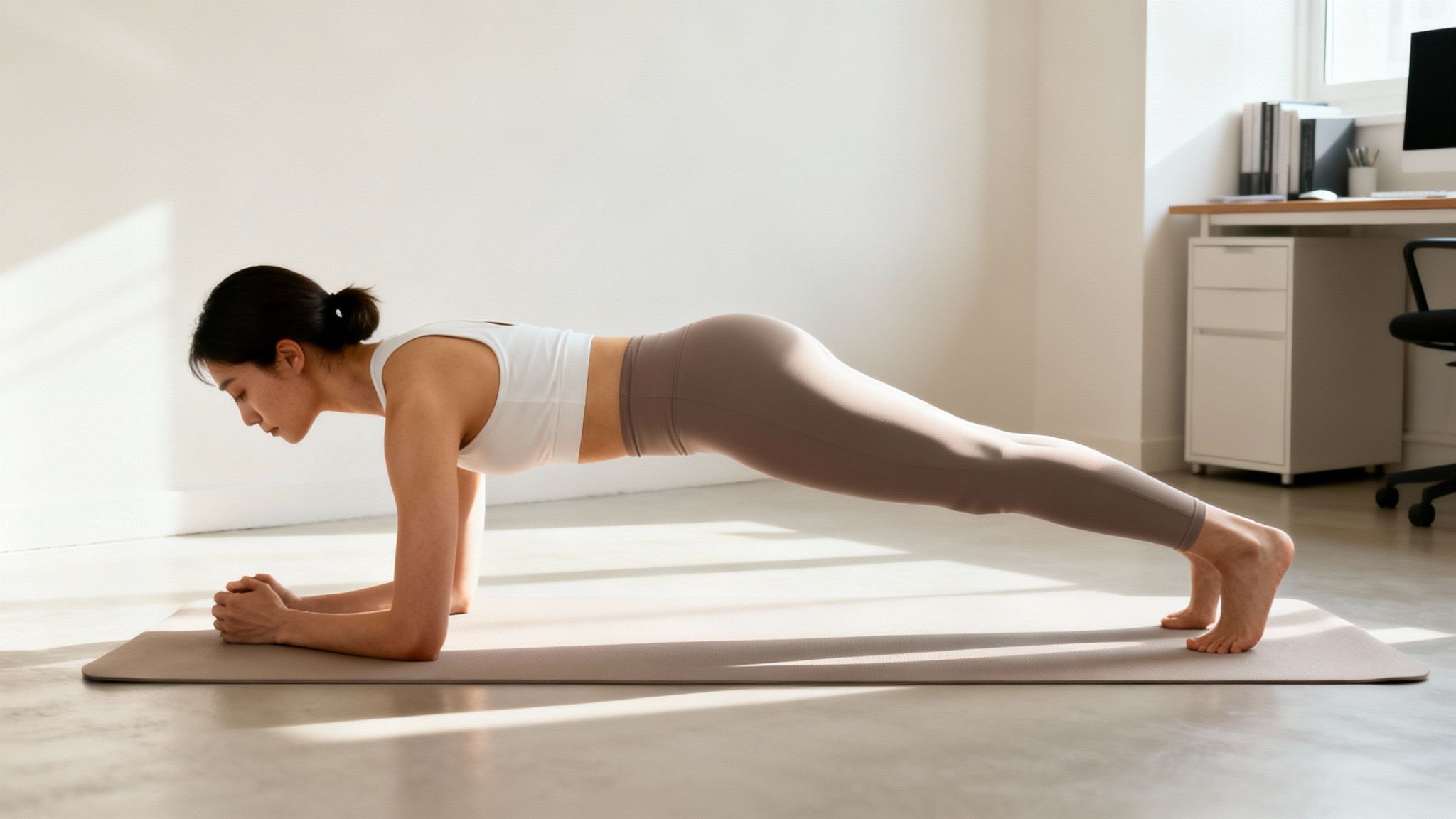
When it comes to one minute fitness, few exercises deliver the same full-body engagement as the plank. This isometric hold is a powerhouse of core conditioning, strengthening your abdominal muscles, lower back, glutes, and shoulders all at once. The principle is simple: you hold a push-up position, creating tension throughout your body to resist gravity for a set period. This single, static movement builds muscular endurance and stability without any equipment.
Its efficiency makes it a go-to for everyone, from physical therapists recommending it for core stability to office workers using a quick 60-second plank to counteract the negative effects of prolonged sitting. Popularized by global fitness programs like Peloton and a staple in countless fitness app challenges, the plank has earned its reputation as a foundational exercise.
How to Implement the 60-Second Plank
To get the most out of your minute, proper form is non-negotiable. Poor alignment can reduce effectiveness and increase the risk of strain.
- Maintain Alignment: Your body should form a straight, rigid line from your head to your heels. Avoid letting your hips sag or rise too high.
- Engage Your Core: Actively pull your navel in toward your spine. This crucial step protects your lower back and maximizes abdominal engagement.
- Shoulder and Wrist Position: Place your hands directly under your shoulders. If performing a forearm plank, ensure your elbows are under your shoulders.
- Breathe: It's common to hold your breath during a tough exercise, but steady breathing delivers oxygen to your working muscles. Inhale and exhale deeply and consistently.
For those just getting started, a full minute might feel like an eternity. That's perfectly fine. If you are new to this type of training, you can find a lot of useful information on how to ease into an exercise routine. Start with 20 or 30-second holds and gradually build up your time as your strength improves. Once you can comfortably hold a standard plank for 60 seconds, you can progress by adding variations like leg lifts or side planks to continue challenging your body.
2. Jump Rope Sprint (60 Seconds)
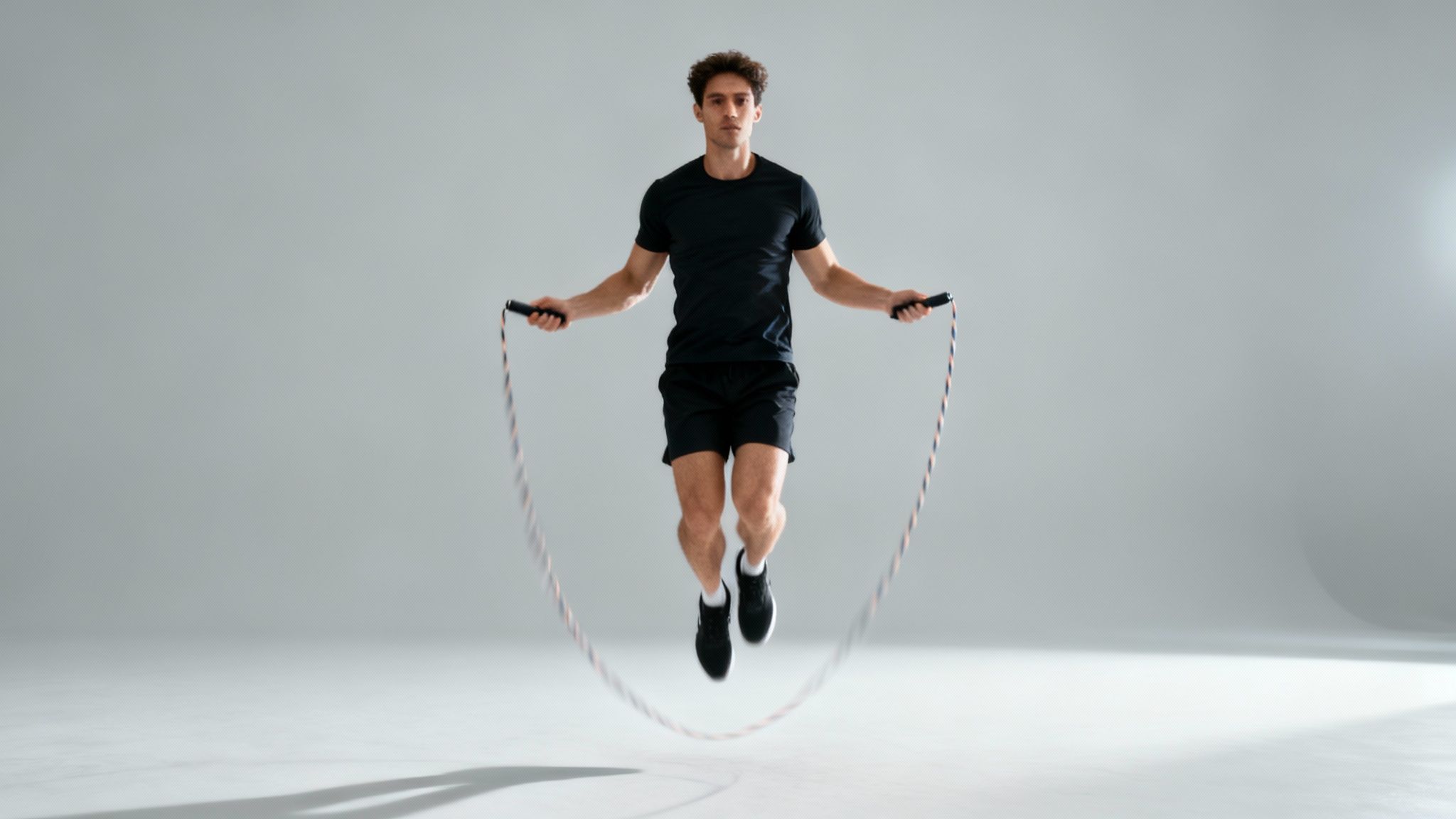
When the goal is maximum cardiovascular impact in minimum time, the jump rope sprint is a clear winner in the world of one minute fitness. This isn't your playground skip; it's a high-intensity, all-out effort that skyrockets your heart rate, torches calories, and sharpens your coordination. The principle is explosive and effective: by jumping rope at your maximum possible speed for 60 seconds, you engage your entire body, from your calves and quads to your core and shoulders, in a highly efficient workout.
Its status as a top-tier conditioning tool is well-established. From the iconic training montages of Rocky Balboa to its non-negotiable role in a boxer's regimen for improving footwork and endurance, the jump rope is legendary. Modern fitness communities, including CrossFit and HIIT enthusiasts, have fully embraced it, incorporating high-speed rope work into daily workouts for its unparalleled efficiency. Celebrity trainers like David Goggins also champion it for building mental and physical toughness.
How to Implement the Jump Rope Sprint
Proper technique is crucial for maximizing speed, preventing stumbles, and protecting your joints during this high-impact minute.
- Proper Rope Length: Ensure your rope is the right size. Stand on the center of the rope with one foot; the handles should reach roughly to your armpits.
- Maintain Form: Keep your elbows tucked in close to your sides and use your wrists, not your entire arms, to turn the rope. This creates a faster, more efficient rotation.
- Jump Efficiently: Stay on the balls of your feet and jump just high enough to clear the rope. Flat-footed or excessively high jumps waste energy and increase impact.
- Wear Supportive Shoes: Protect your ankles and knees by wearing athletic shoes with good cushioning and support.
A full 60-second sprint is incredibly demanding. If you are just starting, begin with 20 or 30-second intervals and focus on maintaining a consistent rhythm. As your stamina improves, you can increase the duration until you can complete the full minute at high intensity. For a more comprehensive workout, integrate one-minute jump rope sprints between other exercises like squats or push-ups to create a powerful HIIT circuit.
3. Bodyweight Squats (60 Seconds)
When it comes to foundational movements for one minute fitness, the bodyweight squat is an undisputed champion. This powerful compound exercise targets the largest muscles in your body, including your quadriceps, hamstrings, glutes, and calves, all while engaging your core for stability. The principle is straightforward: you lower your hips from a standing position and then push back up. This single, fluid movement builds lower-body strength, enhances mobility, and improves balance without any equipment.
Its universal application makes it a staple everywhere, from physical therapy clinics using it for knee injury recovery to CrossFit boxes and strength training programs that build entire routines around it. Workplace wellness initiatives often recommend a quick set of squats to break up long periods of sitting. The squat's efficiency in building functional strength has cemented its reputation as an essential exercise for people of all fitness levels.
How to Implement 60 Seconds of Squats
To maximize the benefits and prevent injury during your minute of squats, focusing on proper form is crucial. Poor technique can place undue stress on your knees and lower back.
- Maintain an Upright Posture: Keep your chest lifted and your back straight throughout the movement. Avoid rounding your shoulders or lower back.
- Engage Your Core: Tighten your abdominal muscles as if you are bracing for a punch. This helps stabilize your spine and protect your back.
- Proper Depth and Knee Alignment: Aim to lower your hips until your thighs are at least parallel to the floor. Ensure your knees track in line with your toes and do not collapse inward.
- Control the Movement: Perform each repetition at a controlled pace. Avoid bouncing at the bottom of the squat, and instead, drive up powerfully through your heels to return to the starting position.
Completing a full minute of continuous squats can be demanding, especially for beginners. If you're just starting out, there are many resources that can help you get started with a beginner home workout routine. Begin with 20 or 30-second intervals and focus on mastering the form before increasing the duration. Once you can comfortably perform squats for 60 seconds, you can increase the intensity by adding variations like pulse squats or jump squats to keep challenging your muscles.
4. Mountain Climbers (60 Seconds)
When you need to elevate your heart rate and engage your entire body in a single minute, mountain climbers are a top-tier choice for one minute fitness. This dynamic exercise combines a strong plank hold with a cardio-intensive leg drive, effectively targeting your core, shoulders, and legs while torching calories. The movement mimics the motion of climbing, requiring you to rapidly bring your knees toward your chest from a push-up position, creating a powerful, full-body conditioning effect.
Its scalability and intensity have made it a favorite in high-intensity interval training (HIIT) circuits, military fitness drills, and CrossFit WODs (Workout of the Day). Digital fitness platforms like Peloton and Beachbody frequently incorporate mountain climbers into their routines, showcasing their effectiveness for building cardiovascular endurance and core strength in a short, intense burst.
How to Implement 60-Second Mountain Climbers
To maximize benefits and prevent injury during your minute of work, maintaining proper form is crucial. Speed should never come at the expense of technique.
- Establish a Strong Foundation: Start in a high plank position with your hands directly under your shoulders and your body in a straight line from head to heels.
- Engage Your Core: Keep your abdominal muscles tight throughout the movement. This stabilizes your spine and prevents your hips from sagging or rising too high.
- Drive Your Knees: Alternate driving your knees toward your chest in a controlled but rapid motion. The goal is to move quickly while keeping your upper body stable.
- Breathe Rhythmically: Coordinate your breathing with the movement. Exhale as you drive a knee forward and inhale as you return it to the starting position.
If a full 60 seconds of high-speed mountain climbers feels too intense, start with 20 or 30-second intervals at a slower pace. You can also modify the exercise by placing your hands on an elevated surface like a bench or sturdy chair to reduce the load. As your strength and stamina improve, you can increase your speed or duration, making it a continuously challenging part of your fitness arsenal.
5. High Knees Running in Place (60 Seconds)
When you need to elevate your heart rate instantly, one minute fitness offers the perfect solution with high knees. This dynamic cardio exercise involves running in place while explosively driving your knees toward your chest. It's a fantastic, equipment-free way to boost cardiovascular health, improve lower body power, and enhance coordination and agility. The principle is simple: maximize intensity in a short burst to trigger a significant metabolic response.
The versatility of high knees makes it a staple in various settings. It’s a classic warm-up in high school physical education, an agility drill for athletes honing their footwork, and a go-to for office workers needing a quick energy jolt. Fitness trainers frequently incorporate high knees into high-intensity interval training (HIIT) circuits, and its low-impact nature (when performed correctly) makes it suitable for certain rehabilitation programs.
How to Implement 60-Second High Knees
To maximize the benefits of this minute-long drill and minimize injury risk, proper technique is essential. Focus on form over pure speed, especially when starting out.
- Knee Height is Key: Aim to drive your knees up to at least waist or hip height on every repetition. This ensures full engagement of your hip flexors and core.
- Maintain Upright Posture: Keep your chest up and your back straight, with a very slight forward lean from the ankles. Avoid rounding your back or slouching.
- Engage Your Core: Tighten your abdominal muscles throughout the movement. This stabilizes your torso and protects your lower back.
- Use Your Arms: Pump your arms in rhythm with your legs, just as if you were sprinting. This helps with balance, coordination, and increasing overall intensity.
- Breathe Rhythmically: Inhale and exhale in a controlled, steady pattern. Holding your breath will lead to premature fatigue and reduce performance.
If a full 60 seconds of high-intensity high knees is too challenging at first, start with 30-second intervals and focus on perfect form. You can also begin with a marching pace and gradually increase the speed as your fitness improves. Once you master the basic minute, you can integrate it into a larger circuit with exercises like jumping jacks or burpees for a comprehensive micro-workout.
6. Push-Ups (60 Seconds)
When it comes to foundational upper body strength, the push-up is in a class of its own. This classic bodyweight exercise is a cornerstone of one minute fitness because it efficiently targets multiple muscle groups simultaneously, including the chest, shoulders, triceps, and core. The movement involves lowering and raising your body with your arms, essentially performing a moving plank, which builds both muscular strength and endurance. It requires zero equipment and can be done anywhere, making it a perfect choice for a quick and effective micro-workout.
The push-up’s versatility and effectiveness have made it a standard in various fields. It’s a key benchmark in military and law enforcement fitness tests, a fundamental skill for calisthenics athletes performing advanced variations, and even used in physical therapy settings for shoulder rehabilitation. For anyone looking to build functional strength in a short amount of time, a 60-second set of push-ups is an incredibly powerful tool.
How to Implement 60-Second Push-Ups
Maximizing your minute of push-ups requires attention to form to ensure muscle engagement and prevent injury. Rushing through reps with poor technique is far less effective than performing fewer, well-executed ones.
- Proper Hand Placement: Position your hands slightly wider than your shoulders, directly in line with your chest.
- Maintain a Straight Body Line: Your body should form a rigid, straight line from your head to your heels, just like in a plank. Keep your core tight to prevent your hips from sagging or rising.
- Full Range of Motion: Lower your chest until it nearly touches the ground. A full range of motion is more important than a high number of partial reps.
- Control the Movement: Perform each push-up at a steady, controlled pace. Avoid dropping down quickly; focus on engaging your muscles through both the lowering and pushing phases.
If a full minute of standard push-ups is too challenging, modifications are key to building strength safely. Beginners can start with wall push-ups, incline push-ups (placing hands on a bench or sturdy chair), or knee push-ups. As your strength improves, you can progress to the standard version and eventually aim to increase the number of reps you can complete within the 60-second window.
7. Burpees (60 Seconds)
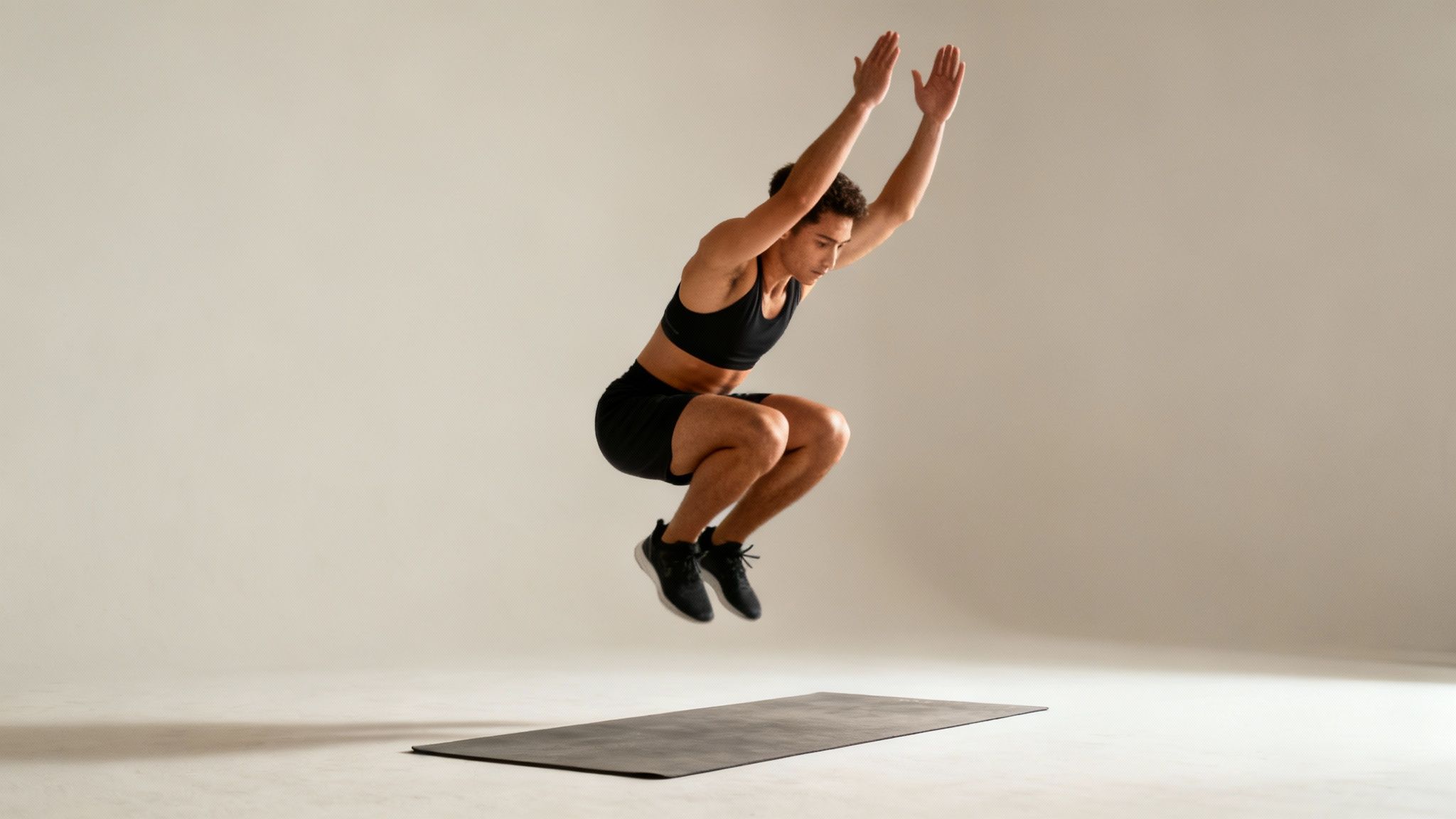
When the goal is maximum calorie burn and total-body conditioning in minimal time, the burpee is in a class of its own. This high-intensity exercise is a powerful sequence combining a squat, plank, push-up, and explosive jump into one seamless movement. Performing burpees for just 60 seconds provides a formidable cardiovascular challenge while simultaneously building strength in your chest, arms, shoulders, core, and legs, making it a champion of one minute fitness.
Its reputation for intensity and efficiency has made it a cornerstone of military training programs, CrossFit workouts, and countless HIIT classes worldwide. The burpee requires no equipment, just your own body weight and the determination to push through the minute. This accessibility and its profound metabolic impact make it a favorite for home fitness enthusiasts and athletes alike who need to get results fast.
How to Implement 60 Seconds of Burpees
Mastering the burpee is about controlling each component of the movement. Rushing with poor form increases injury risk and reduces effectiveness.
- Pace Yourself: The goal is consistent movement for 60 seconds, not an all-out sprint for 15. Find a rhythm you can maintain. Quality over quantity is key.
- Master the Components: Practice each part of the burpee separately: the squat, the plank, and the push-up. Combining them becomes easier once you are comfortable with the individual movements.
- Land Softly: When you jump back to your feet and into the air, absorb the impact by landing with your knees bent. This protects your joints from unnecessary stress.
- Breathe Consistently: It's easy to hold your breath during such an intense exercise. Focus on a steady breathing pattern to supply your muscles with the oxygen they need to perform.
A full minute of burpees is advanced. Don't be discouraged if you can't do it at first. Start with 20-30 second intervals or use modifications like stepping back instead of jumping or removing the push-up. As you get stronger, you can increase your time and intensity. Such a demanding workout also requires proper nutrition to help your body recover; you can get some ideas on the best post-workout recovery foods to support your efforts.
One-Minute Workout — 7-Exercise Comparison
| Exercise | 🔄 Implementation complexity | ⚡ Resource requirements & efficiency | 📊 Expected outcomes | 💡 Ideal use cases | ⭐ Key advantages |
|---|---|---|---|---|---|
| The 60-Second Plank | Low–Moderate; focus on steady form | No equipment, minimal space; extremely time-efficient | Improved core strength, posture, stability; low calorie burn | Desk breaks, rehab, warm-ups, core-focused sessions | ⭐⭐⭐ — Scalable, spine-friendly when performed correctly |
| Jump Rope Sprint (60 Seconds) | Moderate; requires coordination and timing | Requires rope and clear overhead/foot space; very high cardio efficiency | Rapid heart-rate increase; high calorie burn; improved coordination | HIIT circuits, athletic conditioning, quick cardio bursts | ⭐⭐⭐⭐ — Exceptional calorie burn and portability |
| Bodyweight Squats (60 Seconds) | Low–Moderate; technique important for knees | No equipment, moderate space; efficient for strength | Increased lower-body strength, muscle mass, mobility | Strength routines, rehab (with guidance), workplace breaks | ⭐⭐⭐⭐ — Engages large muscle groups; functional strength |
| Mountain Climbers (60 Seconds) | Moderate–High; requires plank stability and tempo control | No equipment, small space; high-intensity cardio + core combo | Fast cardiovascular gains; core endurance; calorie burn | HIIT circuits, conditioning, core-focused cardio | ⭐⭐⭐⭐ — Combines cardio and core in one movement |
| High Knees Running in Place (60 Seconds) | Low; easy to learn but requires pacing | No equipment, very small space; low-impact compared to jumping | Moderate calorie burn; improved explosiveness and running form | Warm-ups, apartment-friendly cardio, low-impact HIIT | ⭐⭐⭐ — Joint-friendly cardio, easy to scale |
| Push-Ups (60 Seconds) | Moderate; progression needed for strength gains | No equipment, small space; strength-focused rather than cardio | Upper-body strength, shoulder stability, core engagement | Strength circuits, calisthenics, warm-ups, rehab (modified) | ⭐⭐⭐⭐ — Versatile progressions; efficient upper-body builder |
| Burpees (60 Seconds) | High; complex sequence and high demand on form | No equipment, moderate space; maximal time-efficiency for results | Very high calorie burn, full-body strength, anaerobic capacity | HIIT, military/bootcamp training, maximal conditioning | ⭐⭐⭐⭐⭐ — Most metabolically demanding; combines strength + cardio |
Making One Minute Count: Your Path to a Healthier Life
The journey to better health often seems like a mountain to climb, a challenge that demands hours you simply don't have. This article was designed to dismantle that myth. We have explored the potent reality that significant, measurable progress can be achieved in the pockets of time you once overlooked. From the core-shredding stability of a 60-second plank to the explosive power of a minute of burpees, each exercise is a testament to the power of concentrated effort.
The core principle of one minute fitness is not about replacing traditional workouts but augmenting your life with consistent, manageable bursts of activity. It's about transforming the narrative from "I have no time" to "I can always find one minute." This is a profound mental shift that empowers you to take control of your well-being, one minute at a time.
Weaving Movement into Your Daily Fabric
Think of these micro-workouts as building blocks. One minute of mountain climbers before your morning shower, a quick set of bodyweight squats while waiting for your coffee to brew, or a jump rope sprint during a commercial break. Individually, they are small victories. Cumulatively, they create a powerful and sustainable foundation for a healthier lifestyle.
The secret to lasting change isn't grand, unsustainable gestures; it's the small, repeatable actions you integrate into your daily rhythm. One minute fitness is the ultimate expression of this powerful concept.
Your Actionable Next Steps
To truly harness the benefits of this approach, you must move from reading to doing. Here’s how to start today:
- Choose Your "Big Three": Select three exercises from this list that you find most engaging or that target areas you want to improve.
- Schedule Your Minutes: Identify specific triggers in your day to perform these exercises. For example, "After I hang up a work call, I will do 60 seconds of high knees."
- Track Your Progress: Keep a simple log. Note how many reps you completed or how you felt. Seeing your numbers increase is a powerful motivator.
- Embrace Progression: Once an exercise feels too easy, challenge yourself. Add five more seconds to your plank, try a push-up variation, or aim for two more burpees within the minute.
This isn't just exercise; it's a strategic investment in your long-term health. The power of one minute fitness lies in its accessibility and its ability to build momentum. It proves that every second truly does count, and by claiming just a few of those seconds for yourself, you are paving the way for a more energetic, resilient, and vibrant life. You have the tools, you have the time, and now, you have the roadmap. The first minute of your new fitness journey starts now.
Ready to dive deeper into sustainable wellness and find more strategies that fit your busy life? At The Happy Health Blog, we specialize in providing evidence-based, practical advice on everything from micro-workouts to mindful eating. Explore our resources and join a community dedicated to making health an achievable, joyful part of everyday life at The Happy Health Blog.
