


Magnesium is one of the hardest-working minerals in your body, quietly managing over 300 critical biochemical reactions. It's the silent partner in everything from energy production to muscle function, yet a surprising number of us are running on empty. This can lead to a cascade of confusing symptoms that are often chalked up to something else entirely.
The Unseen Impact of Low Magnesium

Think of magnesium as the calm, collected manager of a bustling factory. It keeps the assembly lines moving, ensures communication between departments is clear, and makes sure energy resources are allocated properly. When the manager is gone, things start to fall apart. Signals get crossed, production slows, and the whole system becomes inefficient. That’s what a magnesium shortage looks like inside your body.
And this isn't a niche issue; it's practically a silent epidemic. Globally, an estimated 2.4 billion people—about 31% of the world's population—are thought to be magnesium deficient. Zooming in on the United States, the numbers are just as stark: nearly half of all adults get less than the recommended daily amount from their food. You can learn more about these global nutrition trends and their implications.
Because the signs of low magnesium can be so varied and subtle, many people and even their doctors miss the connection. To help you connect the dots, this quick-reference table breaks down the essentials.
Magnesium Deficiency at a Glance
For a quick overview, here’s a snapshot of the most common signs, the typical culprits behind the deficiency, and the best foods to help you replenish your levels.
| Common Signs | Key Causes | Top Food Sources |
|---|---|---|
| Muscle Twitches & Cramps | Poor Dietary Intake | Pumpkin Seeds, Almonds |
| Fatigue & Weakness | Digestive Disorders (e.g., Crohn's) | Spinach, Dark Leafy Greens |
| Anxiety & Mood Changes | Chronic Stress & Alcohol Use | Black Beans, Legumes |
| Irregular Heartbeat | Certain Medications (Diuretics) | Avocado, Bananas |
| Poor Sleep & Insomnia | Diets High in Processed Foods | Dark Chocolate (70%+) |
This table serves as a starting point. If you see yourself in this picture, understanding why this deficiency is so widespread can be the first step toward fixing it.
Why Is Deficiency So Common Today?
It’s natural to wonder how we ended up so low on such a vital mineral. The answer lies in a few key shifts in our food systems and modern lifestyles.
A huge piece of the puzzle is modern farming practices. Over the last century, intensive agriculture has gradually stripped essential minerals like magnesium right out of the soil. This means the spinach or almonds you eat today likely contain less magnesium than the same foods did 50 years ago, making it harder to get what you need even from a "healthy" diet.
Then there's the food itself. The Western diet is dominated by processed foods, which are often stripped of their natural mineral and vitamin content during manufacturing. We've traded nutrient-rich whole foods for convenience.
A diet high in refined sugar, white flour, and processed fats doesn't just lack magnesium—it can actually cause your body to use up its existing stores more quickly. This creates a vicious cycle that's tough to escape without making a conscious change.
Finally, our high-stress culture plays a major role. Chronic stress puts your body in a constant state of "fight or flight," a process that burns through magnesium at an alarming rate. The more stressed you are, the more magnesium you need. This perfect storm of depleted soil, processed diets, and chronic stress has made magnesium deficiency incredibly common.
Recognizing the Physical Signs of Low Magnesium
Your body has a way of telling you when something’s wrong. When it comes to a magnesium shortfall, it doesn't just whisper—it often sends out clear, physical distress signals. These aren’t just random aches and pains; they're direct results of this vital mineral being M.I.A. from key bodily functions. Learning to spot these signs is the first step toward getting things back in balance.

Some of the most common and frustrating signals come straight from your muscles. If you've ever been jolted awake by a searing charley horse or been driven crazy by a persistent eyelid twitch, you know exactly what can happen when magnesium runs low.
Muscle Cramps and Twitches
Think of magnesium and calcium as having a constant tug-of-war inside your muscle cells. Calcium is the signal for your muscles to contract, to tighten up. Magnesium is the equally important signal that tells them to relax.
When you don’t have enough magnesium, calcium barges in and takes over. There’s not enough of the “relaxing” mineral to counter calcium's "contract" command. This imbalance leaves your muscles in a state of high alert, leading to:
- Muscle Cramps: Those sudden, involuntary, and often agonizing contractions, especially in the legs.
- Spasms: Uncontrollable muscle movements that can pop up just about anywhere.
- Twitches (Fasciculations): Small, flickering muscle contractions, like that all-too-familiar twitching eyelid.
These are more than minor annoyances. They're loud-and-clear messages that your muscular system's delicate mineral balance is out of whack.
Without enough magnesium to act as a natural muscle relaxant, your muscles can get "stuck" in the "on" position. It’s like a light switch that’s easy to flick on but gets jammed when you try to turn it off.
Deep Fatigue and Physical Weakness
Another classic sign is a bone-deep fatigue that no amount of sleep seems to touch. This isn't your typical "I'm a bit tired" feeling. It's a profound physical weakness that can make even simple daily tasks feel like climbing a mountain.
The root of this exhaustion lies at the cellular level. Magnesium is absolutely critical for creating adenosine triphosphate (ATP), which is the literal energy currency for every cell in your body. Every single thing you do—from blinking to breathing—is powered by ATP. Magnesium’s job is to bind to ATP molecules to make them stable and usable.
When magnesium is scarce, your body's ability to produce and use ATP grinds to a halt. It’s like a car factory suddenly running out of a tiny but essential screw needed for every engine. Production stops, period. In the same way, without enough magnesium, your cellular energy production plummets, leading straight to that feeling of being completely drained. If this sounds familiar, you might want to look into the many reasons you might be feeling tired and lacking energy.
Irregular Heartbeat and Palpitations
This is perhaps one of the most unnerving signs of a magnesium deficiency. You might feel your heart "skip a beat," flutter, or race for no reason. These sensations, known as heart palpitations, can be pretty scary.
Your heart relies on a steady balance of electrolytes, and magnesium is a star player alongside potassium and calcium. It’s essential for conducting the electrical signals that tell your heart muscle precisely when to contract and when to relax, keeping your rhythm steady. A deficiency throws this finely tuned electrical system into chaos, which can lead to an irregular heartbeat, or arrhythmia.
Think of your heart's rhythm as a symphony. Magnesium is the conductor, making sure every instrument plays on cue. When the conductor is missing, the rhythm falls apart into noise. Restoring magnesium levels is like putting the conductor back on the podium, allowing your heart to find its steady, reassuring beat once more.
The Mental and Emotional Toll of Magnesium Deficiency
Long before the physical symptoms set in, a magnesium deficiency often sends out quiet signals through your mental and emotional state. The connection between what you eat and how you feel is incredibly powerful, and magnesium sits right at the center of it all, acting as a master regulator for your entire nervous system.

Think of magnesium as the natural "brake pedal" for your brain. It helps manage the key neurotransmitters responsible for calming things down, preventing your nervous system from getting stuck in overdrive. When your levels are too low, that braking system gets weak, leaving you vulnerable to a whole host of psychological symptoms.
Heightened Anxiety and Irritability
Ever feel like you're constantly on edge, irritable, or just completely overwhelmed by everyday stress? A lack of magnesium could be playing a role. This mineral is crucial for keeping your body's main stress-response system—the hypothalamic-pituitary-adrenal (HPA) axis—in check.
Basically, magnesium helps control the release of stress hormones like cortisol. When you're deficient, your HPA axis can become overactive, trapping you in a state of "fight or flight." This biochemical imbalance often shows up as:
- Generalized Anxiety: A persistent feeling of worry or dread that just seems out of proportion.
- Irritability: Having a short fuse and getting annoyed by things that normally wouldn't faze you.
- Restlessness: The inability to really relax, often paired with racing thoughts.
By calming this entire stress cascade, getting enough magnesium helps keep your emotional reactions feeling balanced and appropriate. If you find this feeling gets worse at night, you might find some useful tips for managing anxiety at bedtime.
Magnesium acts like a gatekeeper for your brain's NMDA receptors. When levels are good, it sits in these receptors and stops them from getting overstimulated by the excitatory neurotransmitter glutamate. Low magnesium lets these gates swing wide open, leading to an overexcited brain and feelings of anxiety.
Poor Sleep and Insomnia
A good night's rest can feel completely out of reach when your mind refuses to switch off. Magnesium is essential for getting that deep, restorative sleep because it helps maintain healthy levels of GABA, a neurotransmitter that tells your body it's time to relax.
Low GABA levels are tied to all sorts of sleep issues. Without enough magnesium to support its function, you might find yourself:
- Struggling to fall asleep because of racing thoughts.
- Waking up multiple times throughout the night.
- Feeling tired and unrefreshed, even after a full eight hours.
By supporting your body's natural sleep-regulating chemicals, magnesium helps quiet the nervous system and preps your body and mind for a peaceful night.
Apathy and Low Mood
The impact doesn't stop with anxiety. Magnesium deficiency can also manifest as apathy, listlessness, and even contribute to low moods or depression. Its role in brain chemistry is complex, influencing serotonin—the "feel-good" neurotransmitter that regulates mood, appetite, and your general sense of well-being.
While it's certainly not a cure for clinical depression, ensuring your magnesium levels are solid is a fundamental step in supporting stable mental health. A deficiency can throw off the delicate chemical balance you need to maintain a positive outlook. This is all tied together, as chronic fatigue—one of the most overlooked signs of low magnesium—is a major contributor to low mood.
Despite its importance in over 300 bodily functions, somewhere between 10-30% of people in developed nations have mild deficiencies, with the US hitting a staggering 50% inadequate intake. You can learn more about magnesium's vital role in our health.
Who Is Most at Risk for Magnesium Deficiency?
While anyone can come up short, a magnesium deficiency rarely just pops up out of nowhere. It's often the result of specific health conditions, life stages, or daily habits that slowly chip away at your body's mineral reserves. Pinpointing these risk factors is the first step in figuring out if you need to be more mindful of your own magnesium levels.
Think of it this way: your body's magnesium supply is like a reservoir. A good diet keeps it topped up, but certain factors can open the floodgates, draining your stores faster than you can replenish them. For some people, this drain is so constant that the signs of low magnesium are almost guaranteed to show up eventually.
Medical Conditions That Increase Risk
Some of the biggest culprits are underlying health issues that mess with how your body absorbs or holds onto magnesium. Since your gut is the main entry point for this mineral, any trouble there can have a serious domino effect.
Digestive Disorders: If you have a condition like Crohn's disease, ulcerative colitis, or celiac disease, your gut is likely dealing with chronic inflammation. This damages the intestinal lining, making it incredibly difficult for your body to pull magnesium from food, no matter how healthy your diet is.
Type 2 Diabetes: There's a very clear, two-way street between insulin resistance and low magnesium. High blood sugar makes the kidneys flush out more magnesium in the urine. This creates a vicious cycle where low magnesium can actually make insulin resistance worse, which then leads to even more magnesium loss.
Older Adults: Aging itself brings a double whammy. First, our bodies naturally get less efficient at absorbing nutrients from food. Second, older adults are more likely to be on medications, like diuretics for blood pressure, which cause the body to excrete more magnesium. This one-two punch puts them at a much higher risk.
Lifestyle Factors That Deplete Magnesium
It's not just about medical diagnoses. Your everyday habits have a massive impact on your magnesium status. The choices you make can either build up your reserves or leave you running on empty.
A huge one is chronic stress. When your body is constantly stuck in "fight or flight" mode, it burns through magnesium like crazy to produce stress hormones. Magnesium is essential for calming the nervous system, so the more stressed you are, the more you use.
Regular alcohol consumption is another well-known drain. Alcohol acts as a diuretic, which means it makes you pee more, and that urine carries precious magnesium right out of your body. Over time, even moderate drinking can lead to a significant deficit.
Finally, a diet heavy in processed foods is a surefire way to become deficient. These foods are not only stripped of their natural magnesium during processing, but they're also often loaded with sugar, which makes your body get rid of magnesium even faster.
Magnesium deficiency often flies under the radar, but its signs include muscle cramps, fatigue, and irregular heartbeats. Statistics show it's rampant—especially among diabetics, where prevalence hits 11-48%. While hypomagnesemia affects 3-10% of the general population, it skyrockets to 10-60% in hospitalized patients and over 65% in ICU cases. Discover more insights about the prevalence and risks of magnesium deficiency.
Risk Factors vs Protective Factors for Magnesium Levels
Understanding what depletes magnesium is only half the battle. It's just as important to know what helps protect and build your body's supply. The table below breaks down the common lifestyle and health factors that either put you at risk or help you stay in the green.
| Risk Factors (Deplete Magnesium) | Protective Factors (Support Magnesium) |
|---|---|
| High intake of processed foods, sugar, and caffeine | Diet rich in whole foods: leafy greens, nuts, seeds, legumes |
| Chronic, unmanaged stress | Effective stress management techniques (meditation, yoga) |
| Regular or excessive alcohol consumption | Moderate or no alcohol intake |
| Gastrointestinal disorders (Crohn's, celiac disease) | A healthy, well-functioning digestive system |
| Type 2 diabetes and insulin resistance | Well-managed blood sugar levels |
| Use of certain medications (diuretics, PPIs) | Minimal use of magnesium-depleting medications |
| Advanced age, leading to lower absorption | Regular, moderate exercise |
Looking at this comparison, it becomes clear that many of the protective factors are simply the foundations of a healthy lifestyle. Recognizing if you have more factors in the "Risk" column can empower you to be more proactive in protecting your magnesium levels through diet and, if necessary, smart supplementation.
How to Properly Test for Magnesium Deficiency
If you're noticing some of the classic signs of low magnesium, getting a clear diagnosis can be a frustrating process. The go-to test most doctors run, a serum magnesium test, often doesn't give you the full picture. Why? Because it only measures the magnesium floating around in your blood, which is less than 1% of your body's total supply.
It helps to think of your body's magnesium stores as a huge savings account. Over 99% of it is tucked away inside your cells, bones, and muscles for long-term use. The tiny amount in your bloodstream is like the petty cash you keep in your wallet. Your body is incredibly smart and works hard to keep that "petty cash" level stable, even if it means pulling from your savings account until it's nearly empty.
This is a huge problem. You could have a perfectly normal blood test result while your cells and bones are screaming for magnesium. That "normal" result can give a false sense of security, causing the real root of your symptoms to be missed entirely.
Beyond the Standard Blood Test
So, how do you get a more accurate reading? You have to look at the magnesium inside your cells. A much better option is the Red Blood Cell (RBC) magnesium test. This test measures the mineral content within your red blood cells, which is a far more honest reflection of your body’s actual reserves.
An RBC test gives you a view of your magnesium status over the life of those cells—about three months. It's a bit like how an A1c test gives a long-term picture of blood sugar control, rather than just a single moment in time. While no test is perfect, it’s a much more reliable indicator of a long-standing deficiency than a simple serum check.
This decision tree helps visualize some of the key health factors that put people at a higher risk, highlighting why more thorough testing is often necessary.
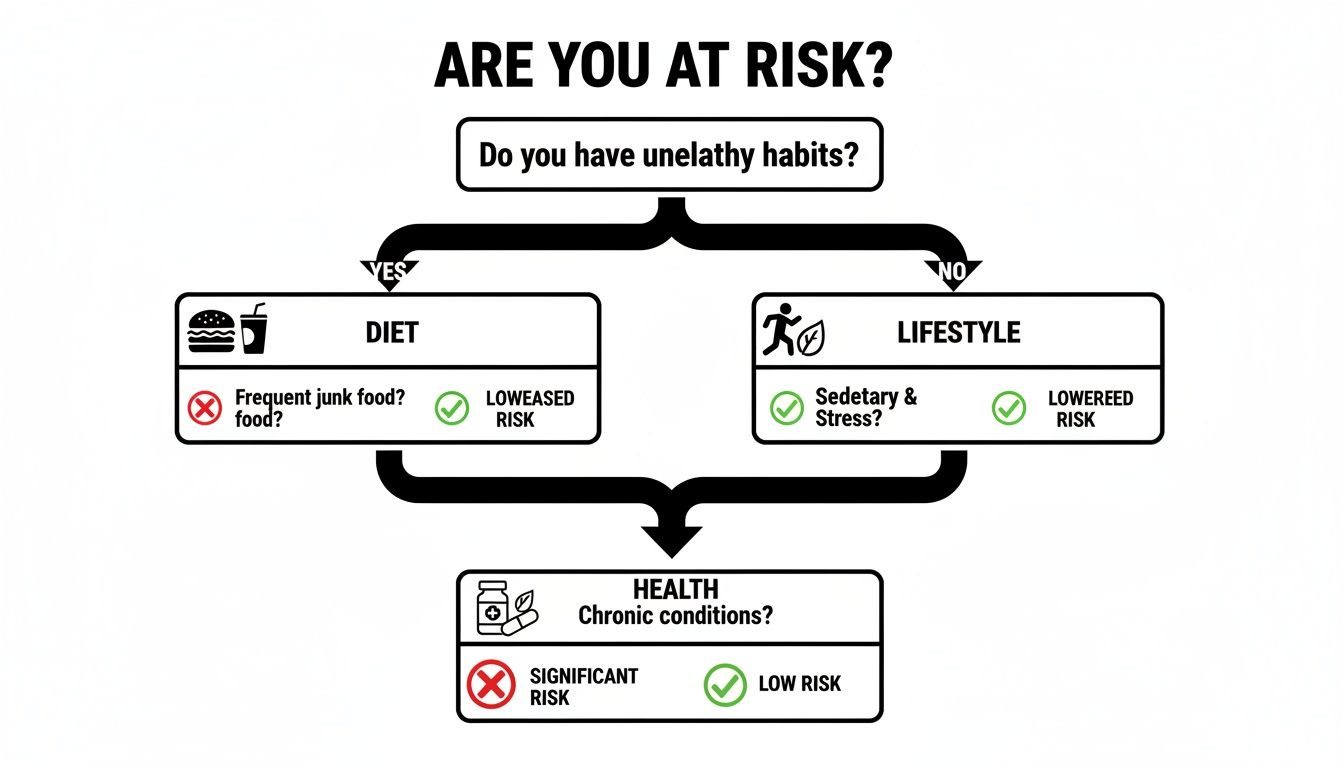
The image above shows how diet, lifestyle choices, and chronic health issues can all contribute to an increased risk of magnesium deficiency.
The Importance of a Clinical Evaluation
At the end of the day, lab numbers are only part of the story. A good diagnosis comes from combining test results with a comprehensive clinical evaluation by a knowledgeable healthcare provider. Your doctor needs to listen to your entire health story—everything from muscle cramps and fatigue to anxiety and insomnia.
A detailed conversation about your diet, lifestyle, stress levels, and other medical conditions is just as valuable as any lab report. These details provide the critical context that numbers on a page simply can't.
Go to your appointment ready to have an open discussion. Don't be afraid to advocate for yourself. If you strongly suspect a deficiency, you can specifically ask your doctor about ordering an RBC magnesium test. By pairing this more insightful lab work with a thorough review of your symptoms, you and your provider can finally get to the bottom of things and build a plan to get you back on track.
A Practical Action Plan to Restore Your Magnesium Levels
Knowing you might be low on magnesium is one thing, but actually doing something about it is where you'll see a real difference. Getting your levels back on track isn't about finding a single magic pill. It’s a two-pronged approach: you lead with food first, then bring in smart, targeted supplements to speed things up.
Think of it like fixing a rickety foundation. You need the right materials (nutrient-dense foods) and the right tools (the correct supplement form) to make it solid again. This plan will walk you through both sides of that equation, helping you rebuild your magnesium stores from the inside out.
Fuel Up with Magnesium-Rich Foods
Your diet is, without a doubt, your most powerful tool. Our bodies are wired to absorb nutrients from whole foods, where magnesium comes naturally packaged with other co-factors that help it get where it needs to go. Making a conscious effort to weave magnesium-rich foods into your meals is the most sustainable way to keep your levels healthy for the long haul.
You don't have to completely change your life overnight. Just start small by sprinkling a few of these powerhouses into your daily routine.
- Dark Leafy Greens: Spinach, kale, and Swiss chard are true nutritional champions. Just one cup of cooked spinach packs around 157 mg of magnesium.
- Nuts and Seeds: Almonds, cashews, and especially pumpkin seeds are loaded with magnesium. A single ounce of pumpkin seeds gives you an incredible 150 mg.
- Legumes: Think black beans, lentils, and chickpeas. A cup of cooked black beans has about 120 mg.
- Avocado: This creamy fruit serves up a solid dose of magnesium alongside those healthy fats we love.
- Dark Chocolate: Yes, you read that right. A small square of good quality dark chocolate (70% cacao or higher) can be a delicious way to top up your intake.
If you need some ideas on how to pull this all together, a structured guide can be a huge help. For example, our clean eating meal plan is full of inspiration for building balanced, nutrient-packed meals.
The real goal here is consistency, not perfection. Try to get at least one magnesium-rich food in with every meal. A handful of almonds for a snack, some spinach tossed into your morning smoothie, or a side of black beans with dinner—it all adds up.
Navigating the World of Magnesium Supplements
While food should always be the foundation, supplements can be incredibly effective for correcting a deficiency more quickly. But here's the catch: not all magnesium is created equal. The supplement aisle can be confusing because magnesium comes in many different forms, and each one has a slightly different job.
Think of it like a toolbox. You have different tools for different tasks. You wouldn't use a hammer to turn a screw, right? The same logic applies here. You need to pick the form of magnesium that best matches your symptoms and goals.
Here’s a quick guide to the most common types:
| Magnesium Form | Best For | Key Characteristics |
|---|---|---|
| Magnesium Glycinate | Sleep, Anxiety, Stress | This one is a fan favorite because it’s highly absorbable and super gentle on the stomach. It's known for its calming effect, making it a go-to for better sleep and less anxiety. |
| Magnesium Citrate | Constipation, General Use | It's well-absorbed and has a gentle laxative effect, which can be a bonus if you're prone to constipation. It's a great all-around choice for boosting overall levels. |
| Magnesium Malate | Fatigue, Muscle Pain | Often recommended for people struggling with fatigue and muscle soreness (like in fibromyalgia), this form is tied to the body's energy production cycle. |
| Magnesium L-Threonate | Cognitive Function | This is a newer, more specialized form celebrated for its unique ability to cross the blood-brain barrier. It's studied primarily for its potential to support memory and brain health. |
How Much Should You Take?
When you start any supplement, it's smart to stick to the recommended guidelines. For most adults, the general daily target is around 320 mg for women and 420 mg for men. If you're truly deficient, your doctor might suggest a higher therapeutic dose for a short time.
A good rule of thumb is to start low and go slow. Gradually increasing your dose gives your digestive system time to adjust. Taking too much at once, especially forms like citrate or oxide, can lead to an upset stomach or a run to the bathroom.
Most importantly, always talk to your doctor or a qualified healthcare provider before starting a new supplement. They can confirm if you actually have a deficiency, recommend the right form and dosage for you, and make sure it won't interfere with any medications you're taking. That personalized advice is the key to getting your levels back up safely and effectively.
Your Questions About Magnesium, Answered
It's one thing to understand what magnesium does, but it's another to know how to manage it in your day-to-day life. Let's tackle some of the most common questions that come up when people start paying attention to this essential mineral.
How Long Does It Take to Fix a Magnesium Deficiency?
There’s no one-size-fits-all answer here, as it really depends on how low your levels are, your diet, and the type of supplement you're taking. Many people start to notice an improvement in symptoms like muscle cramps or restless sleep within a few weeks of consistent use. That's the low-hanging fruit.
But correcting a deep-seated deficiency is a longer game. Replenishing the magnesium stored away in your bones and cells can take several months. The key is to be patient and consistent. Think of it less like a quick fix and more like a long-term investment in your health.
Is My Multivitamin Enough to Get the Magnesium I Need?
Probably not. While a daily multivitamin is a good nutritional safety net, it's not designed to correct a specific deficiency. Most multis contain a fairly small dose of magnesium—often 100 mg or less. That's a far cry from the 320-420 mg most adults need every day.
If you suspect your levels are low, you'll get much better results with a dedicated magnesium supplement and a conscious effort to eat magnesium-rich foods. A multivitamin offers general support, but a targeted approach is what moves the needle.
The "best" form of magnesium truly depends on your individual needs. Your goal should dictate your choice—whether you're aiming for better sleep, improved digestion, or reduced muscle soreness.
Are There Foods or Habits That Block Magnesium Absorption?
Absolutely. It’s not just about what you put in, but also what might be getting in the way. A major offender is phytic acid, a compound found in raw grains, nuts, and legumes that can bind to minerals and prevent your body from absorbing them.
A few other things can drain your magnesium levels or block its uptake:
- High Doses of Other Minerals: Taking large amounts of zinc or calcium can lead to a bit of a traffic jam in your gut, as they all compete for absorption.
- Processed Foods and Sugar: Your body burns through magnesium to metabolize refined sugar, so a diet high in processed foods can quickly deplete your stores.
- Dark Sodas: The phosphoric acid in many sodas can bind to magnesium in your digestive system, flushing it out before your body has a chance to use it.
Which Form of Magnesium Supplement Is the Best?
The "best" form really comes down to what you're trying to achieve. Instead of looking for a single winner, match the supplement to your symptoms.
For example, magnesium glycinate is fantastic for its calming effects and is often recommended for better sleep and reduced anxiety. If you're looking to support digestive regularity, magnesium citrate is a great choice because it's well-absorbed and has a gentle laxative effect.
And for anyone dealing with muscle soreness or fatigue, magnesium malate is a go-to because it's involved in your body's energy-making process. The smartest move is to talk through your specific signs of magnesium deficiency with your doctor to find the perfect form and dose for you.
At The Happy Health Blog, we're committed to providing you with clear, actionable health information to help you feel your best. For more in-depth guides on nutrition and wellness, explore our articles at https://thehappyhealthblog.com.
