


Imagine a week where delicious, healthy meals are always ready, eliminating stressful last-minute decisions and the temptation of takeout. That's the power of strategic meal prepping. It's not about spending your entire Sunday tethered to the kitchen; it's a practical investment in your health, time, and budget. By dedicating just a few hours to batch-cooking, you establish a foundation for a week of nutritious eating, ensuring you stay energized and on track with your wellness goals. This structured approach simplifies your daily routine, removes the guesswork from "what's for dinner," and significantly reduces food waste.
This comprehensive guide moves beyond basic concepts to provide a curated collection of ten foundational healthy meal prep recipes. These recipes are selected for their simplicity, nutritional value, and incredible versatility, designed to prevent palate fatigue and keep you engaged with your food. We will provide everything you need for successful implementation, including:
- Detailed Step-by-Step Instructions: Clear guidance for both novice and experienced cooks.
- Batch-Sizing and Storage: Practical tips on how to scale recipes and store them safely for maximum freshness.
- Nutrition Information: A breakdown to help you align meals with your dietary targets.
- Customization and Substitution Ideas: Suggestions to adapt each recipe to your specific tastes and dietary needs, from gluten-free to low-carb.
From one-pan sheet dinners and grab-and-go breakfasts to customizable power bowls, these recipes are designed to streamline your life and make healthy eating an effortless, sustainable habit. Let's dive in and transform your week, one prepared meal at a time.
1. Sheet Pan Chicken and Roasted Vegetables
The quintessential healthy meal prep recipe, the sheet pan chicken and roasted vegetables method streamlines your cooking process into one efficient step. This approach combines lean protein and a variety of nutrient-rich vegetables onto a single baking sheet, seasoned, and roasted together. It’s a foundational technique that minimizes both active cooking time and cleanup, making it a go-to for busy individuals. The core principle is simplicity: toss your ingredients in seasoning, spread them on a pan, and let the oven do the work.
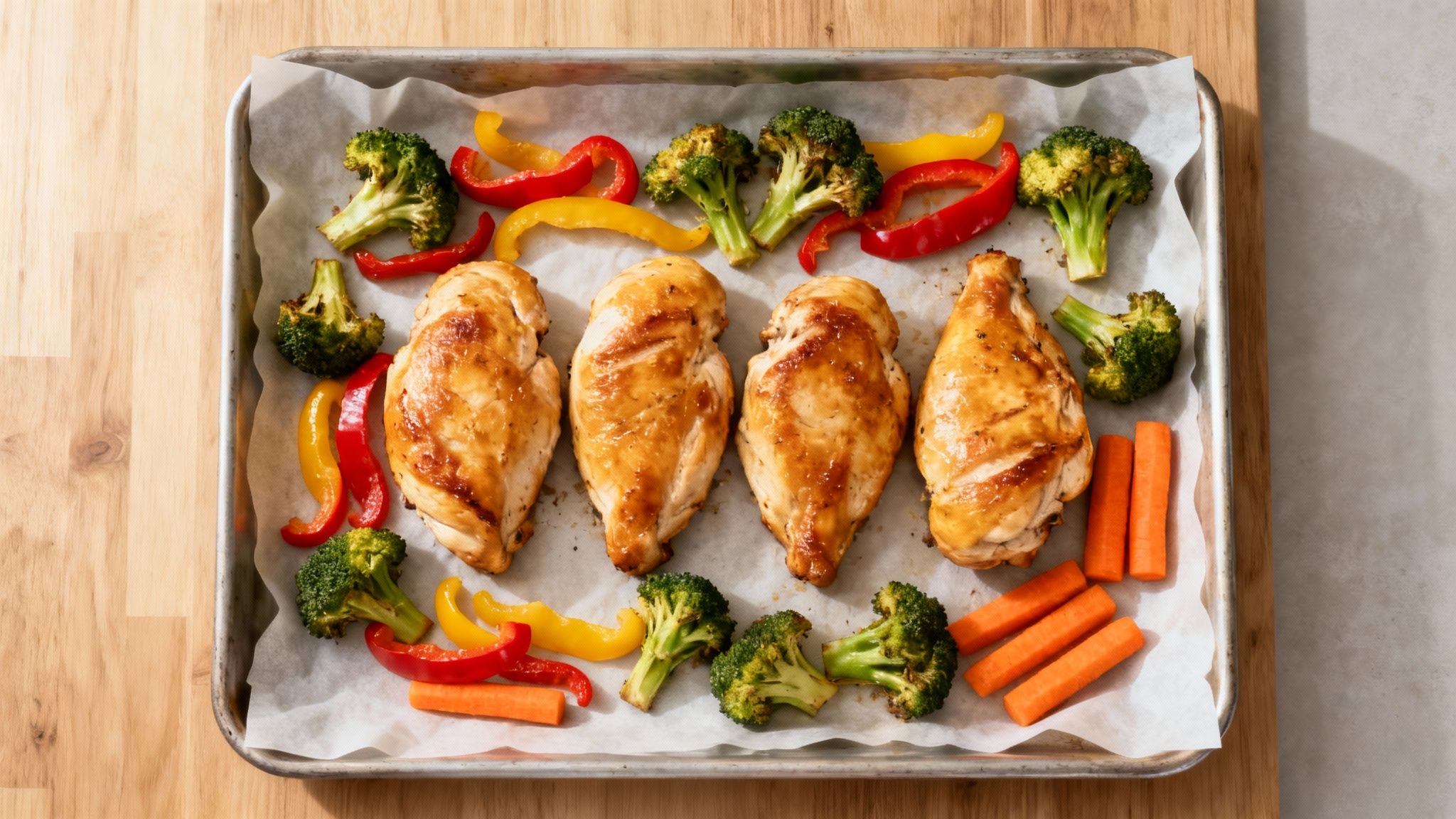
This method shines for its versatility and macro-balanced results, delivering a complete meal of protein, complex carbs, and healthy fats. It's particularly effective for anyone aiming to prepare a full week of consistent, portion-controlled lunches or dinners without spending hours in the kitchen.
Implementation and Tips
For a standard prep, arrange four to five seasoned chicken breasts on a sheet pan with chopped vegetables like broccoli, bell peppers, and carrots. Roast at 400°F (200°C) for 25-30 minutes, or until the chicken is cooked through and the vegetables are tender-crisp.
To guarantee success with your healthy meal prep recipes, follow these specific tips:
- Uniform Vegetable Sizing: Cut dense vegetables like carrots and potatoes smaller than softer ones like broccoli or zucchini to ensure everything cooks evenly.
- Dry the Protein: Pat the chicken breasts completely dry with a paper towel before seasoning. This step is crucial for achieving a well-browned, flavorful exterior rather than a steamed texture.
- Separate Seasoning: Toss the vegetables and chicken in their respective seasonings in separate bowls before arranging them on the pan. This prevents the vegetables from becoming soggy and allows for better flavor control.
- Use Parchment Paper: Lining your sheet pan with parchment paper is a non-negotiable for easy cleanup. It prevents sticking and means you won't have to scrub the pan afterward.
- Smart Storage: Portion the finished meal into airtight glass containers. Glass is non-porous, so it won’t absorb odors or stains, keeping your meals tasting fresh all week. To reheat, simply microwave for 2-3 minutes or warm in an oven-safe container.
2. Mason Jar Salads with Homemade Dressing
A brilliant solution for portable, crisp salads, the mason jar method revolutionizes how you pack your greens. This technique involves strategically layering ingredients in a glass jar to keep them separate and fresh until you're ready to eat. By placing the dressing at the bottom and the most delicate ingredients at the top, this vertical assembly prevents wilting and sogginess, a common downfall of pre-made salads.
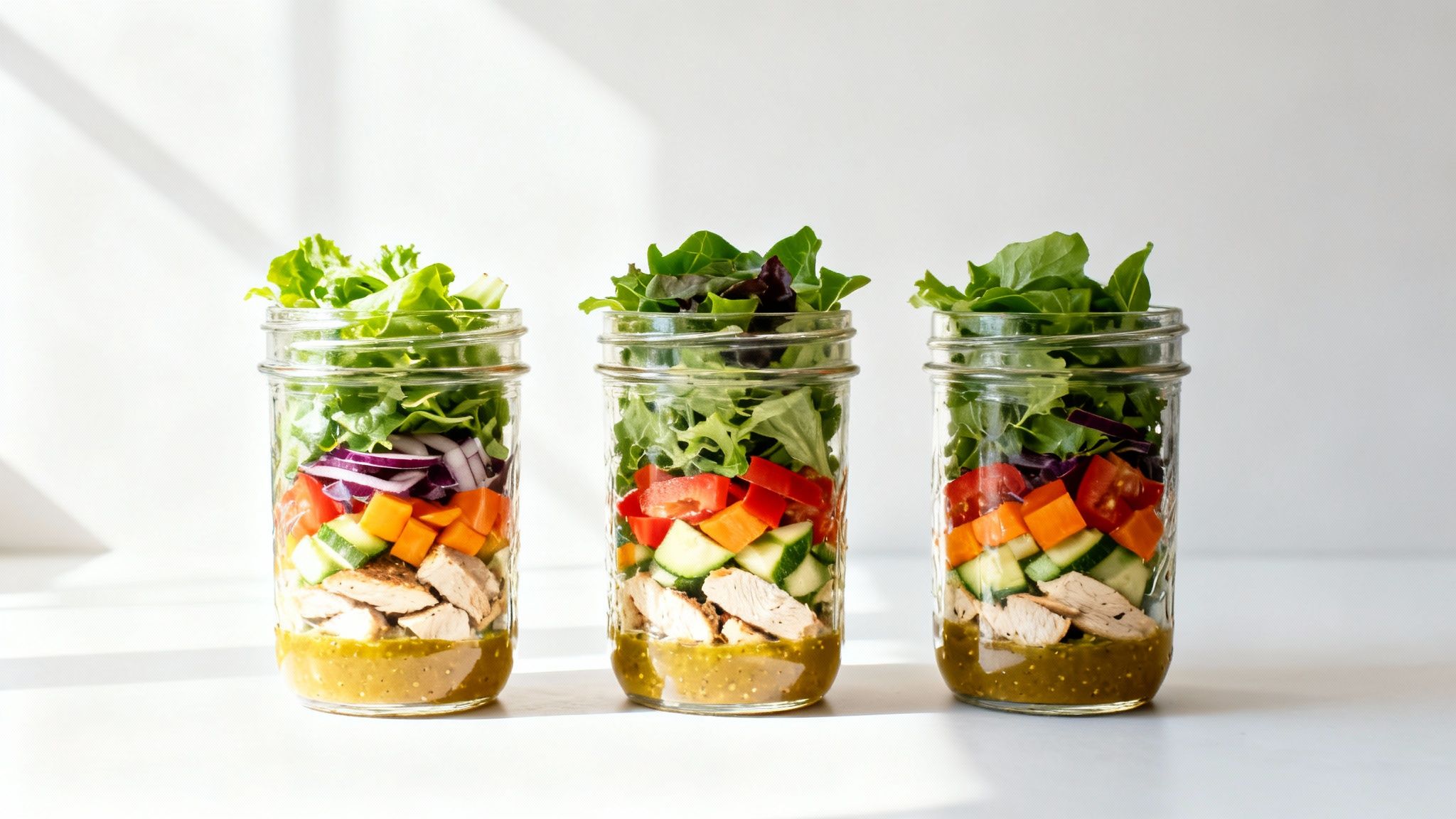
This approach is perfect for creating nutrient-dense, visually appealing meals that stay fresh for up to five days. It excels for those seeking convenient, portion-controlled lunches that don't require reheating, making it one of the most practical healthy meal prep recipes for work or school. Explore more grab-and-go options with these healthy lunch ideas for work.
Implementation and Tips
To prep a week of lunches, you can assemble five jars at once with different combinations, such as a Mediterranean salad with a lemon-herb vinaigrette, chickpeas, cucumbers, and feta, or an Asian-inspired salad with sesame-ginger dressing, edamame, and shredded carrots.
To ensure your salads stay fresh and delicious, follow these specific tips:
- Layer with Precision: Always pour the dressing in first. Follow with hard vegetables (carrots, bell peppers), grains or proteins (quinoa, chicken), softer vegetables (tomatoes, avocado), and finally, delicate greens and nuts at the very top.
- Keep Greens Dry: Ensure your lettuce, spinach, or other greens are completely dry before adding them to the jar. Any moisture will accelerate wilting and spoilage.
- Pack the Jar Tightly: Don't be afraid to pack the layers in snugly. This minimizes air pockets and helps keep the ingredients from shifting and mixing prematurely.
- Use Wide-Mouth Jars: Opt for wide-mouth mason jars (at least 32 oz) for easier layering, mixing, and eating directly from the container.
- Shake Before Serving: When you're ready to eat, just shake the jar vigorously for about 30 seconds. This action evenly distributes the dressing from the bottom throughout all the layers, creating a perfectly tossed salad.
3. Overnight Oats with Protein and Berries
Overnight oats offer a no-cook breakfast solution that is both incredibly simple and nutritionally dense. This method involves combining rolled oats with a liquid, protein sources, and flavorings in a jar, then refrigerating it overnight. As the oats soak, they soften into a creamy, pudding-like consistency, creating a ready-to-eat meal packed with fiber, complex carbohydrates, and sustained-release energy.
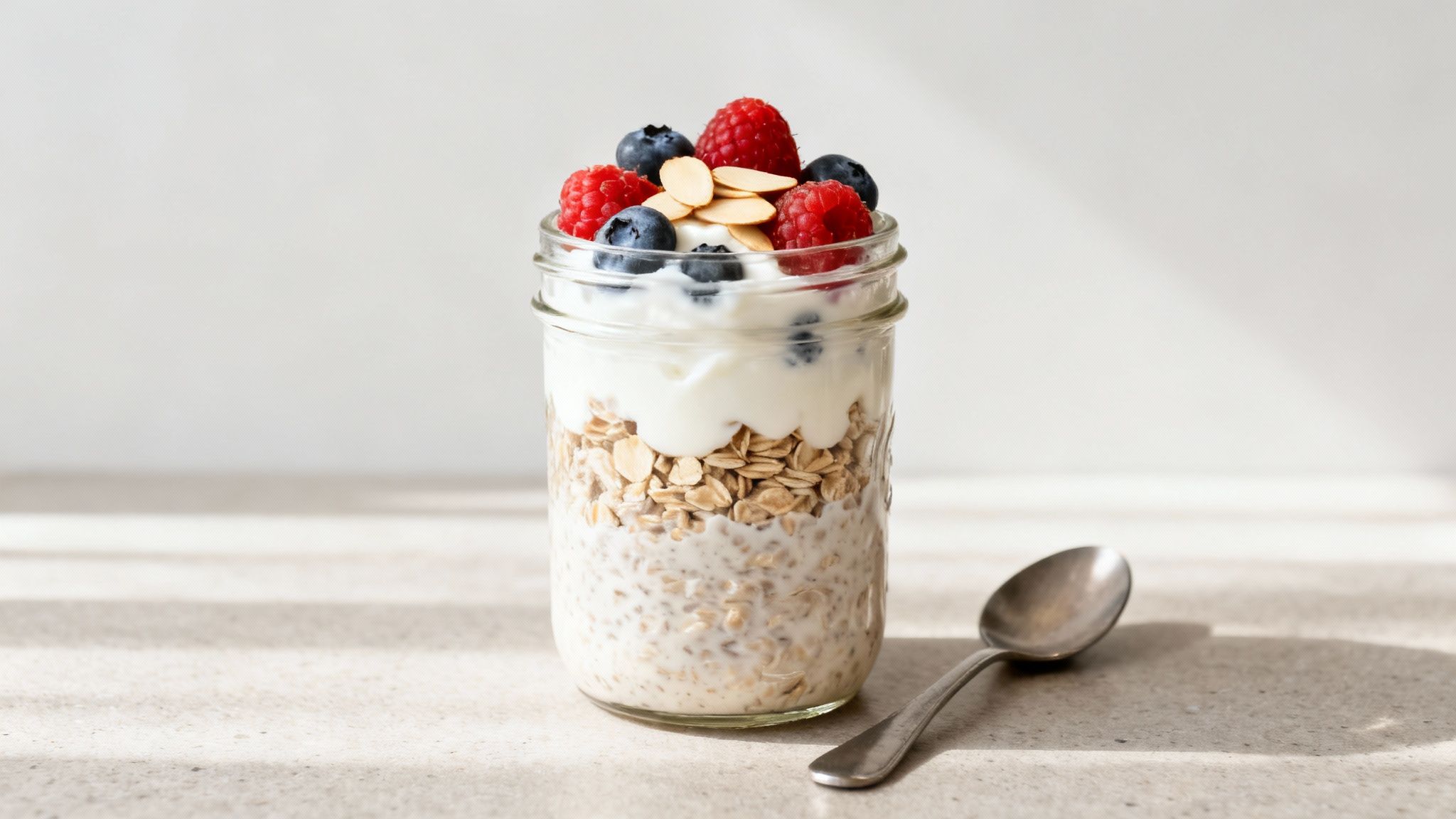
This grab-and-go breakfast is perfect for busy mornings and ensures you start your day with a balanced meal. Its customizability is a key benefit, allowing you to easily adjust flavors and macros, from a vanilla-berry blend to a chocolate peanut butter version. This is one of the most efficient healthy meal prep recipes for anyone needing to streamline their morning routine.
Implementation and Tips
To prepare, combine 1/2 cup of rolled oats, one scoop of protein powder, 1/2 cup of milk (dairy or plant-based), and 1/4 cup of Greek yogurt in a mason jar. Seal and shake well, then refrigerate for at least four hours or overnight. You can easily make four or five jars at once to cover the entire work week.
For a perfect batch of overnight oats every time, follow these specific tips:
- Maintain the Ratio: Use a 1:1 ratio of rolled oats to your primary liquid (e.g., milk) for the ideal consistency. Too much liquid results in a soupy texture, while too little makes it thick and dry.
- Boost with Protein: Mix in protein powder and Greek yogurt before soaking. This not only adds creaminess and flavor but also ensures a complete amino acid profile for muscle repair and satiety.
- Add Toppings Fresh: To prevent sogginess and maintain texture, add crunchy toppings like nuts, seeds, or fresh berries in the morning right before eating.
- Stir Before Serving: Ingredients can settle overnight. Give your oats a thorough stir before you eat to redistribute all the flavors and ensure a consistent texture throughout.
- Smart Storage: Prepare your oats directly in airtight mason jars or glass containers. This makes them perfectly portioned, portable, and easy to grab on your way out the door. They will stay fresh in the refrigerator for up to five days.
4. Slow Cooker Chili and Soup Bases
Leveraging a slow cooker for hearty chilis and soup bases is a game-changing strategy for high-volume meal prep. This method involves combining lean proteins, legumes, vegetables, and broth into a single pot, allowing the low-and-slow cooking process to develop deep, rich flavors with minimal hands-on effort. It's a "set it and forget it" approach that produces satisfying, nutrient-dense meals. The core principle is convenience: load the ingredients in the morning and come home to a fully cooked, aromatic meal ready for portioning.
This method is ideal for creating freezer-friendly, batch-cooked meals, often yielding 8-10 servings from a single preparation. It’s particularly effective for those looking to stock their freezer with complete, healthy meal prep recipes like turkey and white bean chili or lentil and vegetable soup, ensuring a healthy option is always available on busy nights.
Implementation and Tips
To start, you might prepare a large batch of chicken tortilla soup by adding chicken breasts, black beans, corn, diced tomatoes, onions, and broth to the slow cooker. Cook on low for 6-8 hours, then shred the chicken before portioning into containers.
To guarantee success with your slow cooker healthy meal prep recipes, follow these specific tips:
- Brown the Meat First: Searing ground turkey, beef, or chicken pieces in a separate pan before adding them to the slow cooker creates a deeper, more savory flavor base through the Maillard reaction.
- Prep Veggies Ahead: Chop all your vegetables, like onions, carrots, and celery, the night before and store them in an airtight container in the fridge. This makes assembly in the morning take just minutes.
- Layer Ingredients Strategically: Place firm, slow-cooking root vegetables like potatoes and carrots at the bottom of the slow cooker, closer to the heat source. Place more delicate ingredients on top.
- Use Freezer-Safe Bags: For efficient storage, cool the chili or soup completely and ladle single servings into freezer-safe zip-top bags. Lay them flat to freeze, creating stackable "bricks" that save significant freezer space.
- Brighten Flavors After Reheating: Slow cooking can mellow the taste of fresh herbs. To restore vibrancy, stir in fresh cilantro, parsley, or a squeeze of lime juice after you’ve reheated your meal.
5. Egg Muffins with Vegetables and Lean Proteins
Egg muffins are a powerhouse of nutrition packed into a convenient, portion-controlled format. This recipe involves whisking eggs with chopped vegetables, lean proteins, and cheese, then baking the mixture in a muffin tin. The result is a savory, protein-rich bite perfect for a quick breakfast or a satisfying snack on the go. The core principle is batch-baking a complete mini-meal that is both customizable and easy to store.
This method is ideal for those following low-carb, keto, or paleo diets, as the muffins are naturally grain-free and high in protein. Their grab-and-go nature makes them one of the most practical healthy meal prep recipes for busy mornings, ensuring you start your day with a balanced intake of protein and micronutrients without any fuss.
Implementation and Tips
For a standard batch of 12 muffins, whisk 10-12 eggs with a splash of milk and your choice of fillings like cooked sausage, spinach, and feta. Pour the mixture into a muffin tin and bake at 350°F (175°C) for 20-25 minutes, or until the centers are firm.
To guarantee success with your egg muffins, follow these specific tips:
- Prevent Sticking: Use silicone muffin liners or generously grease the muffin tin with oil or butter. This is the most important step to ensure your muffins release cleanly.
- Achieve Fluffiness: Whisk the eggs thoroughly until they are light and slightly frothy. Adding a small amount of milk or cream will create a more tender, custard-like texture.
- Fine-Chop Fillings: Dice all vegetables and proteins into small, uniform pieces. This ensures even distribution throughout each muffin and a consistent texture in every bite.
- Don't Overfill: Fill each muffin cup only about three-quarters full to allow for expansion during baking, preventing overflow and messy cleanup.
- Smart Storage: Let the muffins cool completely before storing them in an airtight glass container in the refrigerator for up to five days. For longer storage, freeze them individually on a baking sheet before transferring to a freezer-safe bag. Reheat in the microwave for 30-60 seconds.
6. Stir-Fry Vegetables with Protein and Brown Rice
A stir-fry is a fast, flavorful, and incredibly efficient method for creating healthy meal prep recipes. This Asian-inspired technique involves quickly cooking lean proteins and crisp vegetables in a wok or large skillet over high heat. Paired with a whole-grain base like brown rice and a light sauce, it delivers a well-rounded meal that preserves the nutrients and texture of its ingredients. The core principle is speed and high heat, which sears the food, locking in flavor and crunch.
This approach is ideal for those who want a customizable meal that is both nutrient-dense and satisfying. Its quick cooking time makes it perfect for a Sunday prep session, yielding several lunches or dinners that reheat beautifully without becoming soggy. Popular variations include chicken and broccoli stir-fry with ginger-garlic sauce or a tofu and mixed vegetable stir-fry with a soy-sesame dressing.
Implementation and Tips
For a typical prep, cook a large batch of brown rice separately. Then, stir-fry your chosen protein (chicken, tofu, or shrimp) and vegetables like bell peppers, snap peas, and broccoli in a high-smoke-point oil. Add your pre-mixed sauce at the very end to coat everything.
To ensure your healthy meal prep recipes for stir-fries are a success, follow these specific tips:
- Prep Everything First: The French call it mise en place for a reason. Chop all your vegetables, cube your protein, and mix your sauce before you even turn on the heat. Stir-frying is too fast to pause for prep.
- Cook in Batches: Avoid overcrowding the pan, which lowers the temperature and steams your food instead of searing it. Cook the protein first, set it aside, then cook vegetables in batches before combining everything at the end.
- Keep Rice Separate: Store the brown rice and the stir-fry mixture in separate containers. Combining them only when you're ready to eat prevents the rice from becoming mushy and absorbing too much sauce.
- Use a High-Smoke-Point Oil: Choose oils like avocado, grapeseed, or sesame oil. They can withstand the high temperatures required for a proper stir-fry without burning and creating off-flavors.
- Add Sauce Last: Pour in your sauce during the final minute of cooking. This allows it to thicken slightly and coat all the ingredients without making the vegetables lose their crispness. To reheat, microwave for 2-3 minutes, stirring halfway through.
7. Baked Sweet Potatoes with Toppings Bar
The baked sweet potato with a toppings bar approach transforms a simple, nutrient-dense ingredient into a versatile meal prep foundation. This system involves batch-baking sweet potatoes and preparing a variety of toppings separately, allowing you to create different flavor profiles for each meal. It’s a customizable method that provides a consistent base of complex carbohydrates, fiber, and beta-carotene while preventing meal fatigue. The core principle is "prep the parts, assemble later," offering maximum flexibility for diverse palates.
This method is ideal for households with different dietary needs or for individuals who crave variety throughout the week. By preparing one base and multiple toppings, you can easily pivot from a Mexican-inspired lunch of black beans and salsa to a Mediterranean-style dinner with chickpeas and feta, all from a single prep session.
Implementation and Tips
Bake four to five medium-sized sweet potatoes on Sunday to use as your meal base for the week. Prepare a few different toppings like cooked shredded chicken, canned black beans, chopped bell peppers, and a Greek yogurt sauce. Store each component in separate airtight containers.
To guarantee success with these flexible healthy meal prep recipes, follow these specific tips:
- Pierce Before Baking: Use a fork to poke holes all over each sweet potato before baking. This allows steam to escape, preventing the potatoes from bursting in the oven.
- Optimal Baking Technique: For a fluffy interior and soft skin, bake at 400°F (200°C) for 45-50 minutes, or until you can easily pierce the center with a knife.
- Prep Toppings in Bulk: Cook proteins like ground turkey or lentils, chop fresh vegetables like cucumbers and onions, and mix sauces like a lemon-dill yogurt dressing. Store each in its own container for easy assembly.
- Smart Storage for Potatoes: Once cooled, store the whole baked sweet potatoes in an airtight container in the refrigerator for up to a week. Do not add toppings until you are ready to eat to prevent sogginess.
- Efficient Reheating: To reheat, microwave a sweet potato for 2-3 minutes or until warm. Alternatively, cut it in half and heat it in an air fryer or oven for a slightly crispier skin. Add your cold or pre-heated toppings just before serving.
8. Ground Turkey Taco Meat with Customizable Components
This meal prep strategy centers on cooking a large batch of seasoned ground turkey, which then serves as a versatile protein base for various meals throughout the week. By preparing the main component in bulk and keeping customizable toppings and sides separate, you can assemble different meals on the fly. This "component prep" method prevents soggy ingredients and offers variety, breaking the monotony of eating the same dish daily.
This approach is one of the most efficient healthy meal prep recipes because a single cooking session can yield taco salads, grain bowls, lettuce wraps, or classic tacos. It is ideal for individuals or families who want flexibility in their weekly menu without sacrificing the time-saving benefits of batch cooking.
Implementation and Tips
To start, brown two pounds of lean ground turkey over medium-high heat with your favorite taco seasoning. Once cooked, let it cool slightly before portioning it into four or five airtight containers. Prepare your toppings, like chopped lettuce, diced tomatoes, and shredded cheese, and store them in separate containers.
Follow these tips to maximize the effectiveness of this meal prep system:
- Prevent Dryness: Cook the turkey over medium-high heat just until it's no longer pink. It will continue to cook as it cools, so avoid overcooking it in the pan to ensure it stays moist upon reheating.
- Season Generously: Use a low-sodium store-bought seasoning packet or create a homemade blend with chili powder, cumin, garlic powder, and onion powder for better flavor and sodium control.
- Component Prep Workflow: While the turkey cooks, use a food processor to quickly chop vegetables like onions, bell peppers, and lettuce. This simultaneous prep saves significant time.
- Separate Wet and Dry: Always store wet ingredients like salsa, pico de gallo, and Greek yogurt separately from dry components like tortillas or corn chips to prevent them from becoming soggy.
- Freeze for Future Use: This taco meat freezes exceptionally well. Portion any extra into freezer-safe bags, remove the air, and store for up to three months for an ultra-fast future meal.
9. Quinoa Power Bowls with Roasted Vegetables and Nuts
Quinoa power bowls offer a complete, plant-based meal prep solution centered around the pseudocereal quinoa, renowned for containing all nine essential amino acids. This approach involves building a balanced bowl with a base of fluffy quinoa, layered with roasted seasonal vegetables, and finished with nutrient-dense toppings like nuts and seeds. It is a highly customizable framework that simplifies creating diverse and satisfying healthy meal prep recipes.
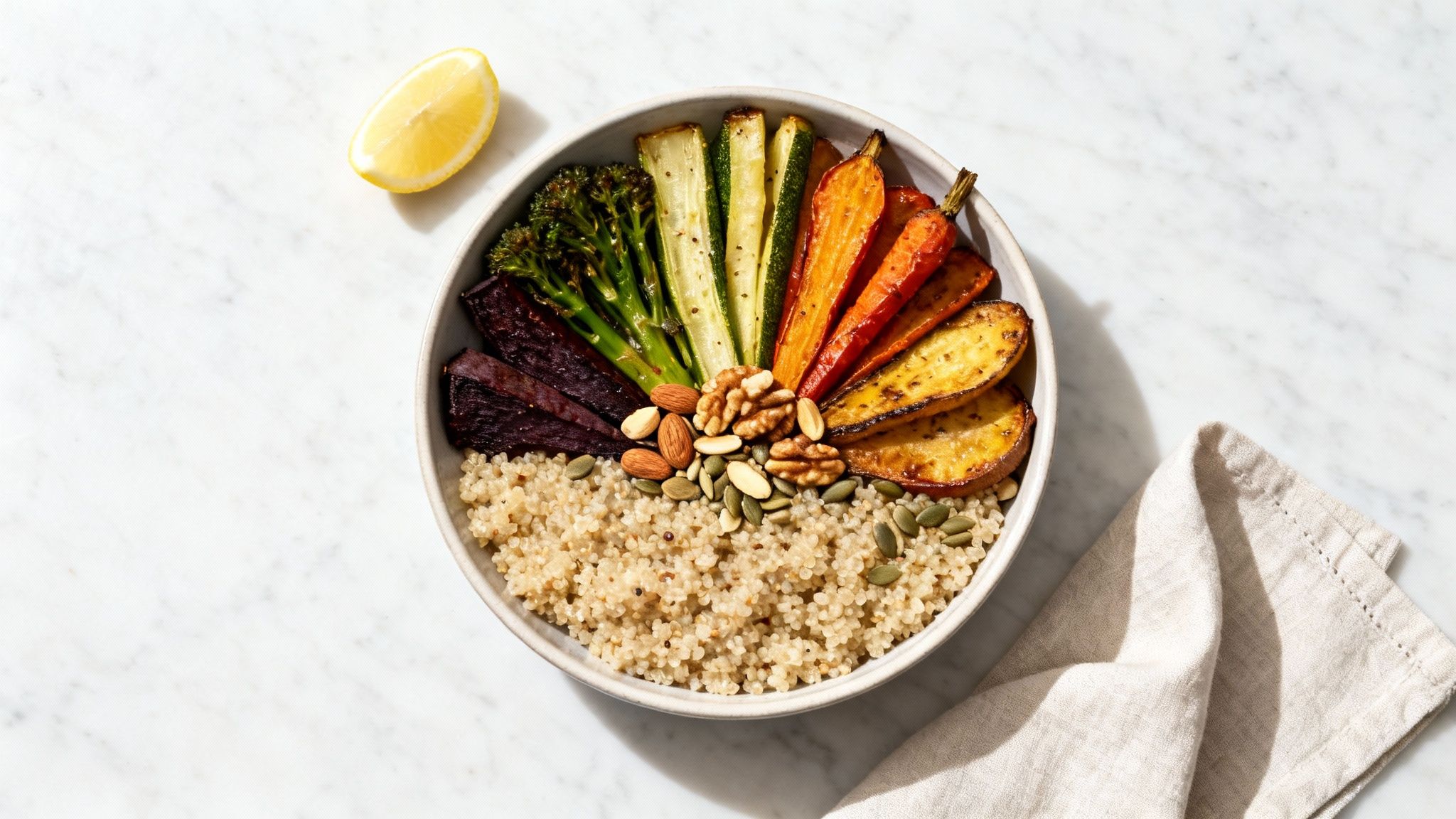
This method is perfect for those seeking sustained energy and high satiety from their meals, thanks to the combination of complex carbs, fiber, and plant-based protein. The versatility allows for endless flavor combinations, from a Mediterranean bowl with roasted eggplant and feta to an Asian-inspired version with edamame and sesame dressing, preventing meal fatigue throughout the week. For those prioritizing plant-forward eating, you can learn more about crafting a balanced plate from our resources on nutrition and wellness.
Implementation and Tips
Prepare the components separately and assemble them just before eating or portion them into containers for the week. For a Fall harvest bowl, roast butternut squash and kale at 425°F (220°C) for 25-30 minutes, cook a batch of quinoa, and toast some pumpkin seeds.
To guarantee success with your quinoa bowls, follow these specific tips:
- Rinse the Quinoa: Always rinse quinoa under cold running water before cooking to remove its natural bitter coating, called saponin. This step is essential for a pleasant, nutty flavor.
- Flavorful Cooking Liquid: Cook the quinoa in vegetable broth instead of water. This simple substitution infuses the grains with a savory depth of flavor from the start.
- Fluff for Texture: Once the quinoa is cooked, let it sit covered for five minutes off the heat, then fluff it with a fork. This separates the grains and creates a light, airy texture.
- Toast Your Toppings: Lightly toast nuts and seeds in a dry pan for 3-5 minutes until fragrant. This enhances their flavor and adds a satisfying crunch to your bowl.
- Pack Dressing Separately: To prevent the ingredients from becoming soggy, always store your dressing in a small, separate container and add it just before serving.
- Smart Storage: Store the cooked quinoa, roasted vegetables, and toppings in separate airtight containers in the refrigerator. This modular approach keeps every component fresh and allows for mix-and-match bowls all week.
10. Baked Salmon with Lemon Herbs and Steamed Broccoli
Baked salmon with lemon and herbs is a cornerstone of heart-healthy meal prep, delivering a potent dose of omega-3 fatty acids and lean protein. This elegant yet simple meal combines baked salmon fillets with steamed broccoli, creating a dish rich in anti-inflammatory properties and essential nutrients. Its minimal ingredient list and quick cooking time make it an incredibly efficient way to prepare sophisticated, health-focused meals for the week.
This method is ideal for those following Mediterranean or anti-inflammatory diets, or anyone aiming to boost their intake of healthy fats for brain and cardiovascular health. The pairing of fatty fish with a cruciferous vegetable like broccoli offers a powerful combination of phytonutrients and fiber, supporting overall wellness without requiring complex cooking techniques.
Implementation and Tips
For a typical prep, season four salmon fillets with olive oil, dill, and lemon slices. Bake at 400°F (200°C) for 12-15 minutes until the fish flakes easily. While the salmon bakes, steam broccoli florets until tender-crisp. Pair each fillet with a portion of broccoli and an optional side of quinoa or brown rice.
To master this entry in your collection of healthy meal prep recipes, follow these specific tips:
- Pat the Salmon Dry: Before seasoning, use a paper towel to pat the salmon fillets completely dry. This is essential for achieving a perfectly flaky texture and prevents the fish from steaming in the oven.
- Avoid Overcooking: Salmon cooks quickly. Keep a close eye on it and remove it from the oven as soon as it flakes with a fork. Overcooked salmon becomes dry and less palatable.
- Use Parchment Paper: Line your baking sheet with parchment paper to prevent the salmon skin from sticking. This trick guarantees an effortless cleanup.
- Steam Broccoli Separately: While you can roast the broccoli, steaming it separately ensures it retains a vibrant green color and tender-crisp texture, which provides a nice contrast to the soft salmon.
- Smart Storage: Store the salmon and broccoli in separate airtight containers or in divided meal prep containers. To reheat, gently warm in the microwave at 50% power for 1-2 minutes to prevent the fish from becoming rubbery.
10 Healthy Meal Prep Recipes: Quick Comparison
| Meal | Implementation complexity 🔄 | Resource requirements ⚡ | Expected outcomes ⭐📊 | Ideal use cases 💡 | Key advantages |
|---|---|---|---|---|---|
| Sheet Pan Chicken and Roasted Vegetables | 🔄 Moderate — single-pan prep, even cutting required | ⚡ Oven, sheet pan, basic pantry | ⭐ Balanced macronutrients; 📊 4–5 days reheatable | 💡 Weekly lunch prep, fitness meal prep | Easy cleanup; customizable veg; portion-controlled |
| Mason Jar Salads with Homemade Dressing | 🔄 Moderate — layered assembly to prevent sogginess | ⚡ Mason jars, fresh produce, homemade dressing | ⭐ Fresh/crisp salads; 📊 Up to 5 days fresh | 💡 Portable office lunches, grab-and-go variety | Portable; preserves texture; visual appeal |
| Overnight Oats with Protein and Berries | 🔄 Very low — no-cook overnight soak | ⚡ Containers/jars, fridge, optional protein powder | ⭐ High satiety and sustained energy; 📊 4–5 days | 💡 Grab-and-go breakfasts, busy mornings | Minimal morning time; customizable flavors; high protein |
| Slow Cooker Chili and Soup Bases | 🔄 Low active effort, long total cook (set-and-forget) | ⚡ Slow cooker, freezer space for bulk portions | ⭐ Nutrient-dense, high-yield; 📊 8–10 servings, 2–3 months frozen | 💡 Batch cooking, family meals, freezer meals | Time-efficient active time; deep flavor; freezes well |
| Egg Muffins with Vegetables and Lean Proteins | 🔄 Low — simple mixing and baking in muffin tin | ⚡ Oven, muffin tin, basic fillings | ⭐ High-protein, portable; 📊 5–7 days refrigerated, freezer-friendly | 💡 Low-carb breakfasts/snacks, meal portions | Portion-controlled; versatile combos; quick grab-and-go |
| Stir-Fry Vegetables with Protein and Brown Rice | 🔄 Moderate — high-heat technique, mise en place | ⚡ Wok/skillet, stovetop, pre-cooked rice suggested | ⭐ Preserves nutrients and crunch; 📊 4–5 days | 💡 Quick weeknight dinners, reheatable lunches | Fast cooking; vibrant veg; adaptable proteins |
| Baked Sweet Potatoes with Toppings Bar | 🔄 Low prep, long bake time; topping prep needed | ⚡ Oven, variety of topping ingredients | ⭐ Filling complex carbs; 📊 5–7 days refrigerated | 💡 Flexible meals—multiple flavor profiles from one base | Versatile base; budget-friendly; nutrient-rich (beta‑carotene) |
| Ground Turkey Taco Meat with Components | 🔄 Low — simple browning, modular assembly | ⚡ Stove, storage containers for components | ⭐ Lean protein base; 📊 4–5 days refrigerated, 3 months frozen | 💡 Modular meals (tacos, bowls, salads) | Highly versatile; lean and affordable; reduces waste |
| Quinoa Power Bowls with Roasted Vegetables and Nuts | 🔄 Moderate — grain cooking + roasting + assembly | ⚡ Pot for quinoa, oven, multiple toppings | ⭐ Complete plant protein; 📊 4–5 days | 💡 Vegetarian/vegan meal prep, nutrient-focused bowls | Complete amino acids; gluten-free; high fiber |
| Baked Salmon with Lemon Herbs and Steamed Broccoli | 🔄 Low–moderate — short precise cook time | ⚡ Oven, quality salmon (higher cost), steamer/oven | ⭐ Omega‑3 rich and anti‑inflammatory; 📊 4–5 days | 💡 Heart-healthy meals, elevated weekday dinners | High omega‑3s; quick cook; strong health benefits |
Putting It All Together for a Week of Wellness
You’ve just navigated a comprehensive collection of ten versatile and delicious healthy meal prep recipes, each one a building block for a more streamlined, nourishing week. From the simplicity of Sheet Pan Chicken and Roasted Vegetables to the creative potential of Quinoa Power Bowls, the path to consistent healthy eating is no longer an abstract goal but a tangible, achievable reality. The true power of meal prep lies not just in having food ready to go, but in the freedom and control it gives you over your nutrition, schedule, and well-being.
By embracing these recipes, you're stepping away from the cycle of last-minute takeout decisions and the stress of the daily "what's for dinner?" dilemma. You are actively choosing to fuel your body with wholesome, balanced ingredients. This is a profound act of self-care that pays dividends far beyond the kitchen.
From Recipes to Routine: Making It Stick
The key to transforming these ideas into a lasting habit is to start smart and build momentum. Resisting the urge to prep all ten recipes in your first week is crucial. Instead, focus on a sustainable approach that fits your lifestyle.
Actionable Steps for Sustainable Meal Prep:
- Start Small: Choose just two or three recipes to prepare this week. Perhaps start with prepping your lunches, like the Mason Jar Salads, and one dinner, such as the Ground Turkey Taco Meat. This prevents overwhelm and makes the process feel manageable.
- Master the "Component Prep" Method: You don't always need to assemble full meals. Focus on preparing versatile components. Cook a large batch of quinoa, roast a tray of sweet potatoes, grill some chicken, and chop your vegetables. This allows for mix-and-match flexibility throughout the week, preventing flavor fatigue.
- Schedule It In: Treat your meal prep session like any other important appointment. Block out a specific two-hour window in your calendar on Sunday afternoon or a weekday evening. Putting it on the schedule makes it a non-negotiable part of your routine.
- Get Creative with Leftovers: View your prepped components as a launchpad for creativity. The leftover Sheet Pan Chicken can become the protein in a Quinoa Power Bowl. The Slow Cooker Chili can be used as a topping for Baked Sweet Potatoes. This dynamic approach ensures you never get bored.
The True Value of Investing in Your Health
Mastering the art of meal prep is about so much more than saving time or eating healthier. It's an investment in your future self. Every container you stack in the fridge represents a conscious decision to prioritize your energy, reduce stress, and nourish your body from the inside out. This consistent effort compounds over time, leading to improved energy levels, better focus, and a stronger connection to the food you eat.
You now have a blueprint for success. You have the recipes, the strategies for storage and reheating, and a clear path to integrate these practices into your life. The initial effort will soon become a seamless part of your weekly rhythm, a ritual that empowers you to face the week with confidence, knowing that delicious, healthy meals are always within reach. The journey to a healthier lifestyle is built one prepped meal at a time, and you are perfectly equipped to begin.
Ready to take your wellness journey even further? At The Happy Health Blog, we provide a continuous stream of evidence-based nutrition guides, fitness motivation, and even more healthy meal prep recipes to keep you inspired. Join our community and discover a supportive space dedicated to making a healthy lifestyle accessible and enjoyable. Visit The Happy Health Blog to explore our latest articles and resources.
