

So, you're ready to start exercising. That's fantastic. The key to getting started—and actually sticking with it—is to simply move your body in ways that feel good.
A great starting point is to pick an activity you genuinely enjoy, like walking, and aim for 20-30 minutes, 3-4 times a week. You can always build from there, adding more time, intensity, or variety as you get stronger and more confident.
Building Your Fitness Foundation

Before you get caught up in reps and sets, let's reframe what exercise is all about. It's so much more than just burning calories or building muscle. Think of it as a powerful tool for upgrading your entire life—from boosting your mood and sharpening your focus to helping you sleep like a rock.
When you start seeing movement as a form of self-care instead of a chore, everything changes. This simple mental shift is the secret to building positive daily health habits that feel rewarding, not like a punishment.
Understanding The Core Types Of Exercise
A truly effective fitness plan is a balanced one. To get there, it helps to understand the four main pillars of physical fitness. The good news? You’re probably already doing some of these without even realizing it.
- Cardiovascular (Aerobic) Exercise: This is anything that gets your heart pumping. We're talking about brisk walking, jogging, cycling, dancing, or even a really energetic session of yard work. It’s all about strengthening your heart and lungs.
- Strength Training: This builds muscle and keeps your bones strong. Forget the idea that you have to be a bodybuilder. Simple things like carrying groceries, doing bodyweight squats while waiting for the kettle to boil, or using light resistance bands all count.
- Flexibility and Mobility: These are the movements that keep you limber and prevent that stiff, achy feeling. Think gentle stretching, a relaxing yoga flow, or the graceful movements of tai chi.
- Balance: This is absolutely crucial for preventing falls and staying steady on your feet, especially as we get older. You can work on it by doing simple things like standing on one leg while you brush your teeth.
Don't feel like you have to master all of these at once. Just try to sprinkle a little of each into your week.
A Pro Tip
The goal isn't to be perfect from day one. It's about creating a well-rounded routine that supports your real life—one that you can actually stick with.
And getting started has never been easier. We're living in an age where expert guidance is right at our fingertips. Fitness app downloads are expected to jump from 3.76 billion in 2023 to a staggering 5 billion by 2025. This tech boom has made it incredibly simple for beginners to find guided workouts and track their progress right from their phones.
Your First Week Of Exercise At-a-Glance
Ready to see what this looks like in practice? Here’s a sample blueprint for your first week. Remember, this is just a suggestion—the best plan is the one that fits your schedule and that you enjoy.
The idea here is to mix different types of movement with plenty of rest so you don't burn out.
| Day of the Week | Activity Type | Example Activity | Duration |
|---|---|---|---|
| Monday | Cardio | Brisk Walk | 20-30 minutes |
| Tuesday | Active Rest | Gentle Stretching | 10-15 minutes |
| Wednesday | Strength | Bodyweight Squats & Planks | 15-20 minutes |
| Thursday | Cardio | Cycling or Dancing | 20-30 minutes |
| Friday | Strength | Lunges & Push-up variations | 15-20 minutes |
| Saturday | Active Fun | Hike, swim, or play a sport | 30+ minutes |
| Sunday | Rest | Complete Rest | – |
Feel free to swap activities based on what you have access to or what sounds fun. If you hate squats, try something else! The most important thing is to just get moving and listen to your body.
Finding Your Motivation and Setting Smart Goals
Starting a new exercise routine is exciting. That first wave of energy feels like it could last forever, but let's be real—it won't. The secret to making exercise stick isn't about having superhuman willpower. It's about digging deep to find a powerful, personal "why" and then setting goals that actually work for you, not against you.
So many people get discouraged and quit because their goals are too fuzzy ("I want to get in shape") or just way too big ("I'm running a marathon next month!"). This kind of thinking just sets you up for failure. A solid start is built on understanding what really, truly drives you.
Intrinsic vs. Extrinsic Motivation
Motivation usually comes in two flavors, and knowing which one you're running on is the key to building a habit that lasts.
- Extrinsic Motivation: This is the stuff that comes from the outside world. Think working out to fit into a specific dress, to look good for a reunion, or because your doctor nagged you about it. It can give you a nice little push to start, but it often fizzles out because it’s tied to someone else's approval.
- Intrinsic Motivation: Now this is the good stuff. It’s the motivation that comes from within. It’s exercising because you genuinely love the feeling of getting stronger, the mental fog lifting after a good walk, or having more energy to chase your kids around the park. This is the fuel that lasts.
When you can shift your focus to those internal rewards, everything changes. Exercise stops feeling like a punishment and starts becoming something you do for yourself.
When you find an activity you genuinely enjoy, the motivation takes care of itself. The goal shifts from forcing yourself to do something to looking forward to how it makes you feel.
Lots of people find that structure in a gym, especially when the new year rolls around. In fact, 12% of all new gym memberships kick off in January. With the global fitness market valued at $96.7 billion in 2024, it's clear people are looking for dedicated spaces to get started. You can explore more about gym membership trends and see if that environment might support your goals.
Setting Goals The SMART Way
Alright, once you've got your "why," you need a "how." A roadmap. The SMART goal framework is a classic for a reason—it’s a ridiculously effective way to turn a vague wish into a concrete plan.
Let's ditch the "I want to get better at running" idea and make it SMART:
- Specific: "I want to run a 5k without stopping to walk." That's crystal clear.
- Measurable: The distance is 5 kilometers, and the condition is "without stopping." It’s a simple yes or no; you either did it or you didn't. No gray area.
- Achievable: If you're mostly walking right now, aiming to run a 5k in three months is a solid, realistic challenge. Trying to do it next week? Not so much.
- Relevant: This goal ties directly into your desire to improve your running and boost your cardiovascular health. It lines up perfectly with your "why."
- Time-bound: "I will complete my 5k in 12 weeks." Giving yourself a deadline creates just enough urgency to keep you on track.
Having this kind of structure makes your daily efforts feel like they're building toward something real. It gives you a finish line to aim for.
Celebrate The Small Wins
Please, don't wait until you've hit that huge, final goal to give yourself a pat on the back. A sustainable fitness journey is built on a series of small, consistent victories.
Did you stick to your plan and get your three workouts in this week? That's a huge win. Did you add an extra minute to your jog? Another win. Celebrate them!
Recognizing these little milestones is what builds momentum. It's you, proving to you, that you can do this. That positive reinforcement is what keeps you going. Treat yourself to a new workout shirt, soak in a relaxing bath, or just take a quiet moment to appreciate your own hard work. This is how exercise stops being a temporary project and becomes a part of who you are.
Choosing Workouts You Genuinely Enjoy
The most scientifically-backed, perfectly structured workout plan in the world is totally worthless if you absolutely hate doing it. Let's be honest: if you dread every session, you're not going to stick with it.
The real secret to building a lasting exercise habit isn't about finding the "best" workout. It's about discovering activities you actually look forward to. When you find something that clicks, it stops feeling like a chore and starts feeling like a non-negotiable part of your day. This is less about discipline and more about discovery.
Find Your Fitness Personality
Before you spend a dime on a gym membership or a single piece of equipment, let’s do a quick gut check. Are you someone who thrives on the energy of a crowd, or do you prefer to zone out by yourself? Figuring this out upfront can save you a ton of frustration down the road.
-
The Social Butterfly: Do you feed off the energy of others? Group fitness is your jam. Think Zumba, spin classes, or even a local bootcamp where the camaraderie pulls you through. Team sports or a neighborhood walking club also fit the bill perfectly.
-
The Solo Adventurer: Is your workout time sacred "me time"? Then you might love the quiet focus of running, swimming, or lifting weights with your favorite podcast blasting in your ears.
-
The Nature Lover: Does being outside just make you feel better? Ditch the four walls and hit the trails for a hike, go for a paddle in a kayak, or find a park for an outdoor yoga session. The fresh air and sunshine are a huge bonus.
-
The Homebody: Let's face it, sometimes convenience is king. If getting out of the house is the biggest hurdle, at-home workouts are your best friend. From bodyweight circuits to thousands of free online classes, you can get a killer workout without ever leaving the living room.
There’s no right answer here. It’s about being brutally honest with yourself about what environment will make you feel motivated, comfortable, and ready to come back for more.
Weighing Your Options: The Gym, Home, and Outdoors
Every workout setting has its own vibe, with unique pros and cons. Let's break them down so you can figure out what works for your life right now. For many people, a mix-and-match approach is the sweet spot.
A gym offers a massive playground of equipment and often has trainers on hand who can show you the ropes, which is fantastic for building early confidence. The downside? Memberships can be pricey, and walking into a crowded weight room for the first time can feel pretty intimidating.
Working out at home, on the other hand, offers total convenience and privacy. You can roll out of bed and get it done in your pajamas if you want. The biggest challenge here is accountability—it's all on you to press play when the couch is calling your name.
The best place to work out is simply the place you'll actually show up. Don't get caught up in what you think you should be doing. Choose the path of least resistance to build the initial habit.
And don't forget the great outdoors. This option is powerful and often overlooked. It's not just free; working out in nature comes with mental health perks that you just can't get indoors, like reduced stress and an improved mood. The obvious catch, of course, is that you're at the mercy of the weather.
Making Fitness Fit Your Budget
One of the biggest myths holding people back is the idea that getting fit has to be expensive. That’s just not true. A tight budget should never be a barrier to moving your body.
Here are a few wallet-friendly ideas to get you moving:
- Bodyweight Exercises: Your own body is the only equipment you really need. Moves like squats, lunges, push-ups (even on your knees!), and planks are incredibly effective for building foundational strength.
- YouTube Workouts: You can find a massive, high-quality library of free workout videos on YouTube for literally any interest—from high-intensity interval training (HIIT) and dance cardio to gentle yoga and Pilates.
- Walking or Jogging: All you need is a decent pair of shoes. It's a simple but powerful way to build cardiovascular fitness. Explore local parks, find a school track, or just walk your own neighborhood.
- Community Resources: Check out your local parks and recreation department. They often offer free or very low-cost fitness classes, sports leagues, and access to public facilities.
By focusing on what you enjoy and what’s easily accessible, you systematically knock down the biggest roadblocks to getting started. This simple shift in mindset makes exercise feel less like a daunting obligation and more like a rewarding part of your life.
Your First Month Actionable Beginner Workout Plan
Alright, enough with the theory. It's time to get moving. This is where the rubber meets the road—your first four weeks of building a solid fitness habit. I've laid out two different paths you can take. One uses nothing but your own bodyweight at home, and the other is for those who are ready to hit the gym.
The magic ingredient for this first month is a concept called progressive overload. It sounds technical, but it’s simple: to get stronger, you have to challenge your muscles just a little bit more over time. We'll do this by gradually adding a few reps or extending our time each week. This gentle nudge is what builds real, lasting strength and helps you sidestep injuries.
The Two Paths: Home vs. Gym
Where you choose to work out matters. A lot. An at-home plan is incredibly convenient—no commute, no waiting for equipment, and zero intimidation factor. It’s just you, your space, and a chance to master the basics without anyone watching.
On the other hand, a gym gives you access to a huge variety of machines and weights, which can be fantastic for targeting specific muscles and keeping your cardio interesting. For some, just being in that structured environment is a huge motivator. Many people find their footing with a beginner gym workout plan that introduces them to the equipment.
Ultimately, there's no right or wrong answer here, only what’s right for you.
Don't Skip Your Warm-Ups And Cool-Downs
Think of your workout like a book—it needs a beginning and an end. Jumping straight into the main event without a warm-up is asking for trouble. A good warm-up gets blood flowing to your muscles and gently raises your heart rate, basically telling your body, "Hey, we're about to work." It's your best defense against injury.
A cool-down is just as crucial. It helps your body transition back to rest, preventing that dizzy feeling you can get when you stop suddenly. It can also help ease some of the next-day muscle soreness. Treat these as non-negotiable parts of every single session.
-
A Solid 5-Minute Warm-Up:
- Light Cardio (2-3 mins): Start with marching in place, some light jogging, or a few jumping jacks.
- Dynamic Stretches (2-3 mins): Move through some arm circles, leg swings, and torso twists to loosen everything up.
-
A Relaxing 5-10 Minute Cool-Down:
- Light Cardio (2-3 mins): Wind down with a slow walk to let your heart rate settle.
- Static Stretches (3-7 mins): Hold stretches for your major muscle groups (like hamstrings, quads, and chest) for about 20-30 seconds each.
Beginner Bodyweight vs. Gym Workout Comparison
To help you visualize the two paths, here’s a quick comparison of what a sample workout looks like for each. Notice how both routines target the same fundamental movement patterns—squatting, pushing, pulling, and core stability—just using different tools.
| Workout Component | At-Home Bodyweight Example | Gym Equipment Example |
|---|---|---|
| Lower Body (Squat) | Bodyweight Squats | Goblet Squats (with a light dumbbell) |
| Upper Body (Push) | Knee Push-ups | Dumbbell Bench Press (with light dumbbells) |
| Upper Body (Pull) | (Tough at home!) | Seated Cable Row |
| Core | Plank | Plank |
| Cardio | Brisk Walking or Jogging | Elliptical, Bike, or Treadmill |
This shows that you can get an effective, well-rounded workout no matter where you are. The best plan is simply the one you'll actually do consistently.
Week 1: Laying the Foundation
This week is all about one thing: showing up. Don't worry about speed or how heavy you're lifting. Your only job is to learn the movements and get comfortable with the routine. Aim to do your strength workout twice this week on days that aren't back-to-back (like Monday and Thursday) and get two cardio sessions in.
At-Home Bodyweight Plan
- Strength: Complete 2 rounds of this circuit, resting 60-90 seconds between rounds.
- Bodyweight Squats: 8-10 reps
- Knee Push-ups: 6-8 reps
- Plank: Hold for 15-20 seconds
- Glute Bridges: 10-12 reps
- Cardio: 20 minutes of brisk walking.
Beginner Gym Plan
- Strength: Complete 2 rounds of each exercise, resting 60-90 seconds between them.
- Goblet Squats (light dumbbell): 8-10 reps
- Dumbbell Bench Press (light dumbbells): 8-10 reps
- Seated Cable Row: 10-12 reps
- Plank: Hold for 15-20 seconds
- Cardio: 20 minutes on the elliptical or stationary bike at a comfortable pace.
This flowchart maps out a simple way to decide on the best workout for you. It all comes down to your personality, your environment, and what you might actually enjoy doing.
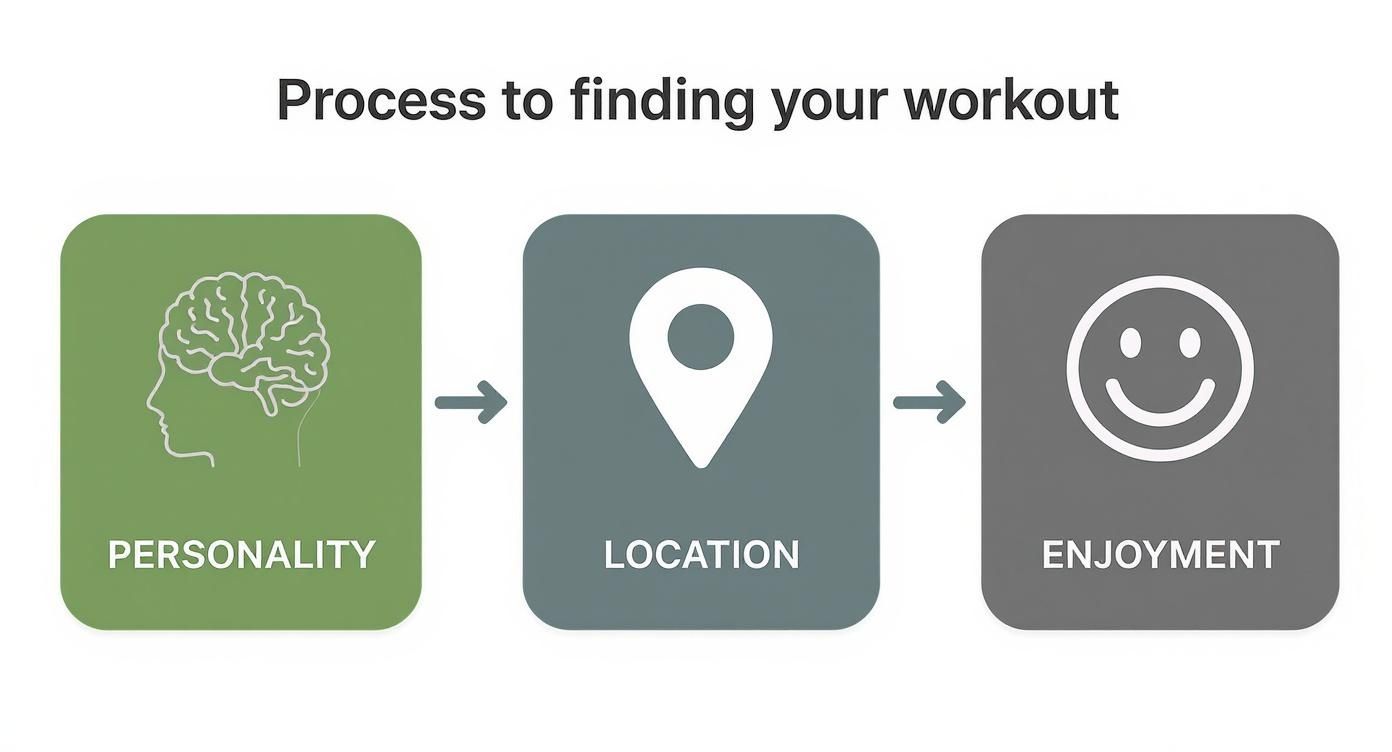
It’s a great reminder that the "best" workout is the one that fits your life, not the other way around.
Week 2: Building Momentum
You made it through the first week—awesome! Now, let's turn the dial up just a tiny bit to encourage your body to keep adapting. We're still aiming for two strength days, but try for two or three cardio sessions if you can.
At-Home Bodyweight Plan
- Strength: Let's go for 3 rounds of the circuit this week.
- Bodyweight Squats: 10-12 reps
- Knee Push-ups: 8-10 reps
- Plank: Hold for 20-30 seconds
- Walking Lunges: 8-10 reps per leg
- Cardio: Bump it up to 25 minutes of brisk walking. Try throwing in a few 1-minute jogging intervals if you feel up to it.
Beginner Gym Plan
- Strength: We're moving up to 3 rounds for each exercise.
- Goblet Squats: 10-12 reps
- Dumbbell Bench Press: 10-12 reps
- Seated Cable Row: 12-15 reps
- Plank: Hold for 20-30 seconds
- Cardio: 25 minutes on the treadmill, maybe with a slight incline to increase the challenge.
Weeks 3 And 4: Increasing The Challenge
By now, these exercises should be starting to feel more familiar. It’s time to consolidate that progress and add another layer of challenge to finish the month strong.
A quick word of advice: Listen to your body. Being sore is totally normal, but sharp pain is a signal to stop. A rest day is productive, not lazy—it's when the real magic of muscle repair and growth happens.
At-Home Bodyweight Plan
- Strength (Weeks 3 & 4): Stick with 3 rounds, but try to rest for only 60 seconds.
- Bodyweight Squats: 15 reps
- Push-ups: Try a few on your toes first, then drop to your knees to finish. Go to your limit!
- Plank: Hold for 30-45 seconds
- Walking Lunges: 10-12 reps per leg
- Cardio: Aim for 30 minutes, mixing in more jogging with your walking.
Beginner Gym Plan
- Strength (Weeks 3 & 4): Keep it at 3 rounds with 60 seconds of rest.
- Goblet Squats: 12-15 reps (see if you can use a slightly heavier dumbbell)
- Dumbbell Bench Press: 12-15 reps
- Lat Pulldown Machine: 10-12 reps
- Leg Press Machine: 12-15 reps
- Cardio: 30 minutes on your favorite machine. Push the intensity just a little higher than you did last week.
After four weeks, you'll have built an incredible foundation. You've established a routine, learned some key movements, and started building the strength and confidence to tackle whatever fitness goals you set next.
How to Stay Consistent When Motivation Fades
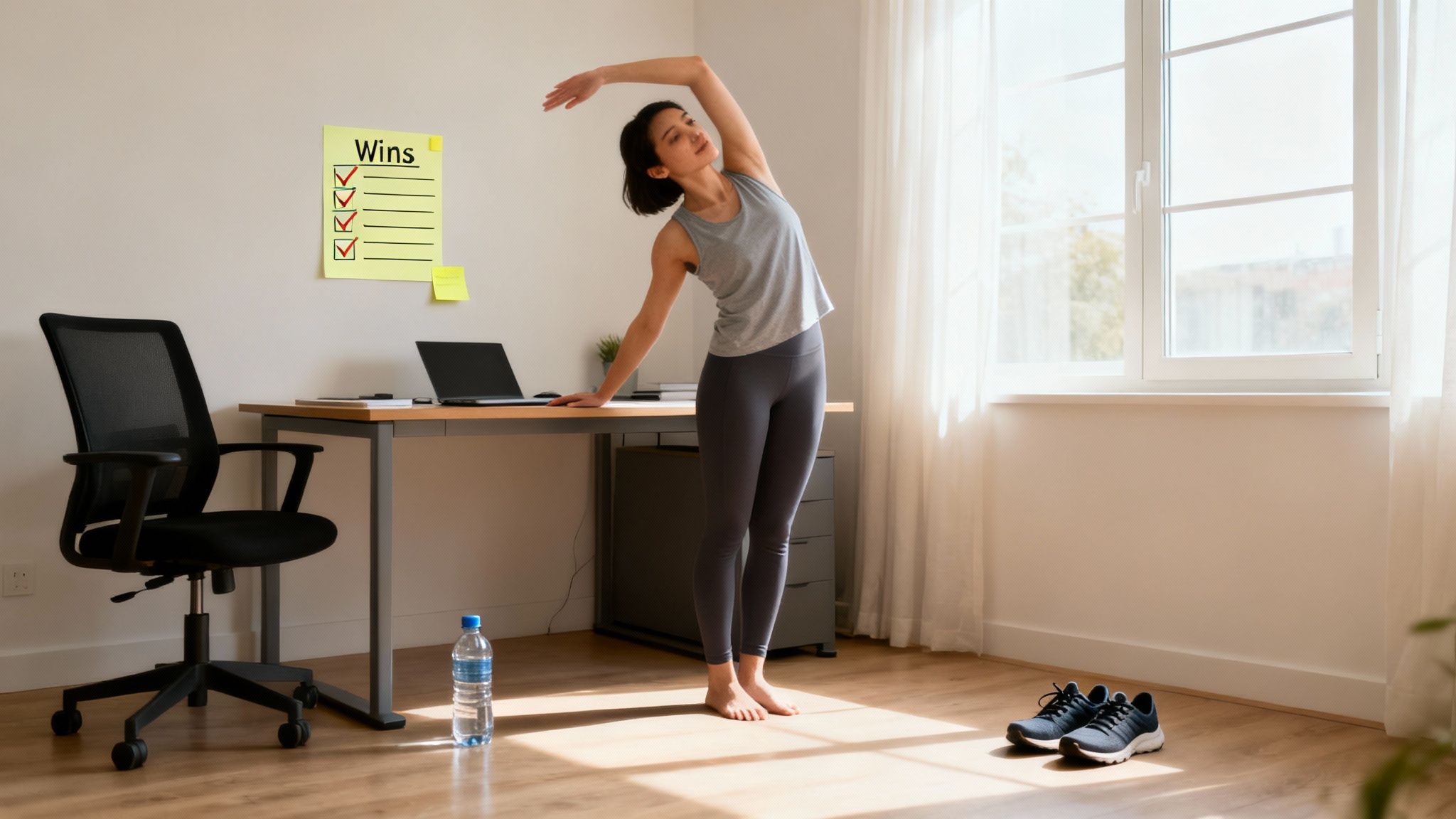
Let's start with a universal truth: that initial surge of motivation you feel when starting a new exercise routine will fade. It’s not a matter of if, but when. This isn’t a personal failing—it’s just how habits are formed.
Real success isn't about white-knuckling your motivation forever. It’s about building smart systems and a resilient mindset that carry you through the days you'd much rather stay on the couch. This is your game plan for pushing past those slumps and making fitness a non-negotiable part of your life.
Navigating Common Roadblocks
We all have them—the go-to excuses that pop up when it's time to work out. Instead of seeing them as dead ends, think of them as predictable challenges you can plan for ahead of time.
"I Don't Have Enough Time."
This is the big one, isn't it? The solution is to completely rethink what a "workout" even is. Forget the idea that it has to be a full hour at the gym to count.
Instead, embrace micro-workouts. These are quick, 5-10 minute bursts of activity that you can sprinkle throughout your day. A set of squats while your coffee brews, a brisk walk around the block on your lunch break—these small efforts compound and make a huge difference over time.
"I'm Too Tired to Exercise."
It sounds backward, but physical activity is one of the best ways to fight fatigue. When you're feeling drained, the last thing you want to do is move, but that's often exactly what your body needs.
Don't force a punishing workout when you're exhausted. Just make a deal with yourself to do a gentle 10-minute walk or some light stretching. Nine times out of ten, you’ll finish feeling more energized than when you started. If you're constantly running on empty, it might be helpful to look into some simple ways of boosting energy without caffeine to support your new routine.
Keeping Your Routine Fresh and Engaging
Boredom is the silent killer of consistency. Grinding through the same workout day after day is a fast track to burnout. The fix is refreshingly simple: mix it up!
- Change Your Scenery: If you walk or run, explore a new park or neighborhood. A different view can make the familiar feel exciting again.
- Try an Online Class: Jump on a platform like YouTube and try something completely new. Think beginner dance workouts, Pilates, or even a kickboxing session right in your living room.
- Curate a Killer Playlist: Never underestimate the power of a great beat. A fresh, high-energy playlist can make the time fly and give you that extra push when you need it most.
Don't be afraid to schedule a "fun day." Ditch your structured workout and go for a hike, play a sport with friends, or hit the pool. The goal is movement, and making it enjoyable is the ultimate hack for long-term success.
Mastering the Mental Game
At the end of the day, consistency is all in your head. It’s about being resilient, forgiving yourself, and playing the long game.
What About Muscle Soreness?
A little muscle soreness is totally normal when you're starting out. It’s a sign that your muscles are getting stronger. The problem is, it can also be a huge demotivator. Instead of stopping cold, try active recovery. Light movement, like a slow walk or gentle stretching, increases blood flow and can help ease the discomfort much faster than just sitting still.
Shift from Perfection to Consistency
You're going to miss a workout. Life happens. The most important thing isn't that you missed it, but what you do next. A single skipped day doesn't undo all your progress. The real trap is letting one missed day snowball into two, then a week, then a month.
Follow this simple but powerful rule: never miss twice in a row. This gives you the flexibility for life’s unexpected curveballs while keeping you tethered to your goal. It acknowledges that perfection is a myth, but consistency is absolutely achievable.
Got Questions About Starting to Exercise? We've Got Answers.
It's totally normal to have a million questions when you're just starting out. Honestly, figuring out how to begin can feel more daunting than the workout itself. Let’s clear up some of the most common things people wonder about so you can get moving with confidence.
Think of this as a conversation with a trainer who's seen it all. We'll skip the jargon and get straight to the practical advice you need.
How Many Days a Week Should I Actually Work Out?
When you’re fired up and ready to go, it's tempting to jump in seven days a week. But trust me on this: that's a fast track to burnout. The real secret is consistency, not killing yourself right out of the gate.
For most beginners, aiming for three to four days of exercise per week is the sweet spot.
Why? Because this schedule gives your body the downtime it needs to recover and get stronger. That rest day isn't you being lazy; it's when the magic happens. A solid, balanced starting plan might look something like this:
- Two days of strength work: Think bodyweight exercises at home or trying out some machines at the gym.
- Two days of cardio: This could be anything from a brisk walk outside to a bike ride or a swim.
This approach helps you build a habit that sticks, without the overwhelming fatigue or potential injuries that come from doing too much, too soon.
Is It Better to Work Out at Home or Join a Gym?
The honest-to-goodness answer? The best place to work out is wherever you'll actually do it. There's no single right answer here. It really comes down to your personality, budget, and what your daily life looks like.
The "perfect" workout environment is a myth. Success comes from choosing the path of least resistance for you. Make it so easy to show up that you do it even on days you don't feel like it.
Working out at home is incredibly convenient, private, and saves you money. On the flip side, a gym offers way more equipment, a change of scenery, and an energy that a lot of people find motivating. Don't be afraid to try both and see what feels right. Maybe you start at home and join a gym later, or vice-versa.
What’s the Best Time of Day to Exercise?
I hear this one all the time. The truth is, there's no single "best" time that works for everyone. The ideal time is simply the one you can consistently protect in your schedule.
Some people feel like superheroes during a morning workout, getting it done before the day’s chaos begins. Others need that evening session to blow off steam and de-stress from work. It all depends on your body's natural rhythm and your daily commitments.
My advice? Experiment. Try a morning workout, a lunch-break walk, and an after-work session over a week or two. You'll quickly figure out what makes you feel energized and what feels like a chore.
How Do I Know if I’m Pushing Myself Too Hard?
This is maybe the most important skill you can develop: learning to listen to your body. There’s a huge difference between the good burn of a challenging workout and the bad pain that signals you’re doing too much.
Feeling some muscle soreness is completely normal, especially in the first 12 to 48 hours after trying something new. That's just Delayed Onset Muscle Soreness (DOMS), and it's a sign your muscles are adapting.
But you need to be on the lookout for red flags. Dial it back immediately if you experience:
- Pain that is sharp, stabbing, or travels down a limb.
- Dizziness, feeling lightheaded, or nauseous during or after exercise.
- Deep exhaustion that lingers long after you've finished your workout.
A great tool for cardio is the "talk test." You should be able to carry on a conversation while you're moving. If you're so out of breath you can't string a few words together, ease up a little.
At The Happy Health Blog, our goal is to give you expert-backed, practical advice to help you succeed on your wellness journey. You can find more articles and tips for building healthy habits that last over at https://thehappyhealthblog.com.
